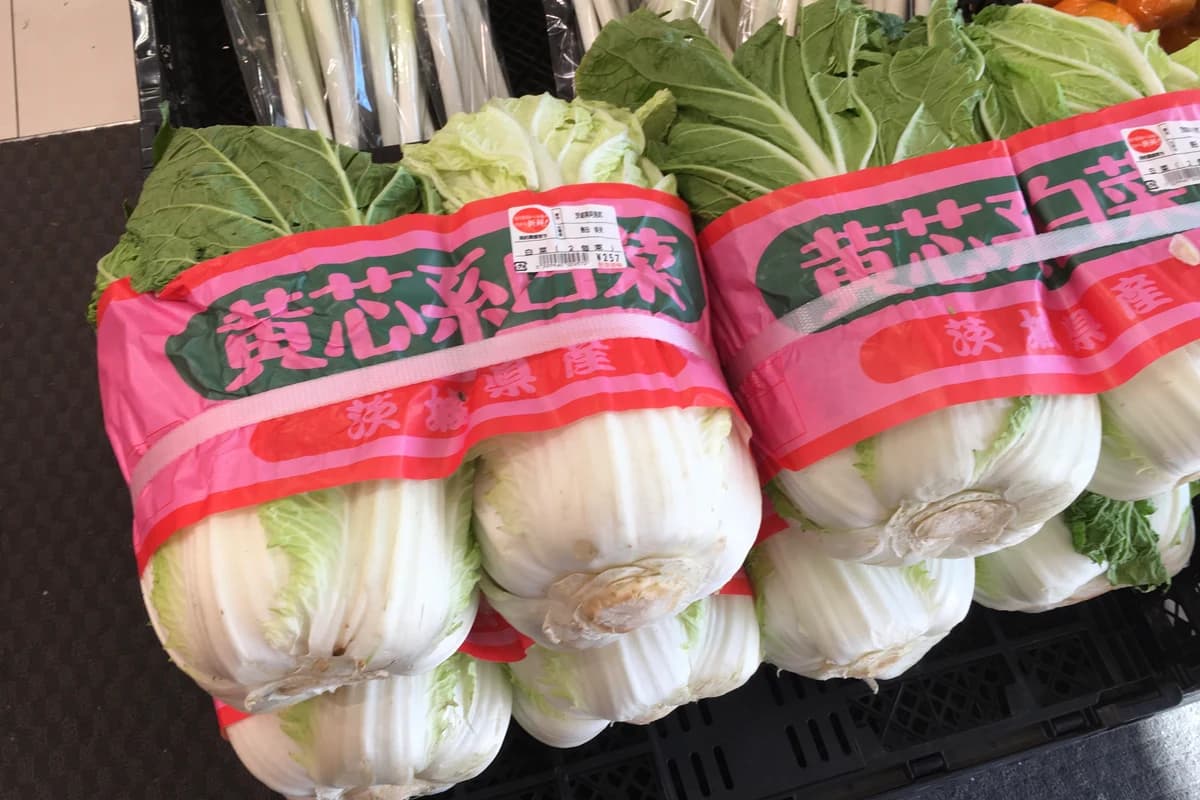
About This Plant
Chinese cabbage, or wombok, is a cool-season heading Brassica rapa grown for tall, crisp Napa-style heads used fresh, stir-fried, and fermented as kimchi. It grows fastest under steady moisture, cool temperatures, balanced fertility, and careful calcium and disease management.
How to Grow Chinese Cabbage (Wombok)
Learn how to grow Chinese Cabbage (Wombok) from seed to harvest in 70 days. Beginner difficulty. Complete nutrient guide, pH/EC requirements, and growing conditions for hydroponics, soil & greenhouse.
Sources cited: 17.
Nutrient Requirements by Growth Stage
Treat wombok as a heavy-feeding leafy Brassica, but avoid excess late nitrogen. Extension sources support split N and K, full P near establishment, strong K demand, and stopping late N before harvest to reduce quality disorders…
Sign in to view nutrient requirements
A free account unlocks NPK targets for all four growth stages, micronutrient levels, a per-stage nutrient calculator, and the full nutrition guide. Signing up takes one click. Truleaf is a free, non-profit project, and every new account helps it grow. No spam, ever.
Growing Environments
Wombok is suitable outdoors, in greenhouses, indoors, and in containers when its cool-season needs are met. Outdoors it performs best in spring and fall; greenhouse crops need ventilation, shade, and cooling to protect head quality…
Temperature
Chinese cabbage is a cool-season heading Brassica. Use 18-25C for rapid germination and target about 16-18C during head growth; 13-20C is a practical production band, while sustained heat reduces head density and increases bolting risk. Young established plants can bolt after more than a week of cold nights below about 10C followed by warmer weather, so spring crops need careful timing.
Humidity
For greenhouse or indoor production, keep relative humidity moderate, roughly 50-70%, and prevent condensation inside the head canopy. This target is greenhouse-derived rather than a wombok-specific optimum, but it aligns with the need for steady transpiration and lower foliar disease pressure…
Light
Indoor wombok should be managed like a moderate-light leafy green: about 15-18 mol/m2/day DLI with a 14-16 h photoperiod is a conservative target. The corrected database value uses 16 mol/m2/day, 15 h, and about 300 umol/m2/s so the DLI math is internally consistent…
Airflow
Use steady ventilation and gentle horizontal airflow to remove crop-zone heat and moisture rather than chasing a crop-specific wind speed. Greenhouse ventilation guidance emphasizes air exchange to prevent humidity buildup and condensation; this is especially important for dense, heading Brassicas where inner leaves…
Sign in to view environmental requirements
A free account unlocks exact temperature, humidity, light and airflow targets, including germination and growth ranges, DLI, photoperiod and PPFD, plus the full environment guide. Signing up takes one click. Truleaf is a free, non-profit project, and every new account helps it grow. No spam, ever.
Hydroponic System Compatibility
NFT has the strongest direct evidence for Chinese cabbage hydroponics, including pH and EC control through a 42-day crop cycle. DWC or floating raft, ebb-flow, and drip-to-substrate systems are suitable when oxygen, drainage, and sanitation are controlled…
Growing Media
Use fertile, moisture-retentive, well-drained soil for field and container culture; Clemson gives a soil pH target near 5.8-6.5, while Hong Kong AFCD supports 6.5-7.5 for local Chinese cabbage production. For soilless culture, start seedlings in sponge, rockwool, or coir plugs and move them into NFT cups, raft…
Container Specs
A full-size wombok head needs one large container rather than crowded salad-green spacing. Use at least 30 cm depth and width, preferably 15-20 L or larger, with drainage holes and a moisture-retentive potting mix…
Training & Support
Wombok does not require trellising, staking, topping, or pruning for normal head production. The useful support is protective rather than structural: floating row cover or insect netting over hoops can protect seedlings from flea beetles, caterpillars, wind, and cold stress…
Sign in to view system compatibility
A free account unlocks why each of the six systems fits or fails, plus growing media, container sizes, training methods, companion plants, and the full systems guide. Signing up takes one click. Truleaf is a free, non-profit project, and every new account helps it grow. No spam, ever.
Propagation
Propagate wombok from seed. Sow 6-12 mm deep in moist seed-starting media or direct seed into prepared beds; emergence is commonly 3-7 days around 18-25C…
Harvesting
Harvest full wombok as a whole head when it is dense, firm, and market-sized. Cut the head at the base with a clean knife, trim damaged outer leaves, keep harvested heads shaded, and cool promptly…
Planting Calendar
Schedule Chinese cabbage for cool windows. Clemson and Minnesota both recommend early spring or fall, with late-summer to fall planting often more reliable because spring cold followed by warmth can trigger bolting…
Common Issues
The main risk pattern is interrupted growth. Tipburn comes from localized calcium shortage in fast-expanding inner leaves, often after uneven moisture, root stress, excess nitrogen, or heat…
Get the full science-backed guide
By signing up, you help keep Truleaf free and support the growth of our nonprofit project. Your account unlocks full details for every plant issue—including symptoms, causes, step-by-step solutions, and prevention—plus the month-by-month planting calendar, the complete guide, and all research sources. It only takes one click. No spam, ever.