Sobre esta planta
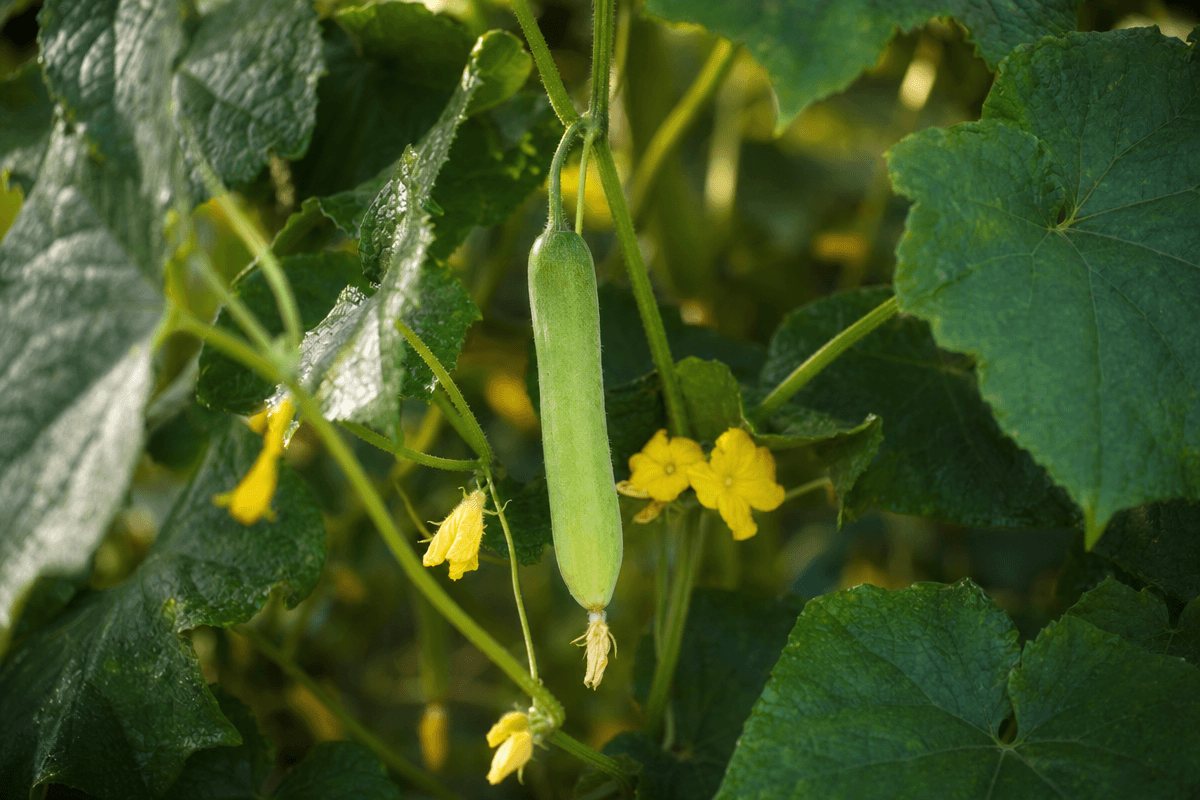
O pepino (Cucumis sativus) é uma cucurbitácea de estação quente e uma das hortaliças mais cultivadas em produção hidropônica no mundo. Esta trepadeira vigorosa e indeterminada prospera em ambientes de estufa com alta luminosidade e umidade elevada, atingindo 1,5-3 m quando conduzida verticalmente em cordas ou treliças. O pepino é excepcionalmente dominante em potássio entre as culturas hidropônicas, requerendo mais K do que N durante a floração e frutificação. Responde excepcionalmente bem ao enriquecimento com CO2 (+22% de produtividade a 1000 ppm) e à irrigação por gotejamento com substratos de lã de rocha ou fibra de coco. As sementes germinam rapidamente (3-5 dias a 25-30°C) e a primeira colheita é alcançável dentro de 50-70 dias a partir da semeadura. Uma planta bem manejada produz 4-5 kg por ciclo de produção com dificuldade intermediária. Os principais desafios incluem o oídio, a podridão radicular por Pythium em sistemas recirculantes e doenças virais transmitidas por pulgões.
Como Cultivar Pepino
Aprenda a cultivar Pepino da semente à colheita em 70 dias. Dificuldade Intermediate. Guia completo de nutrientes, requisitos de pH/EC e condições de cultivo para hidroponia, solo e estufa.
Respaldado por 30 citações revisadas por pares.
Requisitos nutricionais por estágio de crescimento
O pepino é uma cucurbitácea de alto consumo que requer de forma única mais potássio do que nitrogênio durante a frutificação — uma das poucas culturas hidropônicas com esta característica. Iniciar plântulas a EC 1,0-1,5 com N moderado (100-150 ppm) e K equilibrado (150-230 ppm)…
Entre para visualizar requisitos de nutrientes
Uma conta gratuita libera as metas de NPK das quatro fases de crescimento, os níveis de micronutrientes, uma calculadora de nutrientes por fase e o guia de nutrição completo. Criar a conta leva só um clique. O Truleaf é um projeto gratuito e sem fins lucrativos, e cada nova conta nos ajuda a crescer. Sem spam, nunca.
Ambientes de Cultivo
A estufa é o principal ambiente comercial para pepino, fornecendo o calor controlado, umidade e luz que esta cultura tropical requer. O cultivo interno é totalmente viável com iluminação de alta intensidade (DLI 25+, PPFD 430+) e controle de temperatura/umidade — ideal para produção durante todo o ano em qualquer…
Temperatura
O pepino é uma cultura de estação quente que requer calor constante para crescimento rápido e desenvolvimento do fruto. As sementes germinam a partir de um mínimo de 16°C até um ótimo de 35°C, com emergência em 3-5 dias a 25-30°C. Abaixo de 12°C, a germinação é insignificante. Para crescimento vegetativo e reprodutivo, manter 18-30°C com uma média diária ótima de 24°C (dia 26°C, noite 18-20°C). Temperaturas acima de 35°C causam aborto floral e frutos amargos. Temperaturas noturnas abaixo de 15°C retardam o crescimento e reduzem significativamente o pegamento dos frutos. A estreita faixa ótima de crescimento (média de 24°C) reflete a origem tropical do pepino — ele não possui qualquer tolerância a geadas. A temperatura da zona radicular de 20°C+ é crítica para a absorção de nutrientes, particularmente o fósforo, que se acumula nas raízes sem translocação abaixo de 20°C.
Umidade
O pepino é uma cultura de alta transpiração que prospera com umidade moderada a alta. Manter 60-80% de umidade relativa com um alvo ótimo de 70% como média de 24 horas…
Luz
O pepino requer alta intensidade luminosa para produtividades comerciais. Visar um DLI (integral luminosa diária) de 20-30 mol/m²/d, com 25 mol/m²/d como excelente alvo intermediário para culturas frutíferas…
Circulação de Ar
Manter velocidade do ar de 0,3-1,0 m/s ao nível do dossel. Mínimo de 0,3 m/s previne microclimas estagnados que promovem o oídio e o míldio, que são as doenças mais danosas do pepino em estufa…
Entre para visualizar requisitos ambientais
Uma conta gratuita libera os valores exatos de temperatura, umidade, luz e ventilação, incluindo faixas de germinação e crescimento, DLI, fotoperíodo e PPFD, além do guia de ambiente completo. Criar a conta leva só um clique. O Truleaf é um projeto gratuito e sem fins lucrativos, e cada nova conta nos ajuda a crescer. Sem spam, nunca.
Compatibilidade com sistemas hidropônicos
A irrigação por gotejamento com substrato é o padrão comercial global para pepino em estufa (classificação excelente) — placas de lã de rocha, fibra de coco ou bolsas de perlita fornecem entrega precisa de nutrientes, suporte estrutural para plantas grandes e controle ótimo de EC/pH. DWC e fluxo-refluxo são boas…
Substratos
As placas de lã de rocha são o padrão indiscutível da indústria para pepino comercial em estufa, oferecendo excelente retenção de água (80% por volume), aeração (15-20% ar), esterilidade e suporte estrutural para plantas portando cargas pesadas de frutos. A fibra de coco é cada vez mais adotada como uma alternativa…
Vasos
Usar recipientes de pelo menos 30 cm tanto de profundidade quanto de largura por planta (aproximadamente 15 L de volume mínimo). Pesquisas demonstram redução significativa de produtividade em recipientes abaixo de 12-15 L…
Condução e Suporte
O treinamento não é estritamente necessário — o pepino é naturalmente uma trepadeira rasteira que produz frutos quando se espalha — mas é fortemente recomendado para variedades trepadeiras devido ao aumento de 2-3x na produtividade, qualidade melhorada do fruto, redução de doenças e 70% de economia de espaço. A…
Entre para visualizar compatibilidade de sistemas
Uma conta gratuita libera por que cada um dos seis sistemas funciona ou não, além de substratos, tamanhos de vaso, métodos de condução, plantas companheiras e o guia de sistemas completo. Criar a conta leva só um clique. O Truleaf é um projeto gratuito e sem fins lucrativos, e cada nova conta nos ajuda a crescer. Sem spam, nunca.
Propagação
O pepino é uma das hortaliças mais fáceis de propagar por semente — as sementes grandes germinam rapidamente sem necessidade de pré-tratamento. Semear a 2-2,5 cm de profundidade em substrato úmido a 25-30°C para germinação mais rápida (3-4 dias)…
Colheita
O pepino é uma cultura indeterminada que produz frutos continuamente uma vez que a floração começa, com o período de colheita tipicamente durando 10-12 semanas. Colher quando os frutos atingirem comprimento uniforme — 30-36 cm para tipos europeus (mínimo USDA 28 cm), 13-20 cm para tipos mini/Beit Alpha — com textura…
Calendário de Plantio
Para climas temperados do hemisfério norte (zonas USDA 4-12): Iniciar sementes em ambiente interno em março-abril, 3-4 semanas antes da última data de geada. Usar células grandes ou vasos de turfa — as cucurbitáceas são sensíveis à perturbação radicular…
Problemas Comuns
O pepino é suscetível a doenças fúngicas, podridões radiculares por oomicetos, doenças virais e pragas artrópodes em sistemas de estufa e hidropônicos. As cinco doenças principais são o oídio (Podosphaera xanthii — colônias brancas nas folhas, manejado com Bacillus subtilis ou fungicidas de enxofre), míldio…
Acesse o guia completo respaldado pela ciência
Ao se cadastrar, você ajuda a manter o Truleaf gratuito e apoia o crescimento do nosso projeto sem fins lucrativos. Sua conta libera todos os detalhes de cada problema das plantas—incluindo sintomas, causas, soluções passo a passo e prevenção—além do calendário de plantio mês a mês, do guia completo e de todas as fontes de pesquisa. Leva apenas um clique. Sem spam, nunca.