How to Hand-Pollinate Indoor Plants Without Bees
Indoors and under cover, there are no bees or wind to move pollen — so fruiting crops set poorly, drop blossoms, or grow misshapen fruit. This guide shows exactly how to hand-pollinate tomatoes, peppers, strawberries, cucumbers, and squash, with the tools, timing, and one climate limit hand-pollination can't fix. Grounded in peer-reviewed research and university extension guidance.
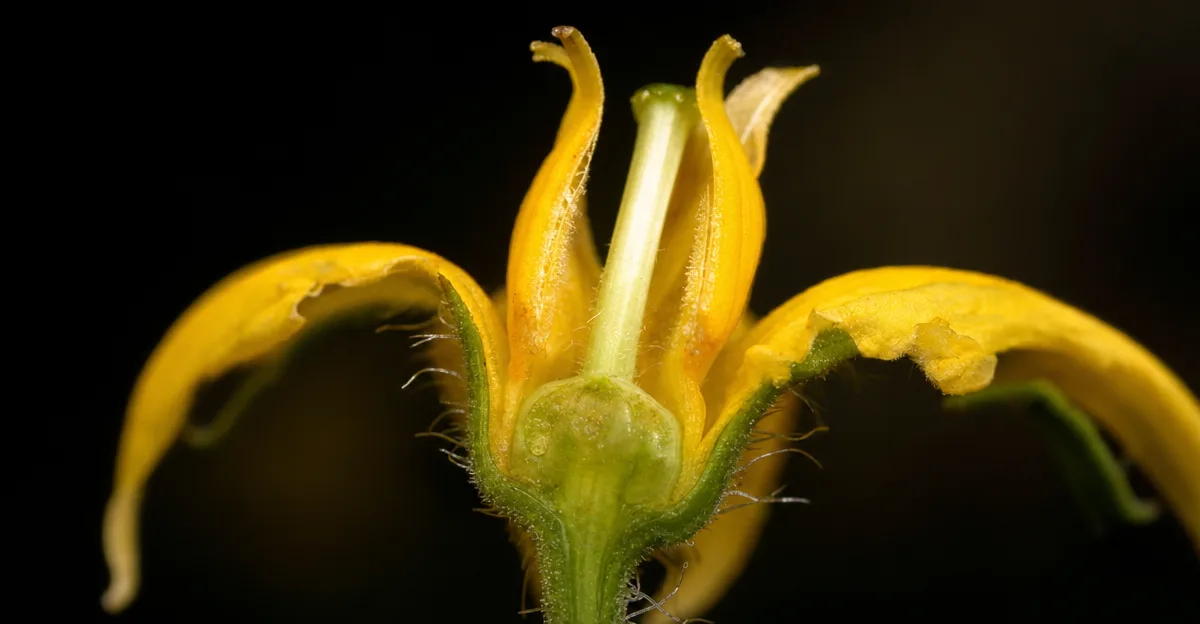
You planted tomatoes on a sunny windowsill, they flowered beautifully — and then the flowers yellowed and dropped without setting a single fruit. Or the strawberries fruited, but every berry came out small and lumpy. Or the cucumber flowers bloomed for weeks and nothing swelled behind them. If any of that sounds familiar, the problem usually isn't your soil, your light, or your feeding. It's that there are no bees or wind indoors to move pollen — and most fruiting crops need that movement to turn a flower into fruit.
Outdoors, wind shakes pollen loose and insects ferry it from flower to flower. Under a roof — a windowsill, a grow tent, a greenhouse, or a high tunnel — both of those disappear. Crops that fruit reliably in an open garden then set poorly, drop their blossoms, or produce misshapen fruit. The fix is to take over the pollinators' job yourself. It takes seconds per plant, needs almost no equipment, and this guide walks through exactly how to do it for the crops home growers raise most: tomatoes, peppers, strawberries, cucumbers, and squash — plus the one thing hand-pollination can't fix.
First, Know Which Kind of Flower You Have
"Hand-pollination" means three different actions depending on the crop, because fruiting plants carry their flowers in three fundamentally different ways. Getting this right is most of the battle.
- Self-fertile "buzz" crops — tomato, pepper. Each flower is perfect: it has both male and female parts and can pollinate itself. You do not need a second plant. The pollen is simply locked inside the flower and has to be shaken loose.
- Self-compatible but pollen-limited — strawberry. A strawberry flower can pollinate itself too, and it will set some fruit alone. But each berry is built from dozens of tiny seeds, and every one needs a grain of pollen delivered to its own stigma. Miss some, and you get a misshapen berry.
- Separate male and female flowers — cucumber, squash, melon, and other cucurbits. These plants carry two kinds of flower on the same vine. Pollen has to be physically carried from a male flower to a female one — and some greenhouse varieties skip pollination entirely (more on that below).
Match your crop to the right archetype and the technique follows. Let's take them one at a time.
Tomatoes and Peppers: Shake the Pollen Loose
Tomato and pepper flowers are self-fertile and enclosed — the stigma sits inside a cone of anthers that hold the pollen in pockets that open only through tiny pores at the tip. In the open garden, wind and the vibrations of visiting bees rattle that pollen out. Indoors, nothing does — so you supply the vibration.
Why vibration specifically? Recent imaging work shows that a buzz literally "unzips" the interlocked hairs that lock the anther cone shut, releasing the pollen inside; the study found that sonic vibration across a broad band — roughly 50 to 10,000 hertz — boosted pollination, fruit size, and seed set across four commercial tomato varieties, and that contactless vibration from a small speaker worked as well as a wand touched to the plant. The practical message is not that there is one magic frequency. A separate study on a tomato relative found that how much pollen you extract is driven mainly by how long you buzz, not by hitting an exact pitch. So don't overthink the tool — almost anything that vibrates will do the job if you hold it there for a moment.
How to do it:
- Wait for open flowers. Only fully open flowers with visible yellow anthers are ready.
- Vibrate each flower cluster for a second or two. Touch a vibrating tool (an electric toothbrush is the classic choice) to the stem just behind the flower truss, or gently pulse the truss with a fingertip. You may see a faint puff of pollen dust — that's the goal.
- Repeat every one to three days while the plant is flowering. Vibrating longer and coming back over several days extracts more pollen and improves set; a single pass is rarely enough for a whole plant.
- Do it midday on a sunny day, when pollen is driest and sheds most freely (see Timing, below).
Peppers work the same way — perfect, self-fertile flowers that benefit from a gentle buzz or even a soft brush inside each bloom. Peppers are at least as temperamental about heat as tomatoes, which we'll come back to at the end.
For the full nutrient, spacing, and environment picture behind a productive crop, pair this with our hydroponic tomatoes guide and hydroponic bell pepper guide — pollination is the last mile once the plant itself is thriving.
Strawberries: Brush the Whole Flower Face
Strawberries are widely, and wrongly, said to "need bees." Modern cultivars are self-compatible: a flower can pollinate itself, and it will set fruit on its own. But the yield and quality tell a different story. Because each berry is really a cluster of dozens of individual seeds (the "pips" on the outside), every one of those seeds needs its own grain of pollen delivered to its own stigma. When pollination is incomplete, the un-pollinated section of the berry simply doesn't swell — and you get the small, lumpy, one-sided fruit so common on indoor plants.
The evidence is consistent: assisted pollination produces larger, better-shaped, longer-lasting berries, while incomplete pollination causes malformation and downgrades fruit quality. One review put numbers on it — even under open, natural conditions, strawberry yield showed measurable pollen limitation, meaning the plants would have done better with more pollen delivered. Indoors, with no pollinators at all, that gap is wider. What matters most is even coverage of the entire flower face, so that every stigma receives pollen — which is exactly why a careful brush beats a single dab.
How to do it:
- Use a soft brush or cotton swab — a small artist's paintbrush is ideal.
- Swirl gently over the entire center of each open flower, covering the whole dome of stigmas, and move from flower to flower so pollen mixes among blooms.
- Repeat daily or every other day while flowers are open; each flower is only receptive for a few days.
You'll know it's working when berries come out plump and evenly rounded instead of pinched. For the growing setup that feeds those berries, see our hydroponic strawberries guide.
Cucumbers, Squash, and Melons: Move Pollen Male to Female
Cucurbits are the one group where you do move pollen between flowers, because they carry separate male and female blooms on the same plant. But before you start — check your variety first.
Many modern greenhouse cucumbers are parthenocarpic: they're bred to set seedless fruit with no pollination at all, and pollinating them can actually cause misshapen, poorly formed fruit. If your seed packet says "parthenocarpic," "seedless," "greenhouse," or "all-female" (gynoecious), do nothing — the plant handles it. This section is for open-pollinated and heirloom cucurbits — most squash, melons, pumpkins, and garden cucumbers — that genuinely need pollen moved by hand indoors.
Telling the flowers apart: female flowers have a tiny immature fruit — a miniature cucumber, squash, or melon — right behind the petals, at the base of the flower. Male flowers sit on a plain thin stalk with nothing behind them, and they usually appear first and in greater numbers.
How to do it:
- Identify an open male and an open female flower on the same morning.
- Transfer the pollen. Either pick the male flower, peel back its petals, and dab its pollen-covered center directly onto the center of the female flower; or use a soft brush to carry pollen from male to female. One male flower can pollinate several females.
- Do it in the morning. Cucurbit flowers typically open for a single day, and the pollen is viable the morning the flower opens — so timing is tight.
A swollen fruit behind a pollinated female flower within a few days means it took; a female flower whose baby fruit yellows and shrivels wasn't pollinated in time. For the rest of the growing picture, see our hydroponic cucumber guide.
Collecting and Storing Pollen When Flowers Won't Cooperate
The single most frustrating failure indoors isn't bad technique — it's timing. Cucurbits open each flower for only one day, and because male flowers usually appear first and in greater numbers, you will regularly meet a female flower that opens on a morning with no male open to donate. The professional answer is to stop relying on two flowers cooperating on the same day and instead collect pollen and carry it to the flower yourself.
Capturing pollen from buzz crops (tomato, pepper). The same broadband vibration that self-pollinates a tomato flower will also shed a visible dust of pollen you can catch. Hold a vibrating tool to an open flower over a small dry container, a dark spoon, or a watch glass, and pulse for a few seconds — contactless vibration from a speaker sheds pollen as effectively as a wand touched to the plant, and longer buzzing extracts more. Collect from several flowers to build a usable pinch, then brush it onto the stigmas of flowers that shed poorly on their own. This is the rescue technique for a plant that flowers heavily but sets little.
Capturing pollen from cucurbits. Pick a freshly opened male flower in the morning, peel back the petals, and you have a loaded applicator you can walk to any open female on the vine. If no female is open yet, a detached male will hold usable pollen for a few hours if you keep it cool and out of direct sun — but treat that as a short reprieve, not storage: cucurbit pollen is viable essentially only the morning the flower opens.
Why you cannot stockpile it. Pollen is the most temperature-sensitive tissue the plant makes, and the same heat and cold that damage it on the plant degrade it just as fast once it is off the plant — sustained warmth around 30–34 °C or cold near 14 °C wrecks viability and germination. Keep collected pollen cool, dry, and shaded, and use it within hours, not days. Commercial hybrid-pepper seed operations, which hand-transfer pollen at scale, treat pollen freshness and handling temperature as the critical control point of the whole process — a useful signal of how fragile the material is.
Isolate-and-transfer, for true seed. If your goal is to save seed that comes true or to make a deliberate cross, collecting pollen isn't enough — you also have to keep unwanted pollen out. Before a female (or perfect) flower opens, cover it with a light bag or tie the bud closed; open it only to apply the pollen you chose, then re-cover until the fruit sets. This controlled isolation is the core of manual hybrid-seed technique, and it is the one part of hand-pollination that pays off not in this season's fruit but in next season's seed.
Beyond the Big Three
The same principle — if there's no wind or insect indoors, move the pollen yourself — extends to other fruiting crops growers raise under cover. Vining and container fruits such as those in our growing passion fruit in containers guide, and even indoor spice crops like black pepper (Piper nigrum), fruit best when you take deliberate steps to move pollen among their open flowers rather than trusting to still indoor air. Match the crop to the nearest of the three archetypes above — perfect self-fertile flower, pollen-limited self-compatible flower, or separate male and female flowers — and apply the matching technique.
Your Pollination Toolkit
You almost certainly own everything you need already. Match the tool to the flower type:
| Tool | Best for | How to use |
|---|---|---|
| Electric toothbrush | Tomatoes, peppers (buzz crops) | Touch the stem behind the flower cluster for a second or two; the vibration shakes pollen loose. |
| Small artist's brush | Strawberries; transferring cucurbit pollen | Swirl gently over the whole flower center; move between flowers. |
| Cotton swab | Strawberries; small flowers | Same as a brush — a soft, disposable alternative. |
| Detached male flower | Cucumbers, squash, melons | Peel back the petals and dab the center directly onto a female flower. |
| Your fingertip / a gentle tap | Tomatoes, peppers | Lightly pulse or flick the flower truss to mimic a passing breeze. |
| Small fan | A whole indoor bed of buzz crops | A breeze for a few hours a day helps self-fertile tomatoes and peppers set, though it's less thorough than direct buzzing. |
The takeaway: there's no specialized equipment to buy. Anything that delivers a brief vibration (for buzz crops) or carries pollen gently across the flower face (for the rest) will work.
Timing: When to Pollinate {#timing-when-to-pollinate}
When you pollinate matters as much as how:
- Pollinate midday, on sunny days. Pollen sheds most freely when it's warm, dry, and the humidity has dropped from the morning — extension guidance points to bright midday conditions as the best window.
- Only work fully open flowers. A flower that hasn't opened isn't receptive; anthers won't have shed.
- Move fast on cucurbits. Squash, melon, and cucumber flowers typically open for just one day, and their pollen is viable the morning the flower opens — so a mid-morning pass is ideal for those crops.
- Come back regularly. Flowers open in waves over days and weeks, so a single session won't catch them all. A quick pass every one to three days keeps up with new blooms.
The One Thing Hand-Pollination Can't Fix: Temperature
Here's the honest caveat that keeps growers from chasing the wrong problem: no amount of hand-pollinating fixes bad temperatures. Pollen is the most heat- and cold-sensitive part of a fruiting plant, and if the air is too hot or too cold, the pollen itself is damaged before you ever touch the flower.
The numbers are consistent across crops. In tomato, modelling and controlled work show that sustained heat around 30–34 °C reduces pollen viability and germination, cutting seed set and fruit size, while cold around 14 °C reduces fruit set at the other end. A classic study independently confirmed that high temperatures depress tomato pollination and fruit set, with some cultivars more tolerant than others. Peppers are at least as sensitive, and pepper pollen is the acknowledged weak link: a review of pepper pollination identifies pollen as the "weak link," with sustained temperatures above roughly 32 °C impairing pollen development, viability, and pollen-tube growth, and driving flower and fruit drop. Treat these as approximate thresholds, not hard cliffs — the exact tolerance varies by cultivar.
The practical rule: if your plants are dropping flowers despite diligent hand-pollination, check your temperatures first. Get the growing environment into the comfortable range — roughly the low-to-mid 20s °C for most fruiting crops — and then hand-pollination will do its job. Pollination is the last step, not a rescue for a plant that's too hot or too cold.
A Diagnostic Walkthrough When Fruit Still Won't Set
You're pollinating diligently and still coming up empty. The mistake most growers make here is to do more of the same — buzz harder, brush more often — when the real cause is usually somewhere else entirely. Work through these symptoms in order, because the order is the diagnosis: fix temperature before technique, technique before timing, and only then question the variety.
1. Flowers yellow and drop before any fruit forms. This is almost never a pollination-effort problem — it is the classic signature of damaged pollen, which fails before you ever touch the flower. Sustained heat around 30–34 °C in tomato, or above roughly 32 °C in pepper, and cold near 14 °C at the other end, all cut pollen viability and drive blossom drop. If flowers abort wholesale, put the thermometer — not the toothbrush — to work first. No technique rescues pollen the environment already killed.
2. Fruit sets, but comes out small, lumpy, or one-sided. Now the flower was pollinated — just not completely. On strawberries this is the tell-tale lumpy, half-swollen berry: each berry is built from dozens of tiny seeds that each need their own grain of pollen delivered to their own stigma, so when coverage is uneven, the un-pollinated section simply never swells. The fix is coverage, not force — brush the entire flower face, and come back over several days so every stigma gets a turn while the flower is receptive.
3. A cucurbit's baby fruit swells for a day or two, then yellows and shrivels. That miniature fruit behind the female flower is the plant's provisional bet; if no viable pollen arrives the morning the flower opens, it aborts the bet and drops it. The cause is timing, and the remedy is the collect-and-carry method above — have pollen ready the moment a female opens, rather than hoping a male is open on the same vine the same morning.
4. Cucumbers set fine on their own — or get worse when you pollinate. Stop. You almost certainly have a parthenocarpic or gynoecious greenhouse variety that is bred to fruit without pollen, and hand-pollinating it can cause the very misshapen, poorly formed fruit you're trying to prevent. Confirm the variety and, if so, do nothing.
5. Everything looks pollinated, temperatures are fine, and it still won't set. Two culprits remain. Extreme humidity can sabotage otherwise-good technique — very damp air makes pollen clump and refuse to shed, while very dry air can desiccate the stigma — so aim for moderate humidity and pollinate midday when the air has dried but not baked. And if a crop consistently underperforms across seasons despite everything, the ceiling may simply be genetic: some cultivars set poorly under indoor conditions no matter how well you work them.
The through-line: blossom drop points to environment, misshapen fruit points to coverage, shriveled cucurbit fruit points to timing, and effortless (or worsened) set points to variety. Diagnose in that order and you'll stop treating the wrong problem.
Quick Reference
| Crop | Flower type | Technique | Frequency |
|---|---|---|---|
| Tomato | Perfect, self-fertile, enclosed | Vibrate the flower cluster (electric toothbrush / tap) | Every 1–3 days while flowering |
| Pepper | Perfect, self-fertile | Buzz or gently brush inside each flower | Every 1–3 days while flowering |
| Strawberry | Perfect, self-compatible, pollen-limited | Brush the whole flower face evenly | Daily / every other day |
| Cucumber, squash, melon | Separate male & female flowers | Move pollen male → female — unless parthenocarpic | Each morning, on open flowers |
Two rules above all: first, match the crop to its flower type — buzz the self-fertile crops, brush the pollen-limited ones, and move pollen male-to-female on the cucurbits (checking first that they aren't parthenocarpic). Second, remember that pollination is the final step: fix temperature and light first, because damaged pollen can't be rescued by any technique.