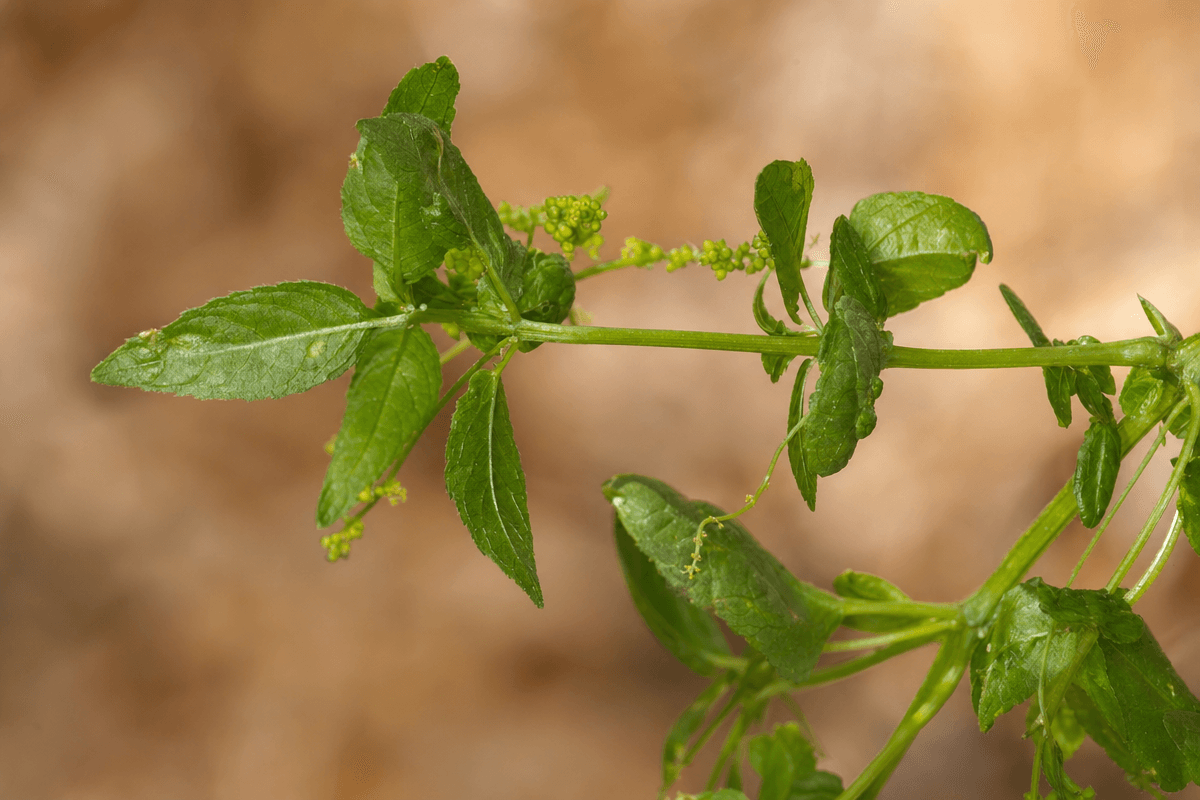
About This Plant
Good King Henry is a perennial leafy green grown for spring shoots and spinach-like leaves, with year-one establishment followed by many seasons of cut-and-come-again harvests.
How to Grow Good King Henry
Learn how to grow Good King Henry from seed to harvest in 365 days. Intermediate difficulty. Complete nutrient guide, pH/EC requirements, and growing conditions for soil & container.
Sources cited: 20.
Nutrient Requirements by Growth Stage
Good King Henry is a nitrogen-hungry perennial. In soil, amend annually with nitrogen-rich organic matter before spring growth…
Sign in to view nutrient requirements
A free account unlocks NPK targets for all four growth stages, micronutrient levels, a per-stage nutrient calculator, and the full nutrition guide. Signing up takes one click. Truleaf is a free, non-profit project, and every new account helps it grow. No spam, ever.
Growing Environments
Primarily an outdoor perennial for USDA zones 3-8. Well-suited for greenhouse and polytunnel season extension…
Temperature
Good King Henry is a cool-weather perennial that performs best at 10-22C (50-72F). Germination occurs at 15-21C after cold stratification of 4-10 weeks at 4C. The optimal growth temperature is approximately 15-18C, reflecting the plant's Alpine and northern European origins. At temperatures exceeding 24C (75F), the plant bolts readily, producing flower stalks and bitter-tasting leaves. Once established, plants are extremely cold-hardy, tolerating temperatures down to -20C (USDA zones 3-8), making them suitable for year-round cultivation in cold frames or polytunnels.
Humidity
Good King Henry prefers consistently moist soil throughout the growing season, reflecting its origin in fertile European pastures and farmyards. No species-specific aerial relative humidity requirements have been published; the estimated 50-70% RH (optimal 60%) represents a reasonable range for temperate-climate leafy…
Light
Good King Henry requires a minimum of 6 hours of sunlight daily, tolerating full sun to partial shade. In warm climates, partial shade is preferred to delay bolting…
Airflow
No authoritative data specifies optimal airflow rates for Good King Henry. The RHS notes a preference for sheltered conditions…
Sign in to view environmental requirements
A free account unlocks exact temperature, humidity, light and airflow targets, including germination and growth ranges, DLI, photoperiod and PPFD, plus the full environment guide. Signing up takes one click. Truleaf is a free, non-profit project, and every new account helps it grow. No spam, ever.
Hydroponic System Compatibility
Deep taproot and perennial habit make it incompatible with DWC, NFT, Kratky, and aeroponics. Ebb-and-flow with deep substrate and drip irrigation are the best controlled-environment approaches…
Growing Media
Tolerant of sandy, loamy, clay, and chalky soils. Prefers fertile, humus-rich, nitrogen-rich loam with good drainage…
Container Specs
Can be grown in containers but better suited to open ground due to deep taproot. Minimum 40 cm depth and width for taproot development…
Training & Support
Requires no training or support. Compact, clump-forming, entirely self-supporting…
Sign in to view system compatibility
A free account unlocks why each of the six systems fits or fails, plus growing media, container sizes, training methods, companion plants, and the full systems guide. Signing up takes one click. Truleaf is a free, non-profit project, and every new account helps it grow. No spam, ever.
Propagation
Propagated by seed or division. Seeds carry primary dormancy requiring cold stratification at 4C for 8-10 weeks…
Harvesting
A true cut-and-come-again perennial that regrows reliably. Do not harvest in year 1…
Planting Calendar
Begin cold stratification December-January. Sow indoors February-March, 10-12 weeks before last frost…
Common Issues
Generally pest-free and disease-resistant. Slugs and snails are the primary pest threat on tender spring foliage…
Get the full science-backed guide
By signing up, you help keep Truleaf free and support the growth of our nonprofit project. Your account unlocks full details for every plant issue—including symptoms, causes, step-by-step solutions, and prevention—plus the month-by-month planting calendar, the complete guide, and all research sources. It only takes one click. No spam, ever.