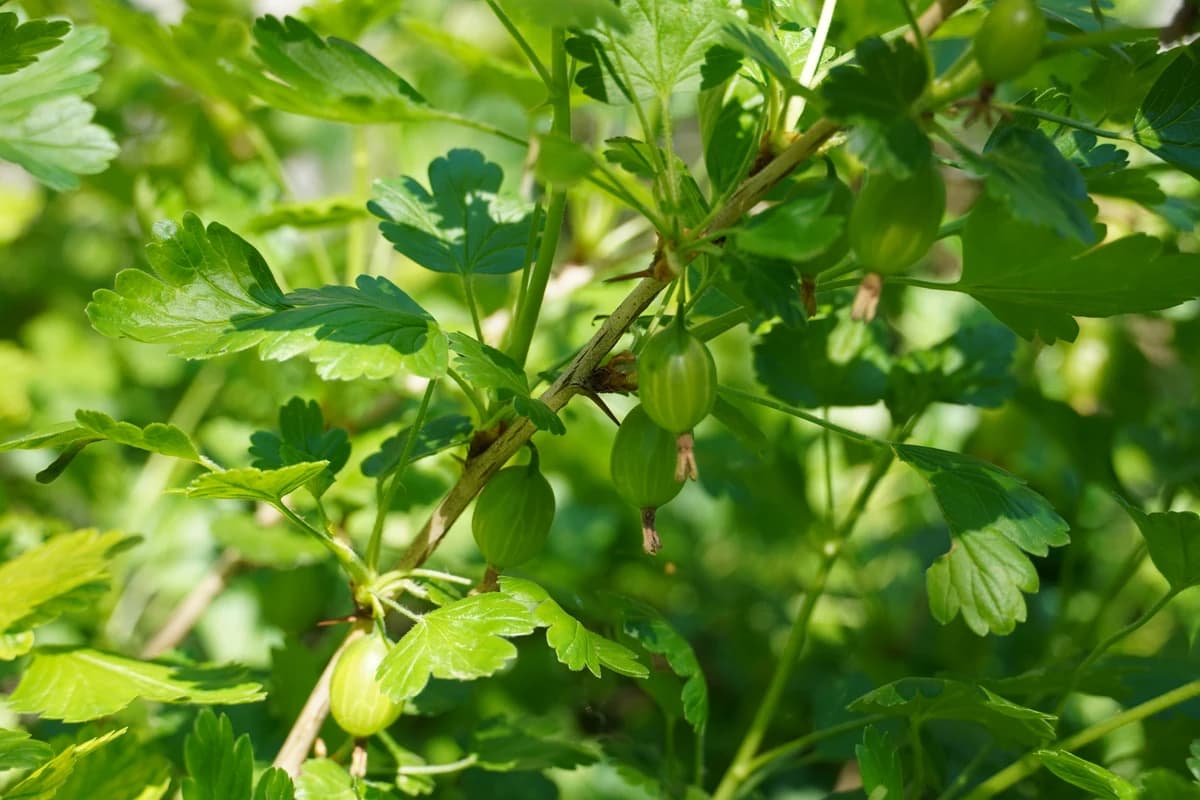
About This Plant
Gooseberry is a cool-climate Ribes shrub grown for tart to sweet translucent berries used fresh, frozen, and in pies, jams, jellies, sauces, and desserts. It is self-fertile, productive in partial shade to full sun, and depends on annual pruning, steady moisture, potassium-aware nutrition, and mildew-resistant cultivars for reliable fruiting.
How to Grow Gooseberry
Learn how to grow Gooseberry from seed to harvest in 730 days. Intermediate difficulty. Complete nutrient guide, pH/EC requirements, and growing conditions for soil & container.
Sources cited: 10.
Nutrient Requirements by Growth Stage
Ribes-specific closed-hydroponic NPK ppm by stage was not found. Use moderate nutrition and soil or substrate testing as the primary rule…
Sign in to view nutrient requirements
A free account unlocks NPK targets for all four growth stages, micronutrient levels, a per-stage nutrient calculator, and the full nutrition guide. Signing up takes one click. Truleaf is a free, non-profit project, and every new account helps it grow. No spam, ever.
Growing Environments
Outdoor soil culture is the primary environment for gooseberry, especially in cool temperate climates. Greenhouse, high tunnel, and container production are plausible for protected or specialty use, but they should mimic cool roots, strong drainage, and open airflow rather than warm water culture…
Temperature
Gooseberry is a cool-climate perennial shrub, not a warm hydroponic annual. Extension guidance places it in cold regions, with many cultivars hardy to very low winter temperatures and needing substantial chilling before budbreak. Use about 5-28 C as the active-growth tolerance band and keep production closer to 15-20 C where fruit quality and mildew management matter. Hot, dry sites reduce performance, so afternoon shade is appropriate in warm climates.
Humidity
No gooseberry-specific relative-humidity target was found, so humidity should be managed around disease risk rather than a narrow crop number. A moderate 45-65% indoor range is a practical compromise, but the stronger evidence is cultural: avoid wet foliage, overhead irrigation, and stagnant canopies because mildew…
Light
Gooseberries crop in full sun to partial shade. Full sun generally gives more fruit, but partial shade is useful in hot regions and can protect early bloom and shallow roots from summer stress…
Airflow
Airflow is a verified management requirement. University guides repeatedly emphasize spacing, pruning, and open canopies so sunlight enters the bush and foliage dries quickly…
Sign in to view environmental requirements
A free account unlocks exact temperature, humidity, light and airflow targets, including germination and growth ranges, DLI, photoperiod and PPFD, plus the full environment guide. Signing up takes one click. Truleaf is a free, non-profit project, and every new account helps it grow. No spam, ever.
Hydroponic System Compatibility
Gooseberry fits soil, raised bed, large container, and substrate-drip systems better than DWC, NFT, ebb-flow, or Kratky. The supporting guides call for moist but not waterlogged soil, drip irrigation, and strong drainage around shallow fibrous roots…
Growing Media
Use fertile, moisture-retentive, well-drained media. Gooseberries perform best in rich loam or amended soil with organic matter and pH near 6.0-7.0, while tolerating some higher pH soils…
Container Specs
Container gooseberries need volume and drainage, not small herb-pot culture. USU notes bushes commonly reach 3-5 ft tall and wide, and spacing guidance of 3-5 ft reflects their mature spread…
Training & Support
Most gooseberries are grown as open bushes and require pruning rather than physical support. Fruit is borne heavily on one-, two-, and three-year-old wood; remove old, weak, or ground-touching canes to keep 9-12 productive canes and reduce disease pressure…
Sign in to view system compatibility
A free account unlocks why each of the six systems fits or fails, plus growing media, container sizes, training methods, companion plants, and the full systems guide. Signing up takes one click. Truleaf is a free, non-profit project, and every new account helps it grow. No spam, ever.
Propagation
Propagate named gooseberry cultivars by cuttings or layering, not seed, because seedlings vary. Gooseberries root from stem cuttings but can be slower than currants; easy cultivars may show roots in 2-3 weeks, while container establishment may take about 8 weeks depending on cultivar and conditions…
Harvesting
Harvest use determines timing. Pick full-sized green gooseberries for pies, jams, jellies, and sauces, or leave fruit until it softens and develops ripe cultivar color for sweeter fresh eating…
Planting Calendar
Plant dormant bare-root or potted gooseberries in very early spring or fall, before active growth where possible. Prune during dormancy in late winter or early spring before bud swell, then monitor insects and diseases during bloom and early fruit sizing…
Common Issues
The main verified problems are powdery mildew, anthracnose or leaf spot, root-rot complexes, imported currant worm, gooseberry fruitworm, aphids, borers, heat or drought stress, and legal or disease concerns around white pine blister rust in some regions. Prevention is mostly cultural: resistant cultivars,…
Get the full science-backed guide
By signing up, you help keep Truleaf free and support the growth of our nonprofit project. Your account unlocks full details for every plant issue—including symptoms, causes, step-by-step solutions, and prevention—plus the month-by-month planting calendar, the complete guide, and all research sources. It only takes one click. No spam, ever.