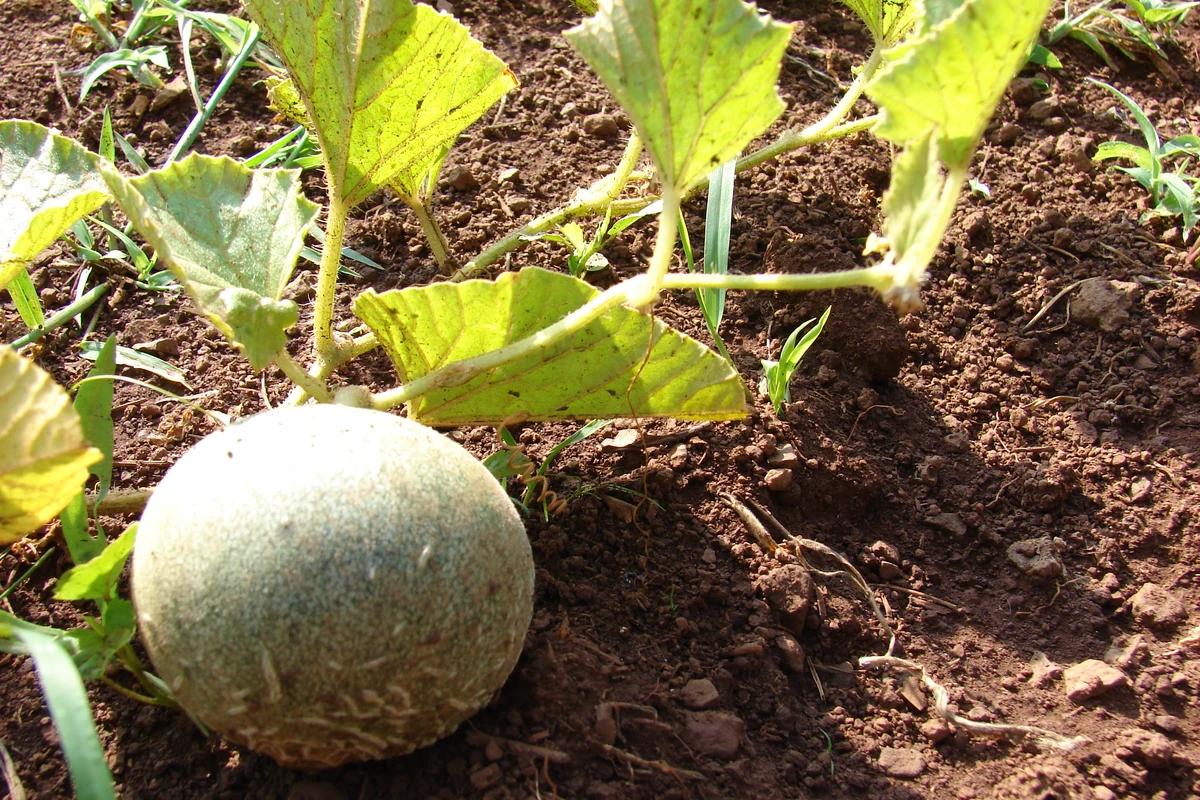
About This Plant
Cantaloupe is a warm-season netted melon grown for aromatic sweet fruit. Research on hydroponic netted melon shows that fruit quality depends on stage-specific nitrogen and potassium management, warm root zones, strong light, pollination, and careful irrigation as fruit ripens.
How to Grow Cantaloupe
Learn how to grow Cantaloupe from seed to harvest in 102 days. Intermediate difficulty. Planting, care, feeding and the right growing conditions.
Sources cited: 12.
Nutrient Requirements by Growth Stage
Use stage-specific nutrition rather than a flat NPK target. The strongest hydroponic netted melon paper used 168 mg/L N, 31 mg/L P, and 195 mg/L K as full-strength solution, then found better fruit quality with reduced N before fruiting and a K increase at pollinated young fruit…
Sign in to view nutrient requirements
A free account unlocks NPK targets for all four growth stages, micronutrient levels, a per-stage nutrient calculator, and the full nutrition guide. Signing up takes one click. Truleaf is a free, non-profit project, and every new account helps it grow. No spam, ever.
Growing Environments
Cantaloupe is well suited to outdoor warm-season production and protected greenhouse or high-tunnel culture when irrigation, fertility, and pollination are actively managed. Ordinary indoor fruiting production is not source-backed: vines need strong light, heat, pollination, root volume, and support…
Temperature
Cantaloupe is a warm-season crop. For seed germination, use 25-30C as the core target; extension sources support warm soil and rapid germination near 30C, while the hydroponic netted melon study held root-zone water at 28-31C with a 30C mean. For post-emergence growth, manage day conditions around 24-30C and ventilate before greenhouse temperatures remain in the mid-30s C. The previous 28-31C growth range is usable for warm protected systems but should not be treated as a universal optimum.
Humidity
Use 50-70% relative humidity as a practical protected-culture band, with about 60% as an operating setpoint rather than a proven biological optimum. Cantaloupe needs enough humidity to prevent transplant stress, but dense, humid canopies increase mildew risk and reduce fruit quality…
Light
The current 16-hour photoperiod is supported by the hydroponic netted melon study, where seedlings received 16 hours of LED light at 300-400 micromol m-2 s-1 before transplanting. The prior DLI and intensity combination was mathematically inconsistent: 350 micromol m-2 s-1 for 16 hours supplies about 20.2 mol m-2 d-1,…
Airflow
Airflow is a disease-management and pollination support factor rather than a precisely quantified cantaloupe nutrient variable. Extension disease guidance links dense, wet canopies with foliar disease pressure, and mildew management depends on spacing, drip irrigation, leaf drying, and preventive scouting…
Sign in to view environmental requirements
A free account unlocks exact temperature, humidity, light and airflow targets, including germination and growth ranges, DLI, photoperiod and PPFD, plus the full environment guide. Signing up takes one click. Truleaf is a free, non-profit project, and every new account helps it grow. No spam, ever.
Hydroponic System Compatibility
Drip-fed substrate systems have the best applied support for cantaloupe because they allow staged fertigation and careful water reduction near ripening. NFT and aerated solution culture are supported by melon research, but full-size fruiting vines need structural support, stable reservoirs, oxygenation, and root-zone…
Growing Media
Outdoors, use warm, fertile, well-drained sandy loam or loam with soil pH near 6.0-6.5. Heavy or wet soils raise disease risk, while very sandy soils need careful irrigation and fertility…
Container Specs
No complete academic or extension source gave a precise final pot volume for mature cantaloupe. The structured 75 L, 45 cm depth, and 60 cm width values should be treated as conservative app guidance for compact or trellised cultivars, not a paper-derived threshold…
Training & Support
Training support is strongly recommended for greenhouse, hydroponic, and container cantaloupe. High-tunnel guidance supports vertical culture with trellis netting or strings, and research netted melon studies pinched vines and maintained one fruit per plant to standardize quality…
Sign in to view system compatibility
A free account unlocks why each of the six systems fits or fails, plus growing media, container sizes, training methods, companion plants, and the full systems guide. Signing up takes one click. Truleaf is a free, non-profit project, and every new account helps it grow. No spam, ever.
Propagation
Propagate cantaloupe from seed. Extension guidance supports sowing 0.5-1 inch deep into warm media, with germination commonly around 7-10 days and broader source ranges of 6-18 days under cooler or variable conditions…
Harvesting
Harvest timing depends on market distance. USU notes cantaloupe are market-ready at half-slip, well-netted, and appropriate background color, while garden guidance often favors full-slip for immediate eating quality…
Planting Calendar
For a temperate Northern Hemisphere schedule, start seed indoors in March-April, transplant or direct sow in May-June after frost danger has passed, and harvest in midsummer through early fall. Field guides emphasize soil warmth more than calendar date: seed will not germinate below about 60F, transplants perform best…
Common Issues
The prior issue list was incomplete. Aphids and whiteflies are verified cucurbit pests, and IPM guidance supports scouting leaf undersides, monitoring protected culture, and avoiding unnecessary pesticide use…
Get the full science-backed guide
By signing up, you help keep Truleaf free and support the growth of our nonprofit project. Your account unlocks full details for every plant issue—including symptoms, causes, step-by-step solutions, and prevention—plus the month-by-month planting calendar, the complete guide, and all research sources. It only takes one click. No spam, ever.