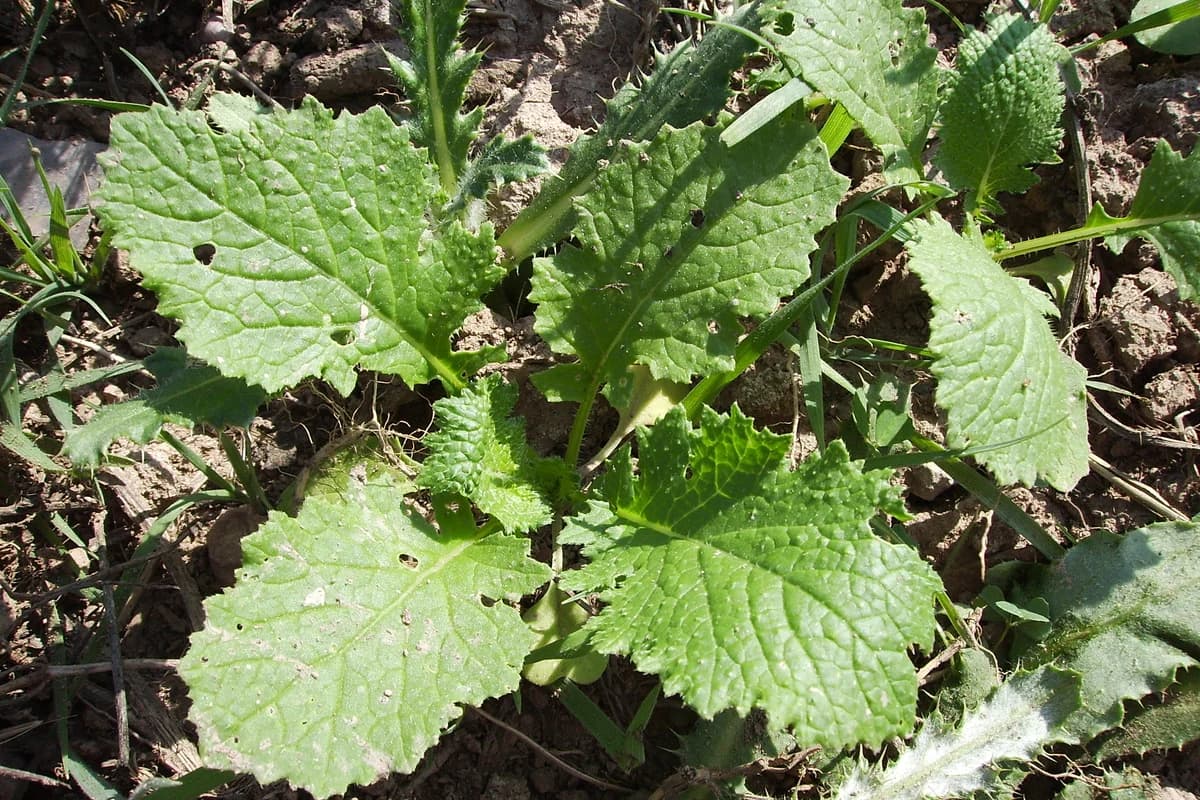
About This Plant
Rapini, also called broccoli rabe or cime di rapa, is a fast cool-season Brassica rapa crop grown for tender leaves, stems, and unopened flower buds. Unlike heading broccoli, it is harvested young, commonly 40-60 days from sowing, before yellow flowers open. It performs best in fertile, moist, well-drained media, full sun to light shade, and cool spring or fall windows. Heat, drought stress, flea beetles, aphids, caterpillars, downy mildew, and black rot are the main production risks.
How to Grow Rapini (Broccoli Rabe)
Learn how to grow Rapini (Broccoli Rabe) from seed to harvest in 50 days. Beginner difficulty. Complete nutrient guide, pH/EC requirements, and growing conditions for hydroponics, soil & greenhouse.
Sources cited: 12.
Nutrient Requirements by Growth Stage
Feed rapini as a fast leafy/bud Brassica, not as a full-size heading broccoli crop. Direct hydroponic evidence in broccoli raab microgreens used a complete nitrate-dominant solution around 105 ppm N, 16 ppm P, 117 ppm K, 86 ppm Ca, 24 ppm Mg, and 31 ppm S at pH 6.5 and EC 1.37…
Sign in to view nutrient requirements
A free account unlocks NPK targets for all four growth stages, micronutrient levels, a per-stage nutrient calculator, and the full nutrition guide. Signing up takes one click. Truleaf is a free, non-profit project, and every new account helps it grow. No spam, ever.
Growing Environments
Rapini can be grown outdoors, in greenhouses, indoors under lights, and in containers. Outdoor crops are easiest in spring and fall, where full sun and cool temperatures align naturally…
Temperature
Rapini is a cool-season Brassica; manage it for quick growth before heat opens the buds. Brassica germination sources support a broad about 4-35C biological range, with practical fast emergence in cool-to-mild conditions; spring and fall plantings are preferred because warm late-spring weather hastens flower opening and quality loss. For controlled growing, target roughly 15-21C day conditions and cooler nights, using the current 18C optimum as a practical center point. Established plants tolerate cool weather, but hard freezes and heat spikes both reduce marketable shoots.
Humidity
No rapini-specific RH trial was found, so humidity should be managed from Brassica disease biology and leafy-green CEA practice. Keep RH moderate, about 50-70%, and prioritize dry leaf surfaces overnight…
Light
Rapini grows in full sun and tolerates light shade, but shade slows maturity and can increase stretch. For indoor production, use a leafy-greens lighting program rather than broccoli-head assumptions: 14-16 hours and about 14-17 mol/m2/day DLI are reasonable starting targets, with the current 350 umol/m2/s PPFD…
Airflow
Airflow is mainly a disease-prevention and gas-exchange control for rapini. Use continuous gentle canopy movement plus greenhouse or tent ventilation; avoid a stagnant, humid canopy because downy mildew, soft rot, and other Brassica diseases spread rapidly when leaves and bud clusters stay wet…
Sign in to view environmental requirements
A free account unlocks exact temperature, humidity, light and airflow targets, including germination and growth ranges, DLI, photoperiod and PPFD, plus the full environment guide. Signing up takes one click. Truleaf is a free, non-profit project, and every new account helps it grow. No spam, ever.
Hydroponic System Compatibility
Rapini is compatible with several hydroponic systems because it is compact, short-cycle, and harvested as shoots rather than heavy heads. NFT and DWC are the best fits for leafy-green production; DWC is forgiving if aerated, while NFT saves solution but is more vulnerable to pump interruptions…
Growing Media
Use clean, well-drained media that hold moisture without staying saturated. NC State describes rapini as preferring fertile, moist, well-drained soil with high organic matter…
Container Specs
Rapini is container-suitable because mature plants are usually only 25-38 cm tall at harvest. Use a container at least 20 cm deep, with drainage holes and enough surface area to thin plants to about 10-15 cm spacing…
Training & Support
Rapini needs no trellis, cage, stake, pruning system, or formal training. The crop is harvested young as upright tender shoots and leaves, usually at 10-15 inches tall…
Sign in to view system compatibility
A free account unlocks why each of the six systems fits or fails, plus growing media, container sizes, training methods, companion plants, and the full systems guide. Signing up takes one click. Truleaf is a free, non-profit project, and every new account helps it grow. No spam, ever.
Propagation
Seed propagation is the standard method. Sow 6-13 mm deep, either direct in early spring or late summer, or start plugs for transplanting where an earlier protected crop is needed…
Harvesting
Harvest rapini promptly while stems are succulent and buds are closed. Purdue and UF/IFAS both describe harvest at 10-15 inches tall before flower buds open; cut at ground level or where the stem changes from tough to tender…
Planting Calendar
Use cool-season windows rather than fixed calendar dates. In temperate gardens, sow or transplant for an early spring crop 4-6 weeks before the average last frost, and sow again in mid-to-late summer for a fall crop…
Common Issues
The existing issues are real but should be treated as core Brassica coverage, not an exhaustive list. Arizona documents flea beetles, aphids, cabbage maggots, diamondback moths, loopers, imported cabbageworms, downy mildew, wirestem, black rot, and soft rot in broccoli raab production…
Get the full science-backed guide
By signing up, you help keep Truleaf free and support the growth of our nonprofit project. Your account unlocks full details for every plant issue—including symptoms, causes, step-by-step solutions, and prevention—plus the month-by-month planting calendar, the complete guide, and all research sources. It only takes one click. No spam, ever.