Overwinter Rosemary: Why It Really Dies and How to Save It
Rosemary is only reliably hardy to about zone 8, yet the thermometer is rarely what kills it. This guide covers rosemary's real cold limits, why freeze-desiccation and wet roots do more damage than raw cold, how to pick and protect cold-hardy varieties, mulching and wrapping in-ground plants, and overwintering in a container indoors — grounded in peer-reviewed plant physiology and land-grant extension guidance.
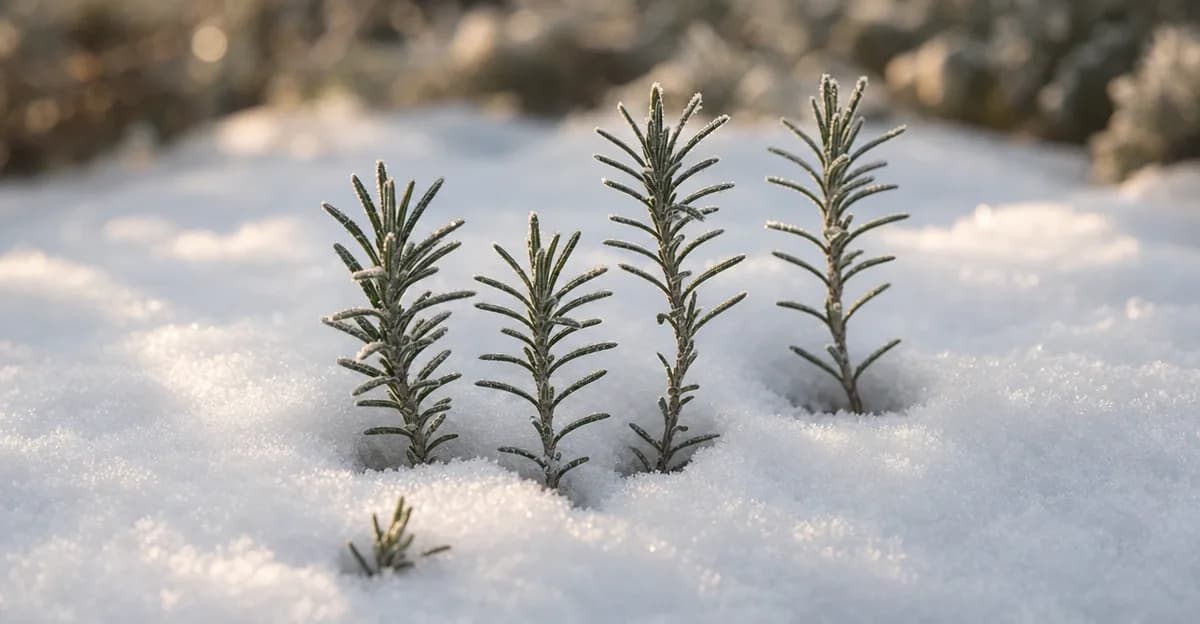
Rosemary is an evergreen Mediterranean subshrub, and that origin story explains both its charm and its problem. It keeps its aromatic needle-like leaves all year, but it evolved in a mild climate — so in much of the world it sails through summer and then quietly dies over its first hard winter. If you have lost a rosemary before, you are in good company, and the reason is usually more interesting than "it got too cold."
This guide walks through what it actually takes to carry rosemary from fall into spring: how cold your plant can really take, why the thermometer reading is rarely the whole story, how to choose and protect a plant left outdoors, and how to overwinter one indoors when your winters are genuinely too cold to risk it.
How cold is too cold? Rosemary's real hardiness limits
Start with the honest baseline. Across independent university extension programs, standard rosemary is rated as reliably perennial only in USDA hardiness zone 8 and warmer — roughly a coldest-winter low of 10–20 °F (−12 to −7 °C). Below that, survival outdoors gets progressively less certain. University of Illinois Extension puts it plainly: rosemary is "not reliably hardy in zone 6 or colder," and in those zones it is "best overwintered indoors." Cold-climate land-grant guidance from the Upper Midwest agrees, treating rosemary as a tender perennial that is brought inside or grown as an annual.
That said, not all rosemary is equally tender. Certain cultivars have a reputation for taking more cold. Illinois Extension singles out 'Arp' as "one of the more cold-tolerant varieties," pushing survival to perhaps zone 6. Horticultural sources go further and attach specific numbers — 'Arp' reported to survive around −10 °F (−23 °C), 'Madalene Hill' (also sold as 'Hill Hardy') around 0 °F (−18 °C), and 'Athens Blue Spire' around −5 to −10 °F.
Treat those cultivar temperatures as reputation, not guarantee. They come from horticultural media rather than controlled cold-hardiness trials, so they are best read as "reported to survive around" a given temperature — not as hard minimums you can bank on in an exposed garden. The reliable takeaway is the direction, not the decimal: 'Arp' and a handful of named selections are meaningfully hardier than an unnamed garden-center rosemary, but no rosemary reliably shrugs off a hard freeze with no protection at all. If you are near the edge of zone 6–8, choosing a cold-hardy cultivar buys you a margin; it does not make protection optional.
Cold-hardy cultivar selector
If you are gardening at the cold edge — roughly zone 6 to 7 — the cultivar you plant is one of the few levers that meaningfully shifts your odds. The table below collects the named selections with a reputation for extra hardiness, the temperatures horticultural sources attach to them, and — just as important — the caveat that keeps you honest about what those numbers mean.
| Cultivar | Reported cold rating | Roughly implies | How to read it |
|---|---|---|---|
| 'Arp' | ~ −10 °F (−23 °C); extension calls it one of the more cold-tolerant, to about zone 6 | Zone 6 with protection | The most consistently recommended hardy pick — the closest thing to a safe bet north of zone 8 |
| 'Madalene Hill' (also sold as 'Hill Hardy') | ~ 0 °F (−18 °C) | Zone 7, edge of 6 | A common upright alternative to 'Arp' |
| 'Athens Blue Spire' | ~ −5 to −10 °F (−21 to −23 °C) | Zone 6–7 | A newer selection in the same hardy tier |
Three things turn this table into a decision:
- Buy the name, not the shelf tag. An unlabeled "rosemary" from a garden center is genetically a coin toss and should be treated as tender. If hardiness matters, buy a specifically named cultivar from a source that stands behind the label.
- The numbers are reputations, not ratings. As the main guide notes, these figures come from horticultural media rather than controlled cold-hardiness trials — read every one as "reported to survive around," and give yourself a wide margin.
- A hardy cultivar earns you a margin, not a pass. Even 'Arp' wants the mulch-wrap-microclimate treatment below at the cold edge. Genetics move the odds; they do not replace protection.
Why rosemary dies in winter — and it's usually not the cold you think
Here is the counterintuitive heart of overwintering. Most winter-killed rosemary is not simply frozen to death at some magic temperature. Two subtler mechanisms do most of the damage, and understanding them changes how you protect the plant.
Freeze-desiccation — drying out while frozen. When temperatures drop below freezing, ice forms in the spaces between cells and pulls water out of the cells themselves. This cellular dehydration — not the cold number alone — is a primary mechanism of freezing injury in plant tissue. Rosemary is especially exposed to it because it is evergreen: it keeps its leaves through winter and keeps losing water vapor from them, even on cold, bright, windy days. When the roots are cold or frozen and cannot pull replacement water from the soil, the foliage desiccates. Rosemary-specific research confirms that water relations govern the plant's survival under stress, which is exactly why a green, leafy evergreen can "burn" and die in winter without the soil ever reaching a dramatic low.
Duration matters as much as the low. A brief dip to a cold temperature is very different from being held frozen for days. Controlled freezing work shows that prolonged freezing at a given sub-zero temperature causes greater and more irreversible injury than a short exposure to the same temperature. In practice, a long cold snap that keeps your plant frozen for a week is more lethal than a single frosty night at the same reading — a reason the nominal "minimum temperature" a variety tolerates is only part of the picture.
Wet, cold roots are a killer of their own. Rosemary has a well-documented low tolerance for wet soil and no tolerance for "wet feet." Waterlogged winter soil that then freezes is a particularly deadly combination, and in mild maritime climates a soggy winter root zone kills more rosemary than cold air does. And roots are the vulnerable end of the plant regardless: they are markedly less frost-hardy than the shoots above them, so a crown and foliage can survive conditions the roots cannot.
The through-line: winter kill in rosemary is mostly a story about water and roots, not just the air temperature. That reframes every protection step below.
Container vs. in-ground: the pot is the colder root zone
There is a widespread assumption that a potted plant is somehow better protected from cold than one in the ground. For roots, the opposite is true — and it is worth understanding why before you decide where your rosemary spends the winter.
Roots are far less frost-hardy than the shoots above them, and root survival depends heavily on the insulation the surrounding soil provides. The frost-hardiness literature specifically flags loss of soil insulation — exposed substrate, thin snow cover — as a driver of increased root freezing injury. A plant in the open ground has the entire thermal mass of the earth buffering its root zone. A plant in a pot does not: the root ball is exposed to cold air on every side, with only a thin wall between it and the wind, so pot roots reach lethal cold faster and stay there.
So why grow rosemary in a container at all? Because a pot is portable, not warm. Its real advantage is that you can pick it up and move it — onto a sheltered porch, into a garage, or indoors — when hard cold arrives. Extension guidance recommends treating rosemary as a container plant precisely for this reason, and advises pulling pots into protection whenever temperatures drop into the low 20s °F. If you leave a potted rosemary outdoors and unprotected through a real freeze, you have given it the coldest possible root environment, not the safest one.
Harden it off: why abrupt transitions kill
Plants do not become cold-tough overnight; they acclimate into it. Rosemary is an evergreen subshrub, so the acclimation logic that governs other evergreens applies: cold hardiness develops in autumn in response to the combination of falling temperatures, shortening days, and changes in light quality — not low temperature alone. That process drives the plant to slow its growth and build freezing tolerance gradually. Tissue that has not gone through it — a plant pushed into soft new growth, or one yanked from a warm windowsill straight into a hard frost — is far more freeze-susceptible than the same plant would be after a proper hardening period.
Two practical rules follow directly:
- Don't force soft late-season growth. Anything that pushes tender new shoots late in the season leaves the plant with unhardened tissue heading into cold — soft growth cannot acclimate in time. This is a matter of timing, letting the plant wind down naturally as days shorten, not a feeding schedule.
- Transition gradually, in both directions. Rosemary-specific work shows that preconditioning — gradual acclimation to changing conditions — improves survival and cuts water loss. Move a plant destined for indoors before the first hard frost, not after, and reintroduce it to the outdoors gradually in spring rather than shocking it with sudden full sun and wind.
Protecting rosemary left in the ground: mulch, wrap, and microclimate
If you are in roughly zone 6–8 and want to try overwintering rosemary outdoors, the goal of every technique below is the same: restore insulation to the roots and cut the wind-and-sun desiccation of the foliage.
Mulch the root zone. Because soil insulation is what stands between roots and lethal cold, a thick mulch layer over the root zone and crown restores the insulating blanket that snow or extra ground mass would otherwise provide. This is the single most mechanism-aligned thing you can do for an in-ground plant.
Wrap the foliage. Remember that much of winter damage is desiccation driven by wind and sun on evergreen leaves. A burlap wrap or windbreak shields the foliage from drying wind and harsh winter sun, directly reducing that water loss — this is the same reasoning that makes wind exposure so damaging in the first place. Extension and horticultural guidance consistently pair mulching the base with wrapping or sheltering the top for at-risk rosemary.
Use your microclimate. Where you plant matters. A spot against a south-facing wall, out of the prevailing wind, is warmer and more sheltered than open ground. Horticultural guidance suggests such siting can effectively "bump up" your zone by roughly half a zone to a full zone — enough, sometimes, to be the difference between survival and loss. Treat that as a helpful rule of thumb rather than a precise number.
Get the drainage right first. None of the above compensates for soggy roots. Rosemary needs free-draining soil and a sheltered, sunny spot; wet winter soil is a bigger killer than cold in mild climates. Plant in gritty, well-drained ground (or raise the bed), and never leave rosemary sitting in waterlogged winter soil.
In-ground winter protection: the build, step by step
The section above explains why mulch, wrap, and microclimate work. This is the how — the sequence, materials, and timing that turn those principles into an actual winter setup. The order matters, because protection applied at the wrong moment does little, or even backfires.
1. Time it to the plant's own acclimation. Do not wrap or heavily mulch while the weather is still mild. Rosemary builds its own freezing tolerance through autumn in response to falling temperatures and shortening days, and it needs to feel that cooling to harden off. Let the plant acclimate through the first light frosts, then add protection as the first hard freeze approaches — not in early fall.
2. Get drainage right before anything else. No wrap saves a plant sitting in waterlogged, freezing soil. If your site holds water, this is the season's real work: plant in gritty, free-draining ground or a raised bed. Wet-then-frozen roots kill more rosemary in mild climates than cold air does.
3. Mulch the root zone deeply. Because soil insulation is the single thing standing between roots and lethal cold, a thick layer of a loose, airy mulch — straw, shredded leaves, pine boughs — over the root zone and crown rebuilds the insulating blanket that reliable snow cover would otherwise provide. Keep it loose rather than packed and soggy; the goal is trapped air, not a wet mat against the stems.
4. Wrap the top against wind and sun, not against cold. The foliage damage is desiccation — water pulled from evergreen leaves faster than frozen roots can replace it. A burlap screen, or a burlap-wrapped frame on the windward and south sides, cuts the drying wind and the harsh low-angle sun that drive that loss. Use breathable burlap, never sealed plastic against the foliage: plastic traps moisture, bakes the plant on sunny days, and invites rot.
5. Vent on the thaw, unwrap in stages. During extended mild spells, loosen the wrap so trapped moisture can escape. In spring, remove protection gradually as the hard-freeze risk passes — the same acclimation logic runs in reverse, and a plant unwrapped straight into sudden sun and wind can scorch.
Done in this order, the setup restores exactly what the plant is missing at the cold edge: insulated roots and sheltered foliage, over the drainage that makes both survivable.
Overwintering rosemary indoors: the reliable option for cold zones
If you garden in zone 6 or colder, indoors is the dependable answer — extension programs across cold regions converge on "bring it inside" as the strategy that actually works. But be honest that indoors is reliable, not effortless: NC State Extension notes rosemary "can be difficult to overwinter indoors," and it fails in a few predictable ways. Manage these and it comes through:
- Give it a cool, bright spot. Rosemary wants "a cool (even cold) sunny location where the humidity is high" — a bright, unheated-but-frost-free room is closer to ideal than a warm, dim living room. The most common indoor failure is simply too little light in a too-warm, too-dry room.
- Water sparingly to avoid root rot. Indoor rosemary needs far less water than it did outside in summer. Overwatering a plant in cool, low-evaporation indoor conditions invites root rot — consistent with rosemary's documented intolerance of wet roots. Let the top of the soil dry between drinks.
- Keep the air moving to avoid mildew. Still, stagnant indoor air is where powdery mildew shows up on rosemary. Some gentle air circulation helps keep the foliage healthy through a long indoor winter.
- Start with a container, not a dug-up garden plant. Rosemary that has grown in the ground "does not transplant very well" when dug up to move indoors, so the smoother path is to keep the plant you intend to overwinter in a pot from the start.
A quick decision guide
Use this to decide your rosemary's winter strategy at a glance:
| Your winter zone | Recommended strategy |
|---|---|
| Zone 8 and warmer | Leave rosemary in the ground; ensure free-draining soil and a sheltered, sunny site. Little to no protection needed in a typical winter. |
| Zone 6–7 | Choose a cold-hardy cultivar (e.g. 'Arp'), plant in a warm microclimate (south wall, out of the wind), mulch the roots and wrap the foliage — or grow in a pot and move it to shelter for hard freezes. |
| Zone 5 and colder | Grow in a container and overwinter indoors in a cool, bright, humid spot; water sparingly and keep air moving. Treating it as a tender perennial is the reliable choice. |
Whatever your zone, the two ideas that matter most are the same: protect the roots (insulation and drainage) and reduce water loss from the evergreen foliage (wind shelter, wrapping, or a move indoors). Rosemary that dies in winter has almost always lost that battle before the thermometer ever hit its supposed minimum.
Winter-damage triage: is it dead, and can you save it?
A rosemary that looks dead in the depths of winter is often not — and one that looks fine can already be lost at the roots. Before you pull anything, work through this triage in late winter to early spring, because the recovery move depends entirely on which failure you are looking at.
First, don't rush the verdict. Browned foliage in midwinter is not proof of death. Wait until spring warms before deciding; many desiccated-looking plants push new growth from wood that still held life.
Then read the signs:
| What you see | Most likely cause | How to confirm | What to do |
|---|---|---|---|
| Needles brown/grey and crispy, but stems still bend and show green under a scratched sliver of bark | Freeze-desiccation of the foliage — the leaves dried out; the plant may well be alive | Scratch a stem with a thumbnail: green, moist tissue underneath means living wood | Wait for spring, then cut back to green, living wood and let it reflush; shelter the regrowth from wind |
| Stems snap dry and brittle with no green under the bark, all the way to the base | Wood killed through — that section is dead | Scratch-test progressively lower to find where green tissue starts, if anywhere | Cut back to living tissue; if none survives above soil, watch the crown for a base resprout before giving up |
| Base soft, blackened, or foul-smelling; foliage collapses despite mild weather | Root rot from wet, cold soil — not a cold-air problem at all | Ease the plant up: healthy roots are firm and pale, rotted roots dark and mushy | Usually unrecoverable; the lesson is sharper drainage and sparing winter water next time, not more cold protection |
| Whole plant firm and green but simply hasn't grown | Alive and dormant | None needed — new growth confirms it | Nothing; resume normal care as it wakes |
The recovery playbook, once you've diagnosed it:
- Cut back to life, not by the calendar. Prune only after new growth or the scratch test shows where living wood begins — cutting a dormant-but-alive plant too early removes tissue it could have reflushed from.
- Fix the cause you actually found. Desiccation says more wind shelter next winter; root rot says sharper drainage and less water — never more of the wrong protection.
- Reintroduce gradually. A plant that overwintered under wrap or indoors is unacclimated to full sun and wind, so harden it back off in stages rather than shocking it — the same acclimation logic in reverse.
The pattern under all four rows is the one from the top of this guide: winter loss in rosemary is a story about water and roots. Diagnose which of the two failed, and you will know both whether to keep the plant and how to keep the next one alive.
Where this fits with the rest of your grow
Winter survival is just one chapter of keeping a rosemary thriving year-round. For planting, siting, watering, and harvest through the rest of the year, pair this with the full rosemary plant guide. The core lesson here carries over: rosemary is a tough, drought-adapted Mediterranean plant that asks for sharp drainage and airflow more than it asks for coddling — get its roots and its water right, and getting it through winter becomes far more forgiving.