Hydroponic Black Pepper: Best DWC-to-Drip System
Can you grow black pepper hydroponically? Yes, but Piper nigrum needs a perennial vine setup, warm root zone, drip or DWC strategy, and careful disease prevention.
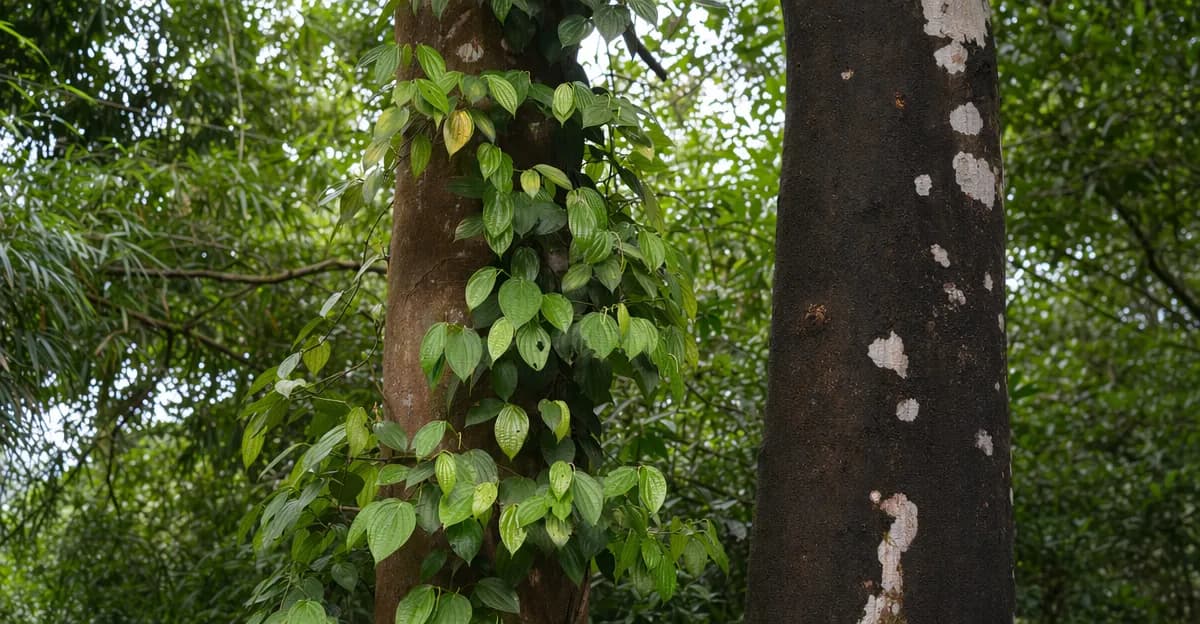
Quick answer: Yes, you can grow hydroponic black pepper, but treat Piper nigrum as a tropical perennial vine, not as a short-cycle lettuce or Capsicum pepper. Start rooted cuttings in Deep Water Culture (DWC) or an ebb and flow tray, then move mature vines into a drip system with coco coir and perlite. Keep pH at 5.5-6.5, EC near 1.0-1.5 in vegetative growth and 1.2-1.8 in flowering and fruiting, and give the vine warm air, high humidity, strong airflow, and a sturdy trellis.
That "yes" comes with a big caveat. Black pepper is slow. A cutting may need three to four years before meaningful flowering, and the best harvests come later. If you want fast hydroponic wins, grow basil, lettuce, or strawberries first. If you want a rare spice crop and you are willing to manage it like a long-term houseplant or greenhouse vine, black pepper is one of the more interesting hydroponic challenges.
Can You Grow Black Pepper Hydroponically?
Black pepper can grow without soil. The strongest direct evidence is a 2021 study in the Borneo Journal of Resource Science and Technology, where researchers produced Piper nigrum cv. 'Kuching' rootstock in a DWC hydroponic system using Hoagland solution, with potassium silicate and salicylic acid treatments improving root initiation in some treatments.
That study matters because it confirms the plant can root and establish in water culture. It does not mean a small countertop system can carry a mature peppercorn vine for years. The crop changes the design problem:
| Crop trait | What it means for hydroponics |
|---|---|
| Woody climbing vine | Needs a trellis, moss pole, or fixed vertical support |
| Multi-year production cycle | Needs durable parts, service access, and long-term root space |
| Adventitious roots at nodes | Can grip supports but also create dense root mass over time |
| Tropical humidity demand | Needs 60-90% relative humidity with airflow, not stagnant wet air |
| Phytophthora sensitivity | Needs drainage, oxygen, sanitation, and careful reservoir temperature |
The easiest way to think about hydroponic black pepper is this: use DWC as a nursery tool and drip as the long-term home.
The Best Hydroponic Systems for Black Pepper
Drip System for Mature Vines
A drip system is the best hydroponic setup for mature black pepper. Use a large container, coco coir plus perlite, and one or two drip emitters that deliver nutrient solution near the root zone. Virginia Cooperative Extension recommends media systems for tall or vining hydroponic crops because they need substantial root support and trellising, not just a shallow channel of moving water.
For black pepper, this usually means:
- A 19 L (5 gal) container for a young vine
- A 38-76 L (10-20 gal) container for long-term fruiting
- A 60:40 or 70:30 coco coir to perlite mix
- A 1.5-3 m support pole or trellis
- Drip cycles that keep the root zone evenly moist but never saturated
- Runoff or recirculation access so you can measure pH and EC
Drip is also more forgiving than DWC once the vine gets woody. The growing medium buffers short interruptions, the crown stays drier, and you can inspect or replace irrigation lines without lifting a mature vine out of a bucket.
DWC for Young Plants and Rootstock Trials
Deep Water Culture is useful for rooted cuttings, nursery plants, and experiments. It keeps the root system visible, makes nutrient changes simple, and has direct support from the 2021 Piper nigrum rootstock study.
Use DWC conservatively:
- Keep young plants in DWC during establishment, not as the default lifetime system.
- Use strong aeration with an air stone.
- Keep the crown above the waterline.
- Leave an air gap between the net pot and solution surface.
- Move the vine before the root mass becomes hard to service.
The risk is not that DWC "doesn't work." The risk is that a mature black pepper vine becomes too large, too long-lived, and too disease-sensitive for a small static reservoir. DWC can get you started. Drip is where most serious growers should finish.
Ebb and Flow for Container-Style Starts
Ebb and flow can work for young black pepper plants in deep pots filled with clay pebbles, coco coir, perlite, or a mixed inert medium. The flood cycle wets the root zone, then the drain cycle pulls air back into the medium.
This system is most useful if you already run ebb and flow benches for tropical plants. Keep flood events short, avoid burying the stem base in wet media, and make sure the tray drains fully. Black pepper does not forgive a soggy collar.
Why NFT Is Usually a Poor Fit
Nutrient Film Technique (NFT) is excellent for many leafy greens and herbs, but it is a poor match for black pepper. NFT channels are shallow, depend on constant flow, and are easiest to clean when crops finish quickly. Black pepper is woody, perennial, and root-heavy.
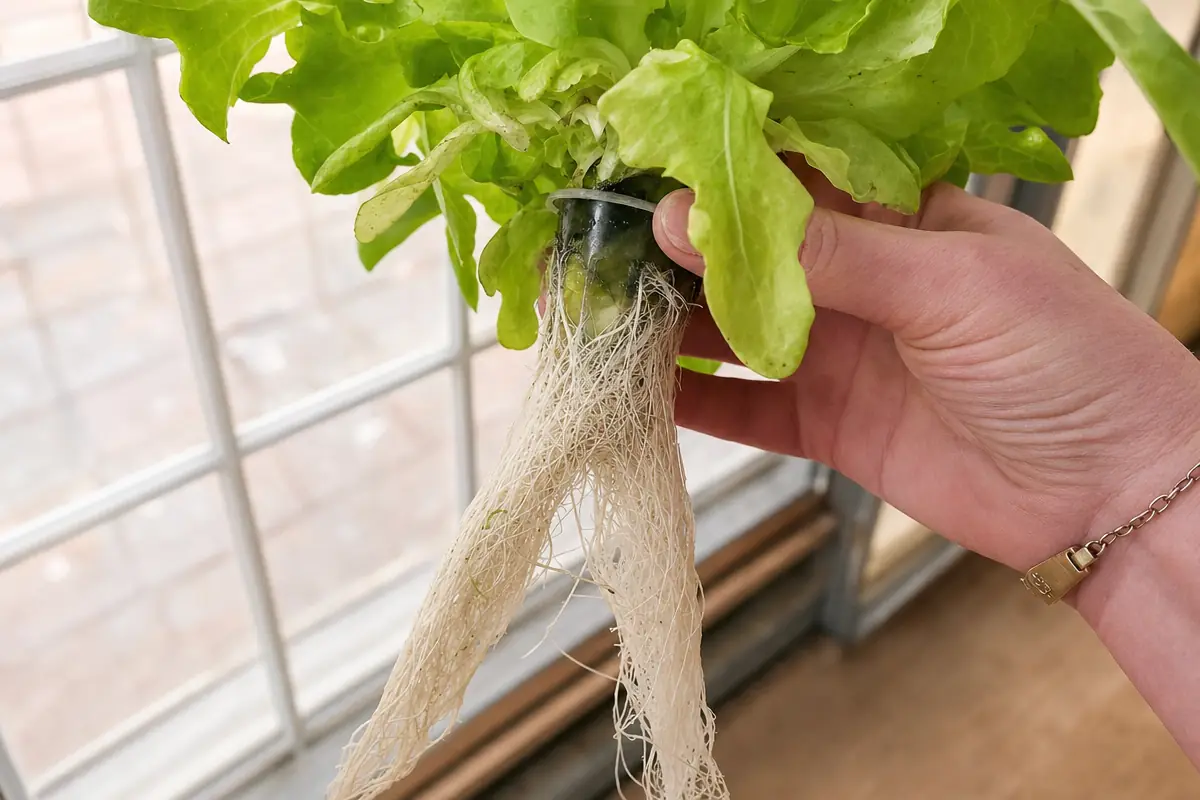
The practical problem is serviceability. A mature black pepper root mass can block a channel, trap debris, and make sanitation difficult. The plant also needs a permanent trellis, which does not pair well with a removable NFT lid. Use NFT for lettuce, basil, and small herbs. Give Piper nigrum a container-based system.
Hydroponic Nutrient Targets
The Truleaf validated plant data for black pepper uses a stage-based nutrient plan derived from Hoagland-style hydroponics, black pepper nutrient management references, and the DWC rootstock study. Start gentle, then raise potassium as the vine matures.
| Stage | EC | pH | Nitrogen | Phosphorus | Potassium | Calcium | Magnesium |
|---|---|---|---|---|---|---|---|
| Seedling or new cutting | 0.5-1.0 | 5.5-6.5 | 105 ppm | 16 ppm | 120 ppm | 100 ppm | 24 ppm |
| Vegetative vine | 1.0-1.5 | 5.5-6.5 | 175 ppm | 31 ppm | 200 ppm | 160 ppm | 40 ppm |
| Flowering | 1.2-1.8 | 5.5-6.5 | 150 ppm | 40 ppm | 235 ppm | 160 ppm | 40 ppm |
| Fruiting | 1.2-1.8 | 5.5-6.5 | 120 ppm | 40 ppm | 280 ppm | 160 ppm | 40 ppm |
For most growers, the vegetative target of about 175-31-200 ppm N-P-K is the everyday formula. Shift toward higher potassium only when the vine is mature enough to flower and hold spikes.
Two points matter more than chasing a perfect recipe:
- Keep pH stable. Oklahoma State University Extension notes that nutrient solution pH affects nutrient availability in soilless culture, and recommends a mildly acidic nutrient solution so the root environment stays near the uptake range.
- Monitor the actual root zone. University of Missouri Extension points out that pH and EC in inert media can track the nutrient solution, but organic media can drift. If you use coco coir, test runoff or use a pour-through method rather than trusting the reservoir alone.
For calculator-based mixing, use the Truleaf nutrient manager and set the target by growth stage. If you are new to EC and pH, start with the hydroponic nutrients for beginners pathway before attempting a multi-year spice crop.
Crop-Stage Nutrient Schedule for Hydroponic Piper nigrum
Use this as a starting schedule for rooted cuttings or nursery plants:
| Month or stage | Target | Notes |
|---|---|---|
| Weeks 1-4 after rooting | EC 0.6-0.8, pH 5.8-6.2 | Keep light moderate and humidity high while roots adapt |
| Months 2-6 | EC 1.0-1.3 | Build vine length, leaf area, and support attachment |
| Months 6-18 | EC 1.2-1.5 | Prune lightly to encourage branching; avoid excess nitrogen |
| Mature vegetative flush | EC 1.3-1.5 | Use the 175-31-200 ppm N-P-K target |
| Flowering and berry set | EC 1.4-1.8 | Increase potassium while keeping calcium and magnesium steady |
| Post-harvest maintenance | EC 1.0-1.3 | Reduce feed, clean emitters, and inspect roots and stem base |
Refresh small recirculating reservoirs every 7-14 days. In drip-to-waste systems, check runoff EC weekly. If runoff EC rises more than 0.5 mS/cm above the feed solution, flush with half-strength nutrient solution and reduce frequency or concentration.
Setting Up the Grow Environment
Black pepper is native to humid tropical regions and performs best when warmth, humidity, and filtered light stay consistent. Missouri Botanical Garden describes Piper nigrum as a tropical vine best grown in bright indirect sun or sun-dappled conditions, with support and good drainage.
Use these targets:
| Factor | Target |
|---|---|
| Air temperature | 24-29 degrees C (75-84 degrees F) for steady growth |
| Minimum night temperature | Keep above 15-18 degrees C (59-64 degrees F) |
| Humidity | 70-85% for indoor or greenhouse growing |
| Light | Bright filtered light; about 100-200 umol/m2/s PPFD |
| Photoperiod | About 12 hours |
| Airflow | Gentle continuous movement, about 0.3-0.8 m/s |
| Reservoir temperature | Ideally below 24 degrees C (75 degrees F) |
Humidity is where many indoor growers get the wrong idea. Black pepper likes humid air, but disease likes stagnant wet air. Use a humidifier and oscillating fan together. Do not rely on frequent misting, especially in a hydroponic setup where the root zone is already moist.
Support is not optional. Install the pole or trellis before the vine gets large. A moss pole works for display plants, but a rigid trellis or bamboo frame is easier for a long-term hydroponic grow.
Starting Plants for Hydroponics
Start with a rooted cutting or a healthy nursery plant. Seeds are slow and unreliable unless they are fresh, unprocessed seed from a living plant. Dried peppercorns from the spice aisle are not a practical seed source because black pepper processing usually destroys viability.
If you start from a rooted cutting:
- Rinse the roots gently if the cutting was started in soil.
- Remove dead roots, peat plugs, or compacted media.
- Dip the clean roots in plain water before moving to hydroponic media.
- Place the cutting in clay pebbles, perlite, or coco-perlite.
- Run a mild nutrient solution at EC 0.5-1.0 for the first few weeks.
- Keep humidity high, light moderate, and airflow gentle.
If you buy a potted plant, quarantine it for two to three weeks before moving it into a shared hydroponic area. Scale insects, mealybugs, fungus gnats, and soil-borne pathogens are much easier to catch before the plant joins a reservoir or recirculating bench.
Disease Prevention in Soilless Black Pepper
The main reason to be cautious with hydroponic black pepper is disease pressure at the root and crown. Foot rot, often called quick wilt, is the most serious black pepper disease. Research has identified Phytophthora capsici and Phytophthora tropicalis as important causal species in black pepper foot rot, and another review describes biological control with Trichoderma and Pseudomonas as a promising part of integrated management.
Hydroponics can reduce some soil risks, but it can also spread waterborne problems quickly if sanitation is weak. Build the system around prevention:
- Keep the stem base above saturated media.
- Use sterile or fresh growing medium.
- Clean reservoirs and lines before planting.
- Do not share tools between sick and healthy plants without sanitizing them.
- Maintain strong aeration in DWC.
- Keep reservoirs cool enough to hold oxygen.
- Avoid standing water around the crown.
- Remove badly infected vines rather than trying to nurse them in a shared system.
Root-Zone Disease Prevention Protocol
Use this checklist every week:
| Check | Healthy sign | Action if off target |
|---|---|---|
| Root color | White to cream roots, no sour smell | Trim dead roots only if healthy roots remain; refresh solution |
| Crown moisture | Stem base dry between irrigation events | Lower flood height or move emitters away from stem |
| Reservoir temperature | Below 24 degrees C (75 degrees F) | Shade reservoir, increase volume, or add cooling |
| Dissolved oxygen | Strong bubbling in DWC | Clean air stone, increase pump size, or add circulation |
| Runoff EC | Similar to feed solution | Flush with half-strength solution if salts are rising |
| Leaves | Firm, green, no rapid wilt | Inspect roots and stem base immediately |
Beneficial microbes can help, but they are not a substitute for oxygen and drainage. If you run a sterile reservoir, stay consistent. If you run a biologically active system, avoid oxidizers that wipe out the organisms you just added.
Timeline and Yield Expectations
Black pepper is not a fast harvest crop. Use this timeline:
| Time from cutting | What to expect |
|---|---|
| 0-2 months | Root recovery and new leaf growth |
| 2-12 months | Vine training, support attachment, and canopy building |
| Year 2 | Larger root system and stronger lateral branching |
| Years 3-4 | First realistic flowering window from cuttings |
| Year 5 and beyond | More reliable flowering and stronger harvest potential |
Validated black pepper data puts mature field yields around 1-5 kg dried peppercorns per plant per year, with young container or hydroponic vines more realistically around 0.2-0.5 kg at first harvest under good conditions. The ICAR-IISR package-of-practices planning figure puts dry recovery from fresh berries at about 33-37%, while a genotype study in Scientia Horticulturae found a wider 26.30-43.24% pericarp dry-recovery range across 18 black pepper genotypes. Use 33-37% for ordinary planning, but expect cultivar and processing method to move the actual recovery.
That is not a reason to avoid the crop. It is a reason to grow it for the right purpose. Hydroponic black pepper is best for plant collectors, tropical greenhouse growers, school demonstration systems, specialty spice projects, and experienced indoor growers who want a long-term crop.
DWC vs Drip: The Practical Decision
Use DWC if you are rooting cuttings, testing nutrient response, or growing a young plant for a limited period. Choose drip if you want a fruiting vine.
| Goal | Best system | Why |
|---|---|---|
| Root cuttings | DWC or aerated propagation bin | Easy to observe roots and change solution |
| Grow a display vine for one season | DWC or ebb and flow | Manageable while the plant is small |
| Keep a vine for multiple years | Drip system | Better root support and easier trellising |
| Push toward peppercorn harvest | Drip in coco-perlite | Best balance of moisture, oxygen, and support |
| Use a countertop herb garden | Not recommended | Too small, too wet, and too short-lived |
| Use NFT channels | Not recommended | Root clogging and trellis service problems |
The winning setup is not fancy. It is a large container, airy medium, reliable drip irrigation, stable nutrient solution, warm air, high humidity, and a support strong enough to stay in place for years.
Multi-Year System Plan for Mature Vines
Year one is about roots and structure. Keep the vine compact, train it vertically, and avoid forcing high EC.
Year two is about canopy. Top the vine once it reaches your support height, then encourage lateral branching. Lateral growth matters because flower spikes form from nodes along productive growth.
Year three is your first serious flowering watch. Keep potassium higher during mature growth, but do not let nitrogen run excessive. Too much soft growth can make pest and disease problems worse.
Year four and beyond is maintenance. Replace old drip lines, flush or refresh media as needed, prune for airflow, and inspect the crown often. A healthy vine can remain productive for many years, but only if the root zone stays clean and oxygenated.
FAQ
Can you grow black pepper in a hydroponic tower?
Not as a long-term crop. Towers are better for compact, short-cycle plants. Black pepper needs a woody support, larger root volume, and easier access to the crown and root zone.
Can black pepper grow in a Kratky jar?
Kratky is not a good fit. A passive reservoir can work for short-cycle greens, but black pepper is a perennial vine with a large root system and high disease risk in stagnant water.
What pH should hydroponic black pepper use?
Use pH 5.5-6.5, with 5.8-6.2 as a practical target. This matches the validated Piper nigrum range and general hydroponic nutrient availability guidance.
What EC should hydroponic black pepper use?
Use EC 0.5-1.0 for new cuttings, 1.0-1.5 for vegetative vines, and 1.2-1.8 for mature flowering or fruiting plants. Increase slowly and watch leaf tips, runoff EC, and root health.
Will a hydroponic black pepper plant produce peppercorns indoors?
It can, but do not expect a quick harvest. Indoors, the hardest requirements are stable warmth, high humidity with airflow, enough filtered light, and patience through the three- to four-year establishment window.
Final Takeaway
Hydroponic black pepper is possible, but the system has to respect the plant. Piper nigrum is a tropical, woody, multi-year vine. Start it like a hydroponic experiment, then grow it like a long-term greenhouse crop.
If you want the simplest path, root or establish the cutting in DWC, move it to a drip-fed coco-perlite container, keep pH and EC steady, and focus on oxygen and disease prevention. The reward is not speed. The reward is a living peppercorn vine that can turn a controlled environment setup into a genuine spice crop.
Keep growing
- How to Grow Black Pepper: 9 Steps From Cutting to Harvest — the complete soil-based guide covering propagation, training, pests, and harvesting peppercorns
- Black pepper plant profile — validated nutrient, environment, and system-compatibility data
- Hydroponic Nutrients for Beginners — the EC and pH fundamentals behind this build