Hydroponic Nutrients: 17 Essentials Most Beginners Miss
Discover the 17 essential nutrients your hydroponic plants need — from NPK basics and mixing your first solution to pH, EC management, and the mistakes most beginners make.
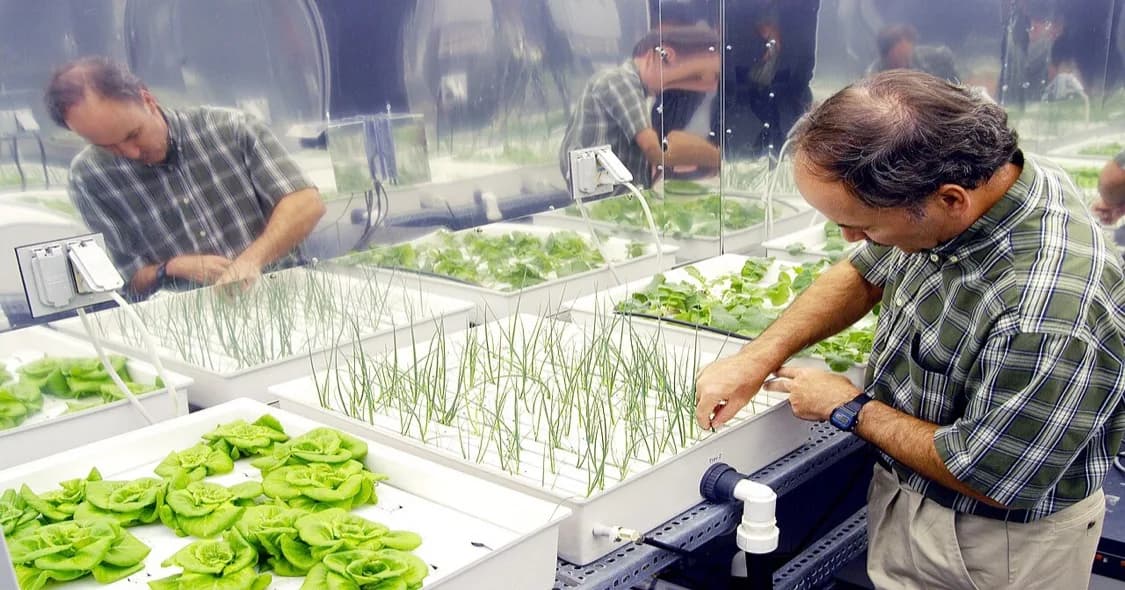
Key takeaway: In soil, plants find their own nutrients. In hydroponics, you are the chef — and the recipe is simpler than most people think. Plants need 17 essential nutrients, delivered as a dissolved solution at the right concentration (EC 1.0–2.4 dS/m for most crops) and pH (5.5–6.5). A two-part liquid nutrient or a three-component dry mix like MasterBlend provides everything a plant needs. The most common beginner mistake is overfeeding, not underfeeding — start at half the recommended strength, measure with an EC meter, and adjust from there.
What Nutrients Do Hydroponic Plants Need?
In soil, decomposing organic matter and minerals provide a slow drip of nutrients to plant roots. Remove the soil, and you must supply every element a plant needs through your nutrient solution. Research has identified 17 elements essential for plant growth — if any one is missing, the plant cannot complete its life cycle.
Three come from air and water (carbon, hydrogen, oxygen). The remaining 14 must be dissolved in your nutrient solution:
Macronutrients (needed in large quantities):
- Nitrogen (N) — drives leaf and stem growth
- Phosphorus (P) — fuels root development, flowering, and energy transfer
- Potassium (K) — regulates water movement, disease resistance, and overall vigor
- Calcium (Ca) — builds cell walls and prevents tip burn
- Magnesium (Mg) — the central atom of chlorophyll; essential for photosynthesis
- Sulfur (S) — needed for protein synthesis and enzyme function
Micronutrients (needed in trace amounts but equally essential): 7. Iron (Fe) — chlorophyll production and electron transport 8. Manganese (Mn) — activates enzymes in photosynthesis 9. Zinc (Zn) — hormone regulation and stem elongation 10. Copper (Cu) — lignin synthesis and reproductive development 11. Boron (B) — cell wall integrity and pollen viability 12. Molybdenum (Mo) — nitrogen metabolism 13. Chlorine (Cl) — osmotic regulation and photosystem II 14. Nickel (Ni) — urease enzyme activity
Penn State Extension identifies all 17 as essential, noting that deficiency of even a single micronutrient can stunt growth or kill a plant despite adequate macronutrient levels. The difference between macro and micro is quantity, not importance.
NPK Explained Simply
Every nutrient bottle displays three numbers — something like 4-18-38 or 10-10-10. These are the NPK ratio: the percentage by weight of nitrogen (N), phosphorus (as P2O5), and potassium (as K2O).
Think of NPK as protein, carbs, and fats for your plants:
- Nitrogen (N) = leaf fuel. Nitrogen is the gas pedal for vegetative growth. Too little and leaves yellow from the bottom up. Too much and you get dark green, floppy growth that's vulnerable to disease.
- Phosphorus (P) = root and flower builder. Phosphorus drives root formation in young plants and triggers the shift to flowering and fruiting. Deficiency shows as purple-tinged leaves and poor root development.
- Potassium (K) = the regulator. Potassium doesn't build structures — it manages them. It controls water movement through stomata, activates over 60 enzymes, and strengthens disease resistance. Deficiency shows as brown, scorched leaf edges starting on older leaves.
How to read the numbers: A nutrient labeled 4-18-38 contains 4% nitrogen, 18% phosphorus pentoxide, and 38% potassium oxide by weight. The remaining percentage is made up of secondary nutrients, micronutrients, and inert carriers.
The ideal NPK balance shifts with growth stage. During vegetative growth, plants consume more nitrogen. During flowering and fruiting, phosphorus and potassium demand increases. Most commercial hydroponic nutrients account for this with different "grow" and "bloom" formulas, or by adjusting ratios.
How to Choose Your First Nutrient System
This is where beginners overthink things. You have two main options: liquid concentrates or dry powders.
Liquid Concentrates
Liquid nutrients come pre-dissolved in concentrated form. You measure a set amount per gallon of water, stir, and you're done.
Pros:
- Easiest to use — measure and pour
- No dissolving or weighing required
- Widely available at garden centers
- pH-buffered formulas available
Cons:
- More expensive per gallon of solution (you're paying for water weight and shipping)
- Bulky to store in large quantities
- Limited shelf life once opened
Common beginner options: General Hydroponics Flora Series (three-part), FloraNova (one-part), MaxiGro/MaxiBloom (powder but single-component)
Dry Powders
Dry nutrients are concentrated powders or crystals that you dissolve in water. They're cheaper per gallon of final solution — dramatically so at scale.
Pros:
- 60–80% cheaper per gallon of working solution
- Compact storage (a 2.5 kg kit makes 400+ gallons)
- Longer shelf life
- Full control over nutrient ratios
Cons:
- Requires a kitchen scale accurate to 1 gram
- Must be dissolved in the correct order to avoid precipitation
- Steeper learning curve on first use
The most popular dry option: MasterBlend 4-18-38, a three-component system where you mix the base fertilizer with calcium nitrate and Epsom salt (magnesium sulfate) at a 2:2:1 ratio by weight. Penn State Extension recommends similar fertilizer programs — specifically Hydro-Gardens 4-18-38 supplemented with calcium nitrate and magnesium sulfate — as a practical starting point for hydroponic growers.
Which Should You Choose?
If you are growing fewer than 10 plants and value simplicity, start with a two-part or three-part liquid system. If you plan to scale up or want to minimize cost, start learning dry nutrients now — the learning curve is about one mixing session.
Either way, never use soil fertilizer in hydroponics. Soil fertilizers rely on microbial breakdown to become plant-available. They contain insoluble compounds that clog drip lines, promote algae, and leave your plants starving in a cloudy solution. Hydroponic nutrients are formulated with fully soluble mineral salts.
How to Mix Hydroponic Nutrients: Step by Step
Whether you use liquid or dry nutrients, the mixing process follows the same logic. Here is the procedure using a two-part liquid system (like General Hydroponics Flora), which applies to most brands:
Step 1: Start with Clean Water
Fill your reservoir with the amount of water you need. If your tap water EC is above 0.4 dS/m (roughly 200 ppm), consider using filtered or reverse-osmosis (RO) water. The University of Missouri Extension recommends source water with EC between 0.2–0.8 dS/m, pH 5.5–7.0, and sodium below 50 ppm.
Step 2: Add Part A (or Micro)
Pour the recommended amount of Part A (usually contains calcium, nitrogen, and micronutrients) into the water. Stir thoroughly for 30 seconds.
Step 3: Add Part B (or Bloom/Grow)
Never mix Part A and Part B together as concentrates before adding water. Concentrated calcium and concentrated phosphorus/sulfate will react and form insoluble precipitates — white chalky residue that locks nutrients out of solution permanently. This is the single most common mixing mistake. Always dilute each part separately into water.
Step 4: Stir and Let It Stabilize
Stir the solution well. Let it circulate or sit for 15–30 minutes before testing.
Step 5: Test and Adjust pH
Check pH with a calibrated meter. Target 5.5–6.5 for most hydroponic crops. Oklahoma State University Extension recommends 5.0–6.0 as the range where overall nutrient availability is optimized. Use pH Down (phosphoric acid) or pH Up (potassium hydroxide) in small increments — a few drops at a time.
Step 6: Test EC to Confirm Strength
Check EC with a conductivity meter. Your target depends on the crop and growth stage (see the feeding schedule section below). If EC is too high, add plain water. If too low, add a small amount of both nutrient parts proportionally.
Tip for dry nutrients (MasterBlend 4-18-38): The standard recipe is 12 grams MasterBlend + 12 grams calcium nitrate + 6 grams Epsom salt per 5 US gallons (about 2.4g + 2.4g + 1.2g per gallon). Always add MasterBlend first, then Epsom salt, then calcium nitrate last. Never pre-mix calcium nitrate with the other dry components — they will react and precipitate.
Professional Stock Solution Preparation
Once you're comfortable with single-batch mixing, stock solutions save time and improve consistency. A stock solution is a concentrated nutrient mix — typically 100x to 200x working strength — that you dilute into your reservoir as needed.
Why use stock solutions:
- Mix once, dose for weeks — no weighing or measuring each time you top off
- More precise dosing via volumetric measurement (mL) rather than weight (grams)
- Standard practice in commercial greenhouses and research facilities
The A/B rule applies at any concentration: You must always prepare two separate stock solutions because calcium cannot coexist with phosphates or sulfates at high concentrations without precipitating.
Stock Solution A (Calcium tank):
- Calcium nitrate
- Iron chelate (Fe-DTPA or Fe-EDDHA)
- Dissolve in half your total stock volume of water
Stock Solution B (Everything else):
- MasterBlend 4-18-38 (or equivalent base fertilizer)
- Magnesium sulfate (Epsom salt)
- Any additional micronutrient supplements
- Dissolve in the other half of your total stock volume
Preparing a 100x concentrate (per liter of stock):
For a MasterBlend-based system targeting a working solution of approximately EC 2.0:
| Component | Per liter of Stock A | Per liter of Stock B |
|---|---|---|
| Calcium nitrate | 240 g | — |
| Fe-DTPA 11% | 4.8 g | — |
| MasterBlend 4-18-38 | — | 240 g |
| Epsom salt | — | 120 g |
To use: add 10 mL of Stock A and 10 mL of Stock B per liter of water (or 38 mL each per gallon). Measure EC and adjust.
Storage and shelf life:
- Store in opaque, sealed containers — light degrades iron chelates
- Label clearly: "STOCK A — CALCIUM" and "STOCK B — BASE + MG"
- Shelf life at room temperature: 2–3 months for Stock A, 4–6 months for Stock B
- If crystals form at the bottom, warm the container and shake — if crystals don't redissolve, the concentration is too high for your water temperature
- Never store stock solutions in metal containers — the low pH of concentrated solutions corrodes metal
Dilution math: To calculate your own stock concentrate ratio:
- Grams per liter of stock = (grams per liter of working solution) x (concentration factor)
- For a 100x stock at 2.4 g/L working rate: 2.4 x 100 = 240 g/L per stock
Understanding pH and EC
These two measurements are the most important numbers in hydroponics. If you only buy two tools, make them a pH meter and an EC meter.
pH: The Gatekeeper of Nutrient Availability
pH measures how acidic or alkaline your nutrient solution is, on a scale from 0 (most acidic) to 14 (most alkaline). In hydroponics, pH controls which nutrients your plants can actually absorb.
Outside the optimal range, nutrients precipitate out of solution or bind into forms that roots cannot uptake — a condition called nutrient lockout. Your solution may contain every nutrient at the right concentration, but if pH is wrong, the plant starves anyway.
Optimal pH ranges:
| Crop Type | pH Range |
|---|---|
| Leafy greens (lettuce, spinach, herbs) | 5.5–6.5 |
| Fruiting crops (tomatoes, peppers, cucumbers) | 5.5–6.5 |
| Strawberries | 5.5–6.2 |
| Basil | 5.5–6.5 (tolerates down to 4.0 per Gillespie et al., 2020) |
| Most hydroponic crops | 5.5–6.5 |
Research by Gillespie, Kubota, and Miller (2020) at the University of Arizona demonstrated that basil tolerates a wider pH range than commonly assumed — pH as low as 4.0 suppressed root rot without negatively affecting growth. But for beginners, stick to the 5.5–6.5 range until you have experience with specific crops.
For a deep dive into pH management, drift correction, and nutrient lockout mechanics, see our complete guide: pH and EC Management in Hydroponics.
EC: How Strong Is Your Solution?
EC (electrical conductivity) measures the total dissolved salts in your solution, reported in dS/m (deciSiemens per meter) or mS/cm (same value). The higher the EC, the more concentrated the nutrients.
PPM (parts per million) is an alternative scale. The conversion depends on your meter:
- EC x 500 = PPM (Hanna, Milwaukee meters)
- EC x 700 = PPM (Truncheon, Bluelab meters)
This inconsistency is why most professionals — and all academic research — use EC.
General EC ranges by growth stage:
| Growth Stage | EC Range (dS/m) | PPM (x500) |
|---|---|---|
| Seedlings | 0.4–0.8 | 200–400 |
| Vegetative | 1.0–1.6 | 500–800 |
| Flowering/fruiting | 1.6–2.4 | 800–1,200 |
| Heavy-feeding crops (tomatoes) | 2.0–3.5 | 1,000–1,750 |
A 2018 study in PLoS ONE (Ding et al.) found that pakchoi achieved the best balance of growth and eating quality at EC 1.8–2.4 dS/m, while very high EC (4.8–9.6 dS/m) triggered elevated antioxidant enzyme activity — a marker of salt stress — and reduced overall quality. The practical lesson: more is not better. Pushing EC above your crop's optimal range causes the same symptoms as underfeeding — because the plant cannot take up water against the osmotic gradient.
When EC climbs too high, the result is nutrient burn — brown, crispy leaf tips caused by osmotic stress. See our full guide: Nutrient Burn in Hydroponics: The Science of Overfeeding.
Nutrient Schedules by Growth Stage
Plants don't need the same nutrient strength throughout their life. Here's a practical feeding schedule based on university extension data and commercial practice:
Seedling Stage (Week 1–3)
- EC: 0.4–0.8 dS/m (200–400 ppm)
- Approach: Use quarter- to half-strength nutrient solution. Seedling roots are delicate — high EC damages them.
- What's happening: The plant is establishing its root system and first true leaves. It's drawing heavily on nitrogen and phosphorus.
Vegetative Stage (Week 3–8, varies by crop)
- EC: 1.0–1.6 dS/m (500–800 ppm)
- Approach: Gradually increase EC as the plant develops more leaf area. Use a "grow" formula higher in nitrogen.
- What's happening: Rapid leaf and stem expansion. Nitrogen demand peaks. The plant is building its photosynthetic machinery.
Flowering and Fruiting Stage
- EC: 1.6–2.4 dS/m (800–1,200 ppm)
- Approach: Switch to a "bloom" formula that shifts the ratio toward phosphorus and potassium. Reduce nitrogen slightly to prevent excessive vegetative growth at the expense of fruit.
- What's happening: Flowers form, pollen develops, fruit sets and swells. Potassium demand peaks — it drives sugar transport into fruit.
Sample EC Targets by Crop
| Crop | Seedling EC | Vegetative EC | Fruiting/Harvest EC |
|---|---|---|---|
| Lettuce | 0.4–0.6 | 0.8–1.2 | 1.0–1.4 |
| Basil | 0.4–0.6 | 1.0–1.4 | 1.0–1.6 |
| Tomatoes | 0.6–1.0 | 1.2–1.8 | 2.0–3.5 |
| Peppers | 0.6–0.8 | 1.2–1.8 | 1.8–2.8 |
| Strawberries | 0.4–0.6 | 1.0–1.4 | 1.2–1.8 |
For plant-specific nutrient data, explore the Truleaf plant database — it includes validated EC, pH, and nutrient concentration ranges for each growth stage.
Crop-Specific Nutrient Concentration Tables
The EC ranges above tell you how strong your solution should be, but not what's in it. These tables break down the target concentration of each major nutrient by crop and growth stage in parts per million (ppm). Use them to verify your nutrient mix against a lab analysis or to fine-tune custom formulations.
Lettuce and Leafy Greens
| Nutrient | Seedling (ppm) | Harvest (ppm) |
|---|---|---|
| Nitrogen (N) | 80–100 | 150–200 |
| Phosphorus (P) | 15–25 | 30–50 |
| Potassium (K) | 80–100 | 150–200 |
| Calcium (Ca) | 80–100 | 150–200 |
| Magnesium (Mg) | 20–25 | 40–50 |
| Sulfur (S) | 25–30 | 50–65 |
| Iron (Fe) | 1.5–2.5 | 2.5–5.0 |
Target EC: 0.8–1.4 dS/m at harvest. Lettuce is sensitive to high EC — exceeding 2.0 dS/m causes tip burn even when calcium is adequate.
Tomatoes
| Nutrient | Seedling (ppm) | Vegetative (ppm) | Fruiting (ppm) |
|---|---|---|---|
| Nitrogen (N) | 70–100 | 150–200 | 180–220 |
| Phosphorus (P) | 20–30 | 40–50 | 40–60 |
| Potassium (K) | 80–120 | 200–250 | 300–400 |
| Calcium (Ca) | 80–100 | 150–200 | 180–220 |
| Magnesium (Mg) | 20–30 | 40–50 | 40–60 |
| Sulfur (S) | 30–40 | 50–65 | 60–80 |
| Iron (Fe) | 2.0–3.0 | 3.0–5.0 | 3.0–5.0 |
Note the sharp increase in potassium during fruiting — K drives sugar transport into fruit and directly affects flavor. Blossom end rot is almost always a calcium delivery issue caused by low transpiration, not low calcium concentration in solution.
Basil and Culinary Herbs
| Nutrient | Seedling (ppm) | Harvest (ppm) |
|---|---|---|
| Nitrogen (N) | 70–90 | 120–180 |
| Phosphorus (P) | 15–25 | 30–40 |
| Potassium (K) | 80–100 | 140–200 |
| Calcium (Ca) | 70–90 | 120–160 |
| Magnesium (Mg) | 20–25 | 35–50 |
| Sulfur (S) | 25–30 | 45–60 |
| Iron (Fe) | 1.5–2.5 | 2.5–4.0 |
Basil responds well to moderate nitrogen — pushing N above 200 ppm promotes rapid leaf expansion but dilutes essential oil concentration, reducing aroma.
Strawberries
| Nutrient | Seedling (ppm) | Vegetative (ppm) | Fruiting (ppm) |
|---|---|---|---|
| Nitrogen (N) | 60–80 | 100–150 | 120–170 |
| Phosphorus (P) | 15–25 | 30–40 | 35–50 |
| Potassium (K) | 80–100 | 150–200 | 250–350 |
| Calcium (Ca) | 70–90 | 120–160 | 140–180 |
| Magnesium (Mg) | 20–25 | 35–45 | 35–50 |
| Sulfur (S) | 25–30 | 40–55 | 50–65 |
| Iron (Fe) | 1.5–2.5 | 2.5–4.0 | 2.5–4.0 |
Strawberries are particularly sensitive to EC during fruiting. Keep below 1.8 dS/m — higher concentrations reduce fruit size even as they may slightly increase sugar content (Brix).
How to use these tables: Compare your nutrient brand's guaranteed analysis (usually on the label or website) against these targets at your working dilution rate. If a nutrient is significantly below target, supplement it individually. If significantly above, you may be using a formula designed for a different crop type.
Reservoir Management
How often to change your nutrient solution depends on your system type and crop:
- Full reservoir change: Every 7–14 days for most systems. This prevents nutrient imbalances from accumulating — plants consume nutrients at different rates, so ratios drift over time.
- Top-off approach: Between full changes, top off with plain pH-adjusted water (not more nutrient solution) if the water level drops. Adding nutrients on top of nutrients raises EC progressively and causes overfeeding.
- Monitor daily: Check pH and EC at least once a day. A sudden EC spike (from water evaporation) or pH drift (common as plants absorb nutrients) tells you when to act.
A 2023 review in the Canadian Journal of Plant Science identifies the nitrogen-based management approach as the most practical strategy: track nitrogen depletion as the trigger for solution replacement, since nitrogen is typically the first nutrient exhausted.
The 17 Essential Nutrients: Quick Reference
| Nutrient | Symbol | Role | Deficiency Symptom |
|---|---|---|---|
| Nitrogen | N | Leaf/stem growth | Yellowing from lower leaves upward |
| Phosphorus | P | Roots, flowers, energy | Purple-tinged leaves, stunted roots |
| Potassium | K | Water regulation, disease resistance | Brown scorched leaf edges on older leaves |
| Calcium | Ca | Cell wall structure | Tip burn on new growth, blossom end rot |
| Magnesium | Mg | Chlorophyll, photosynthesis | Interveinal yellowing on older leaves |
| Sulfur | S | Protein synthesis | Uniform yellowing of new leaves |
| Iron | Fe | Chlorophyll production | Interveinal yellowing on new leaves |
| Manganese | Mn | Enzyme activation | Interveinal chlorosis, tan spots |
| Zinc | Zn | Hormone regulation | Small, distorted leaves; shortened internodes |
| Copper | Cu | Lignin, reproduction | Wilting of new growth, light green leaves |
| Boron | B | Cell walls, pollen | Brittle, hollow stems; poor fruit set |
| Molybdenum | Mo | Nitrogen metabolism | Leaf cupping, marginal scorch |
| Chlorine | Cl | Osmotic regulation | Wilting, leaf bronzing |
| Nickel | Ni | Urease activity | Leaf tip necrosis |
| Carbon | C | Structural (from CO2) | N/A — from air |
| Hydrogen | H | Structural (from water) | N/A — from water |
| Oxygen | O | Respiration (from air/water) | N/A — from air/water |
If you see deficiency symptoms, don't guess — use our diagnostic tool: Plant Nutrient Deficiency Chart.
Common Nutrient Mistakes Beginners Make
Mistake 1: Using Soil Fertilizer
Soil fertilizers (like Miracle-Gro for gardens) contain ammoniacal nitrogen and insoluble compounds that depend on soil bacteria to become plant-available. In hydroponics, they don't dissolve fully, they clog systems, and they can release ammonia that damages roots. Use only nutrients labeled for hydroponic use.
Mistake 2: Not Measuring
Eyeballing nutrient amounts is the fastest path to problems. A kitchen scale (for dry nutrients) and measuring cups or syringes (for liquids) are non-negotiable. The difference between a thriving plant and nutrient burn can be 0.5 dS/m of EC.
Mistake 3: Ignoring pH
Your solution can contain every nutrient at the perfect concentration and still starve your plants if pH is wrong. At pH 7.5, iron, manganese, and zinc become nearly unavailable. At pH 4.0, calcium and magnesium absorption drops. Check pH after mixing, and again daily. Invest in a calibrated pH meter — test strips lack the precision needed to distinguish between pH 5.5, 6.0, and 6.5, the critical range for hydroponics.
Mistake 4: Mixing Too Strong
The single most common beginner error. Research consistently shows that exceeding a crop's optimal EC range reduces growth — Ding et al. (2018) found that pakchoi yield and quality declined at very high EC, while the Ding study and others confirm that elevated salt concentrations trigger oxidative stress in plant tissues. Start at half the manufacturer's recommended strength. You can always increase — but reversing nutrient burn requires flushing the entire system.
Mistake 5: Never Changing the Reservoir
As plants feed, they don't consume all nutrients equally. Nitrogen depletes first; calcium and sulfate accumulate. After 10–14 days, your solution's ratio bears no resemblance to what you mixed. A full reservoir change every 1–2 weeks resets the balance.
Mistake 6: Mixing Concentrates Together
This bears repeating: never mix concentrated Part A with concentrated Part B, or calcium nitrate with phosphate/sulfate solutions, before diluting in water. The reaction produces calcium phosphate and calcium sulfate — insoluble white precipitates that remove calcium, phosphorus, and sulfur from your solution permanently. Penn State Extension flags this as one of the most critical preparation rules.
Nutrient Deficiency and Toxicity Diagnostic Matrix
When something goes wrong, this matrix helps you move from symptom to diagnosis to corrective action. For each mineral nutrient, it lists deficiency and toxicity signs, where symptoms appear first, and the fix. Mobile nutrients show deficiency in older leaves first; immobile nutrients show it in new growth.
Mobile Nutrients (deficiency appears in older/lower leaves first):
| Nutrient | Deficiency Signs | Toxicity Signs | First Fix |
|---|---|---|---|
| Nitrogen (N) | Uniform yellowing of older leaves progressing upward; slow growth; thin stems | Dark green, lush growth; delayed flowering; weak stems | Deficiency: add calcium nitrate at 50–100 ppm N. Toxicity: dilute reservoir by 25% |
| Phosphorus (P) | Purple/bronze tint on undersides of older leaves; stunted roots; delayed maturity | Rare in hydroponics; can induce zinc and iron lockout at very high levels | Deficiency: add monopotassium phosphate; verify pH is below 6.5 (P locks out at high pH) |
| Potassium (K) | Brown, scorched leaf margins on older leaves; weak stems; poor fruit quality | Induces calcium and magnesium deficiency by competitive uptake | Deficiency: add potassium sulfate at 50–100 ppm K. Check Ca and Mg simultaneously |
| Magnesium (Mg) | Interveinal chlorosis on older leaves (veins stay green, tissue between yellows) | Rare; may interfere with calcium uptake at extreme levels | Deficiency: add Epsom salt at 25–50 ppm Mg. Foliar spray of 2% MgSO4 for fast relief |
Immobile Nutrients (deficiency appears in new/upper growth first):
| Nutrient | Deficiency Signs | Toxicity Signs | First Fix |
|---|---|---|---|
| Calcium (Ca) | Tip burn on new leaves; blossom end rot; distorted new growth | Rarely toxic itself; excess competes with K and Mg uptake | Verify Ca is 150+ ppm in solution; increase air circulation to boost transpiration |
| Sulfur (S) | Uniform yellowing of new leaves (resembles N deficiency but starts at top) | Leaf scorch at very high levels; usually from sulfate-heavy fertilizers | Deficiency: add magnesium sulfate or potassium sulfate |
| Iron (Fe) | Interveinal chlorosis on newest leaves; severe cases turn leaves white | Bronze-spotted leaves; root darkening | Add iron chelate (Fe-DTPA below pH 6.5, Fe-EDDHA above 6.5); verify pH is below 6.5 |
| Manganese (Mn) | Interveinal chlorosis similar to iron but with tan/brown necrotic spots | Brown spots, reduced growth | Check pH (Mn locks out above 6.5); add MnSO4 at 0.5–1.0 ppm |
| Zinc (Zn) | Small, distorted leaves; shortened internodes; "little leaf" | Induces iron deficiency; purple coloring | Add ZnSO4 at 0.5 ppm; verify pH below 6.5 |
| Copper (Cu) | Wilting of new growth; light green coloring; poor fruit set | Root damage; stunted growth above 2 ppm | Deficiency: add CuSO4 at 0.05–0.1 ppm. Toxicity: full reservoir change |
| Boron (B) | Hollow, brittle stems; distorted new growth; poor pollen viability | Brown leaf tips; necrotic leaf margins (narrow safe range) | Deficiency: add borax at 0.2–0.5 ppm B. Toxicity: full reservoir change |
| Molybdenum (Mo) | Leaf cupping; marginal scorch resembling K deficiency | Very rare in hydroponics | Add sodium molybdate at 0.05 ppm; verify pH above 5.0 (Mo locks out at low pH) |
Diagnostic decision process:
- Where are symptoms appearing? Older leaves = mobile nutrient (N, P, K, Mg). New leaves = immobile nutrient (Ca, S, Fe, Mn, Zn, Cu, B, Mo).
- Check pH first. If pH is outside 5.5–6.5, correct it before adding any nutrients — most apparent "deficiencies" are actually pH-induced lockout.
- Check EC. If EC is above your crop's optimal range, the issue may be salt stress mimicking deficiency. Dilute before supplementing.
- Check individual nutrients only after pH and EC are confirmed correct. If you cannot measure individual ions, a full reservoir change with fresh solution is the safest correction.
FAQ
Can I make my own hydroponic nutrients from scratch? Technically yes — the Hoagland solution (1950) is the foundational recipe used in plant science research worldwide. It uses reagent-grade potassium nitrate, calcium nitrate, monopotassium phosphate, magnesium sulfate, and micronutrient salts. But sourcing and weighing individual reagents is impractical for beginners. Pre-formulated systems like MasterBlend or General Hydroponics give you the same nutrient profile without the complexity.
How often should I change my nutrient solution? Every 7–14 days for most systems. Between changes, top off with pH-adjusted water (not nutrient solution) to maintain volume. If you notice EC rising sharply or pH swinging more than 1.0 point between checks, change sooner.
What's the best NPK ratio for hydroponics? There is no single "best" ratio — it depends on the crop and growth stage. For vegetative growth, higher nitrogen formulas (like 3-1-2) are typical. For flowering and fruiting, the ratio shifts toward potassium (like 1-2-3 or 1-1-2). Most two-part or three-part systems let you adjust this ratio by changing the proportion of grow vs. bloom formula.
Is there a difference between hydroponic and soil nutrients? Yes. Hydroponic nutrients use fully soluble mineral salts (like calcium nitrate, potassium sulfate, chelated iron) that dissolve completely in water and are immediately available to roots. Soil fertilizers often contain slow-release granules, organic matter, or insoluble minerals that require soil microbiology to break down. Using soil nutrients in hydroponics causes clogging, nutrient lockout, and algae growth.
How do I know if my plants need more nutrients? Your EC meter tells you. If EC drops below your target range and plants are actively growing, they're consuming nutrients faster than you're supplying them — increase the concentration slightly at your next reservoir change. Visual cues like pale or yellowing leaves suggest deficiency, but always confirm with an EC reading before adding more nutrients. The problem might be pH lockout, not low concentration.
What happens if pH is too high or too low? At high pH (above 7.0), iron, manganese, zinc, copper, and boron become progressively less available, causing deficiency symptoms even though the elements are present in solution. At very low pH (below 4.5), calcium and magnesium uptake decreases, and aluminum/manganese can reach toxic concentrations. The 5.5–6.5 range keeps all 14 mineral nutrients in their most plant-available forms simultaneously.
Key Takeaways
- Hydroponic plants need 17 essential nutrients. Three come from air and water; 14 must be dissolved in your solution. Every commercial nutrient system — liquid or dry — is designed to provide all 14.
- Start with a two-part liquid system for simplicity, or a MasterBlend 4-18-38 dry kit for cost efficiency. Both work. Never use soil fertilizer.
- Mix nutrients into water, never concentrates into each other. Always add calcium-containing solutions last to prevent precipitation.
- Target pH 5.5–6.5 and EC appropriate for your crop's growth stage: 0.4–0.8 for seedlings, 1.0–1.6 for vegetative, 1.6–2.4 for flowering/fruiting.
- Measure, don't guess. A pH meter and an EC meter are the two most important tools in hydroponics — more important than the nutrients themselves.
- Start at half the recommended nutrient strength. You can always add more. Overfeeding causes nutrient burn, and the fix (flushing) is more disruptive than starting conservative.
- Change your reservoir every 7–14 days to prevent nutrient ratio drift.
Hydroponic nutrition is not complicated — it just requires precision. With a $30 EC meter, a $30 pH meter, and any reputable nutrient brand, you have everything you need to feed your plants exactly what they want, exactly when they need it.
Ready to start growing? Explore our plant database for specific growing parameters, or calculate your nutrient mix for exact dosing. If you're new to hydroponics systems, start with our DWC guide or NFT guide.