Hydroponische Teeltmedia: 4 Opties voor Uw Systeem
Vergelijk kokosvezel, Rockwool, perliet en kleikorrels en kies het juiste substraat voor uw systeem, irrigatie en hergebruik.
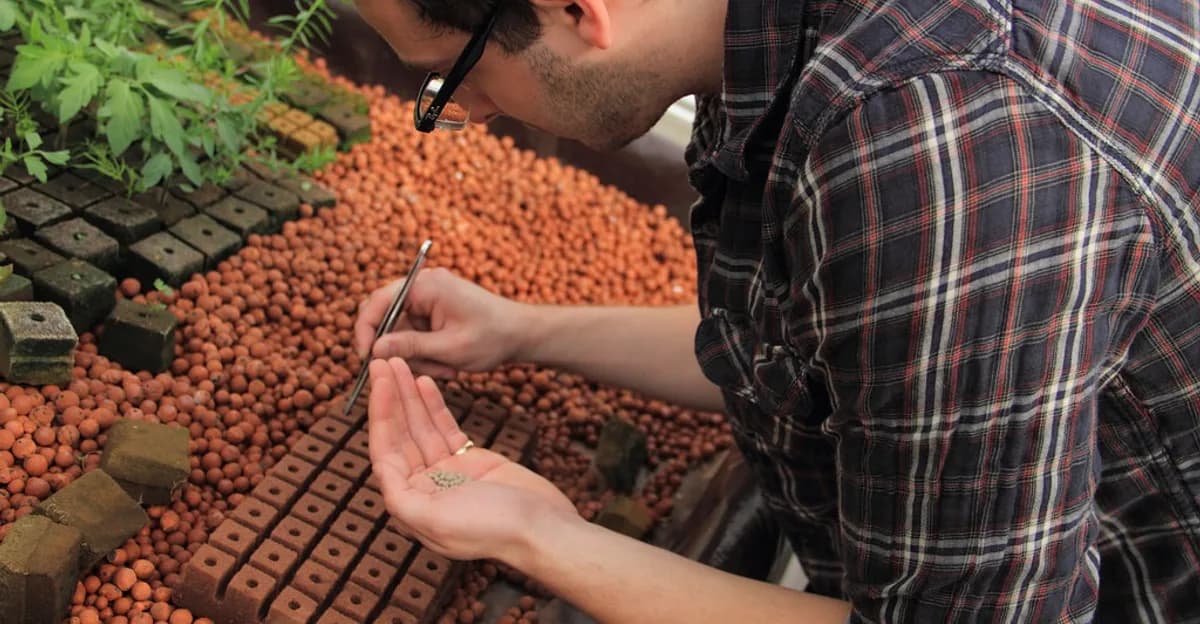
Belangrijk punt: Er is geen beste hydroponische groeimedium voor elke opstelling. Kokosvezel, Rockwool (steenwol), perliet en kleikorrels behandelen water, lucht, voedingsstoffen en hantering elk op een andere manier. Uw systeem en de betrouwbaarheid van de irrigatie zouden de keuze moeten beperken voordat prijs of populariteit in de vergelijking wordt meegenomen.
Voor veel beginners die druppelbewaterde potten of kweekzakken gebruiken, is een voorbereid kokosvezelproduct of een kokos-perlietmix een praktisch uitgangspunt. Rockwool is geschikt voor precieze druppelsystemen en vermeerdering. Perliet werkt goed als beluchtingscomponent of in een compatibel druppelsysteem. Kleikorrels zijn geschikt voor netpotten, eb-en-vloedbedden en andere systemen die zijn gebouwd rond een grof, snel doorlatend substraat.
Snel overzicht
| Kweekmedium | Gedrag van water en lucht | Belangrijkste voordeel | Belangrijkste waarschuwing | Past vaak |
|---|---|---|---|---|
| Kokosvezel | Bevat een nuttige waterreserve terwijl lucht wordt vastgehouden; de balans verandert met de deeltjesmix en verdichting | Vergevingsgezinde waterreserve voor beheerde druppelteelt | Zouten, voedingsinteracties en batchvariatie vereisen een kwaliteitsproduct en aangepaste irrigatie | Druppel-ingerichte potten, zakken en platen |
| Rockwool | Gemanufactureerde poriënstructuur kan aanzienlijke hoeveelheden water en lucht opslaan bij juiste irrigatie | Uniforme blokken, kubussen en platen maken de reactie van het gewas beter voorspelbaar | Weinig chemische buffering betekent nauwe controle; verwijdering is een terugkerend nadeel | Stekken en precisie-druppelsystemen |
| Perliet | Licht en sterk beluchtend; bruikbare waterreserve varieert met kwaliteit en container | Voegt drainage en lucht toe aan een mix | Stof, zwevende deeltjes en een zwakke wortelkluitcohesie kunnen de hantering bemoeilijken | Mengsels en compatibele druppelsystemen |
| Kleikorrels of LECA | Grof en vrij doorlatend, met minder opgeslagen water dan kokosvezel of Rockwool | Duurzame ondersteuning die kan worden gereinigd en hergebruikt in geschikte systemen | Betrouwbare irrigatie is belangrijk; nieuw materiaal kan de pH beïnvloeden en droge korrels kunnen drijven | Eb en vloed, netpotten en substraatbedden |
Dit zijn relatieve beschrijvingen, geen gestandaardiseerde beoordelingen. De deeltjesgrootte, verdichting, vorm van de container, wortelgroei en productie kunnen veranderen hoe een product zich gedraagt. Controleer het productblad voor de deeltjesgrootte, waterretentie, met lucht gevulde porositeit en initiële elektrische geleidbaarheid (EC) of pH wanneer die details beschikbaar zijn.
Kies het systeem voordat u het medium kiest
Een groeimedium moet passen bij de manier waarop water de wortels bereikt. Los, licht perliet kan drijven of ontsnappen in sommige recirculerende overstromingssystemen. Kleikorrels passen beter bij eb-en-vloedbedden en netpotten omdat hun grotere deeltjes vrij afwateren en gemakkelijker op hun plaats blijven.
Als u de apparatuur nog kiest, begin dan met onze gids voor het kiezen van een eerste hydrocultuursysteem. Raadpleeg voor een eb-en-vloedopstelling de gids voor eb-en-vloedhydrocultuur.
Denk vervolgens na over de betrouwbaarheid van de irrigatie. Een grof, snel drainerend substraat laat meer lucht rond de wortels, maar slaat ook minder water op tussen irrigatiecycli. Daardoor heeft u minder marge bij gemiste cycli dan met een medium met een grotere waterreserve. Dit is een praktische afleiding uit de eigenschappen en beheeradviezen in de beoordeelde bronnen, niet het resultaat van een directe stroomuitvaltest.
Kokosvezel: een praktische keuze voor druppelgeïrrigeerde containers
Kokosvezel wordt gemaakt van de bolster van kokosnoten. Commerciële producten kunnen verschillende verhoudingen van fijn merg, vezels en stukjes bevatten. Die fracties beïnvloeden samen met verdichting en verwerking de balans tussen opgeslagen water en lucht.
Die balans maakt bereide kokosvezel nuttig in druppelgeïrrigeerde containers en platen. Twee onafhankelijke kasproeven hebben aangetoond dat specifieke kokosvezelproducten Rockwool kunnen vervangen in beheerde tomaat- en komkommersystemen, met gunstige gewasresultaten in die experimenten. De proeven gebruikten benoemde producten, gewassen en irrigatiemethoden, dus ze bewijzen niet dat kokosvezel altijd een hogere opbrengst oplevert.
Kokosvezel reageert ook sterker met de voedingsoplossing dan Rockwool of perliet. De uitwisselingsplaatsen kunnen voedingsionen vasthouden en afgeven, terwijl slechte verwerking natrium of chloride kan achterlaten. Herkomst, wassen, deeltjessamenstelling en opslag beïnvloeden allemaal het product dat u ontvangt.
Kies een product met duidelijke informatie over kwaliteit en voorbereiding. Volg de instructies voor hydratatie of conditionering en stel vervolgens de irrigatie in op basis van het gedrag van dat product in plaats van een Rockwool-schema te kopiëren. Kokos-perlietmengsels kunnen de luchtruimte vergroten, maar het resultaat hangt nog steeds af van de korrelgroottes en verhoudingen in het mengsel.
Beste keuze: een teler met druppelgeïrrigeerde potten, zakken of platen die meer waterreserve wil dan een grof mineraal medium en het voedingsgedrag van het product kan volgen.
Rockwool: uniformiteit voor precieze irrigatie
Rockwool, ook wel steenwol genoemd, wordt geproduceerd als blokjes, blokken, korrelig materiaal en platen. De gecontroleerde structuur kan water vasthouden terwijl er luchtige ruimte behouden blijft, en commerciële producten zijn relatief uniform. Die consistentie helpt telers om irrigatie en wortelzonebeheer bij planten te herhalen.
Rockwool is chemisch inert en heeft weinig vermogen om snelle veranderingen in voedingsconcentratie of pH te verzachten. Inert betekent niet onderhoudsvrij. De teler moet het product volgens instructies conditioneren en de voedingsoplossing en irrigatie nauwkeurig beheren.
De voorspelbare vormen zijn nuttig voor vermeerdering en gecontroleerde druppelkweek. Een onderzoek naar kropjes sla toonde ook aan dat korrelige Rockwool- en perlietmengsels zich anders gedroegen dan het geteste op zichzelf staande perlietproduct, inclusief verschillen in waterretentie en wortelkluitcohesie. Die resultaten behoren tot dat product en dat zaailingssysteem, niet tot iedere Rockwool of perlietsoort.
De belangrijkste zorg aan het einde van het gebruik is verwijdering. Rockwool is niet biologisch afbreekbaar, dus vervangings- en lokale verwijderingsopties horen bij de aankoopbeslissing. Dat nadeel creëert geen universele milieubeoordeling omdat productie, transport, gebruiksduur en lokale verwijderingsroutes verschillen per product en regio.
Beste keuze: propagatie of precisie druppelcultuur waar uniforme blokken en nauwkeurige irrigatiecontrole belangrijker zijn dan gemakkelijke afvoer.
Perliet: sterke beluchting met wateropslag die afhangt van de korrelgrootte
Perliet is een lichtgewicht, poreus mineraalmedium. Het voegt lucht en drainage toe aan mengsels en kan ook zelfstandig planten ondersteunen in een geschikt druppelsysteem. Het watergedrag ervan wordt vaak te simplistisch voorgesteld. De bruikbare reserve verandert met de deeltjesgrootte, de geometrie van de container en het irrigatieontwerp, dus “perliet blijft droog” en “perliet houdt veel water vast” zijn beide slechte universele regels.
Zeer lichte deeltjes kunnen tijdens het hanteren stof veroorzaken en in sommige overstromingssystemen drijven of wegspoelen. Los perliet kan ook een minder samenhangende wortelkluit vormen dan substraten met fijner of sterker bindend materiaal, hoewel het directe bewijs hier afkomstig is van één proef met slazaailingen en één geëxpandeerd-perlietproduct.
Perliet is vaak het meest nuttig als onderdeel van een mengsel. Het combineren met kokosvezel kan de luchtruimte vergroten, terwijl kokosvezel meer waterreserve levert. Het exacte resultaat hangt af van beide componenten, dus een zak met het label “kokosvezel en perliet” geeft u niet genoeg informatie om het irrigatieschema van een andere teler te kopiëren.
Beste toepassing: een afgebakend mengsel dat meer lucht en drainage nodig heeft, of een druppelsysteem dat is ontworpen voor losse perliet en de bijbehorende irrigatiebehoeften.
Klei parels of LECA: duurzaam steunmateriaal voor snel drainerende systemen
Klei parels worden ook verkocht als Lichtgewicht Geëxpandeerde Klei Aggregate (LECA). Ze vormen een grove, poreuze laag die vrij afwatert en minder water opslaat dan kokos of Rockwool. Dat maakt de frequentie van irrigatie en de betrouwbaarheid van de pomp belangrijker.
Hun grote deeltjes passen in eb-en-vloed-bakken, netpotten, aquaponische mediumbakken en andere recirculerende systemen die zijn ontworpen voor grove ondersteuning. Droge pellets kunnen drijven, dus het systeem moet nog steeds het medium bevatten tijdens het vullen en overspoelingscycli.
Opmerking: Gepubliceerde bronnen zijn het oneens over het vermogen van LECA om voedingsionen uit te wisselen. Sommige beschrijven het als bijna inert, terwijl UF/IFAS geëxpandeerde klei een hoge kationenuitwisselingscapaciteit toekent. Behandel de chemische eigenschappen als productspecifiek.
Een tweejarig kasonderzoek met tomaten toonde aan dat nieuwe geëxpandeerde klei aanvankelijk de wortelzone pH verhoogde in die specifieke druppelirrigatieopstelling, terwijl hergebruikt materiaal zich anders gedroeg. Controleer de productspecificatie, bereid het voor zoals aangegeven, en let op pH en EC in plaats van aan te nemen dat elk merk dezelfde chemie heeft.
Klei-aggregaten kunnen worden hergebruikt, maar hergebruik hangt af van het verwijderen van wortels, het reinigen en desinfecteren van het materiaal, het bevestigen dat de fysieke staat nog geschikt is voor het systeem, en het beheersen van het risico op ziekten. Het bewijs ondersteunt niet dat ze "oneindig herbruikbaar" zijn of een garantie op steriliteit na thuisreiniging geven.
Beste toepassing: netpotten, eb-en-vloedsystemen en substraatbedden met betrouwbare irrigatie en een plan voor reiniging tussen gewassen in.
Waterreserve en beluchting moeten samen worden beoordeeld
Wortels hebben een substraat nodig dat water kan leveren zonder de poriën voortdurend verzadigd te houden. Meer waterretentie is niet automatisch veiliger en meer drainage is niet automatisch gezonder. Het irrigatiemoment bepaalt hoe de poriestructuur van het substraat zich tijdens de teelt gedraagt.
Verdichting, fijne deeltjes, diepte en vorm van de container, en wortelgroei kunnen het evenwicht tijdens gebruik veranderen. Een medium dat begint met nuttige luchtruimte kan nog steeds te nat blijven bij overmatige irrigatie. Een grof medium kan te weinig water hebben als het interval tussen irrigaties te lang is.
Gebruik de gegevens van de fabrikant als uitgangspunt en observeer vervolgens het gewas en de wortelzone. Als u het merk, de deeltjesgrootte, de container of de mixverhouding verandert, behandel het dan als een nieuwe irrigatie-instelling in plaats van te veronderstellen dat het oude schema overdraagbaar is.
Stel de irrigatie in gebruik na een mediumwissel
Een ander merk, graad, vorm of mengsel kan veranderen hoe water door de wortelzone beweegt. De deeltjesgrootte, verdichting, vorm van de container en verwerking van het product beïnvloeden allemaal het resultaat, dus een irrigatieschema mag niet uitsluitend op de naam van het medium worden overgedragen.
Test de nieuwe opstelling op een representatieve container of de kleinste praktische groeizone voordat u het hele gewas verandert:
- Noteer het exacte product, de graad en het batchnummer. Voor een mengsel, noteer de componenten en verhoudingen. Noteer ook de afmetingen van de container en hoe stevig het medium is ingepakt.
- Bereid het product voor zoals de fabrikant aangeeft. Houd hydratatie, conditionering en vullen consistent over de testcontainers.
- Voer de geplande irrigatiecyclus uit en controleer de hele container. Let op droge plekken, langdurige verzadiging, ongelijke afvoer, drijvende korrels of losse deeltjes die het systeem verlaten.
- Controleer het medium opnieuw vóór de volgende geplande cyclus. Een grof medium dat snel water tekortkomt, heeft een ander interval of een andere systeemaanpassing nodig. Een medium dat verzadigd blijft, heeft minder irrigatie, meer drainage of een herziening van de verdichting en de deeltjesgrootte nodig.
- Houd pH en elektrische geleidbaarheid (EC) in de gaten tijdens de omschakeling. Cocopeat kan interageren met voedingsionen, en nieuwe geëxpandeerde klei beïnvloedde de wortelzone pH in één tomatenonderzoek. Behandel elke reactie als productspecifiek.
- Verander één irrigatievariabele tegelijk en noteer de reactie van de gewas. Houd het uiteindelijke schema gekoppeld aan dat product, die container, het groeistadium van het gewas en het systeem.
Maak van de test geen universeel watergeefschema. De beoordeelde studies gebruikten specifieke producten, gewassen, containers en irrigatiemethoden. Uw resultaat kan uw opstelling helpen afstellen, maar kan geen schema vaststellen voor elk product dat als kokosvezel, Rockwool, perliet of LECA wordt verkocht.
Kies niet alleen op aankoopprijs of een “milieuvriendelijk” etiket
De goedkoopste zak kan vaker water nodig hebben, meer handelingen vereisen, of eerder vervangen moeten worden. Een herbruikbaar medium kan nog steeds schoonmaakkosten en gezondheidsrisico's met zich meebrengen. Een hernieuwbaar materiaal kan een lange afstand afleggen of aanzienlijke verwerking vereisen. Minerale media verschillen in productie-energie, gebruiksduur en afvalverwerkingsroutes.
Het beoordeelde bewijs wijst geen universele milieuwinnaar aan tussen kokosvezel, Rockwool, perliet en LECA. Een eerlijke vergelijking vereist de volledige gebruikscyclus: productie, transport, aantal teelten, reiniging, fysieke achteruitgang en de lokale verwerkingsroute aan het einde van de gebruiksduur.
Vergelijk de totale gebruikskosten voordat u koopt
De prijs van de zak vertelt niet het hele verhaal. Vergelijk de beschikbare producten met hetzelfde werkblad, op basis van lokale prijzen en het systeem dat u gaat gebruiken.
| Kosten of beperking | Wat te registreren | Beslissing die het beïnvloedt |
|---|---|---|
| Geleverd product | Prijs, verzending, bruikbaar volume na voorbereiding en opslagruimte | Of een lage schapprijs laag blijft na levering en voorbereiding |
| Systeemcompatibiliteit | Container of bed, irrigatiemethode, deeltjesbeheersing en betrouwbaarheid van de pomp | Of het medium op zijn plaats kan blijven en voldoende water kan leveren tussen de cycli |
| Voorbereiding | Hydratatie, conditionering, stofbeheersing en initiële pH of EC controles vereist door het product | Arbeid en benodigdheden vóór het planten |
| Gewasbeheer | Monitoring, irrigatie-aanpassingen en afhandeling tijdens het gewas | Voortdurende arbeid en de kosten van een slechte match |
| Omzet | Verwijdering van wortels, reiniging, sanitaire maatregelen, inspectie en verwachte vervanging | Of hergebruik praktisch is zonder uit te gaan van een onbeperkte levensduur |
| Einde van gebruik | Lokale verwijdering, herstel of andere toegestane route | De werkelijke kosten en lokale impact na het gewas |
Weiger eerst een optie als deze niet past bij het irrigatie- of containmentsysteem. Vergelijk vervolgens de overgebleven opties gedurende dezelfde geplande teeltcyclus. Als hergebruik deel uitmaakt van de berekening, neem dan het werk van het verwijderen van wortels, reinigen, desinfecteren en controleren van de fysieke staat van het medium mee. Deel de aankoopprijs niet door een beloofd aantal hergebruiken, tenzij de leverancier dat cijfer kan onderbouwen voor het product en de gebruikstoepassing.
Houd de milieuvergelijking apart van het totale kostenplaatje. Hernieuwbare oorsprong, productie-energie, transport, levensduur, hergebruik en verwijdering beschrijven verschillende onderdelen van de gebruikscyclus. Eén gunstige eigenschap bepaalt geen universele milieubeoordeling.
Voordat u koopt, vergelijk de geleverde kosten, voorbereiding, irrigatiebehoefte, verwachte levensduur, schoonmaakbehoeften en afvoeropties voor de producten die beschikbaar zijn in uw regio.
Veelgestelde vragen
Wat is het beste hydroponische groeimedium voor beginners?
Voor een beginner met een druppel-geïrrigeerde container is een kant-en-klaar kokosvezelproduct of een kokos-perlietmix een redelijk startpunt omdat het wateropslag kan combineren met nuttige beluchting. Deze aanbeveling hangt af van een product van goede reputatie en het instellen van irrigatie voor die mix. Het is niet van toepassing op elk hydroponisch systeem.
Is kokosvezel beter dan Rockwool?
Geen van beide is universeel beter. Kokosvezel kan in gecontroleerde teeltproeven even goed of beter presteren dan Rockwool, maar varieert meer en reageert sterker met voedingsstoffen. Rockwool is uniformer en chemisch inert, wat past bij precieze irrigatie, maar biedt weinig chemische buffering en geeft een afvalprobleem.
Kan ik perliet alleen gebruiken in hydrocultuur?
Ja, in een systeem dat is ontworpen om het te bevatten en te irrigeren. Perliet is licht en sterk beluchting bevorderend, terwijl zijn waterreserve afhangt van de korrelgrootte en het ontwerp van de container. Losse deeltjes en zwakke wortelkluitcohesie kunnen het minder geschikt maken voor sommige systemen.
Zijn kleikorrels herbruikbaar?
Ze kunnen worden hergebruikt na het verwijderen van de wortel, schoonmaken, ontsmetten en een controle of het materiaal nog steeds geschikt is voor het systeem. Hergebruik betekent niet dat de kiezelstenen voor altijd steriel of ongewijzigd blijven.
Welk substraat is het beste als de pomp stopt?
De bronnen die voor deze handleiding zijn geraadpleegd, hebben pompstoringen niet direct getest. Hun bewijsmateriaal over fysische eigenschappen suggereert dat een substraat met een grotere bruikbare watervoorraad meer marge biedt tussen irrigatie-activiteiten dan grof LECA, maar productkwaliteit, container, gewas en wortelontwikkeling beïnvloeden allemaal het resultaat.
Schrijf uw systeem, irrigatiebetrouwbaarheid, productspecificaties en einde-gebruiksplan op. Deze details helpen u de opties te beperken voordat u geld uitgeeft.