Hydroponic Lavender: Grow Fragrant Blooms Without Root Rot
Lavender thrives without soil when you get the system, media, and nutrients right. This research-backed guide covers system selection, stage-by-stage nutrient management, the vernalization trick for indoor flowering, and the mistakes that cause root rot — so you can grow fragrant, oil-rich lavender year-round.
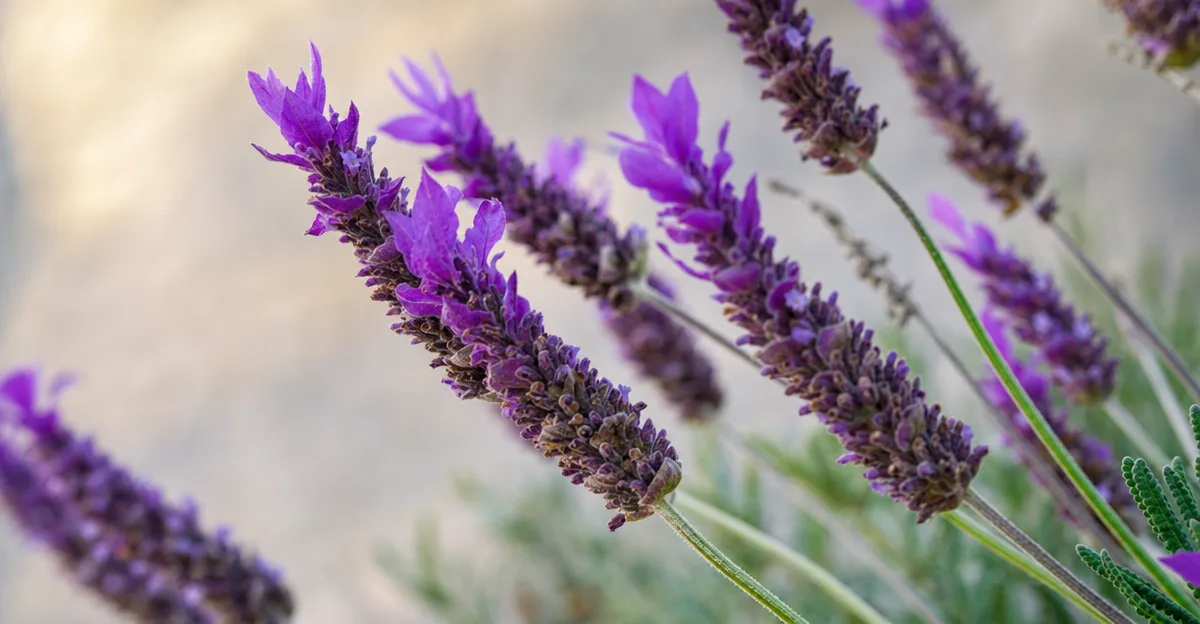
Key point: Lavender (Lavandula angustifolia) is one of the most rewarding herbs to grow hydroponically — and one of the easiest to kill if you choose the wrong system. Its Mediterranean roots mean it demands fast drainage, high oxygen at the root zone, and nutrient restraint. Get those three things right and hydroponic lavender outperforms soil-grown plants in growth speed, essential oil consistency, and year-round production. Get them wrong — especially by keeping roots too wet — and root rot sets in fast. This guide covers every aspect of soilless lavender cultivation: which systems work (and which don't), stage-by-stage nutrient targets from peer-reviewed research, the vernalization trick for triggering flowering indoors, and the specific mistakes that turn a promising setup into a compost bin.
Why grow lavender hydroponically
Lavender has been cultivated for centuries in rocky Mediterranean hillsides — environments with sharp drainage, lean soil, and intense sun. Hydroponics might seem like the opposite of that, but the right soilless setup actually replicates those conditions better than most garden soil.
Faster growth. Hydroponic lavender reaches harvest maturity faster than soil-grown plants because you control nutrient delivery directly to the roots. The typical harvest timeline from transplant drops from 155+ days in soil to approximately 120-130 days in optimized hydroponic systems.
Consistent essential oil quality. Research by Chrysargyris et al. (2016, 2017) demonstrated that precise control over nitrogen, phosphorus, and potassium directly influences essential oil composition and yield. In soil, nutrient availability fluctuates with rainfall, temperature, and microbial activity. In hydroponics, you set the exact concentration and ratio — meaning you can optimize for linalool and linalyl acetate content (the compounds that define high-quality lavender oil) by tuning your nutrient solution.
Year-round production. Outdoor lavender is seasonal, blooming once or twice between June and August in temperate climates. Indoor hydroponic systems with supplemental lighting and controlled temperature produce multiple bloom cycles per year — provided you manage the vernalization requirement (more on this below).
No soil-borne disease. Six Phytophthora species have been confirmed as pathogenic on three Lavandula species in controlled trials. These water molds live in soil and are nearly impossible to eliminate once established. Soilless systems sidestep soil-borne pathogens entirely — though they introduce their own root health challenges that require careful management.
Space efficiency. Lavender's compact growth habit (25-60 cm height, 30-60 cm spread for English lavender) makes it well-suited to vertical racks, grow tents, and greenhouse bench systems where space is at a premium.
Best varieties for hydroponics
Not every lavender thrives in soilless culture. The ideal hydroponic variety is compact, vigorous, and — if you want flowers — capable of blooming without extended cold treatment.
| Variety | Species | Why it works hydroponically |
|---|---|---|
| 'Munstead' | L. angustifolia | Most widely validated in research. Compact (30-45 cm), strong fragrance, good cold hardiness. Used in Mattson & Erwin (2005) flowering studies. |
| 'Hidcote' | L. angustifolia | Compact (30-40 cm), deep violet flowers, excellent container performance. Performs well in restricted root zones. |
| 'Phenomenal' | L. x intermedia | Lavandin hybrid with exceptional humidity tolerance and vigor. Larger (60-75 cm) but resists the fungal issues that plague pure English lavender in enclosed environments. |
| 'Lavance Purple' | L. angustifolia | Bred for container production. Can flower without vernalization under long days — a significant advantage for continuous indoor production. |
| 'Goodwin Creek Grey' | L. x ginginsii | Tender hybrid (zones 8+) that flowers prolifically without cold treatment. Continuous bloomer in warm indoor environments. |
For most hydroponic growers, 'Munstead' or 'Hidcote' are the safest starting points — they're well-documented, widely available, and their nutrient responses are established in peer-reviewed literature. If avoiding vernalization is your priority, look for newer cultivars bred for container/greenhouse production.
Choosing your hydroponic system
This is the most critical decision. Lavender is extremely sensitive to waterlogging — its roots demand high oxygen availability and cannot tolerate standing in unaerated solution. System choice determines whether your lavender thrives or rots.
Tier 1: Recommended systems
Drip irrigation (best overall)
Drip systems deliver nutrient solution in controlled pulses to the root zone, then allow the media to drain and re-aerate between cycles. This wet-dry cycling perfectly mimics lavender's natural preference. Chrysargyris et al. (2017, 2018) used drip fertigation in perlite for their peer-reviewed lavender nutrition studies — the setup that produced the data underlying the nutrient targets in this guide.
- Media: Perlite, or 70% coco coir + 30% perlite
- Irrigation schedule: 3-4 drip cycles per day during active growth (60-90 seconds per cycle), allowing complete drainage between cycles. Reduce to 2 cycles in winter or low-light periods.
- Key advantage: Scalable from one pot to hundreds; tunable pulse duration lets you dial in the exact moisture level lavender wants.
Ebb and flow (flood and drain)
Short, infrequent flood cycles mimic the intense-rain-then-drought pattern of Mediterranean climates. Flood the tray for 10-15 minutes, then drain completely. The extended dry period between floods keeps root-zone oxygen high.
- Media: LECA (expanded clay pebbles) or a perlite-vermiculite mix
- Flood schedule: 2-3 times per day during active growth, once daily in winter. Tables must drain fully — standing water in the tray is the most common ebb-and-flow failure with lavender.
- Key advantage: Simple, reliable, low maintenance.
Tier 2: Viable with modifications
Aeroponics
Root-zone oxygenation is excellent because roots hang in air and receive nutrient mist. Crisan et al. (2023) notes "promising results" for aeroponic lavender cultivation. Lykokanellos et al. (2026) found that aeroponic propagation systems yield 20-30% greater root length than traditional mist or float systems for lavender cuttings.
- Consideration: Mist nozzles can clog with mineral deposits; lavender's woody root system develops differently in aeroponic environments and may require support structures.
Deep Water Culture (DWC)
Possible but risky. Roots sit in aerated nutrient solution — the opposite of lavender's natural preference. DWC can work if you maintain high dissolved oxygen (>6 mg/L) with multiple air stones and a large air gap between the net pot base and solution surface.
- Critical modification: Only partially submerge roots. Use a deep net pot (15+ cm) filled with LECA so the upper root zone stays dry while lower roots access the solution. Keep solution temperature below 22C (72F) — above this, dissolved oxygen drops and Pythium risk rises sharply.
Tier 3: Not recommended
NFT (Nutrient Film Technique): The thin film of constantly flowing solution keeps roots too wet for lavender. Channels wider than 100 mm may work for mature plants, but the persistent moisture is a root rot invitation.
Kratky (passive/non-circulating): Stagnant, unaerated solution is incompatible with lavender's high oxygen demand. Root rot is virtually guaranteed. Do not attempt.
Growing media: drainage is everything
The growing medium for hydroponic lavender serves one primary function: rapid drainage with high air porosity. Lavender roots need to breathe between irrigations.
Best options (ranked):
| Medium | Air porosity | Water retention | Best for |
|---|---|---|---|
| Perlite (100%) | Very high | Low | Drip systems — the research standard for hydroponic lavender |
| 70% coco coir + 30% perlite | High | Moderate | Drip systems where some moisture buffering is needed |
| LECA (expanded clay pebbles) | Very high | Very low | DWC and ebb-and-flow systems |
| Perlite-vermiculite (70:30) | High | Moderate | Ebb-and-flow systems |
Avoid: Pure coco coir (retains too much moisture), rockwool (stays too wet for lavender), and any organic substrate that decomposes and compacts over time.
Research by Ferraro et al. (2019) found that substrate composition directly influences lavender's volatilome and essential oil profile — substrates with aggregates that improved drainage produced higher linalool content, the primary quality marker for lavender essential oil.
pH of the medium matters. Unlike soil-grown lavender, which prefers slightly alkaline conditions (pH 6.5-7.5), hydroponic lavender performs best at pH 5.8-6.5 in the nutrient solution. The lower pH range ensures micronutrient availability — particularly iron — which is critical in soilless systems where the buffering capacity of soil minerals is absent.
Nutrient solution management
Lavender is a light-to-moderate feeder that actively suffers from excess nutrition, particularly nitrogen. Research consistently shows that high nitrogen promotes vegetative growth at the direct expense of essential oil yield — the very thing most growers want to maximize.
Macronutrient targets by growth stage
| Nutrient | Seedling | Vegetative | Flowering |
|---|---|---|---|
| Nitrogen (N) | 80-120 ppm | 175-225 ppm | 150-200 ppm |
| Phosphorus (P) | 25-35 ppm | 40-60 ppm | 50-70 ppm |
| Potassium (K) | 100-150 ppm | 250-325 ppm | 300-350 ppm |
| Calcium (Ca) | 100-150 ppm | 150-200 ppm | 200-300 ppm |
| Magnesium (Mg) | 30-50 ppm | 50-80 ppm | 60-100 ppm |
| EC (mS/cm) | 0.8-1.2 | 1.0-1.6 | 1.2-2.0 |
| pH | 6.0-6.5 | 5.8-6.5 | 5.8-6.5 |
Data synthesized from Chrysargyris et al. (2016, 2017, 2018).
The three rules of lavender nutrition
1. Potassium is king. Potassium is the single most important cation for essential oil biosynthesis in lavender. Chrysargyris et al. (2017) demonstrated that increasing K from 200 to 300 ppm significantly improved essential oil yield and antioxidant activity. During flowering, push K to 300-350 ppm (optimal ~325 ppm) while targeting the K:Ca ratio at approximately 1.5:1 — achievable when Ca is in the 200-230 ppm range. At higher Ca levels (250-300 ppm), the ratio compresses toward 1.2:1, which prioritizes structural integrity over peak essential oil optimization.
2. Restrain nitrogen. Excess N produces lush, floppy growth with weak fragrance and poor oil yield. At flowering onset, reduce N by 10-15% from the vegetative peak. The visual cue: healthy hydroponic lavender has a slightly silvery-green, compact appearance — if it looks "too green and lush," your nitrogen is too high.
3. Don't neglect calcium. Calcium supports cell wall integrity and prevents the soft, disease-prone tissue that makes lavender vulnerable to Botrytis and Phytophthora. Chrysargyris et al. (2018) used 300 ppm Ca in their full research nutrient solution. Most growers maintain 150-200 ppm during vegetative growth and increase to 200-300 ppm during flowering — but growers optimizing specifically for essential oil may benefit from testing the higher end.
Micronutrient targets
| Micronutrient | Target (ppm) |
|---|---|
| Iron (Fe) | 2.0 |
| Manganese (Mn) | 0.5 |
| Zinc (Zn) | 0.1 |
| Copper (Cu) | 0.05 |
| Boron (B) | 0.2 |
| Molybdenum (Mo) | 0.05 |
Use chelated iron (Fe-EDDHA or Fe-DTPA) — lavender is prone to iron chlorosis in soilless systems, and chelated forms remain available across the 5.8-6.5 pH range.
Advanced Nutrient Protocol by Growth Stage
This section provides the precise transition protocol and ratio management for optimizing lavender's nutrient uptake across all growth stages.
Stage transition protocol:
Seedling to Vegetative (at 4-6 true leaf pairs): Increase N gradually from 120 to 175 ppm over 7-10 days. Transition EC into the 1.0-1.6 vegetative range, targeting 1.3-1.6 as nitrogen increases. Monitor for tip burn — if leaf edges brown, reduce EC by 0.2 and check Ca levels.
Vegetative to Flowering (at first visible bud formation): Reduce N by 10-15% from vegetative levels (e.g., drop from ~200 to ~175 ppm). Increase K from 275 to 300-325 ppm. Increase P from 50 to 60 ppm. Raise EC ceiling to 2.0.
Key ratios to maintain:
- N-P-K balance: Target 200-50-275 during peak vegetative growth.
- Ca:Mg ratio: 2.5:1 — calcium-dominant ratio supports cell wall integrity and prevents Mg-induced Ca lockout.
- K:Ca ratio: ~1.5:1 during flowering when Ca is 200-230 ppm; ~1.2:1 at higher Ca levels (250-300 ppm). Potassium dominance promotes essential oil biosynthesis.
Reservoir management:
- Change nutrient solution completely every 7-10 days. Lavender's moderate uptake rate means less nutrient depletion than tomatoes or lettuce, but ratio drift occurs faster than you'd expect — K depletes first.
- Top off with half-strength solution between changes. Full-strength top-offs concentrate salts as water evaporates, pushing EC above lavender's tolerance.
- Monitor pH daily for the first month, then every 2-3 days once stable. Lavender systems tend to drift upward (alkaline) — adjust with phosphoric acid, which simultaneously provides P.
Foliar feeding (supplemental):
Research indicates that foliar application of potassium and zinc can mitigate the effects of salinity stress and enhance essential oil yield. During flowering, a weekly foliar spray of potassium sulfate (2 g/L) and zinc sulfate (0.5 g/L) may improve oil quality — but this is supplemental, not a substitute for root-zone nutrition.
Light, temperature, and humidity
Light requirements
Lavender is a high-light plant. Insufficient light produces leggy, weak stems with poor flowering and reduced essential oil content.
Target DLI: 18 mol/m2/day (minimum 14 mol/m2/day for acceptable growth). This translates to approximately:
- 16 hours at 300-350 umol/m2/s PPFD under LED grow lights
- South-facing greenhouse with supplemental lighting in winter months
Mattson and Erwin (2005) demonstrated that flowering percentage increases dramatically under high DLI — plants receiving 13.4 mol/m2/d produced substantially more blooms than those at 5.3 mol/m2/d. For indoor growers, this means skimping on light is the single fastest way to get vegetative growth with no flowers.
Spectrum: Full-spectrum white LEDs (3500-4000K) work well for lavender. Adding supplemental red (660 nm) promotes flowering and stem elongation, while blue (450 nm) encourages compact growth. UV-A supplementation (380-400 nm) may enhance secondary metabolite production — including essential oil compounds — though lavender-specific spectral research is limited.
Temperature
| Parameter | Target | Range |
|---|---|---|
| Daytime | 22C | 18-28C |
| Nighttime | 16C | 12-18C |
| Nutrient solution | 18-20C | 16-22C |
The day-night temperature differential (DIF) of 4-6C is important for healthy growth and flowering. Constant warm temperatures produce weaker plants.
Critical threshold: Keep nutrient solution temperature below 22C (72F). Above this, dissolved oxygen levels drop and the risk of Pythium and Phytophthora infection increases sharply. If your grow room runs warm, a nutrient chiller is a worthwhile investment for lavender.
Humidity and airflow
Target humidity: 30-50% RH (optimal 40%). Lavender evolved in the dry Mediterranean, and high humidity is its enemy in enclosed growing environments. Above 60% RH, the risk of Botrytis (gray mold) and Phytophthora increases significantly.
Airflow: 0.3-1.0 m/s across the canopy. Use oscillating fans to prevent stagnant microclimates around the dense foliage. Adequate airflow also strengthens stems — lavender grown in still air produces weak, floppy growth that falls over under the weight of flower spikes.
In grow tents and enclosed rooms, a dehumidifier may be necessary — especially during the dark period when transpiration drops and humidity spikes.
Starting lavender in hydroponic systems
From cuttings (recommended)
Stem cuttings are the fastest and most reliable propagation method for hydroponic lavender. Cuttings produce genetically identical plants, ensuring consistent essential oil profiles across your crop.
- Take 5-8 cm semi-hardwood cuttings from side shoots in summer (after bloom) or spring (from new growth). Use non-flowering shoots.
- Remove lower leaves, leaving 2-3 leaf pairs at the top. Optionally dip the cut end in 0.1% IBA (indole-3-butyric acid) rooting hormone.
- Root in perlite or a perlite-vermiculite mix at 21C with bottom heat. Keep the rooting medium moist but not saturated.
- Roots form in 21-40 days, with success rates of 47-83% depending on moisture conditions. Drier conditions actually favor root development over shoot growth — resist the urge to keep cuttings wet.
- Transplant to your hydroponic system when roots are 5-8 cm long and white. Acclimate gradually by running your system at half-strength nutrient solution for the first week.
Aeroponic propagation yields 20-30% greater root length than traditional mist or float systems, making it an excellent option for operations that need high-quality transplants.
From transplants
If starting from nursery plants grown in soil:
- Remove all soil from roots by gently washing under lukewarm running water. Soil particles in hydroponic systems introduce pathogens and clog emitters.
- Inspect roots carefully. Healthy lavender roots are white to light tan and firm. Discard any plant with brown, mushy, or foul-smelling roots.
- Transition gradually: Run your system at EC 0.6-0.8 for the first week, then increase to seedling-level EC (0.8-1.2) over the following week.
From seed (slowest)
Seed propagation takes 14-28 days to germinate with often low success rates. Cold stratification (2-6 weeks at 1-4C) significantly improves germination. Maintain germination temperature at 15-24C. Seedlings need 100-200 days to reach transplant size — plan accordingly. Seed-grown plants introduce genetic variation, which may be undesirable if you're targeting consistent essential oil quality.
The flowering challenge: vernalization
Here is the uncomfortable truth about indoor hydroponic lavender: most English lavender cultivars require a vernalization period — 5-15 weeks of cold exposure (5C optimal, up to 10C acceptable) — to trigger flowering. Without this cold treatment, plants produce abundant vegetative growth but few or no blooms.
Mattson and Erwin (2005) found that increasing cold treatment duration at 5C up to 15 weeks progressively improved flowering in 'Munstead' lavender, with ten or more weeks producing the strongest response. Plants forced at 21C produced more shoots and flowers than those forced at 27C.
Practical approaches
Option 1: Simulate winter. Move plants to a cold space (unheated garage, cold frame, refrigerator set to 5-8C) for 6-10 weeks. Reduce light to 8 hours per day (short photoperiod). After cold treatment, return to your hydroponic system at 21C with 16-hour light and long-day photoperiod. Flowering typically begins 4-8 weeks after forcing.
Option 2: Choose non-vernalization varieties. Several newer cultivars flower without cold treatment under long days (16+ hours). 'Lavance Purple', 'Bandera Purple', and L. x ginginsii hybrids like 'Goodwin Creek Grey' are worth testing if uninterrupted indoor production is your goal.
Option 3: Grow for foliage only. Lavender leaves contain aromatic compounds valuable for sachets, cooking, and teas — you don't strictly need flowers. If your goal is culinary lavender or dried foliage, skip vernalization entirely and harvest vegetative growth.
Food safety note: If growing lavender for culinary use, ensure all nutrient salts, growing media, and containers are food-safe. Avoid foliar sprays within 7-14 days of harvest.
Indoor Flowering Control: Vernalization Protocol
This week-by-week protocol manages lavender through vernalization and forcing for predictable indoor bloom cycles.
Pre-vernalization (weeks 1-2):
- Reduce feeding to half-strength vegetative formula
- Decrease photoperiod from 16h to 12h over 7 days
- Lower daytime temperature to 18C
- This acclimates the plant and prevents shock from sudden cold exposure
Vernalization phase (weeks 3-10, 8 weeks typical):
- Temperature: 5-8C constant (refrigerator, cold room, or cold greenhouse)
- Photoperiod: 8 hours at low light (100-150 umol/m2/s) — plants are not dormant and still photosynthesize
- In hydroponic systems, reduce irrigation to once every 3-4 days (just enough to prevent root desiccation)
- Nutrient solution: quarter-strength or plain pH-adjusted water
- Monitor for fungal issues — cold, humid conditions favor Botrytis
Forcing phase (weeks 11-18):
- Return plants to the hydroponic system at 21C daytime, 16C nighttime
- Increase photoperiod to 16 hours at full intensity (300+ umol/m2/s)
- Resume full-strength flowering nutrient formula (N 150-200, K 300-350)
- Flower buds appear within 3-5 weeks of forcing initiation
- First harvest at 50-75% bud opening for peak essential oil content
Cycle time: 18-22 weeks from vernalization start to first harvest. With staggered batches entering vernalization every 4-6 weeks, you can achieve near-continuous flowering production.
Without vernalization (for compatible cultivars):
- Maintain 16-hour long-day photoperiod continuously
- Day temperature 21-24C, night 15-18C
- Flowering-stage nutrient formula from the onset of bud formation
- Cultivars like 'Lavance Purple' may begin budding 8-12 weeks after transplant under these conditions
Common problems in hydroponic lavender
Root rot (the #1 killer)
Root rot in hydroponic lavender is caused by Pythium, Phytophthora, and Fusarium species that thrive in warm, oxygen-poor nutrient solutions. Six Phytophthora species alone have been confirmed pathogenic on lavender.
Symptoms: Wilting despite adequate moisture (paradoxical wilt), yellowing lower leaves, brown or mushy roots (healthy roots are white and firm), foul odor from the root zone.
Prevention (the only reliable strategy):
- Maintain dissolved oxygen above 6 mg/L — use air stones or air pumps in all recirculating systems
- Keep nutrient solution temperature below 22C (72F)
- Ensure complete drainage between irrigation cycles — no standing water
- Sterilize system components between crops with hydrogen peroxide (3% solution)
- Prefer drip or ebb-and-flow systems; if using DWC, maintain dissolved oxygen above 6 mg/L and partial root submersion (see system selection above)
Treatment: Once root rot is established in lavender, recovery is difficult. Remove affected plants immediately to prevent spread. Treat the remaining system with hydrogen peroxide (3 mL of 3% H2O2 per liter of nutrient solution) and improve aeration. If the infection is systemic (multiple plants affected), drain, sterilize, and restart the system.
Botrytis (gray mold)
Fuzzy gray-brown mold on leaves and flower spikes. Favored by humidity above 60% RH and poor airflow — both common problems in enclosed hydroponic environments.
Prevention: Maintain RH below 50%, ensure airflow of 0.3-1.0 m/s, remove dead or dying leaves promptly, and water/irrigate only during the light period (never in the dark cycle when humidity naturally rises).
Iron chlorosis
Interveinal yellowing on young leaves — the most common nutrient deficiency in hydroponic lavender. Usually caused by pH drift above 6.5 rather than insufficient iron in solution.
Fix: Check pH first (should be 5.8-6.5). If pH is correct, increase chelated iron (Fe-EDDHA) to 2.5-3.0 ppm temporarily. Avoid Fe-EDTA, which becomes unavailable above pH 6.0.
Leggy, weak growth
Elongated stems with wide internodes and small leaves. Almost always a light problem. Lavender needs a DLI of at least 14 mol/m2/day — ideally 18. Increase light intensity, increase photoperiod (up to 18 hours), or move plants closer to the light source.
Salt buildup
Lavender's low nutrient demand means salts accumulate in the media faster than the plant absorbs them. White crystalline deposits on the media surface or around drainage holes indicate buildup.
Fix: Flush the media with plain, pH-adjusted water (5.8-6.0) every 2-3 weeks. In drip systems, run one irrigation cycle per week with plain water. Monitor EC of the runoff — if it's more than 0.5 mS/cm above your input EC, flush immediately.
Harvesting hydroponic lavender
When to harvest
For dried flower and culinary use: Cut when 25-50% of buds on each spike have opened. For essential oil distillation: Wait until 50-75% bloom for peak oil concentration.
Harvest in the morning after any overnight humidity has cleared but before midday heat — volatile oils dissipate under strong light and high temperatures.
How to harvest
Use clean, sharp pruning shears. Cut stems as long as possible — well-maintained hydroponic lavender produces stems 15-25 cm long. Cutting long stems doubles as pruning, encouraging the plant to produce new growth from lower buds.
After the first harvest flush, a well-fed plant in a hydroponic system can produce a second (and sometimes third) harvest if you prune promptly and maintain flowering-stage nutrient levels.
Yield expectations
Individual hydroponic plants under optimized conditions can produce 30-50 g of dried flower buds per harvest cycle, with 2-3 harvest cycles per year in a vernalization-managed system. This compares to approximately 50 g per plant per season outdoors.
The real advantage is consistency: hydroponic lavender produces uniform flower size and essential oil composition across harvests, which is difficult to achieve in field conditions where weather variability affects every crop.
Commercial Hydroponic Lavender Production
For operations scaling beyond hobbyist production, hydroponic lavender offers year-round revenue potential through fresh-cut flowers, dried buds, essential oil distillation, and value-added products.
System design for scale
Drip irrigation in perlite is the recommended commercial system — it's the same setup used in the peer-reviewed research that produced the nutrient data in this guide.
- Density: 16-25 plants per square meter in 2-5 L containers
- Irrigation: Automated drip with timer-controlled pulses (3-4 per day during active growth)
- Media: 100% perlite or 70:30 coco coir:perlite
- Fertigation: Inline dosing from concentrated stock solutions (A+B system) with EC/pH monitoring
Production scheduling
With vernalization management, a commercial operation can stagger batches for near-continuous harvest:
| Batch | Transplant | Vernalization Start | Forcing Start | First Harvest |
|---|---|---|---|---|
| A | Week 1 | Week 12 | Week 20 | Week 26 |
| B | Week 7 | Week 18 | Week 26 | Week 32 |
| C | Week 13 | Week 24 | Week 32 | Week 38 |
| D | Week 19 | Week 30 | Week 38 | Week 44 |
This four-batch rotation produces harvest windows every 6 weeks with 8-week vernalization periods. The table assumes fast-forcing cultivars that compress the forcing phase to ~6 weeks. For standard 'Munstead'/'Hidcote' requiring 8-week forcing (see vernalization protocol above), add 2 weeks to each First Harvest column. Adjust timing based on cultivar response and market demand.
Revenue streams
- Fresh-cut lavender bundles: Highest per-stem value; requires same-day delivery or next-day shipping
- Dried buds: $15-30/kg wholesale; shelf-stable, lower logistics cost
- Essential oil: 0.8-1.5% extraction rate from fresh flowers; lavender oil wholesales at $80-150/kg for English lavender
- Hydrosol: Byproduct of steam distillation; $10-25/L for cosmetic-grade
Energy economics
The primary constraint on commercial indoor lavender is energy cost. At 300-350 umol/m2/s PPFD for 16 hours, LED fixtures consume approximately 200-300 W per square meter. Combined with climate control (dehumidification, cooling, heating for vernalization), energy represents the largest operating cost.
Operations in temperate climates may find a hybrid model most viable: greenhouse production with supplemental LED lighting, using natural cold periods for vernalization and reducing artificial cooling costs.
Putting it all together
Hydroponic lavender succeeds when you respect three principles: drain fast, feed light, light hard. Use a drip system or ebb-and-flow with perlite or LECA, keep nitrogen below 200 ppm and push potassium to 300+ ppm during flowering, and provide at least 18 mol/m2/day of light. Everything else — pH, temperature, humidity — serves those three pillars.
The biggest trap is treating lavender like other hydroponic herbs. Basil and mint tolerate (even enjoy) wet root zones, moderate humidity, and generous nitrogen. Lavender does not. It wants the opposite of what most hydroponic plants want — and the growers who internalize that distinction are the ones who succeed.
For the complete general lavender guide — including soil cultivation, pruning technique, and variety selection — see our comprehensive lavender growing guide. For detailed nutrient and environment data, check the lavender plant profile. And if you're building an indoor herb garden, our guide to the 10 best indoor hydroponic herbs shows how lavender fits alongside easier herbs like basil, mint, and cilantro.