How to Grow Lavender That Thrives Year After Year
Learn how to grow lavender successfully — from choosing the right variety and planting to pruning, harvesting, and hydroponic cultivation. Science-backed guide with peer-reviewed nutrient data, seasonal care calendar, and troubleshooting tips.
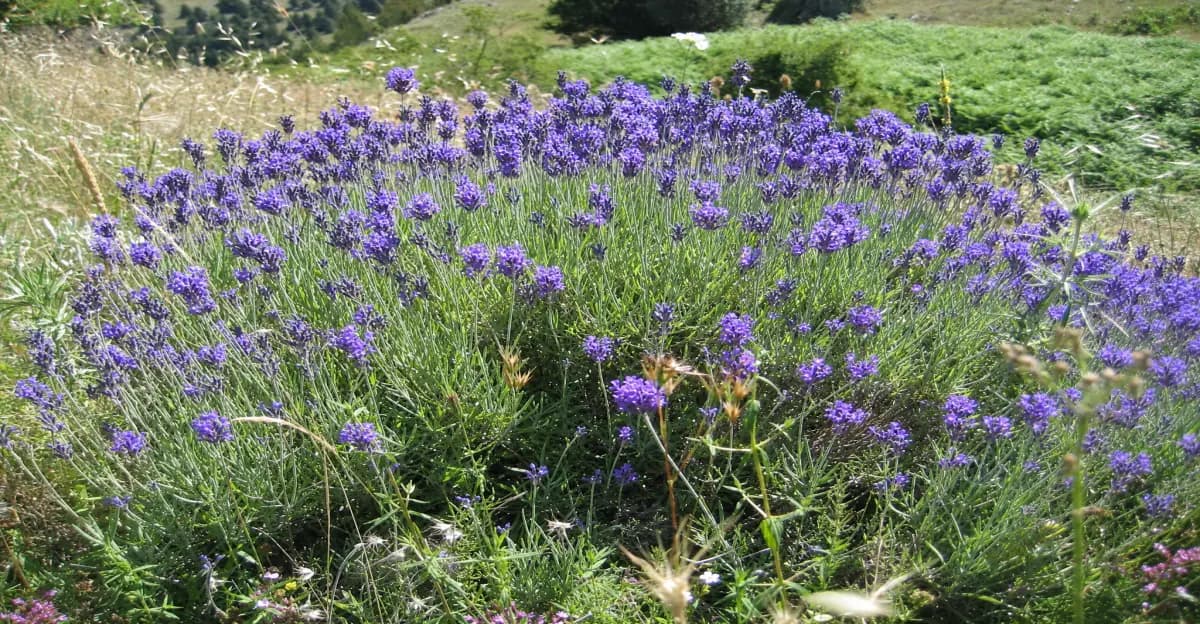
Key point: Lavender (Lavandula angustifolia) is a woody Mediterranean herb that rewards growers with fragrant flowers, essential oils, and culinary uses — but only if you give it what it actually wants: sharp drainage, full sun, lean soil, and restrained watering. This guide covers everything from variety selection and planting to pruning, harvesting, and even hydroponic cultivation, backed by peer-reviewed research and university extension data. See the full lavender growing profile for detailed nutrient schedules and environment parameters.
Why grow lavender?
Lavender is one of the world's most widely cultivated aromatic herbs, and for good reason. The genus Lavandula belongs to the Lamiaceae (mint) family and includes over 45 species, though English lavender (L. angustifolia) remains the standard for gardens, essential oil production, and culinary use. Its name traces back to the Latin lavare — "to wash" — reflecting its centuries-old role in bathing and perfumery.
Beyond aesthetics, lavender is a genuinely productive plant. A single mature bush can yield 50 g of dried flower buds per season, with field plantings producing roughly 300 g per square meter. The essential oil — dominated by linalool and linalyl acetate — has documented antioxidant, antimicrobial, and anxiolytic properties, making it one of the most commercially valuable herb crops globally.
For home growers, lavender offers a rare combination: drought tolerance once established, natural deer and rabbit resistance, powerful pollinator attraction, and a productive lifespan of 10–20 years with proper pruning. It thrives outdoors in USDA zones 5–9, adapts well to containers, and can even be grown hydroponically with the right approach.
Choosing the right variety
Not all lavender is the same. The variety you choose determines hardiness, size, fragrance intensity, and suitability for your growing environment.
| Type | Species | Height | Hardiness | Best for |
|---|---|---|---|---|
| English lavender | L. angustifolia | 25–60 cm | Zones 5–9 | General gardens, essential oil, culinary, cold climates |
| Lavandin | L. x intermedia | 60–90 cm | Zones 5–9 | Large landscapes, commercial oil production, higher yields |
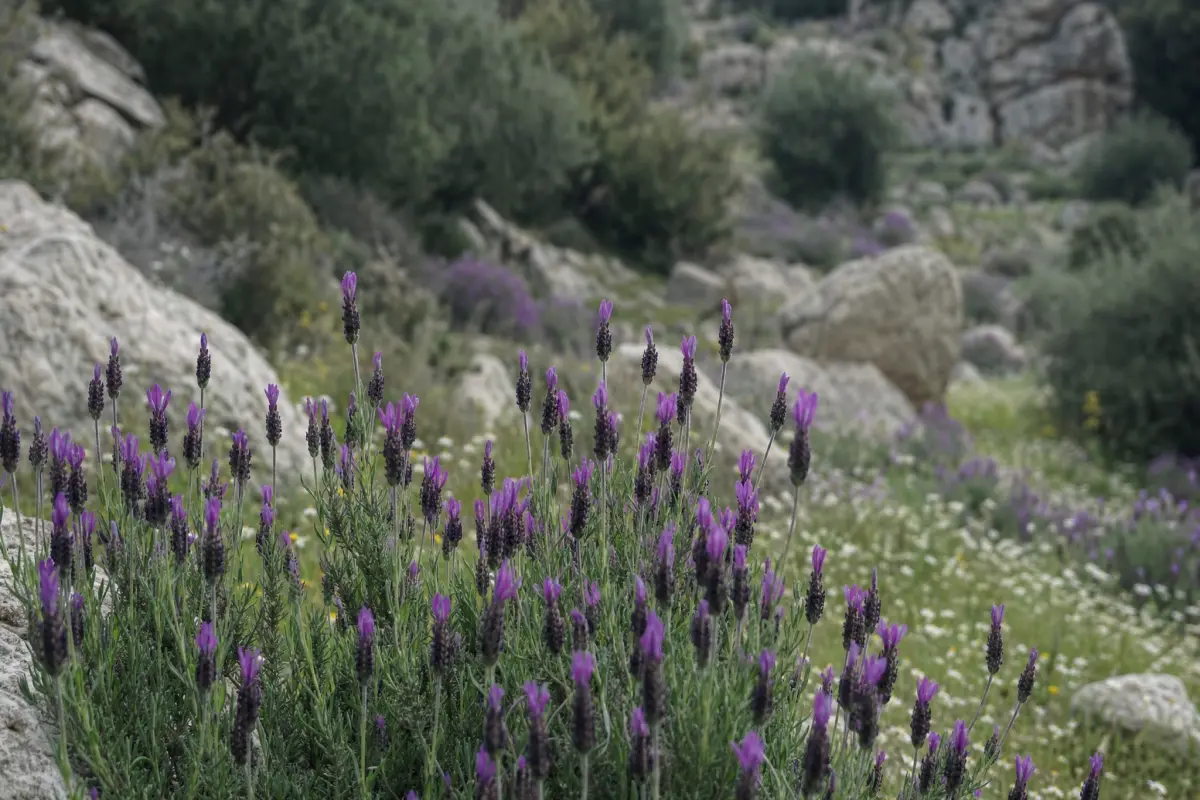
| French lavender | L. stoechas | 30–60 cm | Zones 7–10 | Containers, warm climates, ornamental use |
| Spanish lavender | L. dentata | 60–90 cm | Zones 8–11 | Warm/humid climates, year-round flowering |
For most growers, English lavender cultivars are the safest bet. Within that species, two compact cultivars stand out:
- 'Munstead' — 30–45 cm, early blooming, excellent cold hardiness (to -29 C / zone 5), strong fragrance. The most widely recommended garden cultivar.
- 'Hidcote' — 30–40 cm, deep violet flowers, compact habit. Outstanding for borders and containers.
For essential oil production, look for cultivars high in linalyl acetate and low in camphor — camphor creates a harsh, medicinal scent. 'Mailette' and 'Maillette' are commercial standards in Provence for this reason.
If you live in a humid climate (southeastern US, UK coastal areas), consider lavandin hybrids like 'Phenomenal' or 'Grosso', which show better tolerance to humidity-related fungal diseases than pure English lavender.
Planting requirements
Sunlight: full sun is non-negotiable
Lavender is a high-light plant that requires a minimum of 6–8 hours of direct sunlight daily. Research by Mattson and Erwin (2005) demonstrated that flowering percentage increases dramatically under high daily light integral (DLI), with 13.4 mol/m²/d producing substantially more blooms than 5.3 mol/m²/d. Runkle and Blanchard (2022) found linear improvements in inflorescence number as DLI increased from 5 to 20 mol/m²/d.
In practical terms: plant lavender in the sunniest spot you have. South-facing locations are ideal in the Northern Hemisphere. Partial shade produces leggy, weak plants with poor flowering and reduced essential oil content.
Soil: drainage above all else
This is the single most important factor for lavender success. Lavender evolved on the rocky, alkaline hillsides of the Mediterranean, and it demands soil that drains fast and completely. Wet feet kill lavender faster than any pest or disease.
Ideal soil profile:
- pH: 6.5–7.5 (slightly alkaline). If your soil is acidic, amend with agricultural lime.
- Texture: Sandy loam or gravelly soil. Heavy clay is lavender's worst enemy.
- Drainage test: Dig a 30 cm hole, fill with water, and time how long it takes to drain. If it takes more than 30 minutes, your soil needs amendment.
- Amendment for heavy soils: Mix in coarse sand, perlite, or fine gravel at a 1:1 ratio with native soil. Raised beds (20–30 cm above grade) are the most reliable fix for poor drainage.
Do not add compost or organic-rich amendments to lavender beds — unlike most garden plants, lavender performs best in lean, nutrient-poor soil. Rich soil promotes soft, floppy growth that's vulnerable to rot and produces less essential oil.
Spacing
Give lavender room to breathe. Adequate spacing prevents the humid microclimates that trigger fungal diseases:
- Compact cultivars ('Munstead', 'Hidcote'): 30–45 cm apart
- Standard English lavender: 45–60 cm apart
- Lavandin hybrids ('Grosso', 'Phenomenal'): 60–90 cm apart
- Row spacing (field production): 90–120 cm between rows
When to plant
Spring planting (April–May) is the standard recommendation for most zones. Plant after the last frost when soil temperatures exceed 15 C. This gives roots an entire growing season to establish before winter.
Fall planting (September–October) works well in zones 7 and warmer, and often produces stronger first-year plants because roots establish during cool, moist conditions without the stress of summer heat.
Watering and fertilization
Watering: less is more
Once established (after the first growing season), lavender is remarkably drought-tolerant. Overwatering is the most common cause of lavender failure in home gardens.
First year: Water deeply once per week, allowing the soil to dry completely between waterings. In very hot weather (above 35 C), increase to twice per week. Always water at the base — never overhead, which wets foliage and promotes fungal disease.
Established plants: In most climates, rainfall alone is sufficient. Supplement only during extended dry spells (3+ weeks without rain). Container plants need more frequent watering than in-ground plantings, but the same principle applies: let the top 2–3 cm of soil dry before watering again.
Signs of overwatering: Yellowing lower leaves, wilting despite wet soil (paradoxical wilt), mushy or dark-colored roots, and a foul smell from the root zone.
Fertilization: keep it lean
Lavender is a light feeder that actively suffers from excess fertilization. Research by Chrysargyris et al. (2016) found that excessive nitrogen promotes vegetative growth at the direct expense of essential oil yield — the very thing most growers want to maximize.
Outdoor, in-ground plants: A single application of balanced, slow-release fertilizer (10-10-10) in early spring is sufficient. Many experienced growers skip fertilizer entirely and apply a thin layer of crushed limestone or agricultural lime instead, which maintains alkaline pH without adding excess nutrients.
Container plants: Feed monthly during the growing season with a dilute, low-nitrogen liquid fertilizer (5-10-10 or similar). Stop feeding by late summer to allow plants to harden off for winter.
The key principle: Lavender that looks "too lush" and green is actually over-fertilized. Healthy lavender has a slightly silvery, compact appearance.
Pruning: the essential skill
Annual pruning is the single most important maintenance practice for lavender longevity. Without it, plants become woody, leggy, and split open from the center within a few years. With consistent pruning, a lavender plant can remain productive for 15–20 years.
The cardinal rule
Never cut into old bare wood. Lavender rarely regenerates from leafless, woody stems. If you prune too aggressively into old wood, that section of the plant will likely die. Always leave at least 2–3 cm of green growth above the woody base.
Spring pruning (March–April)
When new green growth appears at the base in early spring, cut back approximately one-third of the top growth using hedge shears or hand pruners. Shape the plant into a compact mound. This is your main structural pruning.
Post-bloom pruning (after each harvest)
After the first bloom flush (typically June–July), shear spent flower stalks back to the foliage line. This encourages a second flowering in late summer and prevents the plant from putting energy into seed production.
First-year plants
For newly planted lavender, clip any developing flower buds during the first season. This feels counterintuitive, but redirecting energy from flowering to root and vegetative development produces a much stronger, bushier plant from year two onward.
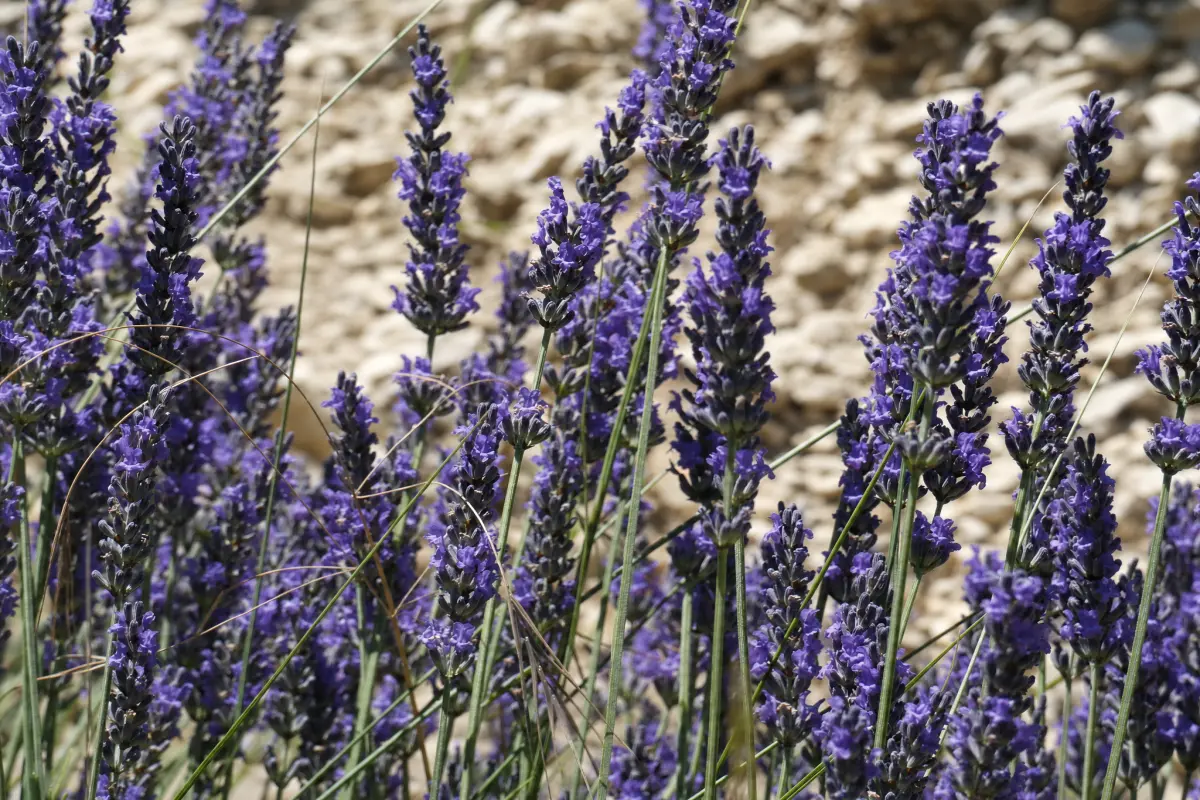
Seasonal care calendar
| Month | Task |
|---|---|
| January–February | Start seeds indoors (10–12 weeks before last frost). Cold-stratify seeds at 1–4 C for 2–6 weeks before sowing to improve germination. |
| March–April | Spring pruning when basal green growth appears. Remove winter mulch. Prepare planting beds. Transplant hardened-off seedlings or rooted cuttings after last frost. |
| May | Direct sow or transplant remaining plants. Begin watering schedule for new plantings. Take softwood cuttings for propagation. |
| June–July | First harvest window — cut when 25–50% of buds on each spike have opened. Post-bloom pruning after harvest. Monitor for spider mites in hot, dry weather. |
| August | Second harvest if plants were pruned after first bloom. Take semi-hardwood cuttings for propagation. Reduce watering for established plants. |
| September–October | Light shaping pruning. Fall planting window in zones 7+. Divide mature, non-woody plants if needed. |
| November–December | In zones 5–6, apply a light winter mulch (straw, not bark) after the first hard frost. Avoid heavy mulch against the crown. Reduce watering to near zero for dormant plants. |
Growing lavender in containers
Container culture is an excellent option, especially for growers in humid climates or with heavy clay soil. The key advantage: you control the growing medium entirely.
Container requirements
- Minimum size: 20 cm deep, 25 cm wide (2–5 L volume per plant)
- Material: Terracotta or breathable fabric pots are ideal — their porosity promotes air exchange and prevents waterlogging. Avoid non-draining decorative pots.
- Drainage: Absolutely essential. Ensure multiple drainage holes. Do not place a saucer under the pot that collects standing water.
Potting mix
Do not use standard potting soil, which retains too much moisture. Instead, mix:
- 50% quality potting mix or coco coir
- 30% coarse perlite
- 20% coarse sand or fine gravel
This provides the fast drainage and aeration that lavender demands.
Container care
- Watering: Check every 2–3 days. Water deeply when the top 2–3 cm of mix is dry. Containers dry faster than garden beds, so you'll water more frequently than in-ground plants — but overwatering remains the primary risk.
- Fertilizing: Feed monthly during the growing season with dilute, low-nitrogen liquid fertilizer.
- Repotting: Repot every spring with fresh potting mix. Lavender's roots benefit from annual media replacement.
- Overwintering: In zones 5–6, move containers to an unheated garage or sheltered spot for winter. Lavender needs a cold dormancy period but shouldn't endure sustained below-zero soil temperatures in a pot (container roots are more exposed than in-ground roots).
Growing lavender indoors and hydroponically
Indoor growing
Lavender can be grown indoors year-round, though it's more demanding than most houseplants.
Light is the limiting factor. A bright south-facing window providing 6–8 hours of direct sunlight may work for French lavender (L. stoechas), which is the most compact and shade-tolerant species. For English lavender, supplemental LED grow lights are nearly always necessary — target 14–16 hours of light at 300–400 umol/m²/s PPFD, providing approximately 18 mol/m²/d DLI.
Humidity must stay low. Indoor environments in winter can actually be ideal for lavender (dry heated air), but in humid climates, keep the relative humidity at or below 50%. A small oscillating fan providing 0.3–1.0 m/s airflow across the canopy prevents the stagnant conditions that promote Botrytis and other fungal diseases.
Temperature: Daytime 20–28 C, nighttime 15–18 C. Lavender needs this day-night temperature differential for healthy growth. Most cultivars also require a vernalization period (5–10 C for 5–15 weeks) to trigger flowering, so uninterrupted warmth indoors may result in vegetative growth without blooms.
Hydroponic lavender
Hydroponic cultivation of lavender is feasible and has been validated in multiple peer-reviewed studies. The primary challenge is lavender's extreme sensitivity to waterlogging — system choice matters enormously.
Best hydroponic systems for lavender (ranked):
- Drip irrigation — Best overall. Tunable drip pulses maintain a moist-but-aerated root zone. Chrysargyris et al. (2018) used drip fertigation in perlite with excellent results. pH 5.8–6.5, EC 1.0–2.0 mS/cm.
- Ebb and flow — Well-suited. Intermittent flooding mimics lavender's preferred wet-dry cycle. Short flood durations (10–15 min) with full drainage between cycles.
- Aeroponics — Excellent root-zone oxygenation. Crisan et al. (2023) notes "promising results" for aeroponic lavender.
- DWC (Deep Water Culture) — Possible but risky. Requires strong aeration with multiple air stones and a large air gap. Roots should only be partially submerged.
- NFT — Requires wide channels (100 mm+) due to lavender's woody root system.
- Kratky (passive) — Not suitable. Non-aerated standing water is incompatible with lavender's high oxygen demand. Root rot is virtually guaranteed.
Hydroponic nutrient targets (vegetative phase):
| Nutrient | Target (ppm) |
|---|---|
| Nitrogen (N) | 175–225 |
| Phosphorus (P) | 40–60 |
| Potassium (K) | 250–325 |
| Calcium (Ca) | 150–200 |
| Magnesium (Mg) | 50–80 |
Potassium is the key cation for essential oil biosynthesis and should increase to 300–350 ppm during flowering (optimal ~325 ppm). Nitrogen should not exceed 200 ppm — excess N suppresses oil production in favor of vegetative growth. At flowering onset, reduce N by 10–15% while maintaining or increasing K and P. Target EC 1.0–2.0 mS/cm, pH 5.8–6.5.
Source divergence — calcium: The vegetative Ca target above (150–200 ppm) reflects practical hydroponic formulations. However, Chrysargyris et al. (2018) used significantly higher Ca (300 ppm) and Mg (140 ppm) in their full research nutrient solution. Growers seeking to replicate exact experimental conditions — particularly for essential oil optimization — may benefit from testing the higher Ca level.
Detailed Nutrient Schedule by Growth Stage
The following tables provide stage-specific nutrient targets for hydroponic lavender, synthesized from peer-reviewed fertigation studies.
Macronutrient targets by stage (ppm):
| Nutrient | Seedling | Vegetative | Flowering |
|---|---|---|---|
| Nitrogen (N) | 80–120 (opt. 100) | 175–225 (opt. 200) | 150–200 (opt. 175) |
| Phosphorus (P) | 25–35 (opt. 30) | 40–60 (opt. 50) | 50–70 (opt. 60) |
| Potassium (K) | 100–150 (opt. 125) | 250–325 (opt. 275) | 300–350 (opt. 325) |
| Calcium (Ca) | 100–150 (opt. 120) | 150–200 (opt. 175) | 200–300 (opt. 250) |
| Magnesium (Mg) | 30–50 (opt. 40) | 50–80 (opt. 65) | 60–100 (opt. 80) |
| Sulfur (S) | 25–35 (opt. 30) | 35–50 (opt. 40) | 40–55 (opt. 50) |
| EC (mS/cm) | 0.8–1.2 | 1.0–1.6 | 1.2–2.0 |
| pH | 6.0–6.5 | 5.8–6.5 | 5.8–6.5 |
Key ratios to maintain:
- N-P-K balance: Target 200-50-275 during peak vegetative growth.
- Ca:Mg ratio: 2.5:1 — calcium-dominant ratio supports cell wall integrity and prevents Mg-induced Ca lockout.
- K:Ca ratio: 1.5:1 — potassium dominance over calcium promotes essential oil biosynthesis during flowering.
Micronutrient targets (all stages):
| Micronutrient | Target (ppm) |
|---|---|
| Iron (Fe) | 2.0 |
| Manganese (Mn) | 0.5 |
| Zinc (Zn) | 0.1 |
| Copper (Cu) | 0.05 |
| Boron (B) | 0.2 |
| Molybdenum (Mo) | 0.05 |
Stage transition protocol:
- Seedling → Vegetative (4–6 true leaf pairs): Increase N gradually from 120 to 175 ppm over 7–10 days. Raise EC from 1.2 to the 1.0–1.6 vegetative range.
- Vegetative → Flowering (at first visible bud formation): Reduce N by 10–15% from vegetative peak. Increase K from 275 to 300–325 ppm. Increase P from 50 to 60 ppm. Raise EC to 1.2–1.6.
For growing media, use 70% coco coir + 30% perlite in drip systems, or LECA (expanded clay pebbles) in DWC and NFT setups. The critical property is rapid drainage — oxygen-deprived roots are lavender's death sentence.
For a deeper look at hydroponic parameters and system compatibility, see the lavender nutrient profile.
Propagation
Lavender propagates by four methods, listed from most to least reliable:
1. Stem cuttings (preferred)
This is the commercial standard. Take 5–8 cm semi-hardwood cuttings from side shoots in summer after bloom. Remove lower leaves, optionally dip the cut end in rooting hormone, and insert into moist, well-draining media (perlite, sand, or a perlite-vermiculite mix) at 21 C. Roots form in 21–40 days, with success rates of 47–83% depending on moisture conditions. Drier root-zone conditions actually favor root development over shoot development in lavender cuttings.
Interestingly, aeroponic propagation systems yield 20–30% greater root length than traditional mist or float systems, making them a compelling option for serious propagators.
2. Layering
Pin a low-growing stem to the ground in spring, ensuring the buried section makes contact with moist soil. Roots form at the contact point over the growing season. Sever the rooted section the following year and transplant. High success rate with almost no effort.
3. Division
Works on younger, non-woody plants. In spring, carefully dig up the plant and separate the root clump into sections, each with healthy roots and multiple growth points. Replant immediately.
4. Seed
The slowest and least reliable method. Germination takes 14–28 days with often low success rates, and seedlings need 100–200 days to reach transplant size. Cold stratification (2–6 weeks at 1–4 C) significantly improves results. Maintain germination temperature at 15–24 C. Seed propagation introduces genetic variation, which can be desirable or undesirable depending on your goals.
Common problems and solutions
Root and crown rot (the #1 killer)
The most serious threat to lavender. Six Phytophthora species have been confirmed as pathogenic on three Lavandula species in controlled trials. Root rot presents as wilting despite adequate moisture, yellowing lower leaves, and dark, mushy roots with a foul odor. Crown rot shows as blackened tissue at the plant's woody base.
Prevention is the only reliable strategy: ensure excellent drainage, never overwater, maintain airflow around the base, and use drip irrigation rather than overhead watering. In hydroponic systems, maintain dissolved oxygen above 6 mg/L and keep nutrient solution temperature at 18–22 C.
Gray mold (Botrytis cinerea)
Fuzzy gray-brown mold on leaves and flower spikes, favored by high humidity (>80% RH) and poor air circulation. Remove infected material immediately. Maintain RH between 30–50%, space plants adequately, and water only at the base in the morning.
Spider mites
The most common arthropod pest in indoor and hydroponic lavender. Fine stippling on upper leaf surfaces, yellowing, and silken webbing on leaf undersides. Spider mites thrive in the same warm, dry conditions lavender prefers (>25 C, <50% RH), making them a persistent challenge. Inspect leaf undersides weekly. Treat with insecticidal soap or neem oil, or release predatory mites (Phytoseiulus persimilis).
Nutrient deficiency signs
- Nitrogen deficiency: General chlorosis, stunted growth, small leaves
- Phosphorus deficiency: Purple-tinged leaves, reduced flowering — adequate P nearly doubles inflorescence production
- Iron deficiency: Interveinal chlorosis on young leaves
- Excess nitrogen: Lush green growth with weak fragrance and poor oil yield
If you notice these signs, check your pH first — nutrient lockout from pH drift is more common than actual deficiency. For a detailed nutrient deficiency visual guide, see our plant nutrient deficiency chart.
Harvesting lavender
Lavender is a perennial subshrub that regrows reliably after each harvest, blooming from year 2–3 onward, with peak production from year 3.
When to harvest
Cut when 25–50% of flower buds on each spike have opened for dried flower and culinary use. Harvest in the morning after dew has evaporated but before midday heat — volatile oils dissipate in strong sunlight.
Source divergence — harvest timing for oil: University extension sources recommend cutting at 25–50% bloom for general use. However, Crisan et al. (2023) notes that peak essential oil concentration occurs at 50–75% bloom. If your primary goal is oil distillation, waiting until roughly half to three-quarters of buds have opened may yield a higher-quality extract.
How to harvest
Use pruning shears or a sickle. Cut stems as long as possible, which doubles as post-bloom pruning. A second (and sometimes third) harvest is possible if you prune promptly after the first bloom flush.
Drying and storage
Bundle 50–100 stems and hang upside-down in a cool, dark, well-ventilated space for approximately two weeks. Air-drying is preferred over oven-drying — research shows that air-dried lavender preserves 60–70 volatile compounds compared to 56–57 with oven drying, retaining significantly more aromatic complexity.
Store dried flowers in dark, airtight containers in a cool, dry place. Properly dried lavender retains its fragrance for 1–2 years.
Advanced Essential Oil Distillation Guide
Lavender essential oil distillation is a viable value-added operation for growers with sufficient plant material. Understanding the process, quality variables, and yield expectations is essential for informed production decisions.
Harvest timing for maximum oil yield
For distillation purposes, harvest at 50–75% bloom for peak essential oil concentration — later than the 25–50% recommended for dried flower use. The additional maturation increases linalool and linalyl acetate content while reducing camphor levels. Cut in the morning after dew has fully evaporated but before peak solar radiation, as UV exposure degrades volatile terpenes in cut material.
Steam distillation process
Steam distillation is the industry-standard method for lavender essential oil extraction:
- Loading: Pack fresh or partially wilted lavender (stems and flowers) into the distillation vessel. Light compression improves steam distribution — avoid over-packing, which creates channeling.
- Steam generation: Heat water in the boiler to produce steady, low-pressure steam (100–105 C). Excessive temperature or pressure degrades heat-sensitive compounds like linalyl acetate.
- Distillation time: 60–90 minutes for English lavender. Over-distillation extracts heavier, less desirable compounds that reduce oil quality.
- Condensation: Steam carrying volatile compounds passes through a condenser. The condensate separates into essential oil (upper layer) and hydrosol (lower layer) in a separating funnel or Florentine flask.
Oil quality markers
High-quality English lavender oil is characterized by the following composition:
| Compound | Target Range | Notes |
|---|---|---|
| Linalool | 25–38% | Primary alcohol; higher in L. angustifolia than lavandin |
| Linalyl acetate | 25–45% | Key ester; correlates with perceived floral quality |
| Camphor | <1.5% | Higher camphor = lower quality; dominant in lavandin |
| 1,8-Cineole | <2.5% | Medicinal note; should be minimized |
Cultivar selection has the strongest influence on oil composition. 'Mailette' and 'Maillette' are the commercial standards in Provence due to their consistently high linalyl acetate and low camphor profiles.
Expected yield
Essential oil yield varies by cultivar, growing conditions, and distillation efficiency:
- Fresh flower yield: 0.8–1.5% (v/w) for L. angustifolia
- Dried flower yield: 2.0–4.0% (v/w) — concentration effect from moisture loss
- Per-plant equivalent: Approximately 0.5–1.5 mL from a mature bush yielding 50 g dried flower
- Per-hectare: 15–40 kg for English lavender; 40–100 kg for lavandin hybrids
Hydrosol as a byproduct
The aqueous condensate (hydrosol or "lavender water") retains water-soluble aromatic compounds and has commercial value for cosmetics, room sprays, and culinary applications. A typical distillation run produces 5–10 L of hydrosol per kg of plant material.
Commercial Lavender Scaling Guide
Scaling lavender from garden to commercial production requires attention to variety selection, planting density, harvest logistics, and essential oil economics.
Planting density and layout
Commercial English lavender plantings typically use 45–60 cm in-row spacing with 90–120 cm between rows, yielding approximately 14,000–25,000 plants per hectare depending on cultivar size. Lavandin hybrids (L. x intermedia), which are larger, are planted at 60–90 cm in-row with 120–150 cm row spacing, producing 7,000–14,000 plants per hectare. For mechanized harvesting, maintain consistent row widths of at least 90 cm to accommodate sickle-bar or reciprocating harvesters.
Yield projections
| Metric | English Lavender | Lavandin |
|---|---|---|
| Dried flower yield | 300 g/m² (~3,000 kg/ha) | 400–600 g/m² (~4,000–6,000 kg/ha) |
| Essential oil yield | 15–40 kg/ha | 40–100 kg/ha |
| Oil content (% dry weight) | 1.5–3.0% | 1.0–2.0% |
| Peak production year | Year 3–4 | Year 3–4 |
| Productive lifespan | 10–15 years | 10–12 years |
English lavender oil commands a significant price premium over lavandin due to higher linalyl acetate content and lower camphor levels.
Cost considerations
Major cost centers for commercial lavender operations:
- Plant stock: 14,000–25,000 plants/ha. Propagating from cuttings in-house (47–83% success rate) reduces this cost significantly.
- Establishment period: 2 years before first meaningful harvest. Budget for weed management, irrigation, and input costs with minimal revenue during this phase.
- Harvest labor: Hand harvesting requires approximately 150–200 labor-hours per hectare per harvest. Two harvests per season are typical for well-managed fields.
- Post-harvest: Drying infrastructure and storage. For oil production, distillation equipment represents a significant capital investment.
Hydroponic commercial production
For indoor/greenhouse commercial production, drip irrigation in perlite or coco-perlite media is the recommended system. Key advantages over field production:
- Year-round production with supplemental lighting (target 18 mol/m²/d DLI)
- Precise nutrient control maximizes essential oil yield
- Climate-independent — viable in regions unsuitable for field lavender
- Higher per-plant yield potential due to optimized conditions
The primary constraint is energy cost for supplemental lighting and climate control, which must be offset by premium product positioning or essential oil distillation revenue.
What's next
This guide is the foundation of our lavender content hub. As we expand, you'll find dedicated deep-dives on specific topics including growing lavender in pots, pruning techniques, indoor and hydroponic cultivation, propagation methods, pest and disease management, and harvesting for essential oil. Each spoke article will link back here and provide the granular detail that this overview can only introduce.
Ready to grow lavender without soil? Our dedicated hydroponic lavender guide covers system selection, nutrient targets, and essential-oil optimization for indoor and greenhouse production.
For detailed nutrient data, environment parameters, and system compatibility ratings, visit the lavender plant profile. If you're exploring hydroponic growing more broadly, our guides on indoor hydroponic herbs and plant nutrient deficiency charts complement this article well.