About This Plant
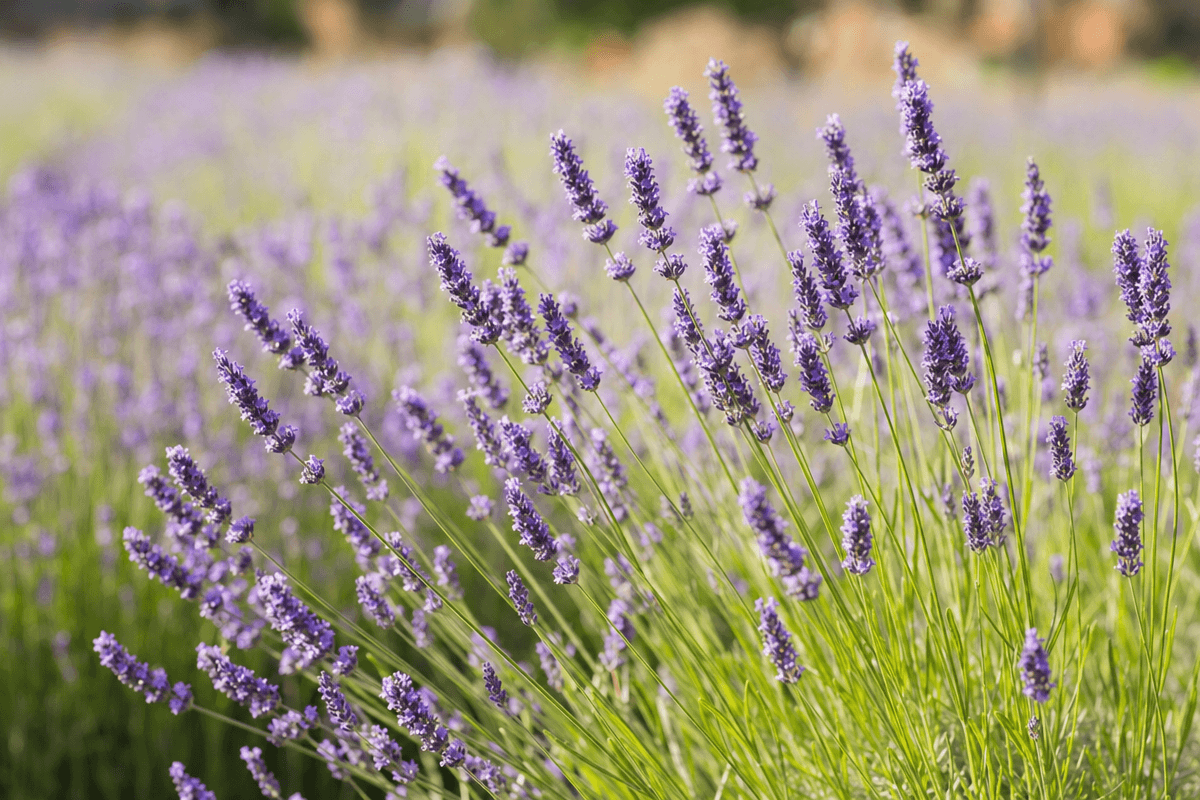
Lavender is a woody Mediterranean herb grown for fragrant foliage and flowers, thriving in bright light, low humidity, and sharply drained media.
How to Grow Lavender
Learn how to grow Lavender from seed to harvest in 155 days. Intermediate difficulty. Complete nutrient guide, pH/EC requirements, and growing conditions for hydroponics, soil & greenhouse.
Sources cited: 22.
Nutrient Requirements by Growth Stage
Lavender in hydroponics requires a potassium-dominant nutrient solution with moderate nitrogen and elevated calcium and magnesium, reflecting its Mediterranean, calcareous-soil origin. The optimal vegetative-phase solution is N 200, P 50, K 275, Ca 175, Mg 65, S 40 ppm, based on three peer-reviewed hydroponic studies…
Sign in to view nutrient requirements
A free account unlocks NPK targets for all four growth stages, micronutrient levels, a per-stage nutrient calculator, and the full nutrition guide. Signing up takes one click. Truleaf is a free, non-profit project, and every new account helps it grow. No spam, ever.
Growing Environments
Lavender thrives across all four growing environments. Outdoor: The primary environment; requires full sun (6-8 hours), well-drained alkaline soil (pH 6.5-7.5), spacing 45-60 cm within rows; hardy USDA zones 5-9…
Temperature
Lavender (Lavandula spp.) is a Mediterranean-origin species adapted to warm, dry summers and cool winters. For seed germination, maintain substrate temperatures of 18-24C (65-75F), with 21C being the sweet spot for consistent sprouting in 14-21 days. Cold stratification at 1-4C for 4-6 weeks before sowing improves germination uniformity. During active vegetative growth, daytime temperatures of 20-28C are optimal, with nighttime drops to 15-18C. The forcing temperature used in peer-reviewed flowering studies is 20C. Above 30C, growth quality declines; heat stress symptoms (leaf curling, reduced oil production) begin above 35C. Lavender requires vernalization (5-10C for 5-15 weeks) to trigger robust flowering in most cultivars. In hydroponic environments, target 22C as the overall optimal setpoint.
Humidity
Lavender evolved in the dry Mediterranean climate and strongly prefers low humidity. In hydroponic indoor cultivation, maintain relative humidity between 30-50%, with 40% as the optimal target…
Light
Lavender is a high-light, facultative long-day plant. Research by Mattson & Erwin demonstrated that flowering percentage increases dramatically under high DLI (13.4 vs…
Airflow
Lavender requires consistent air movement to prevent fungal diseases and maintain the dry canopy conditions it evolved with in Mediterranean climates. Maintain airflow velocities of 0.3-1.0 m/s across the canopy…
Sign in to view environmental requirements
A free account unlocks exact temperature, humidity, light and airflow targets, including germination and growth ranges, DLI, photoperiod and PPFD, plus the full environment guide. Signing up takes one click. Truleaf is a free, non-profit project, and every new account helps it grow. No spam, ever.
Hydroponic System Compatibility
For hydroponic lavender, drip irrigation is the optimal system choice. Tunable pulse drip maintains a moist-but-aerated root zone matching the conditions used in peer-reviewed research where plants grew in perlite with 8 daily fertigation pulses…
Growing Media
The primary recommended medium for hydroponic lavender is a blend of 70% coco coir and 30% perlite, providing excellent drainage with moderate moisture retention. For DWC and NFT systems, LECA (expanded clay pebbles) is preferred for its superior aeration and pH-neutral properties…
Container Specs
For hydroponic lavender, use net pots of 5-10 cm (2-4 inch) diameter, with 7.5 cm being standard for most systems. Container volume should be 2-5 liters per plant; Chrysargyris et al…
Training & Support
Lavender is a self-supporting subshrub requiring no staking, trellising, or structural support. However, annual pruning is essential and is the single most critical maintenance practice for plant longevity…
Sign in to view system compatibility
A free account unlocks why each of the six systems fits or fails, plus growing media, container sizes, training methods, companion plants, and the full systems guide. Signing up takes one click. Truleaf is a free, non-profit project, and every new account helps it grow. No spam, ever.
Propagation
Lavender is propagated by four methods: stem cuttings, seed, layering, and division. Stem cuttings are the preferred commercial technique -- take 5-8 cm semi-hardwood cuttings from side shoots in summer after bloom, remove lower leaves, optionally dip in rooting hormone, and insert into moist sandy media at 21C…
Harvesting
Lavender is a perennial subshrub that regrows reliably after each harvest, with a productive lifespan of 10-20 years under proper care. Harvest flower stems in the morning after dew has evaporated but before midday heat, when essential oil concentration peaks…
Planting Calendar
Sow indoors (Jan-Mar): Start seeds 10-12 weeks before last frost. For zones 5-7, begin mid-March; zone 8, February; zone 9, January-February…
Common Issues
Lavender is a Mediterranean xerophyte with relatively few problems under optimal conditions, but hydroponic cultivation introduces specific risks. The primary threat in recirculating systems is root and crown rot caused by Pythium spp…
Get the full science-backed guide
By signing up, you help keep Truleaf free and support the growth of our nonprofit project. Your account unlocks full details for every plant issue—including symptoms, causes, step-by-step solutions, and prevention—plus the month-by-month planting calendar, the complete guide, and all research sources. It only takes one click. No spam, ever.