Hydroponic pH Keeps Rising? The 4 Real Causes and the Fixes
Why does hydroponic pH keep rising every day? It is not a broken meter. Nitrate-dominant nutrient uptake and source-water alkalinity push pH up. Learn the four real causes of upward pH drift and the fixes that actually last.
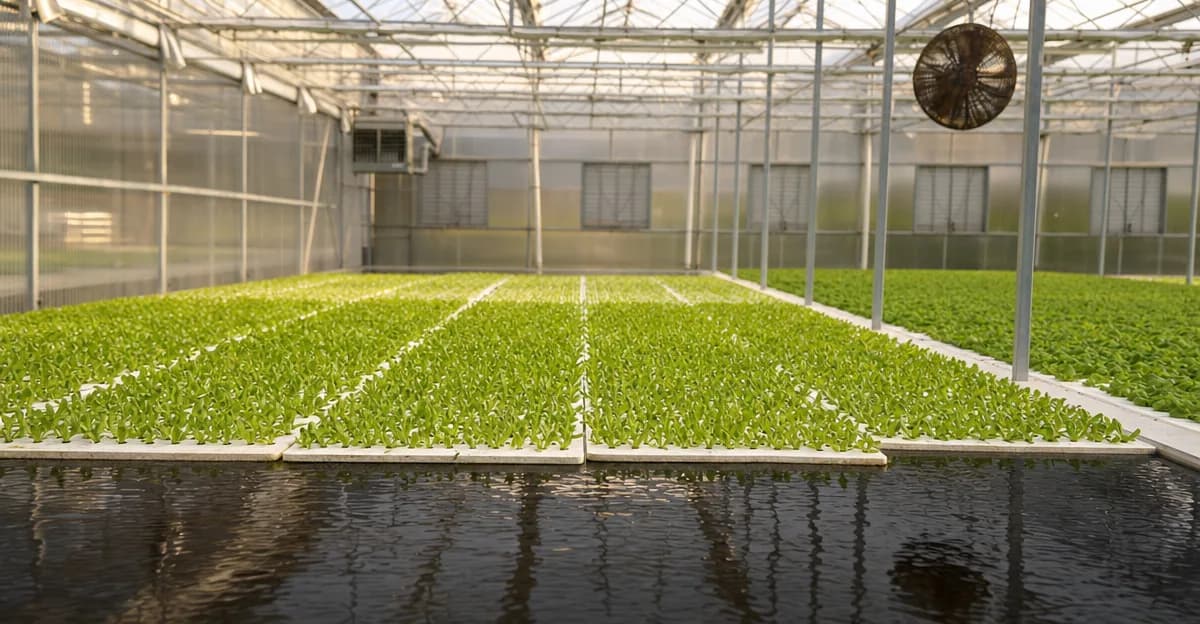
Key takeaway: A hydroponic pH that climbs a little higher every day is not a broken meter and not "weak" pH-Down. In a standard nutrient solution — which is mostly nitrate nitrogen — your plants push pH upward as they feed, and hard, alkaline source water pushes it up further. Rising pH is the default outcome of the chemistry, not a mysterious fault. Once you know whether the driver is your plants, your water, or a lack of buffering, you stop chasing the number and start fixing the cause.
Why does my hydroponic pH keep rising?
Your hydroponic pH keeps rising for two main reasons working together: your plants raise it as they absorb nutrients, and your source water raises it through alkalinity.
Most complete hydroponic formulas supply nitrogen mostly as nitrate (NO₃⁻). When roots take up a negatively charged nitrate ion, they release a hydroxide or bicarbonate ion (OH⁻/HCO₃⁻) back into solution to stay electrically balanced — and that raises pH. Because healthy plants are constantly feeding, this upward push runs all day, every day. On top of that, if your tap or well water carries alkalinity (dissolved carbonates and bicarbonates), it continually neutralizes your acid and drags pH back up.
There are four causes to work through, in order of how often they dominate:
- Nitrate-dominant nutrient uptake — your plants co-release OH⁻/HCO₃⁻ as they feed.
- Source-water alkalinity — carbonates/bicarbonates in hard water push pH up and resist correction.
- Low buffering capacity — dilute solutions swing fast and far with little to hold them.
- Biofilm and algae — a smaller, day/night effect layered on top.
The rest of this guide diagnoses each one, then gives the fixes that make a correction stay.
What pH should a hydroponic reservoir hold?
A hydroponic nutrient solution should sit between pH 5.5 and 6.5. This is the band where all the essential macro- and micronutrients stay dissolved and available to roots.
Once pH climbs above roughly 6.5, availability of iron, manganese, and phosphorus starts to fall as they precipitate out of solution. The nutrients are still physically in your reservoir — they are just chemically locked out, which is why high pH so often looks like a deficiency you cannot feed your way out of.
| Solution pH | What it means for a rising system |
|---|---|
| 5.5–6.5 | Target band — all nutrients maximally available |
| 6.5–7.0 | Iron, manganese, and phosphorus availability declining; correct now |
| Above 7.0 | Micronutrient lockout; interveinal yellowing on new growth likely |
A good practical target is to mix in at pH 5.8–6.0, which leaves room for the natural upward drift before you cross 6.5.
Is it my plants or my water?
Both — but they leave different fingerprints, and telling them apart is the whole diagnosis.
- If pH climbs steadily while a healthy crop is actively growing, and topping up with plain water changes little, the dominant driver is nitrate uptake by your plants.
- If pH creeps up fastest right after you top up or refill, and your acid additions "don't stay down," the dominant driver is source-water alkalinity.
- If pH swings large and fast in a small or dilute reservoir, you have a low-buffering problem amplifying whatever else is happening.
Cause 1: Your plants push pH up (nitrate-dominant uptake)
This is the cause most growers never suspect. Plant roots have to stay electrically balanced: for every charged nutrient ion they pull in, they release a counter-ion. When a root absorbs an anion like nitrate (NO₃⁻), it releases hydroxide or bicarbonate (OH⁻/HCO₃⁻) to compensate — and those raise solution pH.
This is not a hydroponic quirk. Marschner and colleagues (1991) measured it directly at the root surface: nitrate-fed roots raised the surrounding pH, while ammonium-fed roots lowered it. Jeong and Lee (1996) confirmed the same behavior in hydroponic solution culture, where net nitrate uptake raised solution pH and the shift tracked the ratio of anion to cation uptake. A modelling study by Custos and colleagues (2020) shows the general rule: solution pH change is set by the imbalance between cation and anion uptake, and anion-dominant (nitrate) feeding drives an OH⁻/HCO₃⁻ efflux and a pH rise.
Here is why this makes rising pH the default in recirculating hydroponics: standard nutrient formulas are mostly nitrate-N. So healthy, well-fed plants are, by design, running an anion-dominant uptake that pushes pH up continuously. Nothing is broken — the chemistry is simply doing what it must.
Cause 2: Your water pushes it up too (alkalinity, not pH)
The single most useful distinction in this whole topic: it is your water's alkalinity, not its pH reading, that drives your reservoir pH up over time.
Alkalinity is the water's capacity to neutralize acid — its load of dissolved carbonates and bicarbonates. Two water samples can read the same pH on your meter yet behave completely differently: the high-alkalinity one carries a reservoir of buffering that keeps neutralizing your pH-Down and returning pH to a higher resting point. That is exactly the frustration of "I add acid and it won't stay down."
The magnitude is real and measured. Albano and colleagues (2017), across a full 52-week nursery production cycle, found that the carbonates and bicarbonates in irrigation water steadily drove up the pH of the growing medium. Acidifying that water to cut its alkalinity from 5 → 3 → 1 meq/L dropped the water's own pH from 7.37 → 6.37 → 4.79, and over the cycle the growing substrate tracked down with it, from 6.2 → 5.2 → 4.7. Strip the alkalinity and the resting pH falls — which is why it is the water's alkalinity load, not its starting pH reading, that predicts the drift.
There is a natural ceiling but also a catch: bicarbonate cannot push pH much above about 8.3, but at high concentration it provides strong buffering that stubbornly resists your acid additions. Extension guidance treats source-water alkalinity as the number to test — as a rough working line, water carrying more than roughly 75 ppm CaCO₃ (about 1.5 meq/L) of alkalinity tends to fight pH-Down and keep nudging the reservoir back up. If your pH won't hold after correction, test alkalinity, not just pH.
Cause 3: Low buffering makes it swing fast
Unlike soil, a hydroponic nutrient solution has very little inherent buffering — the property that resists pH change. van Rooyen and Nicol (2022) treat the solution's pH-buffering capacity as a measurable, and characteristically low, property of hydroponic systems. Low buffering does not create the upward push on its own, but it removes the brakes: a dilute or small-volume reservoir will swing further and faster from the same nitrate-uptake and alkalinity drivers.
Kudirka and colleagues (2023) put it plainly — hydroponic pH "fluctuates due to unbalanced ion absorption by plants," and liquid systems with little buffer are especially prone to drift. Adding a buffer (3 mM MES) gave passive pH control in the 6.0–6.5 band and delivered a 17% yield increase versus an unbuffered solution. The takeaway: if your pH lurches rather than creeps, buffering is your missing brake.
Cause 4: Biofilm and algae (a smaller, day/night effect)
There is a secondary, biological contributor. Microbial biofilm on reservoir walls and algae in light-exposed water can raise pH during daylight as photosynthesis pulls CO₂ out of solution, then let it fall back at night. This is worth knowing, but keep it in proportion: it is a diurnal oscillation, not a monotonic daily climb, and the evidence for it here is hobbyist-tier only — so treat it as a minor secondary cause, not the main event. If your pH is genuinely trending upward week over week, look to Causes 1 and 2 first. Still, blacking out your reservoir and keeping it clean removes this variable entirely.
Pin down the dominant driver: a 4-step diagnostic protocol
The tell-tale signs above narrow it down; this protocol confirms it. Run it once and you stop guessing which cause to treat.
1. Log the slope, not the number. Record pH at the same time each day for three to five days and track the rate of climb (for example, +0.2 pH/day), not just today's reading. A steady daily climb during active growth points at uptake; a jump concentrated right after top-ups points at water.
2. Run the plain-water top-up test. When the reservoir level drops, top up with plain, pH-neutral water (RO or distilled) instead of fresh nutrient. If pH keeps climbing anyway, your plants are the driver — nitrate uptake continues regardless of what you add. If the climb slows or stalls, your make-up water's alkalinity was feeding it.
3. Titrate your source water's alkalinity. A pH reading alone cannot tell you this — you need an alkalinity test (a titration kit or a lab report), read in meq/L or ppm CaCO₃ (1 meq/L ≈ 50 ppm CaCO₃). This is the single most diagnostic number behind "I add acid and it won't stay down".
4. Apply the threshold. As a rough working line, source water above roughly 75 ppm CaCO₃ (≈1.5 meq/L) of alkalinity will actively fight pH-Down and keep nudging the reservoir up; below that, nitrate uptake and low buffering usually dominate instead. Treat this as a guideline, not a hard cutoff — the exact figure shifts with reservoir volume and how often you refill.
How do I stop my hydroponic pH from climbing?
You stop rising pH by treating the cause, not just dosing more acid. Work these in order:
1. Acidify to correct — but with the right acid. Adding a food-safe acid (phosphoric, nitric, or citric) lowers pH immediately. Acidification is a proven lever: in Albano's trial, neutralizing source-water alkalinity with acid dropped the treated water's pH from 7.37 to 4.79 and pulled the growing medium's pH down with it. Dose in small increments (about 1 mL per gallon at a time) and re-check, because a low-buffered solution over-corrects easily.
2. Shift the nitrogen form — the fix that lasts. Because nitrate uptake is what pushes pH up, adding a small fraction of ammonium nitrogen counteracts the rise at its source. Bosman and colleagues (2024) demonstrated that manipulating the ammonium-to-nitrate ratio in real time controlled pH (and EC) simultaneously in a recirculating system — and Jeong and Lee showed ammonium uptake lowers pH where nitrate raises it. Nudging a few percent of your nitrogen toward ammonium is the difference between "pH-Down I re-dose every day" and pH that holds. Use ammonium cautiously — too much can overshoot into a crash and can be toxic at high fractions.
3. Strip the alkalinity from your water. If your source water is hard, you are fighting its buffering every day. Reverse osmosis removes alkalinity, giving you a near-blank slate to build your solution on; alternatively, acidify the water itself before mixing nutrients, as Albano's alkalinity-neutralization approach shows. This is the highest-leverage fix when pH won't stay down after refills.
4. Add a buffer to hold the band. For dilute or fast-swinging reservoirs, a pH buffer stabilizes the solution passively. A 3 mM MES buffer held pH in the 6.0–6.5 range and raised yield 17% in Kudirka's lettuce trial — buffering restores the brakes that hydroponic solutions naturally lack.
5. Remove the biological contributor. Keep light off the reservoir and surfaces clean to eliminate algae and biofilm, removing the day/night pH wobble.
The best-run systems rarely fight pH at all, because the inputs — water source, nitrogen form, reservoir volume, and buffering — are matched so the solution drifts slowly and predictably.
Professional control: nitrogen form and buffering as live levers
Dosing acid treats the symptom; the two levers below let a well-run system hold its band with barely any acid at all.
Nitrogen form as a real-time control loop. Bosman and colleagues (2024) closed the loop: by adjusting the ammonium-to-nitrate ratio of the feed in real time, they controlled pH and EC simultaneously in a recirculating system. The insight for a serious grower is that nitrogen form is not a one-time recipe choice but a continuous dial — nudge the ammonium fraction up when pH drifts high, ease it back as it settles, and you correct the rise at its charge-balance source instead of chasing it with acid. Keep the ammonium fraction modest; push it too far and the same chemistry overshoots into a crash.
Buffer molarity as a passive brake. A buffer holds the band without your intervention, and its molarity is the knob. Kudirka and colleagues (2023) held lettuce solution in the 6.0–6.5 range with 3 mM MES; too little buffer and the drift wins, too much and you blunt every deliberate correction. Match the molarity to how fast your unbuffered solution swings — dilute, small-volume reservoirs need more.
Measure how hard your solution will fight back. van Rooyen and Nicol (2022) treat the solution's pH-buffering capacity as a measurable property and use it as a live sensor. Measuring it tells you, before you dose, whether a correction will hold or bounce — the difference between a system you tune and one you firefight.
The alkalinity math: how much to strip, and RO versus acid
If step 3 of the diagnostic put your water over the threshold, the next question is how much to remove — and the answer is rarely "all of it."
Neutralize most of the alkalinity, not every bit. In Albano's 52-week trial, acidifying the water to neutralize roughly 40–80% of its carbonate load — stepping alkalinity down from 5 to 3 to 1 meq/L — is what pulled substrate pH down over the cycle. Driving alkalinity to zero strips out the last of the water's buffering and leaves the solution swinging violently on every dose, so the practical target is low, not none. Work in meq/L (1 meq/L ≈ 50 ppm CaCO₃) so you size the acid to the alkalinity you actually measured, not to the pH reading.
RO versus acid — pick by what you're optimizing. Reverse osmosis removes alkalinity wholesale and hands you a near-blank slate to build on, at the cost of equipment, waste water, and having to re-add every nutrient and buffer yourself. Acidifying the raw water is cheaper and leaves a little residual buffering in place, but it means measuring alkalinity and dosing to it each batch. High-alkalinity sources with heavy daily top-up favor RO; moderate alkalinity favors acid.
Dose small in a stripped solution. Once alkalinity is low, buffering is low, so the solution over-corrects easily — add acid in small increments (about 1 mL per gallon at a time) and re-check before the next dose.
When rising pH is actually the opposite problem
Rising and crashing pH are the same charge-balance chemistry with opposite signs. A nitrate-dominant feed plus alkaline water tips pH up (this guide). A feed heavy in ammonium, active nitrification, or soft, acidic source water tips it the other way — pH falls. If your pH is dropping instead of climbing, or swinging violently in both directions, that is the mirror case: see our companion guide, pH Crash in Hydroponics: 5 Causes and Proven Fixes. For the full daily monitoring workflow across both directions, start with the pH and EC Management pillar.
Quick reference: stopping a rising pH
| Driver | Tell-tale sign | Fix |
|---|---|---|
| Nitrate uptake by plants | pH climbs while a healthy crop grows | Add a few % ammonium-N; acidify to correct |
| Source-water alkalinity | pH won't stay down after refills | Test alkalinity; RO the water or acidify before mixing |
| Low buffering | Fast, large swings in a small/dilute reservoir | Add a pH buffer (e.g. MES); mix in at pH 5.8–6.0 |
| Biofilm / algae | Rises in daylight, eases at night | Black out the reservoir; keep surfaces clean |
Rising pH is not a mysterious force. It is predictable chemistry: your plants release OH⁻/HCO₃⁻ as they feed on nitrate, and alkaline water resists your acid. Diagnose which driver dominates, treat the cause, and pH stops climbing.
Related Guides
- pH and EC Management in Hydroponics — the daily pH/EC monitoring pillar
- pH Crash in Hydroponics: 5 Causes and Proven Fixes — the mirror failure mode, when pH falls
- Water Quality for Hydroponics — testing source water alkalinity and hardness
- Nutrient Deficiency Chart — identify what a high-pH lockout looks like on the plant