¿Cuándo está maduro el maracuyá? No espere a que se arrugue
Aprenda a reconocer cuándo está maduro el maracuyá por el color de la piel y la caída natural. Un fruto liso y coloreado puede estar listo sin arrugas.
Estado: Borrador | Actualizado: 2026-07-28
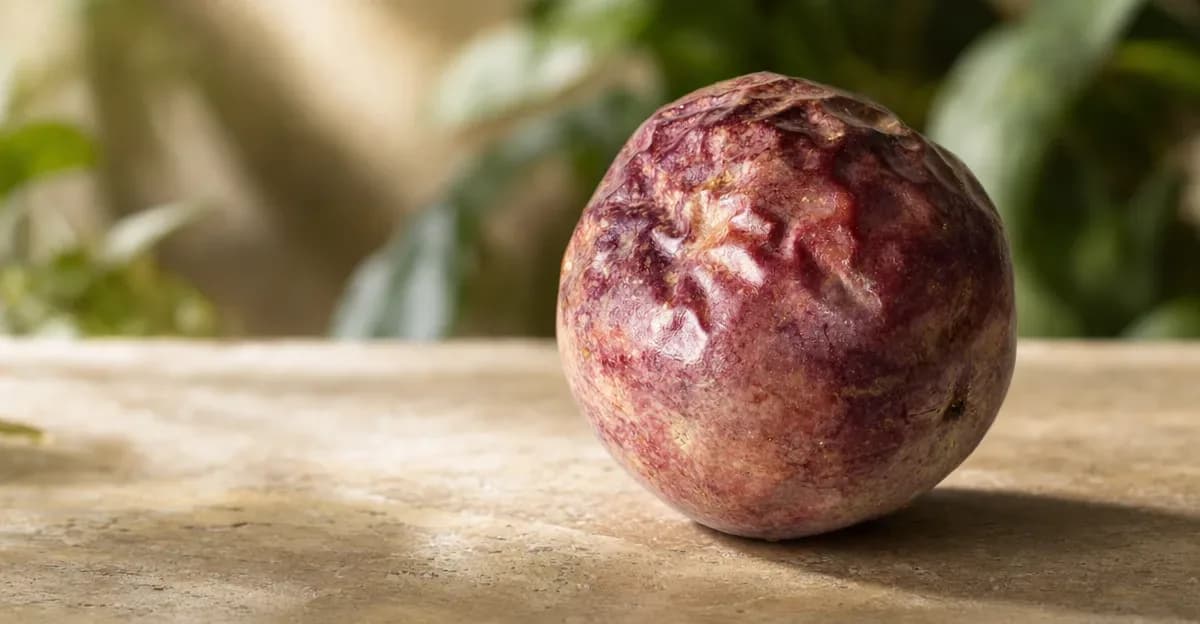
Punto clave: Un cambio claro en el color de la piel puede indicar que el maracuyá ha alcanzado la madurez suficiente para seguir madurando, pero el cambio de color por sí solo no demuestra que el fruto esté listo para comer. Para una comprobación segura si está empezando, espere a que aparezca la mayor parte o la totalidad del color maduro de la variedad, o recoja un fruto sano después de la caída natural. El fruto morado debe verse morado o burdeos. El amarillo debe verse amarillo. Algunos híbridos maduran en rojo. Un fruto liso y completamente coloreado puede estar maduro, por lo que no es necesario esperar a que la piel se arrugue.
Identifique primero la variedad y evite utilizar una tabla de colores en línea o un porcentaje fijo como regla para cada maracuyá. Los estudios sobre diferentes variedades y temporadas alcanzaron diferentes umbrales de cosecha.
El control de madurez en cinco partes
| Controlar | Listo o cerca de estar listo | Espere o inspeccione más |
|---|---|---|
| Variedad | Sabes si el fruto madura de color morado, amarillo o rojo. | Estás comparando una fruta desconocida con una foto genérica de una fruta morada. |
| Color de la piel | La mayor parte o la totalidad de la cáscara muestra el color maduro de esa variedad. | El fruto todavía está uniformemente verde. |
| Adjunto | La fruta ha caído naturalmente y todavía está sana. | Ha permanecido en el suelo el tiempo suficiente para dañarse o enfermarse. |
| textura de la piel | Suave y completamente coloreada, o ligeramente seca y arrugada | Mojado, con fugas, mohoso o marcado por lesiones marrones hundidas |
| Calidad de la cosecha temprana | El fruto mostraba un cambio claro de color antes de recogerlo | Se recogió demasiado pronto, con poco o ningún cambio de color |
1. Identifica el color maduro de tu variedad
El color sólo es útil cuando sabes de qué color debe ser la fruta. La maracuyá morada común cambia de verde a morado o burdeos. Las formas amarillas cambian de verde a amarillo. UF/IFAS También describe híbridos que maduran en rojo.
Esa diferencia descarta el atajo de que cada maracuyá madura debe ser de color púrpura oscuro. La investigación ha documentado progresiones de color separadas para las formas violeta y amarilla de Passiflora edulis, incluidas observaciones directas en paralelo en las etapas de desarrollo del fruto.
Si no conoce la variedad, consulte la etiqueta de la planta, la descripción del vivero o frutos maduros anteriores de la misma enredadera. Utilice el color final de esa variedad como referencia. También puede consultar el perfil del maracuyá para saber más sobre su cultivo.
2. Busque un cambio claro alejándose del verde
El color de la cáscara es la señal visual en la viña más práctica en la evidencia revisada para esta guía. Los estudios de frutas moradas y amarillas utilizaron etapas de color de la cáscara para rastrear la madurez, mientras que UC Davis y UF/IFAS Enumere el color de la superficie entre los indicadores útiles de cosecha.
Para un cultivador casero, “mayormente o completamente en su color maduro” es más confiable que tratar de estimar un porcentaje exacto. Una fruta que todavía es uniformemente verde suele ser demasiado temprana para los tipos comunes de color púrpura, amarillo y rojo que se tratan aquí. La fruta recolectada temprano tiende a tener un aroma más débil y un equilibrio de acidez y azúcares menos favorable que la fruta cosechada después del desarrollo del color.
Esto no significa que todas las frutas recolectadas verdes no madurarán. La fruta puede seguir coloreándose después de la cosecha una vez que ha alcanzado la madurez suficiente, pero el punto de partida varía según la variedad, la temporada y las condiciones de manipulación.
Por qué no existe un porcentaje de color universal
Estudios completos y orientaciones institucionales dan cifras diferentes porque examinaron diferentes frutos y diferentes objetivos:
| Ejemplo de evidencia | Etapa de color utilizada o recomendada | Alcance |
|---|---|---|
| Estudio de maracuyá morada colombiana | Aproximadamente entre un 40% y un 50% de verde y entre un 40% y un 50% de morado | Dos granjas y un entorno de producción |
| Estudio de maracuyá amarilla brasileña | 30,7% amarillo | Cultivo de invierno y protocolo de maduración controlada |
| Tres cultivares amarillos brasileños | Al menos 55% amarillo | Cosecha de verano y almacenamiento controlado. |
| University of Hawaiʻi guía de manejo | 75% o más amarillo o morado | Orientación general poscosecha, incluido el recorte de la fruta antes de su caída. |
Estos valores no deben promediarse en una nueva regla. Muestran por qué un enfoque conservador para principiantes es esperar la mayor parte o la totalidad del color esperado, o recolectar la fruta después de la caída natural.
Construya una referencia de madurez para su vid
Una referencia creada con su propia enredadera es más útil que una carta de colores de otro cultivar. Los estudios de esta guía utilizaron distintos cultivares, estaciones y condiciones de manejo, por lo que sus porcentajes de cosecha no se trasladan directamente de un cultivo a otro.
Comience con una fruta sana que haya caído naturalmente o haya alcanzado el color maduro conocido para su variedad. Úselo como punto final y luego cree un registro breve:
- Fotografíe la fruta a la luz del día indirecta contra el mismo fondo liso cada vez. La iluminación interior puede hacer que la piel morada parezca más roja o la piel amarilla más verde.
- Fotografíe el extremo del tallo, el centro y el extremo de la flor. El color a menudo cambia de manera desigual, por lo que una vista puede ocultar áreas verdes.
- Registre si la fruta estaba adherida, recortada o caída naturalmente. Mantenga el método de cosecha separado del color.
- Tenga en cuenta la fecha, el nombre de la variedad, el estado de la cáscara y si la fruta posteriormente desarrolló moho, fugas, parches empapados de agua o lesiones marrones hundidas.
- Guarde tres etapas de referencia: sin cambio claro de color, en transición y color maduro. No asigne un porcentaje universal a las fotos.
Cuando maduren varias frutas, compare las frutas de la misma vid en lugar de confiar en un solo ejemplo. Una referencia útil debe repetirse en todo el cultivo. Si la fruta caída naturalmente coincide constantemente con la misma etapa de color, esa etapa se convierte en una señal práctica de cosecha para su vid. Si se produce una caída en varias etapas de color, siga usando tanto el color como la condición en lugar de forzar un límite.
Este registro no puede probar que dos frutas tengan el mismo sabor o química interna. Le brinda una línea de base visual consistente respetando los límites de cultivar y temporada en el trabajo publicado.
3. Trate la caída natural como una señal fuerte
Muchos maracuyá alcanzan una madurez avanzada en o cerca de la caída natural. UF/IFAS dice que de la vid caen frutos maduros, y University of Hawaiʻi Las notas orientativas indican que las frutas completamente coloreadas pueden desprenderse de forma natural. Un artículo sobre frutos amarillos revisado por pares también describe la cosecha del suelo o de la vid una vez que la cáscara es predominantemente amarilla.
Una fruta recién caída puede estar lista para usar si está intacta y no muestra descomposición. Recoja la fruta caída con regularidad. El contacto con el suelo puede causar lesiones y enfermedades, mientras que un tiempo adicional después de la caída permite una mayor pérdida de agua de la cáscara.
La caída natural no cancela la verificación de condición. No conserve una fruta porque se cayó sola si está mohosa, gotea, está muy empapada de agua o está marcada por lesiones marrones hundidas.
4. No esperes a que aparezcan las arrugas
Una maracuyá suave puede estar madura. UC Davis, UF/IFAS, y University of Hawaiʻi todos describen el arrugamiento como resultado de la pérdida de humedad durante o después de la maduración. Su guía también separa el marchitamiento temprano o leve del daño a la pulpa comestible.
El trabajo de almacenamiento revisado por pares respalda la misma explicación. En tres cultivares amarillos, los frutos recolectados muy temprano desarrollaron arrugas en la cáscara durante el almacenamiento y perdieron más masa que los frutos recolectados después de un mayor desarrollo del color. En la fruta morada, la fruta encerada perdió menos peso que los controles no tratados al final del almacenamiento refrigerado seguido de la vida útil y mostró menos contracción de la cáscara. El estudio encontró que, por lo demás, la cera brindaba una protección limitada y dependiente de la condición para la calidad poscosecha.
Utilice la textura de la piel como señal de condición:
- Suave y completamente coloreado puede significar maduro.
- Las arrugas leves y secas a menudo reflejan pérdida de agua y no muestran por sí solas que la pulpa se haya echado a perder.
- Las arrugas no son un requisito para la madurez, y la evidencia revisada no respalda la afirmación de que las arrugas siempre significan una fruta más dulce.
5. Separe las inofensivas arrugas de las que se pudren
Las arrugas secas y las caries activas se ven diferentes. Revise toda la cáscara, especialmente cualquier parte que parezca húmeda, suave, oscura o hundida.
| lo que ves | Decisión práctica |
|---|---|
| Arrugas ligeras y secas con una piel intacta. | Es posible que la fruta todavía se pueda utilizar; Las arrugas por sí solas no son un signo de descarte. |
| Moho activo | Desechar la fruta |
| Pulpa goteando o cáscara húmeda y rota | Trátelo como producto dañado o podrido y deséchelo. |
| Zonas muy empapadas de agua | Trátelos como posible desorden o decadencia; desecha la fruta si se ve podrida |
| Lesiones marrones hundidas | Trátelos como una posible enfermedad; desecha la fruta si se ve podrida |
Estos son controles de calidad de los productos agrícolas, no una forma de identificar un patógeno específico sólo por su apariencia. UC Davis y University of Hawaiʻi describen varias enfermedades con síntomas superpuestos de color marrón, hundido, verde oscuro o empapados de agua.
¿Qué pasa si lo eliges temprano?
Si la cáscara tuvo una rotura de color clara, sigue revisando su color y condición. La fruta morada y amarilla cosechada después de que se estableció la madurez continuó madurando durante los períodos poscosecha utilizados en varios estudios.
La fruta recogida en una fase muy temprana es menos predecible. Los experimentos con frutos amarillos encontraron resultados peores en las primeras etapas de color, y la guía de extensión vincula la cosecha temprana con un aroma bajo, una acidez más alta o un sabor inferior.
No conviertas eso en una regla absoluta de que cada fruta verde debe ser desechada. La variedad y la madurez inicial son importantes. La evidencia respalda que se debe esperar a que se desarrolle un color visible cuando se tenga la opción.
Realice un seguimiento de la fruta recogida tempranamente sin tener que adivinar
Si varias frutas se desprenden antes de tiempo, un simple registro del lote puede mostrar lo que sucede después de la cosecha. Mantenga la fruta de diferentes vides o etapas de cosecha en grupos separados. Los estudios detrás de esta guía hicieron lo mismo: definieron las etapas del color de la cáscara, almacenaron la fruta en condiciones establecidas y compararon los cambios dentro de esos grupos.
Etiquete cada lote con la variedad, fecha de cosecha, etapa de color inicial y motivo por el que salió de la vid. Luego verifique las mismas características a intervalos regulares:
| Controlar | que grabar | ¿Qué puede decirte? |
|---|---|---|
| Color de la piel | Fotos desde los mismos ángulos e iluminación. | Si el color continúa desarrollándose |
| Masa | Masa inicial y masa posterior en la misma escala. | Si la fruta está perdiendo agua. |
| Textura | Suave, ligeramente arrugada o profundamente encogida | Cómo cambia la piel a medida que se pierde agua |
| Condición | Moho, fugas, parches húmedos o lesiones hundidas | Si la fruta debe desecharse |
| Aroma y pulpa | Observaciones sólo después de abrir un fruto sano. | Si el cambio de color posterior coincidió con una calidad alimentaria aceptable |
Si pesa la fruta, calcule la pérdida de masa como (starting mass - current mass) ÷ starting mass × 100. Utilice el resultado para comparar frutas en su propio lote. No lo conviertas en un umbral universal de madurez o seguridad. Los trabajos de almacenamiento publicados vinculan las arrugas de la cáscara con la pérdida de masa y agua, pero la magnitud del efecto depende del cultivo, la etapa de cosecha, el tratamiento, la temperatura y la duración del almacenamiento.
El cambio de color después de la recolección también requiere una lectura cuidadosa. Muestra que la piel cambió; no garantiza que una fruta recolectada muy temprano alcance el aroma, la acidez, el equilibrio de azúcar o la calidad del jugo de la fruta cosechada más tarde.
Deseche cualquier fruta que desarrolle moho o pulpa con fugas. Trate el tejido muy empapado de agua o las lesiones marrones hundidas como posible descomposición y deseche la fruta si parece podrida. Mantenga el registro descriptivo. Después de varias cosechas, puede indicarle qué etapas de color iniciales suelen terminar bien en sus propias condiciones de manipulación, sin afirmar que el resultado se aplica a cada maracuyá.
Una práctica rutina de cosecha
- Confirme si su vid produce frutos morados, amarillos o rojos.
- Esté atento a un claro cambio de color de la piel.
- Para una elección segura para principiantes, espere hasta que la mayor parte o la totalidad del color maduro sea visible.
- Recolecte frutos sanos poco después de la caída natural.
- Acepte una cáscara suave como madura cuando el color y la etapa de cosecha coincidan.
- Trate las arrugas secas leves como pérdida de agua, luego inspeccione por separado en busca de moho, fugas, parches empapados de agua y lesiones marrones hundidas.
Preguntas frecuentes
¿Está madura la suave maracuyá?
Puede ser. Una fruta completamente coloreada no necesita arrugarse antes de madurar. Las arrugas se desarrollan a medida que la cáscara pierde agua, por lo que el color y la etapa de cosecha son mejores señales de madurez que las arrugas por sí solas.
¿La maracuyá arrugada está demasiado madura?
No necesariamente. Pueden producirse arrugas secas leves mientras la pulpa comestible sigue siendo utilizable. Verifique si hay moho, fugas, áreas empapadas de agua o lesiones marrones hundidas antes de decidir.
¿Se puede recoger el maracuyá cuando aún está verde?
El fruto recogido después de un cambio claro de color puede seguir madurando fuera de la planta. Un fruto recogido muy pronto, todavía verde de manera uniforme, tiene menos probabilidades de alcanzar la misma calidad de aroma y sabor, aunque el resultado varía según la variedad y la etapa de cosecha.
¿Debe caer el maracuyá de la planta cuando está maduro?
La caída natural es una señal práctica clara de madurez para muchos maracuyás. Recoja los frutos caídos con regularidad y conserve únicamente los que estén sanos, sin pudriciones ni daños graves.
¿De qué color es la maracuyá madura?
El color maduro depende de la variedad. Puede ser morado o burdeos, amarillo o rojo. Juzgue su fruta por su propia variedad y no por una imagen genérica.
Si conoces la variedad y la cáscara ha alcanzado la mayor parte o la totalidad del color esperado, podrás cosechar sin esperar a que aparezcan arrugas. La fruta que cae primero debe recogerse lo antes posible y comprobarse en busca de daños.