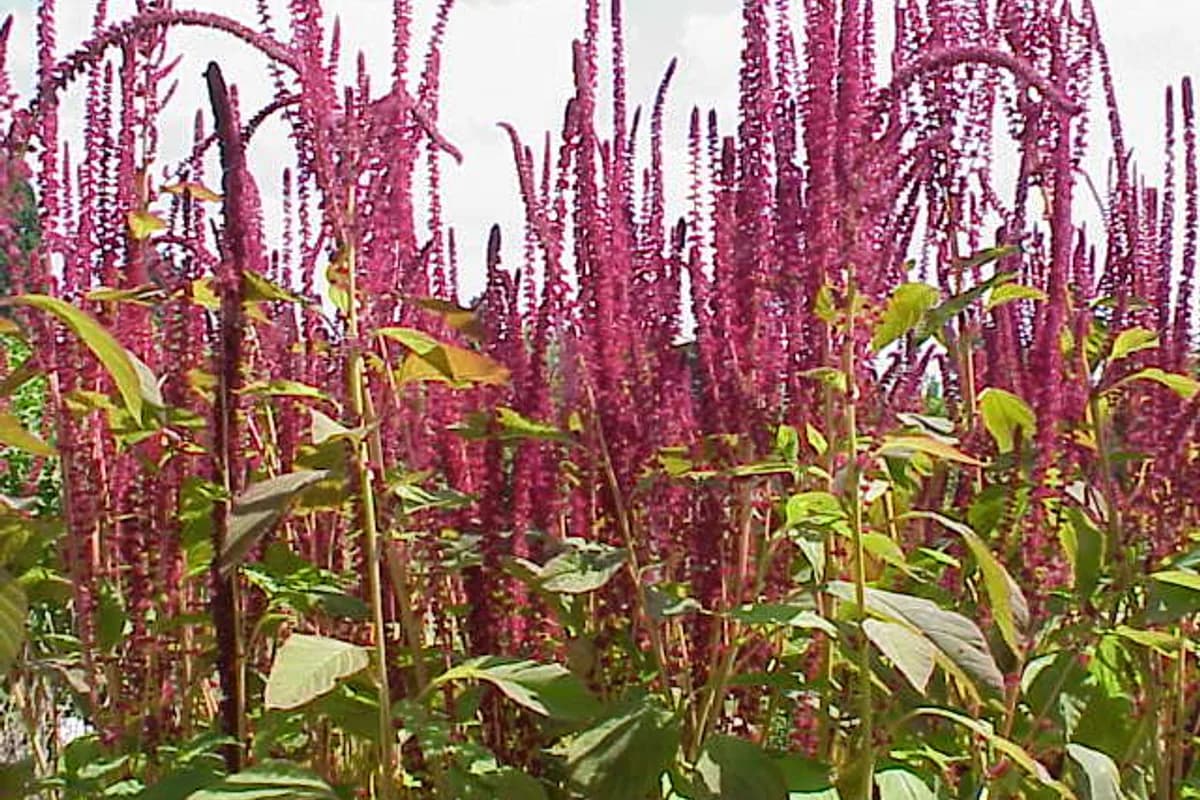
Sobre esta planta
O amaranto para grãos é um pseudocereal de estação quente cultivado pelas sementes minúsculas e ricas em proteína, em vez das folhas. É uma cultura C4 de folhas largas, de sol pleno e sensível à geada, que se estabelece lentamente a partir de sementes muito pequenas e depois cresce rapidamente em clima quente. A produção em campo em solo bem drenado é o sistema mais validado; a produção hidropônica de grãos em ciclo completo ainda é experimental, portanto as metas de EC e nutrientes devem ser tratadas como faixas conservadoras inferidas.
Como Cultivar Amaranto (grão)
Aprenda a cultivar Amaranto (grão) da semente à colheita em 110 dias. Dificuldade Intermediate. Guia completo de nutrientes, requisitos de pH/EC e condições de cultivo para solo e vaso.
Respaldado por 18 citações revisadas por pares.
Requisitos nutricionais por estágio de crescimento
Use testes de solo para a produção em campo e evite estimular o nitrogênio tardiamente na cultura. A extensão rural e a pesquisa aplicada apoiam programas moderados de N em campo, muitas vezes em torno de 45-90 kg N/ha ou aproximadamente 50-100 lb/ac, dependendo da matéria orgânica do solo…
Entre para visualizar requisitos de nutrientes
Uma conta gratuita libera as metas de NPK das quatro fases de crescimento, os níveis de micronutrientes, uma calculadora de nutrientes por fase e o guia de nutrição completo. Criar a conta leva só um clique. O Truleaf é um projeto gratuito e sem fins lucrativos, e cada nova conta nos ajuda a crescer. Sem spam, nunca.
Ambientes de Cultivo
A produção em campo aberto é o ambiente primário validado para o amaranto granífero. Estufas e recipientes são viáveis para mudas, microverdes, vasos de pesquisa e ensaios limitados em pequena escala, mas plantas maduras podem atingir 1.5-2.4 m e precisam de alta luminosidade, secagem gradual e manejo de colheita…
Temperatura
Cultive o amaranto para grãos como uma cultura C4 de estação quente, sensível à geada. Faça a semeadura direta somente depois que o risco de geada tiver passado e o solo estiver aquecido, com 18-24C recomendados para as condições de plantio e germinação. O crescimento ativo em campo é mais forte sob dias quentes em torno de 24-30C, enquanto o clima frio reduz o crescimento drasticamente e temperaturas próximas do congelamento danificam as plantas.
Umidade
Nenhuma fonte sobre amaranto para grãos maduro verificou um ótimo rigoroso de umidade relativa. Para ensaios em estufa ou recipientes, maneje a UR como uma variável de controle de doenças, e não como uma exigência da espécie: 45-65% é uma meta prática que ajuda a limitar o molhamento das folhas, o tombamento de…
Luz
Use sol pleno como a exigência de luz validada. O amaranto para grãos é uma cultura C4 de folha larga e alta luminosidade, e as orientações para cultivo ao ar livre sustentam locais claros e abertos com pelo menos 6 horas de sol direto por dia, preferencialmente mais…
Circulação de Ar
As orientações de movimento do ar são qualitativas para esta cultura. Use espaçamento entre linhas, densidade de plantas e ventilação de estufa que mantenham a folhagem seca e evitem bolsões úmidos e estagnados ao redor dos caules e das inflorescências…
Entre para visualizar requisitos ambientais
Uma conta gratuita libera os valores exatos de temperatura, umidade, luz e ventilação, incluindo faixas de germinação e crescimento, DLI, fotoperíodo e PPFD, além do guia de ambiente completo. Criar a conta leva só um clique. O Truleaf é um projeto gratuito e sem fins lucrativos, e cada nova conta nos ajuda a crescer. Sem spam, nunca.
Compatibilidade com sistemas hidropônicos
Para grãos, o solo em campo é o sistema de produção validado, e sistemas hidropônicos devem ser marcados como experimentais ou não recomendados, em vez de plenamente adequados. Gotejamento em canteiros ou recipientes grandes com substrato bem drenado é o ensaio de cultivo protegido mais plausível, porque oferece…
Substratos
Use solo solto e bem drenado, com pH em torno de 6.5-7.5, para a produção de grãos em campo. O leito de semeadura deve ser fino e firme, porque a semente de amaranto é minúscula e plantada superficialmente; encrostamento, argila pesada e encharcamento reduzem o estabelecimento…
Vasos
A produção em recipientes é possível, mas deve ser tratada como experimental ou em escala de jardim para grãos. Use um recipiente grande, estável e bem drenado, porque plantas maduras são altas e pesadas na parte superior, e evite substratos rasos ou encharcados…
Condução e Suporte
Não use treliça nem conduza formalmente o amaranto-grão. Fontes de campo manejam o acamamento por meio de fertilidade moderada, densidade de plantas adequada, escolha da cultivar e colheita no momento certo, em vez de suporte estrutural…
Entre para visualizar compatibilidade de sistemas
Uma conta gratuita libera por que cada um dos seis sistemas funciona ou não, além de substratos, tamanhos de vaso, métodos de condução, plantas companheiras e o guia de sistemas completo. Criar a conta leva só um clique. O Truleaf é um projeto gratuito e sem fins lucrativos, e cada nova conta nos ajuda a crescer. Sem spam, nunca.
Propagação
O amaranto para grãos é propagado por sementes, com semeadura direta preferida para estandes de grãos em campo. A semente é muito pequena, portanto semeie superficialmente, cerca de 0.6-1.3 cm de profundidade, em um canteiro fino e firme, com bom contato entre semente e solo…
Colheita
Planeje a colheita dos grãos em torno de 100-120 dias após a semeadura e, então, confirme a maturidade por sementes duras que se soltam da inflorescência ao esfregar. Em regiões temperadas, uma geada letal frequentemente ajuda a secar caules e folhas; colha com colheitadeira cerca de 7-10 dias após a geada se a…
Calendário de Plantio
Em regiões norte-americanas de clima temperado frio, semeie amaranto para grãos de meados de maio a meados de junho, após a última geada esperada e depois que o solo tiver aquecido. A cultura precisa de uma longa estação sem geadas, geralmente cerca de 100-120 dias até a colheita, e regiões de estação curta podem ter…
Problemas Comuns
Inspecione primeiro o amaranto-grão quanto a doenças de estabelecimento, insetos nas inflorescências, lesões no caule, acamamento e perdas na colheita. O tombamento de mudas é mais provável em canteiros úmidos, densos e mal aerados; use sementes limpas, evite rega excessiva e mantenha a drenagem…
Acesse o guia completo respaldado pela ciência
Ao se cadastrar, você ajuda a manter o Truleaf gratuito e apoia o crescimento do nosso projeto sem fins lucrativos. Sua conta libera todos os detalhes de cada problema das plantas—incluindo sintomas, causas, soluções passo a passo e prevenção—além do calendário de plantio mês a mês, do guia completo e de todas as fontes de pesquisa. Leva apenas um clique. Sem spam, nunca.