About This Plant
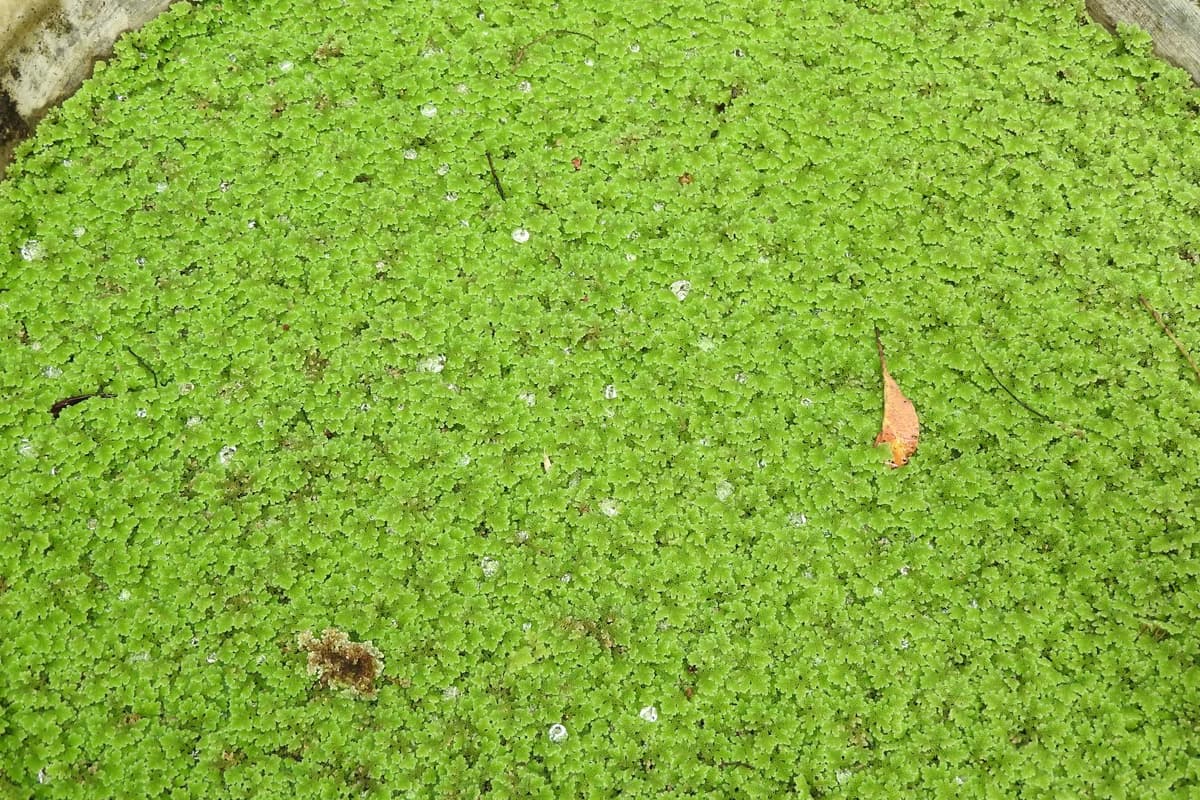
Azolla pinnata is a small, free-floating aquatic fern in the family Salviniaceae that forms dense, carpet-like mats on the surface of still or slow-moving fresh water. The plant consists of a short, branched floating stem bearing two-lobed scale-like leaves that overlap in alternating rows, and fine roots that hang into the water. Leaf colour ranges from bright green to deep rusty red under high light or cooler conditions. Individual plants measure 1.5-2.5 cm across. Azolla is remarkable for its symbiotic relationship with the nitrogen-fixing cyanobacterium Anabaena azollae (Nostoc azollae), which lives in cavities in the dorsal leaf lobes and converts atmospheric nitrogen into plant-available ammonia. Under optimal conditions (20-28C, pH 5.5-7, partial shade), biomass doubles in as little as 2-5 days. Azolla is cultivated globally as a biofertilizer in rice paddy systems (fixing 40-60 kg N/ha/season), as a high-protein livestock and fish feed supplement (25-30% crude protein dry we...
How to Grow Azolla
Learn how to grow Azolla from seed to harvest in 14 days. Beginner difficulty. Complete nutrient guide, pH/EC requirements, and growing conditions for hydroponics, soil & greenhouse.
Backed by 20 peer-reviewed citations.
Nutrient Requirements by Growth Stage
Azolla differs from conventional hydroponic crops because its Anabaena/Nostoc symbiont can meet most nitrogen demand through atmospheric N2 fixation. Routine mineral nitrogen is therefore unnecessary for Azolla-only culture, although low combined nitrogen in experimental media did not significantly change A…
Sign in to view nutrient requirements
A free account unlocks NPK targets for all four growth stages, micronutrient levels, a per-stage nutrient calculator, and the full nutrition guide. Signing up takes one click. Truleaf is a free, non-profit project, and every new account helps it grow. No spam, ever.
Growing Environments
Azolla is highly adaptable and can be cultivated in all four environment types. Outdoor cultivation in ponds and rice paddies is the most extensive globally — the primary and largest-scale use of azolla, with hundreds of thousands of hectares treated annually in Asia…
Temperature
Azolla pinnata thrives between 18C and 28C, with optimal growth at approximately 25C. Growth rate begins declining above 30C and is significantly impaired above 35C; prolonged exposure to 45C is lethal. At the low end, Azolla can survive brief periods at 5C though growth effectively stops, and temperatures below -4C cause irreversible tissue damage. For indoor or greenhouse cultivation, maintain water temperature in the 22-28C range for maximum doubling rates. A. pinnata specifically tolerates higher temperatures better than other Azolla species such as A. filiculoides. Da Silva et al. (2022) achieved optimal growth rates of 0.321 day-1 (doubling time 2.16 days) under controlled greenhouse conditions at approximately 25C.
Humidity
Azolla performs best in humid production environments, with 90% relative humidity giving the highest growth in a controlled A. pinnata study when pH was actively controlled…
Light
Azolla pinnata grows optimally at moderate to bright light intensities of approximately 20,000 lux (300-370 umol/m2/s PPFD) with a 16-hour photoperiod. Photosynthesis saturates at around 400 umol/m2/s — intensities beyond this do not improve growth and may cause photoinhibition at lower temperatures…
Airflow
Azolla is sensitive to air movement and water currents. As a floating fern, its growth mat fragments and disperses under strong wind or turbulent water flow…
Sign in to view environmental requirements
A free account unlocks exact temperature, humidity, light and airflow targets, including germination and growth ranges, DLI, photoperiod and PPFD, plus the full environment guide. Signing up takes one click. Truleaf is a free, non-profit project, and every new account helps it grow. No spam, ever.
Hydroponic System Compatibility
Azolla's system compatibility differs fundamentally from terrestrial crops because it is a floating aquatic fern. Deep Water Culture (DWC) and Kratky passive systems are the most natural and recommended — azolla simply floats on the water surface, replicating its natural paddy and pond habitat…
Growing Media
Azolla does not use a solid rooting substrate. It is a free-floating aquatic fern, so the production medium is standing water with phosphorus and trace minerals supplied by a dilute nutrient solution or by a soil/manure layer below the water…
Container Specs
Use a shallow, non-toxic waterproof container with no drainage holes because Azolla must float continuously. A 10-15 cm water depth is common in small production beds, while shallow static water around 5-20 cm can work when water temperature, pH, and nutrients remain stable…
Training & Support
Azolla requires no training, staking, trellising, or physical support of any kind. As a free-floating aquatic fern, it positions itself naturally on the water surface…
Sign in to view system compatibility
A free account unlocks why each of the six systems fits or fails, plus growing media, container sizes, training methods, companion plants, and the full systems guide. Signing up takes one click. Truleaf is a free, non-profit project, and every new account helps it grow. No spam, ever.
Propagation
Azolla is normally propagated in cultivation by vegetative fragmentation of the floating mat, not by seed sowing. Break healthy fronds into smaller pieces and inoculate the water surface; container and nursery systems commonly use about 125-400 g fresh Azolla per m2, while rice-field inoculation rates may be lower or…
Harvesting
Harvest Azolla by skimming the floating mat with a fine-mesh net or perforated tray, then draining excess water before use. First harvest usually occurs about 14-20 days after inoculation once the surface is substantially covered…
Planting Calendar
Azolla has no traditional planting calendar — cultivation begins with inoculation (floating starter culture on prepared water). In tropical and subtropical climates, year-round cultivation is possible where water temperature remains 20-30C…
Common Issues
The main Azolla problems are nutrient imbalance, pH drift, overcrowding, heat/light stress, and aquatic pests. Low phosphorus reduces growth and nitrogen fixation, but excessive phosphorus without available iron can trigger chlorosis through Fe-P interactions…
Get the full science-backed guide
By signing up, you help keep Truleaf free and support the growth of our nonprofit project. Your account unlocks full details for every plant issue—including symptoms, causes, step-by-step solutions, and prevention—plus the month-by-month planting calendar, the complete guide, and all research sources. It only takes one click. No spam, ever.