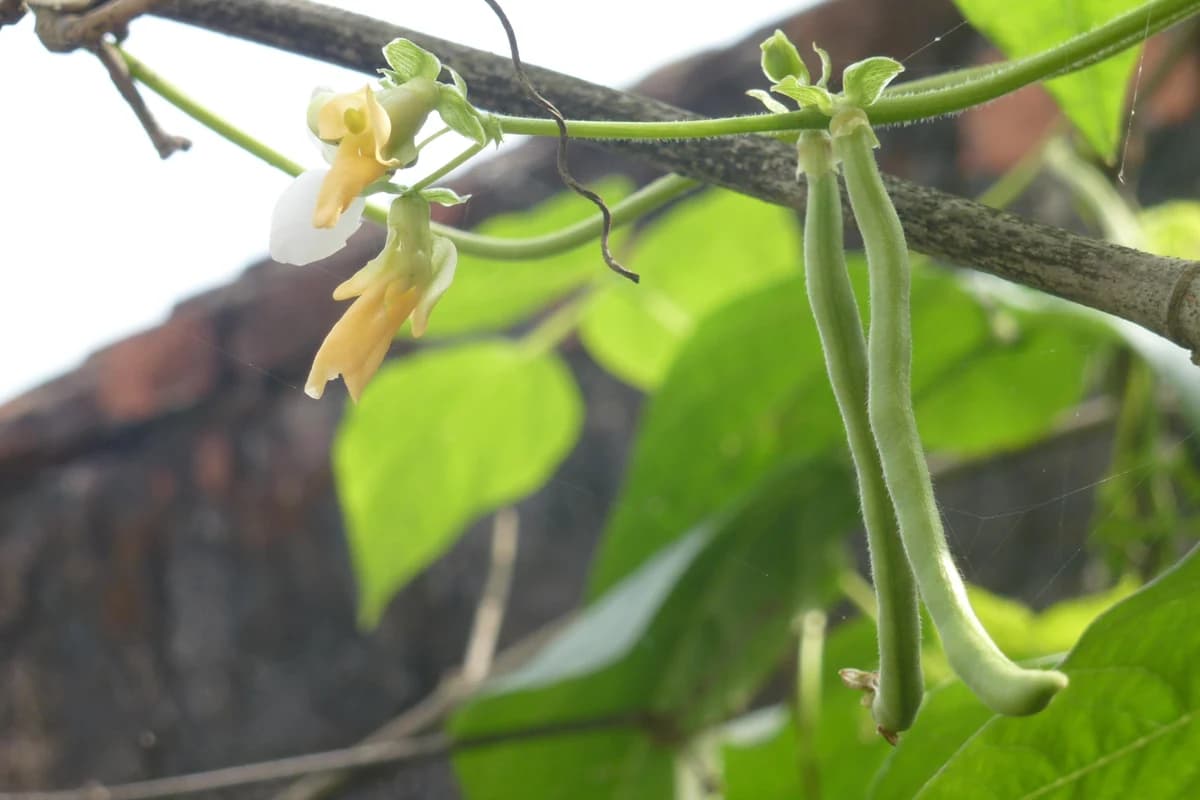
About This Plant
Black bean is a dry-seed market class of common bean grown for mature protein-rich seeds rather than tender snap pods. It is a warm-season, frost-sensitive annual that performs best in full sun, well-drained media, moderate fertility, and careful dry-down before harvest.
How to Grow Black Bean
Learn how to grow Black Bean from seed to harvest in 100 days. Intermediate difficulty. Complete nutrient guide, pH/EC requirements, and growing conditions for hydroponics, soil & greenhouse.
Sources cited: 20.
Nutrient Requirements by Growth Stage
Do not treat black bean like a leafy crop. A full-standard hydroponic common-bean solution supplied about 193 ppm N and confirms the old N value only as a high-N, non-limiting treatment…
Sign in to view nutrient requirements
A free account unlocks NPK targets for all four growth stages, micronutrient levels, a per-stage nutrient calculator, and the full nutrition guide. Signing up takes one click. Truleaf is a free, non-profit project, and every new account helps it grow. No spam, ever.
Growing Environments
Black bean is suitable outdoors, in greenhouses, indoors, and in containers, but those environments have different expectations. Outdoor well-drained soil is the standard dry-seed production system…
Temperature
Black bean is a warm-season common bean. Direct sow only after frost danger and warm soil; controlled common-bean emergence improves sharply from cool conditions to moderate-warm regimes, while dry-bean guides advise planting when soil is consistently around the mid-60s F or warmer. For active growth, use about 18-27C, with 23C day and 20C night validated in a controlled-environment bush bean trial. Prolonged heat above about 27-30C during flowering can reduce pod set, so treat 28C as an upper tolerance rather than a target.
Humidity
Keep relative humidity moderate, usually 50-70%, with 50-60% preferred once the canopy closes or flowering begins. A Guelph controlled-environment bean trial held about 48% RH, while dry-bean disease guidance repeatedly links dense, wet, humid canopies to white mold, anthracnose, rust, and bacterial spread…
Light
Black bean needs full sun outdoors and strong light indoors. Controlled bush bean work used about 329-346 umol/m2/s PPFD over a 16-hour photoperiod, roughly a 19-20 mol/m2/day DLI, and intracanopy light improved bean count and fresh mass in a dense canopy…
Airflow
Use continuous gentle air movement through the canopy rather than stagnant still air. A numeric bean-specific meters-per-second target was not found, but disease sources support drying leaf surfaces and avoiding dense humid canopies to reduce white mold, anthracnose, rust, and bacterial blight risk…
Sign in to view environmental requirements
A free account unlocks exact temperature, humidity, light and airflow targets, including germination and growth ranges, DLI, photoperiod and PPFD, plus the full environment guide. Signing up takes one click. Truleaf is a free, non-profit project, and every new account helps it grow. No spam, ever.
Hydroponic System Compatibility
Drip, NFT, ebb-flow, aerated DWC, and aeroponic systems are all defensible for Phaseolus vulgaris with caveats. The strongest production fit is drip fertigation in soilless media because it supports dry foliage and steady root-zone nutrition…
Growing Media
For dry-seed production, use fertile, well-drained soil and avoid standing water because dry beans are sensitive to waterlogging. Beans form shallow lateral roots plus deeper roots; NDSU notes most water uptake is from the upper root zone, so uniform moisture matters during flowering and pod fill…
Container Specs
Use containers as small-batch dry-bean tools, not staple-crop production units. A 30 cm deep, well-drained pot is a workable minimum, while a 5 gallon container gives roots and moisture reserves enough room for several plants…
Training & Support
Most modern dry black bean cultivars are upright bush or short-vine types and usually do not need trellising. This is different from pole beans, which need supports at planting and can climb far higher…
Sign in to view system compatibility
A free account unlocks why each of the six systems fits or fails, plus growing media, container sizes, training methods, companion plants, and the full systems guide. Signing up takes one click. Truleaf is a free, non-profit project, and every new account helps it grow. No spam, ever.
Propagation
Propagate black bean from seed. Direct sow is preferred because beans dislike root disturbance and dry-bean field systems depend on uniform stands…
Harvesting
Harvest black bean as a dry seed crop, not at the snap-pod stage. Dry-bean sources place harvest commonly around 80-120 days, and UC Davis lists Black Turtle Soup T-39 near 100 days…
Planting Calendar
For a northern-hemisphere temperate baseline, direct sow in May or June after frost and soil warming, then harvest dry beans from late August through October depending on cultivar and weather. Black bean production in northern regions often avoids early cold planting because cold, wet soils slow emergence and increase…
Common Issues
The verified high-priority problems are root-rot complex, anthracnose, rust, white mold, poor nodulation or nitrogen deficiency, and micronutrient chlorosis. Keep Fusarium, anthracnose, and rust, but rewrite them with dry-bean pathogen names and prevention practices…
Get the full science-backed guide
By signing up, you help keep Truleaf free and support the growth of our nonprofit project. Your account unlocks full details for every plant issue—including symptoms, causes, step-by-step solutions, and prevention—plus the month-by-month planting calendar, the complete guide, and all research sources. It only takes one click. No spam, ever.