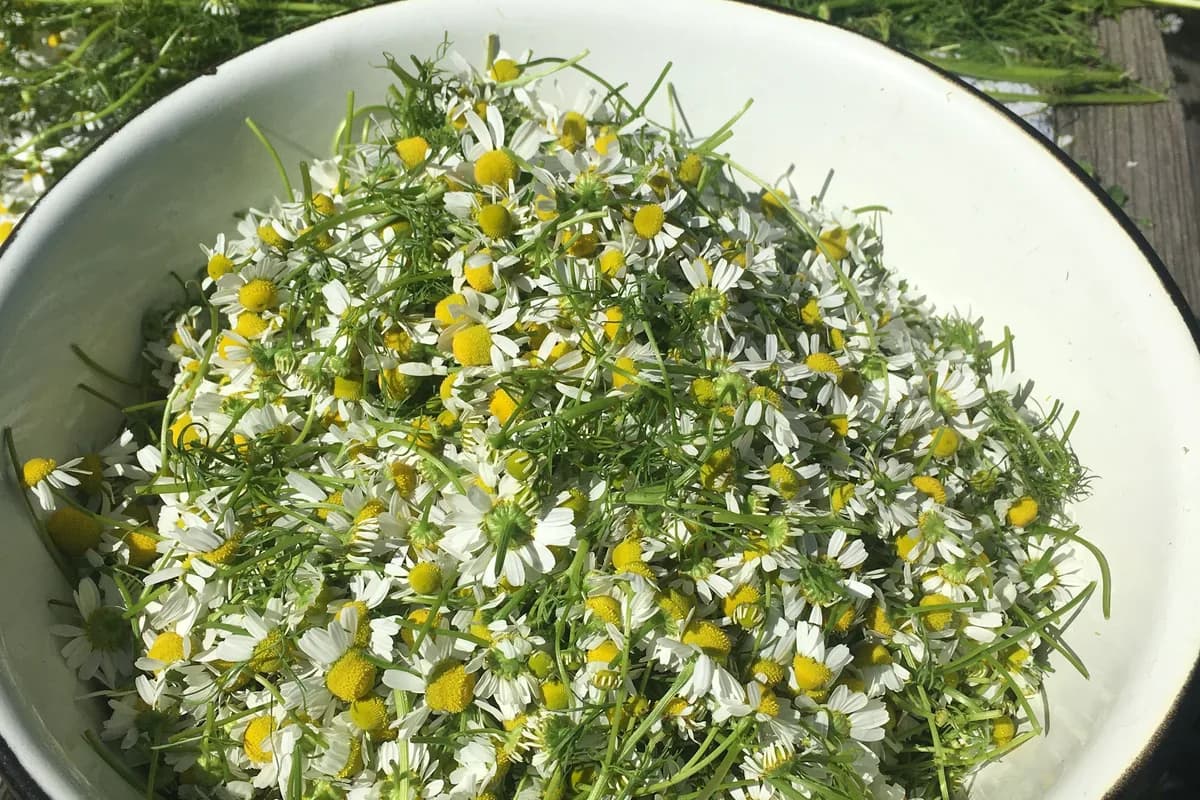
About This Plant
German chamomile is an annual Asteraceae herb grown for aromatic flower heads used fresh, dried, or distilled. It performs best in full sun, well-drained media, and modest fertility, and it can be direct-sown, transplanted young, or grown in controlled hydroponic/aeroponic systems when light, airflow, and EC are managed.
How to Grow Chamomile
Learn how to grow Chamomile from seed to harvest in 120 days. Beginner difficulty. Complete nutrient guide, pH/EC requirements, and growing conditions for hydroponics, soil & greenhouse.
Sources cited: 18.
Nutrient Requirements by Growth Stage
Chamomile is a low-demand medicinal flower crop, so high fixed hydroponic ppm targets are weakly supported. Field trials support modest, soil-test-based fertility: high-yield commercial systems used 100:60:40 kg ha-1 N:P2O5:K2O split with all P and K basal and nitrogen divided through early growth and flower…
Sign in to view nutrient requirements
A free account unlocks NPK targets for all four growth stages, micronutrient levels, a per-stage nutrient calculator, and the full nutrition guide. Signing up takes one click. Truleaf is a free, non-profit project, and every new account helps it grow. No spam, ever.
Growing Environments
Chamomile is suitable for outdoor beds, containers, greenhouses, and controlled indoor systems when each environment is managed for drainage and light. Extension sources support full sun, well-drained soil, shallow-root moisture, and low fertilizer demand…
Temperature
German chamomile performs as a cool-season annual, but controlled systems show usable production conditions rather than a single universal optimum. DWC work germinated seedlings around 25C and produced plants at 24/20C day/night, while aeroponic work germinated at 23C and flowered plants near 18C average air temperature. A practical controlled range is 18-25C for active growth, with 20-25C for germination; outdoor sowing can begin much cooler once soil is above about 13C.
Humidity
The current 50-75% humidity band is supported for indoor DWC chamomile production, but the exact 65% optimum is not independently established. Aeroponic research used high humidity during germination and moderate production humidity, so keep seedlings evenly humid without trapping stagnant air…
Light
Chamomile flowers reliably under long, bright days. A vertical DWC study used 16 hours of light, 250 umol m-2 s-1 seedling intensity, and DLI 17 mol m-2 d-1 for production…
Airflow
Air movement matters most in protected culture because dense, humid canopies favor powdery mildew and weak flower quality. The DWC vertical-farm study used blower-driven airflow around the canopy at about 1.2 m s-1…
Sign in to view environmental requirements
A free account unlocks exact temperature, humidity, light and airflow targets, including germination and growth ranges, DLI, photoperiod and PPFD, plus the full environment guide. Signing up takes one click. Truleaf is a free, non-profit project, and every new account helps it grow. No spam, ever.
Hydroponic System Compatibility
DWC has direct evidence from a vertical hydroponic chamomile study, and aeroponics has direct evidence from controlled flowering research. Drip or substrate irrigation is suitable when it keeps a free-draining root zone evenly moist rather than saturated…
Growing Media
Use a light, well-drained medium. Wisconsin Extension notes chamomile grows in well-drained soil, tolerates poorer soils, and needs little fertilizer, while UC guidance recommends well-drained sandy soil and even moisture during germination…
Container Specs
Containers are appropriate because chamomile is compact, shallow-rooted, and tolerates lean media, but drainage is mandatory. Use at least a 20 cm deep, 20 cm wide container for a single plant or small cluster, with a light mix and room for air movement…
Training & Support
Chamomile does not need staking, trellising, or structural training. It is an upright annual grown for repeated flower-head harvests rather than trained stems…
Sign in to view system compatibility
A free account unlocks why each of the six systems fits or fails, plus growing media, container sizes, training methods, companion plants, and the full systems guide. Signing up takes one click. Truleaf is a free, non-profit project, and every new account helps it grow. No spam, ever.
Propagation
Propagate German chamomile from seed. University guidance says the tiny seeds need light for germination, so surface-sow or press them into moist media instead of burying them…
Harvesting
Harvest the flower heads near full bloom, when the crop is visibly white and before the heads begin to break down. Tea-grade production favors hand-raking, combing, or snipping inflorescences with minimal stem, while clipping more foliage is lower quality for whole flowers but can suit distillation…
Planting Calendar
Calendar timing depends strongly on climate. In temperate gardens, sow directly in fall or early spring and start transplants indoors 6-8 weeks before the last frost, setting them out near the last frost while small…
Common Issues
The current issue list needed correction. Aphids are the most consistently named pest in extension and field pest research…
Get the full science-backed guide
By signing up, you help keep Truleaf free and support the growth of our nonprofit project. Your account unlocks full details for every plant issue—including symptoms, causes, step-by-step solutions, and prevention—plus the month-by-month planting calendar, the complete guide, and all research sources. It only takes one click. No spam, ever.