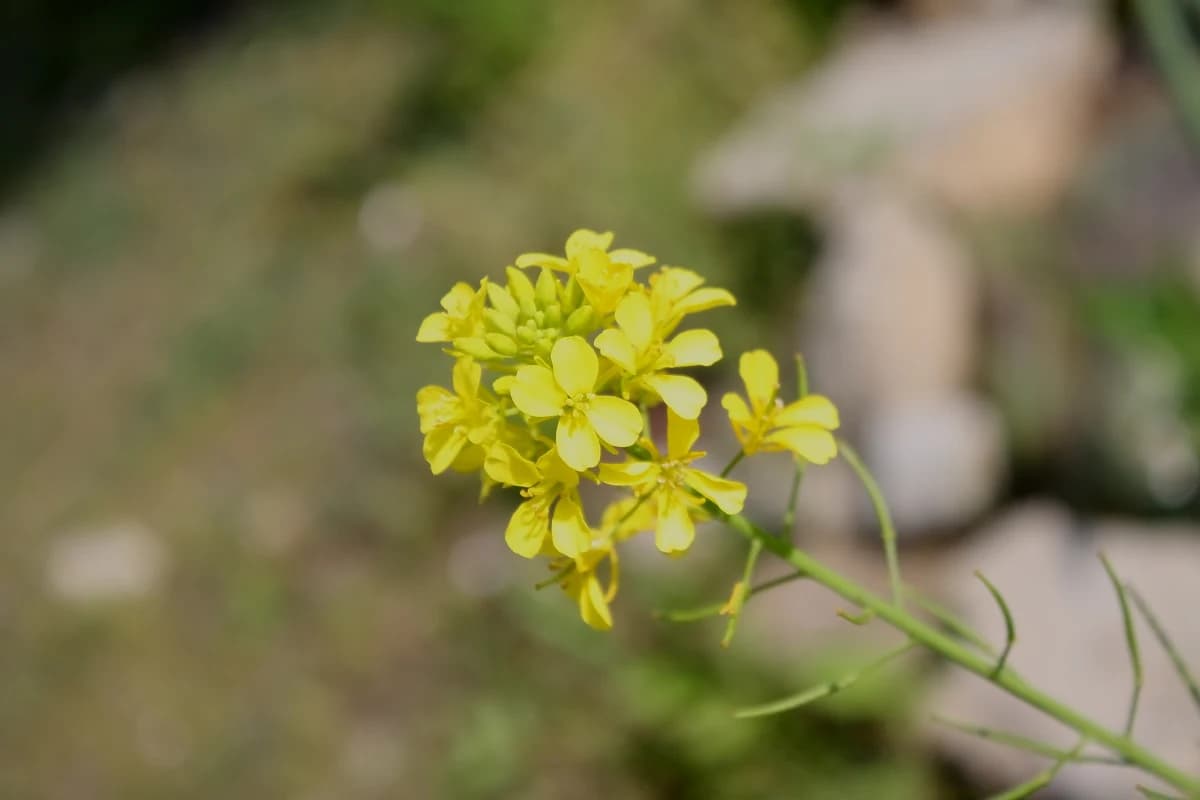
About This Plant
Chinese mustard (Brassica juncea) is a fast-growing, cool-season leafy green prized for its peppery, pungent leaves rich in glucosinolates. Thriving in hydroponic systems at EC 1.2-2.4 and pH 5.8-6.5, it reaches baby-leaf harvest in 3-4 weeks and full maturity in 39 days. A vigorous Brassicaceae crop with high nitrogen and potassium demand (NPK ratio 4:1:5), it grows best at 18-22C with 300 umol/m2/s PPFD. Cut-and-come-again harvest yields multiple flushes before bolting.
How to Grow Chinese Mustard
Learn how to grow Chinese Mustard from seed to harvest in 39 days. Beginner difficulty. Complete nutrient guide, pH/EC requirements, and growing conditions for hydroponics, soil & greenhouse.
Sources cited: 45.
Nutrient Requirements by Growth Stage
Chinese mustard is a vigorous Brassicaceae leafy green with moderate to high nutrient demands, particularly for nitrogen, potassium, and sulfur. During the seedling phase (first 2 weeks), supply half-strength nutrients: N 100-125 ppm (optimal 110), P 20-30 ppm, K 100-150 ppm, with calcium at 80-120 ppm (optimal 100)…
Sign in to view nutrient requirements
A free account unlocks NPK targets for all four growth stages, micronutrient levels, a per-stage nutrient calculator, and the full nutrition guide. Signing up takes one click. Truleaf is a free, non-profit project, and every new account helps it grow. No spam, ever.
Growing Environments
Chinese mustard excels across all growing environments. Indoor: Ideal for plant factories and indoor gardens with LED lighting at 300 umol/m2/s PPFD and 14-16h photoperiod…
Temperature
Chinese mustard (Brassica juncea) is a cool-season crop that performs best at moderate temperatures. For germination, maintain 20-25C for optimal speed and uniformity; seeds can germinate from 15C to 35C but rates decline above 30C. During vegetative growth, the ideal range is 18-22C, with 22C as the optimal target. Day/night temperature differentials of 25/17C (approximately 8C DIF) have been used successfully in controlled studies. Temperatures above 27C increase bolting risk and reduce leaf quality, while sustained heat above 35C causes significant stress with up to 58% fresh weight reduction observed. In indoor systems, maintain nutrient solution temperature at 18-22C to prevent root zone issues. B. juncea is frost-tolerant and continues growing at 15C, though growth rate slows.
Humidity
Maintain relative humidity between 40-70% for Chinese mustard, with 60% as the optimal target. The plant tolerates drier conditions down to 30% but grows best with moderate humidity that supports transpiration-driven nutrient uptake…
Light
Chinese mustard responds strongly to light intensity and duration. The optimal PPFD is 300 umol/m2/s, which produced the greatest leaf length, width, and area in controlled studies…
Airflow
Provide gentle, consistent airflow of 0.3-0.5 m/s at canopy level using oscillating fans. This strengthens stems through mechanical stimulation (thigmomorphogenesis), reduces boundary layer resistance for improved CO2 uptake, and prevents humidity stratification that leads to fungal disease…
Sign in to view environmental requirements
A free account unlocks exact temperature, humidity, light and airflow targets, including germination and growth ranges, DLI, photoperiod and PPFD, plus the full environment guide. Signing up takes one click. Truleaf is a free, non-profit project, and every new account helps it grow. No spam, ever.
Hydroponic System Compatibility
Chinese mustard is highly adaptable across hydroponic systems. DWC: Proven effective in research settings; ensure adequate aeration with air stones…
Growing Media
Five media are validated for B. juncea hydroponic production…
Container Specs
Mustard greens are well-suited to container growing thanks to their shallow root system and compact habit. Choose a container at least 20 cm deep and 30 cm wide…
Training & Support
Chinese mustard requires no staking, trellis, cage, or training of any kind. The plant is compact and self-supporting, typically reaching 30-60 cm tall with sturdy stems…
Sign in to view system compatibility
A free account unlocks why each of the six systems fits or fails, plus growing media, container sizes, training methods, companion plants, and the full systems guide. Signing up takes one click. Truleaf is a free, non-profit project, and every new account helps it grow. No spam, ever.
Propagation
Chinese mustard is grown exclusively from seed — no vegetative propagation is used for this fast-growing annual. Sow seeds 6-12 mm deep in cool, moist soil…
Harvesting
Chinese mustard is a true cut-and-come-again crop, regrowing from its basal growing point after each harvest if cut properly. For baby leaf harvest (15-20 days), cut the entire plant 2-3 cm above the base using clean, sharp scissors; regrowth produces a second and sometimes third harvestable flush at 5-14 day…
Planting Calendar
Chinese mustard is a cool-season crop that thrives in spring and fall but bolts quickly in summer heat above 27C. In spring (zones 5-7), direct sow 2-3 weeks before the last frost as soon as soil reaches 4C…
Common Issues
The five primary issues in hydroponic Chinese mustard are tip burn from calcium transport failure, downy mildew, bolting, Alternaria leaf spot, and nitrogen toxicity. Tip burn is a physiological disorder caused by insufficient calcium reaching fast-growing inner leaf tips via xylem transport — foliar Ca sprays are…
Get the full science-backed guide
By signing up, you help keep Truleaf free and support the growth of our nonprofit project. Your account unlocks full details for every plant issue—including symptoms, causes, step-by-step solutions, and prevention—plus the month-by-month planting calendar, the complete guide, and all research sources. It only takes one click. No spam, ever.