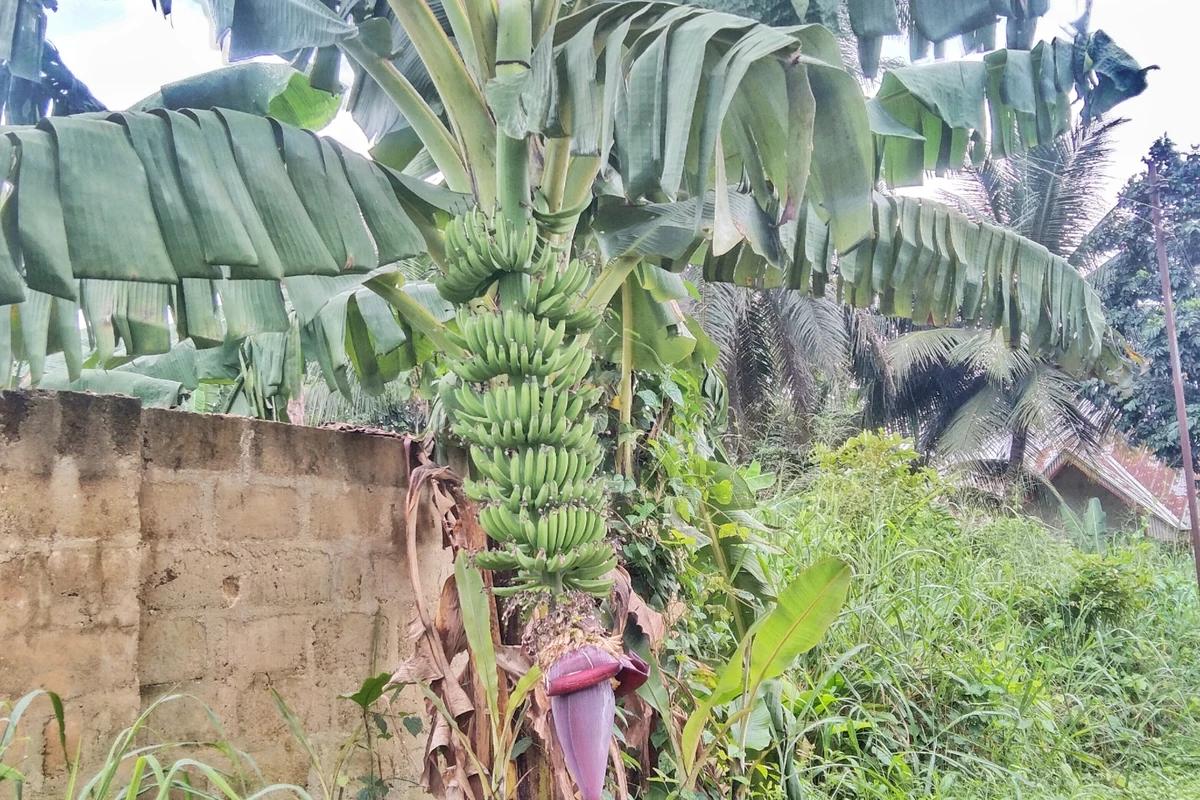
About This Plant
Dwarf Cavendish is a compact Cavendish-group banana grown for tropical foliage and, under strong warm conditions, edible dessert fruit. It is vegetatively propagated, potassium-demanding, and best managed in frost-free outdoor sites, greenhouses, or very large containers with excellent drainage and steady moisture.
How to Grow Banana (Dwarf)
Learn how to grow Banana (Dwarf) from seed to harvest in 420 days. Advanced difficulty. Planting, care, feeding and the right growing conditions.
Sources cited: 20.
Nutrient Requirements by Growth Stage
Use potassium-forward nutrition and monitor EC rather than treating the old 125-40-250 ratio as a universal recipe. Field and fertigation studies consistently show banana is K-dominant, with high N during vegetative growth and K continuing through flower and bunch development…
Sign in to view nutrient requirements
A free account unlocks NPK targets for all four growth stages, micronutrient levels, a per-stage nutrient calculator, and the full nutrition guide. Signing up takes one click. Truleaf is a free, non-profit project, and every new account helps it grow. No spam, ever.
Growing Environments
Dwarf Cavendish can grow outdoors, in greenhouses, indoors, and in containers, but fruiting reliability differs sharply. Outdoor culture needs frost-free warmth, full sun, drainage, irrigation, and wind protection…
Temperature
Treat Dwarf Cavendish as a warm tropical crop, not a cool indoor foliage plant. Active growth is best around 26-30C, with 28C a practical target; growth slows below about 16C, stops near 10C, and chilling can damage leaves, pseudostems, and fruit. The canonical germination field is not biologically meaningful for this seedless Cavendish clone because production uses suckers, corm divisions, or tissue-cultured plantlets rather than true seed.
Humidity
Maintain moderately high humidity, about 60-80% RH with a 70% target, while keeping foliage and media from staying wet. FAO lists at least 60% humidity as preferable for banana, and acclimatization studies show that young plantlets need protected humid conditions while roots and leaves harden…
Light
Give Dwarf Cavendish full sun outdoors or the brightest greenhouse and indoor light available. Banana is day-neutral, so a 14-hour photoperiod should be understood as an indoor lighting schedule for DLI, not a flowering trigger…
Airflow
Use steady gentle airflow in indoor and greenhouse systems, but protect the plant from strong or dry wind. Banana leaves shred easily, and wind can reduce growth or topple fruiting pseudostems; protected sites are recommended in extension guides…
Sign in to view environmental requirements
A free account unlocks exact temperature, humidity, light and airflow targets, including germination and growth ranges, DLI, photoperiod and PPFD, plus the full environment guide. Signing up takes one click. Truleaf is a free, non-profit project, and every new account helps it grow. No spam, ever.
Hydroponic System Compatibility
Use drip fertigation in a large substrate container or bed as the best-supported soilless system. Banana plantlets have been acclimatized hydroponically, including NFT-like nursery systems, but those studies do not verify mature fruiting Dwarf Cavendish in NFT, DWC, ebb-flow, aeroponics, or Kratky…
Growing Media
Use deep, fertile, moisture-retentive but freely draining media. Field guides emphasize drainage and soil moisture because bananas are sensitive to drought yet damaged quickly by flooding or stagnant wet soil…
Container Specs
Container growing is possible but should not be undersized. Dwarf Cavendish may be compact relative to field bananas, yet it remains a large, top-heavy perennial with high water demand and extensive roots…
Training & Support
Training is about support and sucker management, not trellising. Extension guides recommend protecting banana from wind and managing mats so one fruiting pseudostem, one follower, and one or two small sword suckers carry the next cycle…
Sign in to view system compatibility
A free account unlocks why each of the six systems fits or fails, plus growing media, container sizes, training methods, companion plants, and the full systems guide. Signing up takes one click. Truleaf is a free, non-profit project, and every new account helps it grow. No spam, ever.
Propagation
Propagate Dwarf Cavendish vegetatively. Use clean tissue-cultured plantlets, sword suckers, or corm/rhizome divisions; do not rely on seed because cultivated Cavendish bananas are normally seedless and not true-to-type from seed…
Harvesting
Harvest when fingers are mature-green, full-sized, plump, and rounded, before yellowing begins. Support the bunch, cut cleanly, and lower it without bruising; larger bunches are best harvested with two people…
Planting Calendar
There is no seed-starting calendar for Dwarf Cavendish. In warm subtropical sites, plant suckers or tissue-culture plants in spring to early summer, or plant year-round in irrigated tropical and greenhouse systems…
Common Issues
The original issue list was directionally useful but incomplete. For soilless systems, brown soft roots, wilting, and sour media indicate root-zone rot or low-oxygen stress; manage it with sanitation, aeration, drainage, and clean plantlets…
Get the full science-backed guide
By signing up, you help keep Truleaf free and support the growth of our nonprofit project. Your account unlocks full details for every plant issue—including symptoms, causes, step-by-step solutions, and prevention—plus the month-by-month planting calendar, the complete guide, and all research sources. It only takes one click. No spam, ever.