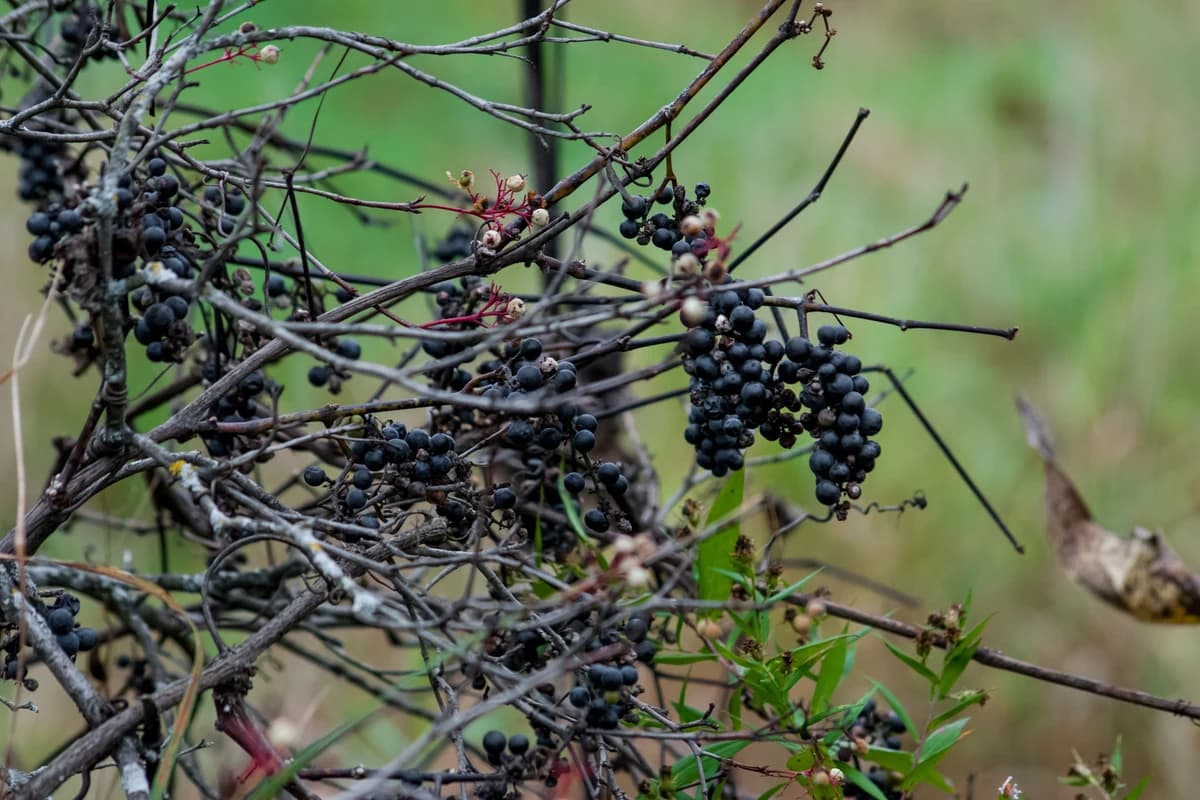
About This Plant
American elderberry is a suckering native shrub grown for fragrant flower cymes and dark purple berries used in syrups, jams, wine, colorants, and wildlife plantings. It performs best in full sun with moist, well-drained, slightly acidic soil, and it needs pruning, irrigation, sanitation, and quick postharvest handling for reliable fruit quality.
How to Grow Elderberry
Learn how to grow Elderberry from seed to harvest in 730 days. Intermediate difficulty. Complete nutrient guide, pH/EC requirements, and growing conditions for soil & container.
Sources cited: 15.
Nutrient Requirements by Growth Stage
The existing NPK values were corrected because they match dry leaf/tissue concentrations, not hydroponic nutrient-solution ppm. No complete source found an elderberry-specific hydroponic stage ppm recipe, so the canonical solution ppm stages are zeroed and treated as unverifiable for hydroponics…
Sign in to view nutrient requirements
A free account unlocks NPK targets for all four growth stages, micronutrient levels, a per-stage nutrient calculator, and the full nutrition guide. Signing up takes one click. Truleaf is a free, non-profit project, and every new account helps it grow. No spam, ever.
Growing Environments
Outdoor field, orchard, hedgerow, and landscape production are well supported. Elderberry prefers full sun, moist but well-drained soil, and pH near 5.5-6.5; it tolerates wet margins better than many fruit crops but suffers where roots remain waterlogged…
Temperature
American elderberry is a hardy outdoor perennial rather than a temperature-controlled hydroponic crop. Complete sources consistently place it in cold-hardy production zones, commonly USDA zones 3-9 or 4A-10B depending source and region. The current database value of -29 to 35C as both germination and growth range is too broad for germination and too literal for crop management. Seeds have morphophysiological dormancy: warm moist stratification followed by cold stratification is used, and germination tests support warm conditions near 20-30C after dormancy treatment. For established plants, use 24C only as a practical warm-season growth midpoint, not as a verified optimum. Site selection should prioritize frost-air drainage, full sun, and reliable soil moisture rather than indoor temperature setpoints.
Humidity
No complete elderberry source provides a controlled-environment relative-humidity target. The current 50-70% range is therefore retained only as a conservative disease-management band, not as a species-specific optimum…
Light
Full sun is the most reliable light recommendation for fruit production. University of Missouri, WVU, USU, and Savanna Institute guidance all describe elderberry as best in sunny, moist, well-drained sites, with partial shade tolerated but lower production expected…
Airflow
Airflow is source-backed as a cultural disease-control requirement, even though no elderberry paper provides a canopy airspeed in m/s. Mature bushes should be thinned so light penetrates the canopy and foliage dries quickly after rain or irrigation…
Sign in to view environmental requirements
A free account unlocks exact temperature, humidity, light and airflow targets, including germination and growth ranges, DLI, photoperiod and PPFD, plus the full environment guide. Signing up takes one click. Truleaf is a free, non-profit project, and every new account helps it grow. No spam, ever.
Hydroponic System Compatibility
The reviewed literature supports soil-grown elderberry with drip or trickle irrigation, not hydroponic production systems. Drip is the only system marked suitable because extension guides describe it as common for providing the 1-2 inches of weekly water needed during growth and fruit development…
Growing Media
The primary growing medium for elderberry is fertile, moist, well-drained field soil with moderate organic matter and pH adjusted near 5.5-6.5. Raised rows or berms are recommended where internal drainage is poor, because elderberry likes moisture but not persistent waterlogging…
Container Specs
Container production is best considered nursery or short-term patio culture, not the default fruit-production system. UF/IFAS lists elderberry as usable in containers or planters, but field guides describe mature American elderberry as a large, multi-stemmed shrub 5-12 ft tall and 6-12 ft wide…
Training & Support
Elderberry does not need trellising; University of Missouri explicitly describes it as a freestanding bush. The required management is pruning, not structural training…
Sign in to view system compatibility
A free account unlocks why each of the six systems fits or fails, plus growing media, container sizes, training methods, companion plants, and the full systems guide. Signing up takes one click. Truleaf is a free, non-profit project, and every new account helps it grow. No spam, ever.
Propagation
Hardwood cuttings are the preferred true-to-type propagation method for elderberry cultivars. Use healthy one-year-old dormant shoots, often pencil-thick, and plant prepared cuttings in late winter or early spring with multiple buds and most of the cutting below the soil line…
Harvesting
Harvest flowers when most florets on the cyme are open, then dry, freeze, or process quickly. For berries, clip whole umbels only when fruit is fully dark purple-black and ripe; green berries should be sorted out during postharvest handling…
Planting Calendar
In temperate North America, establish elderberry with rooted plants or dormant hardwood cuttings in spring after site preparation. Late winter to very early spring is the primary pruning window, before budbreak and before new growth complicates cane removal…
Common Issues
The current issue list needed revision. Elderberry rust and cane/shoot borers are strongly elderberry-specific and should remain, while iron chlorosis should be reframed as broader pH or nutrient stress verified by soil and leaf testing…
Get the full science-backed guide
By signing up, you help keep Truleaf free and support the growth of our nonprofit project. Your account unlocks full details for every plant issue—including symptoms, causes, step-by-step solutions, and prevention—plus the month-by-month planting calendar, the complete guide, and all research sources. It only takes one click. No spam, ever.