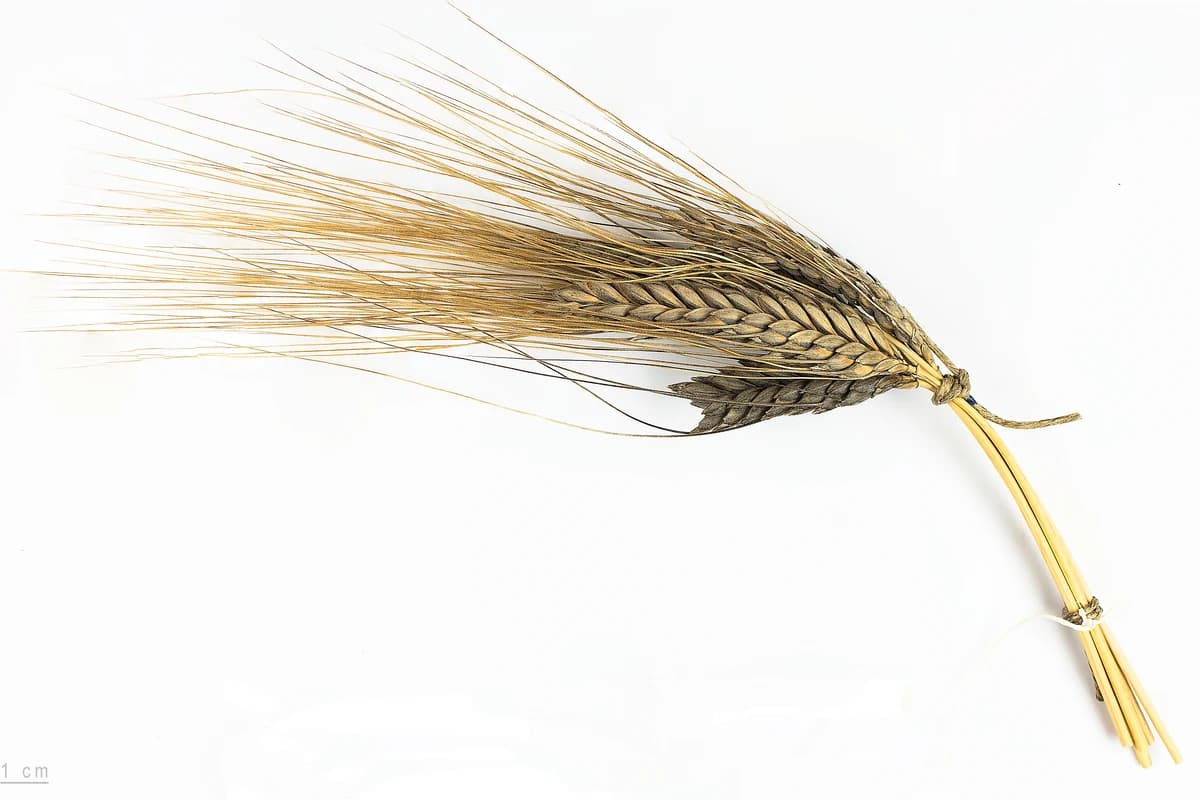
About This Plant
Emmer is an ancient hulled wheat, often sold as farro, valued for resilient field performance, nutty grain flavor, and high-protein specialty flour. It behaves as a cool-season cereal rather than a compact hydroponic vegetable: direct sow it outdoors or in greenhouse beds, manage nitrogen conservatively to avoid lodging, and harvest dry heads for threshing and dehulling.
How to Grow Emmer
Learn how to grow Emmer from seed to harvest in 125 days. Intermediate difficulty. Complete nutrient guide, pH/EC requirements, and growing conditions for soil & container.
Sources cited: 10.
Nutrient Requirements by Growth Stage
Emmer should be managed as a moderate-to-low input wheat. A 2024 precision nitrogen study found best yield and grain protein from managed N timing rather than simply pushing high rates, and older rainfed work showed seeding rate and site strongly shape yield…
Sign in to view nutrient requirements
A free account unlocks NPK targets for all four growth stages, micronutrient levels, a per-stage nutrient calculator, and the full nutrition guide. Signing up takes one click. Truleaf is a free, non-profit project, and every new account helps it grow. No spam, ever.
Growing Environments
Emmer is best suited to outdoor beds or field-scale soil, with greenhouse culture useful for seed increase, demonstrations, or controlled trials. Container culture is possible only in wide, deep troughs and should be treated as educational or small-scale seed work rather than efficient grain production…
Temperature
Emmer is a cool-season cereal. Dicoccum germination testing across temperature regimes supports warm but not hot establishment, while field reviews and trials place productive growth in cool temperate seasons. Use about 5-35C as a germination envelope and keep active growth near 7-24C, with roughly 18C as a practical protected-culture target.
Humidity
No complete emmer paper gives an indoor RH optimum, so humidity is treated as disease management rather than a physiological target. Keep protected stands around 40-60 percent RH and keep heads dry from heading through flowering because wet, humid flowering weather increases Fusarium head blight risk in wheat…
Light
Grow emmer in full sun or high-light greenhouse conditions. Field seeding-rate and nitrogen trials evaluated emmer as an open-field cereal, and review data describe its adaptation to traditional outdoor cropping systems rather than shade…
Airflow
Outdoor airflow usually supplies enough canopy drying, but greenhouse or dense container stands need steady gentle ventilation. Aim for about 0.2-0.6 m/s horizontal airflow to reduce leaf wetness and humid pockets around heads, especially near flowering when Fusarium risk rises…
Sign in to view environmental requirements
A free account unlocks exact temperature, humidity, light and airflow targets, including germination and growth ranges, DLI, photoperiod and PPFD, plus the full environment guide. Signing up takes one click. Truleaf is a free, non-profit project, and every new account helps it grow. No spam, ever.
Hydroponic System Compatibility
Use soil or bed-based drip irrigation as the practical production system. Mature emmer is not a good fit for DWC, NFT, Kratky, or aeroponics because cereal tillers, long roots, lodging risk, and grain harvest processing do not match those systems…
Growing Media
Choose well-drained mineral soil, loam, or sandy loam for productive emmer. Reviews describe emmer as a resilient ancient wheat in traditional low-input systems, and field trials remain the strongest production evidence…
Container Specs
If container growing is necessary, use wide troughs or raised-bed style planters at least 30 cm deep with strong drainage and full sun. The goal is to support multiple tillers, avoid waterlogging, and reduce lodging; small individual pots rarely provide enough root volume or stand density for useful grain harvest…
Training & Support
Do not trellis, top, prune, or train emmer. Lodging prevention should come from agronomy: balanced seeding rate, conservative nitrogen, high light, and timely harvest…
Sign in to view system compatibility
A free account unlocks why each of the six systems fits or fails, plus growing media, container sizes, training methods, companion plants, and the full systems guide. Signing up takes one click. Truleaf is a free, non-profit project, and every new account helps it grow. No spam, ever.
Propagation
Propagate emmer from seed by direct sowing. Seeding-rate trials in southern Italy used direct-sown rainfed stands, and organic wheat guidance emphasizes a firm seedbed, uniform sowing depth, and good seed-soil contact…
Harvesting
Harvest once when the crop reaches full maturity and heads and straw are dry. Emmer is hulled, so threshing is followed by cleaning and dehulling before milling or cooking…
Planting Calendar
For temperate winter emmer, direct sow in autumn and harvest in midsummer. Southern Italy rainfed trials sowed emmer as a winter cereal, and organic wheat guidance follows the same cool-season small-grain pattern…
Common Issues
The main researched risks are leaf rust, Fusarium head blight, lodging, poor emergence, and nitrogen imbalance. Ethiopian evaluations found genotype differences in disease resistance and yield traits, while modern wheat pathology work identifies leaf rust resistance as strongly genotype-dependent…
Get the full science-backed guide
By signing up, you help keep Truleaf free and support the growth of our nonprofit project. Your account unlocks full details for every plant issue—including symptoms, causes, step-by-step solutions, and prevention—plus the month-by-month planting calendar, the complete guide, and all research sources. It only takes one click. No spam, ever.