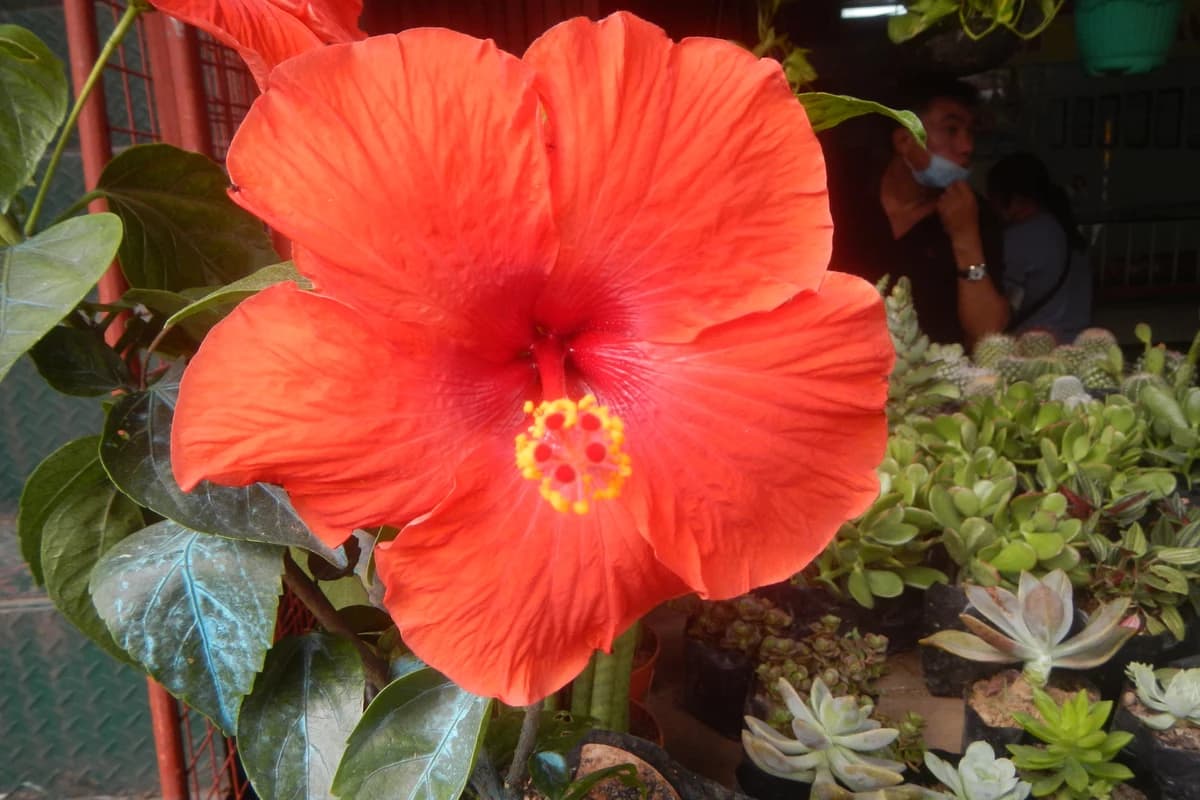
About This Plant
Tropical hibiscus is a warm-climate evergreen shrub grown for large, short-lived ornamental flowers. It performs best with bright light, warm temperatures, acidic to slightly acidic root-zone pH, steady moisture, and balanced nutrition with adequate potassium.
How to Grow Hibiscus
Learn how to grow Hibiscus from seed to harvest in 112 days. Intermediate difficulty. Complete nutrient guide, pH/EC requirements, and growing conditions for soil & container.
Sources cited: 12.
Nutrient Requirements by Growth Stage
Hibiscus needs steady but balanced fertility with particular attention to potassium and pH. A greenhouse ebb-and-flood production study used 161 ppm N, 32 ppm P, 160 ppm K, 26 ppm Mg, 119 ppm Ca, EC 1.45 mS/cm, and pH 5.8 as the standard fertigation regime…
Sign in to view nutrient requirements
A free account unlocks NPK targets for all four growth stages, micronutrient levels, a per-stage nutrient calculator, and the full nutrition guide. Signing up takes one click. Truleaf is a free, non-profit project, and every new account helps it grow. No spam, ever.
Growing Environments
Hibiscus fits outdoor landscapes, greenhouses, containers, conservatories, and bright indoor rooms. NC State recommends full sun to partial shade, rich moist soil with good drainage, high humidity, and protection from wind and frost…
Temperature
Hibiscus is a heat-demanding tropical shrub. Indoor extension guidance recommends warm rooms, with 18-24C best for flowering and bud retention. Controlled pot-plant work found flowering accelerated as temperature rose from 18C to 21C and then 24C, while very low light at 18C prevented hibiscus from flowering within the 130-day trial. Leaf-unfolding models show growth is very slow around 11C, plants failed at 5C, and predicted leaf unfolding peaks near 32C. Use 18-30C for active growth, keep blooming plants near 21-24C, and avoid cold drafts.
Humidity
Hibiscus appreciates humid, stable air but does not need a constantly wet canopy. NC State notes Chinese hibiscus appreciates high humidity and protection from wind and frost…
Light
Light is a primary driver of hibiscus flowering. A factorial HortScience study found plants in full sun at about 840 umol/m2/s flowered earlier and made more buds and flowers than plants under 50 percent shade at about 420 umol/m2/s, though shaded plants were larger and darker green…
Airflow
No complete hibiscus paper reported a numeric canopy air-speed target, so airflow is operational guidance. Use gentle air movement that prevents stagnant humid pockets while avoiding cold drafts…
Sign in to view environmental requirements
A free account unlocks exact temperature, humidity, light and airflow targets, including germination and growth ranges, DLI, photoperiod and PPFD, plus the full environment guide. Signing up takes one click. Truleaf is a free, non-profit project, and every new account helps it grow. No spam, ever.
Hydroponic System Compatibility
The verified production systems for hibiscus are drained substrate containers and recirculating ebb-and-flood fertigation. Wang et al…
Growing Media
Use a rich, well-drained substrate that stays moist but aerated. UMN recommends a hibiscus mix of two parts potting soil, two parts peat moss, and one part perlite or vermiculite…
Container Specs
Hibiscus can outgrow small pots quickly. NC State reports mature landscape size of 1.2-3 m high and 1.5-2.4 m wide and states indoor hibiscus requires a large container in bright light…
Training & Support
Hibiscus usually needs pruning more than structural support. NC State recommends pruning back by about one-half the height in early spring to encourage compact growth and notes flowers form on new growth…
Sign in to view system compatibility
A free account unlocks why each of the six systems fits or fails, plus growing media, container sizes, training methods, companion plants, and the full systems guide. Signing up takes one click. Truleaf is a free, non-profit project, and every new account helps it grow. No spam, ever.
Propagation
Vegetative propagation is the practical standard for tropical hibiscus because cultivars do not come true from seed. UF propagation guidance lists stem-tip cuttings as the primary method, with softwood cuttings taken in late summer, rooted under intermittent mist, and usually rooted in 4-6 weeks at about 21C medium…
Harvesting
Hibiscus is managed mainly for ornamental display, not a storage harvest. UMN notes individual flowers are beautiful but short-lived, typically lasting one day before closing and dropping…
Planting Calendar
Calendar timing depends strongly on climate. For temperate container culture, start seed or cuttings indoors in late winter to spring, move containers outdoors only after frost risk passes, and bring them back before cold nights because tropical hibiscus is not winter hardy…
Common Issues
The strongest hibiscus issue signals are bud loss, iron chlorosis, and insects. UMN lists yellow leaves, flower bud drop, and insect pests as common problems, and warns that cold or abrupt environmental change can cause bud failure…
Get the full science-backed guide
By signing up, you help keep Truleaf free and support the growth of our nonprofit project. Your account unlocks full details for every plant issue—including symptoms, causes, step-by-step solutions, and prevention—plus the month-by-month planting calendar, the complete guide, and all research sources. It only takes one click. No spam, ever.