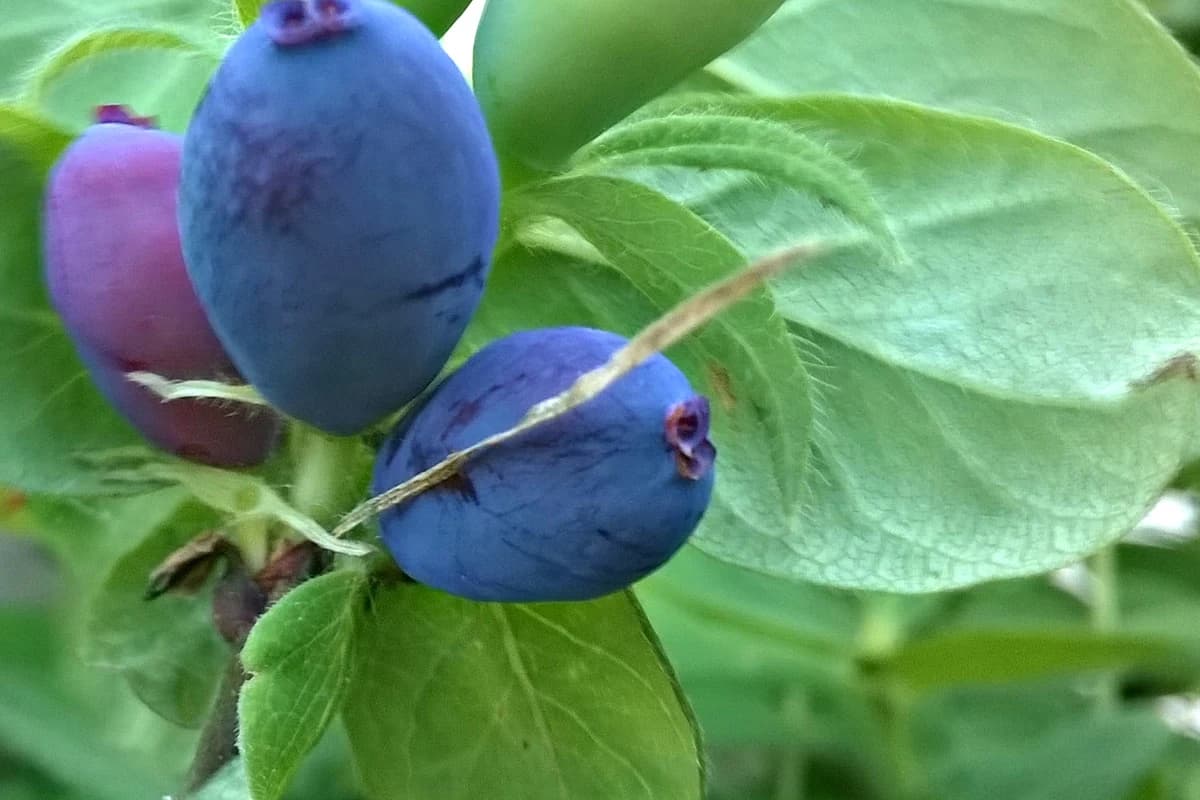
About This Plant
Honeyberry, also called haskap or blue honeysuckle, is a cold-hardy deciduous fruit shrub grown for early blue berries with a sweet-tart flavor. It performs best as an outdoor, container, or protected-culture perennial in cool climates, with compatible cultivars for cross-pollination, steady moisture, open pruning, and harvest timed after berries are fully colored inside.
How to Grow Honeyberry
Learn how to grow Honeyberry from seed to harvest in 730 days. Intermediate difficulty. Complete nutrient guide, pH/EC requirements, and growing conditions for hydroponics, soil & greenhouse.
Sources cited: 16.
Nutrient Requirements by Growth Stage
Honeyberry nutrition should be managed from soil and leaf tests, not from fixed high fertilizer rates. Greenhouse work found best vegetative growth around pHwater 5.9-6.5 and did not find a vegetative benefit from added P and K in the tested loamy sand…
Sign in to view nutrient requirements
A free account unlocks NPK targets for all four growth stages, micronutrient levels, a per-stage nutrient calculator, and the full nutrition guide. Signing up takes one click. Truleaf is a free, non-profit project, and every new account helps it grow. No spam, ever.
Growing Environments
Honeyberry is best suited to outdoor soil, raised beds, large containers, and carefully ventilated greenhouse culture. It is not a natural small indoor crop: shrubs are perennial, need cross-pollination, and benefit from dormancy…
Temperature
Honeyberry is a cool-temperate perennial shrub rather than a warm indoor berry crop. Use about 15-24C for steady active growth, tolerate short periods up to about 27C, and protect plants from prolonged heat that causes scorch and premature leaf drop. Dormant plants are extremely cold hardy, and open flowers tolerate spring frosts better than many fruit crops.
Humidity
No honeyberry-specific production humidity target was found, so keep protected culture moderate rather than humid. A practical 50-70% RH range reduces leaf stress while avoiding the sustained high humidity associated with powdery mildew in dense Lonicera canopies…
Light
Plant honeyberry in full sun for the best flowering, pollination, and yield, with afternoon shade only in hot regions where summer scorch is common. A DLI near 15 mol/m2/day is a cautious controlled-environment starting point, but crop-specific fruiting DLI trials were not found…
Airflow
Maintain open canopy airflow rather than forcing strong wind. Extension guidance recommends pruning to let light and air enter the shrub, while outdoor guides recommend windbreaks where drying winds cause scorch…
Sign in to view environmental requirements
A free account unlocks exact temperature, humidity, light and airflow targets, including germination and growth ranges, DLI, photoperiod and PPFD, plus the full environment guide. Signing up takes one click. Truleaf is a free, non-profit project, and every new account helps it grow. No spam, ever.
Hydroponic System Compatibility
Recommended systems are outdoor soil, large containers, drip-irrigated substrate, and ventilated greenhouse culture. Drip irrigation is especially useful because it maintains moisture while keeping leaves drier…
Growing Media
Use moist, well-drained loam or sandy loam with good organic matter. Honeyberry tolerates a wider pH range than blueberry, but controlled work supports slightly acidic conditions, about pHwater 5.9-6.5, for strongest vegetative growth…
Container Specs
Container culture is possible, but exact mature pot dimensions were not verified in complete academic or extension sources. Use a drained container large enough for a woody shrub, start young plants one size above their nursery pot, and repot as growth demands…
Training & Support
Honeyberry is a free-standing shrub and does not require trellising or staking. During the first three to four years, remove only dead, diseased, rubbing, or crowded wood…
Sign in to view system compatibility
A free account unlocks why each of the six systems fits or fails, plus growing media, container sizes, training methods, companion plants, and the full systems guide. Signing up takes one click. Truleaf is a free, non-profit project, and every new account helps it grow. No spam, ever.
Propagation
Propagate named honeyberry cultivars clonally because seed-grown plants do not preserve cultivar traits reliably. Softwood or semi-hardwood cuttings are useful under controlled humidity, hardwood cuttings can be taken in dormancy but may root poorly, and tissue culture is documented for rapid multiplication…
Harvesting
Honeyberries turn blue outside before they are fully ripe. Harvest when berries are blue to purple inside and taste sweet-tart rather than green or grassy, often about 6-7 weeks after bloom…
Planting Calendar
Plant dormant honeyberry shrubs in fall where possible, or in early spring before active growth. Fall planting gives roots more time to establish before summer heat, while spring planting is reliable for dormant nursery stock…
Common Issues
Honeyberry is relatively low-input, but the main recurring problems are birds, powdery mildew, summer scorch, high-pH nutrient chlorosis, and occasional root or collar decline in saturated sites. Install netting before ripening, prune for airflow, avoid wet crowns, and use soil or leaf testing before nutrient…
Get the full science-backed guide
By signing up, you help keep Truleaf free and support the growth of our nonprofit project. Your account unlocks full details for every plant issue—including symptoms, causes, step-by-step solutions, and prevention—plus the month-by-month planting calendar, the complete guide, and all research sources. It only takes one click. No spam, ever.