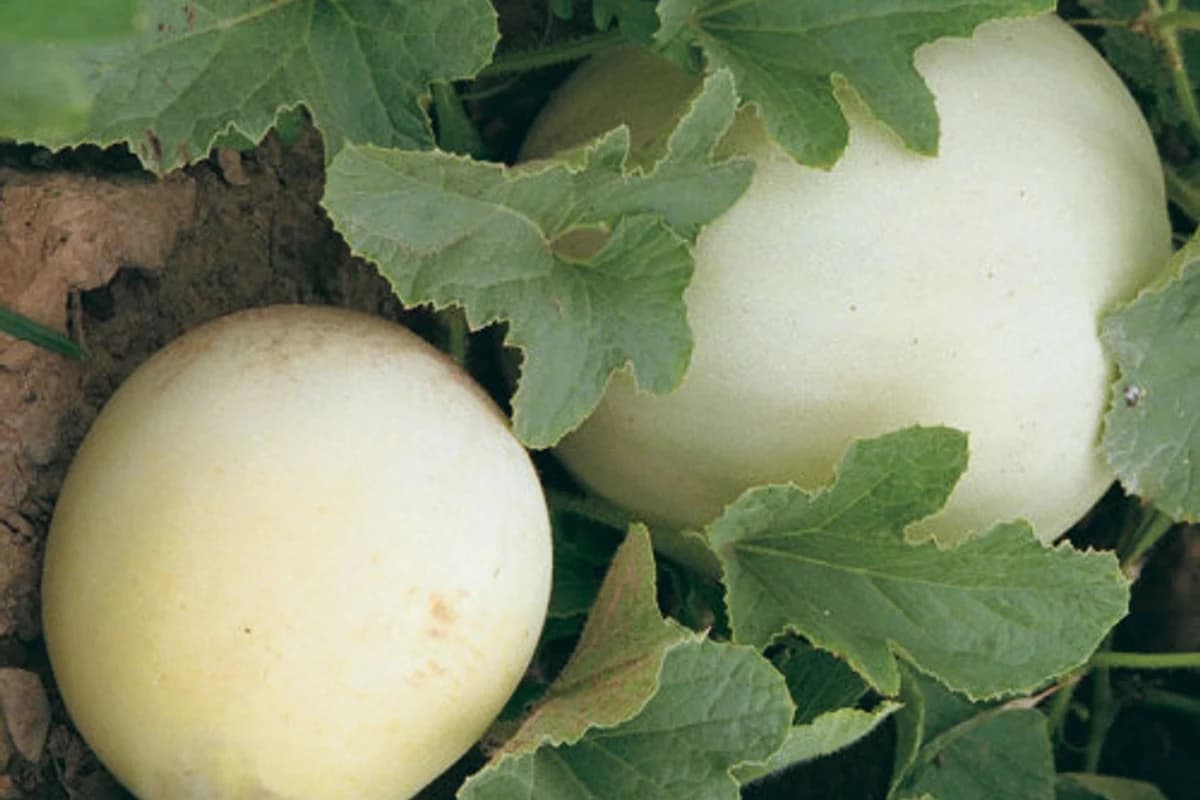
About This Plant
Honeydew is a smooth-rind winter melon in Cucumis melo, grown for sweet pale green flesh and long-keeping fruit. It is a warm-season vine that needs strong light, warm roots, careful pollination, and higher potassium support as fruit develops, making it best suited to outdoor, greenhouse, drip, or actively aerated hydroponic systems.
How to Grow Honeydew
Learn how to grow Honeydew from seed to harvest in 105 days. Intermediate difficulty. Complete nutrient guide, pH/EC requirements, and growing conditions for hydroponics, soil & greenhouse.
Sources cited: 14.
Nutrient Requirements by Growth Stage
Honeydew nutrition should be staged. Hydroponic netted melon research found fruit quality improved when N and K were adjusted by developmental stage, with reduced N around pollinated young fruit and modified K during fruit enlargement…
Sign in to view nutrient requirements
A free account unlocks NPK targets for all four growth stages, micronutrient levels, a per-stage nutrient calculator, and the full nutrition guide. Signing up takes one click. Truleaf is a free, non-profit project, and every new account helps it grow. No spam, ever.
Growing Environments
Honeydew is best outdoors or in greenhouses where it receives full sun, warm temperatures, and pollinator access or hand pollination. Container production is feasible with at least 19 L per plant, excellent drainage, and a sturdy trellis or enough room for vines to sprawl…
Temperature
Honeydew is a warm-season Cucumis melo crop. Germination is fastest in warm media; extension guidance places best germination at 70-90 F, while controlled germination work found strong cultivar-dependent performance around 25 C and broader emergence only under favorable accessions. For crop growth, keep air near 24-29 C with warm roots and no frost exposure. Heat above the mid-30s C can reduce pollen performance, so flowering rooms need ventilation and shading during heat spikes.
Humidity
Target 50-70 percent relative humidity for honeydew, with 60 percent as a practical set point for greenhouse or indoor systems. This range supports transpiration and pollen function while limiting the long wet periods that favor downy mildew and other foliar diseases…
Light
Honeydew needs full sun outdoors and strong supplemental light indoors. University guidance recommends full sun, ideally 8-10 hours direct light for melons…
Airflow
Use steady moderate airflow, about 0.3-0.8 m/s across the canopy, to keep boundary layers thin and flowers dry without whipping vines. Ventilation matters directly for melon productivity: greenhouse ventilation increased honey bee foraging on Cucumis melo, improving the chance of fruit set…
Sign in to view environmental requirements
A free account unlocks exact temperature, humidity, light and airflow targets, including germination and growth ranges, DLI, photoperiod and PPFD, plus the full environment guide. Signing up takes one click. Truleaf is a free, non-profit project, and every new account helps it grow. No spam, ever.
Hydroponic System Compatibility
Drip fertigation in coco, perlite, or rockwool is the strongest hydroponic fit because EC, dry-back, and K:N ratio can be adjusted as fruit develops. DWC can work for single plants if reservoirs are large, cool, and highly aerated…
Growing Media
Use well-drained media with high air capacity. Coco coir blended with perlite is preferred for drip systems because it supports both moisture buffering and dry-back control…
Container Specs
Use a minimum 19 L container per plant, with about 40 cm width and depth as a practical lower limit for a single vine. Larger containers are better because honeydew has a vigorous root system and heavy fruit load…
Training & Support
Training support is optional outdoors but recommended in protected and container systems. Ground sprawl is simple, yet trellising improves airflow, harvest access, and space use…
Sign in to view system compatibility
A free account unlocks why each of the six systems fits or fails, plus growing media, container sizes, training methods, companion plants, and the full systems guide. Signing up takes one click. Truleaf is a free, non-profit project, and every new account helps it grow. No spam, ever.
Propagation
Honeydew is propagated from seed for ordinary production. Direct sow after soil reaches 65-70 F, or start seed indoors 3-4 weeks before the last frost where the season is short…
Harvesting
Honeydew harvest differs from cantaloupe because mature fruit usually does not slip from the vine. Cut fruit with clean shears when rind color shifts from green-white toward creamy or yellowish white, the blossom end yields slightly, the rind feels waxy or tacky, and soluble solids are at least 10 percent Brix…
Planting Calendar
For temperate Northern Hemisphere planning, sow indoors in March-April, then transplant in May-June after frost danger and after soil warms to at least 65 F. Direct sowing is also May-June in warm soil…
Common Issues
The previous issue list was incomplete. Keep pollination failure, Pythium root rot, nutrient burn, and low sweetness, but add symptoms and prevention for each…
Get the full science-backed guide
By signing up, you help keep Truleaf free and support the growth of our nonprofit project. Your account unlocks full details for every plant issue—including symptoms, causes, step-by-step solutions, and prevention—plus the month-by-month planting calendar, the complete guide, and all research sources. It only takes one click. No spam, ever.