Забудьте про AeroGarden — 3 DIY Гідропонні Системи від $15
AeroGarden закрився, а потім перезапустився — але він вам не потрібен. Порівняйте 3 DIY гідропонні збірки від $15, які перевершують будь-яку капсульну систему.
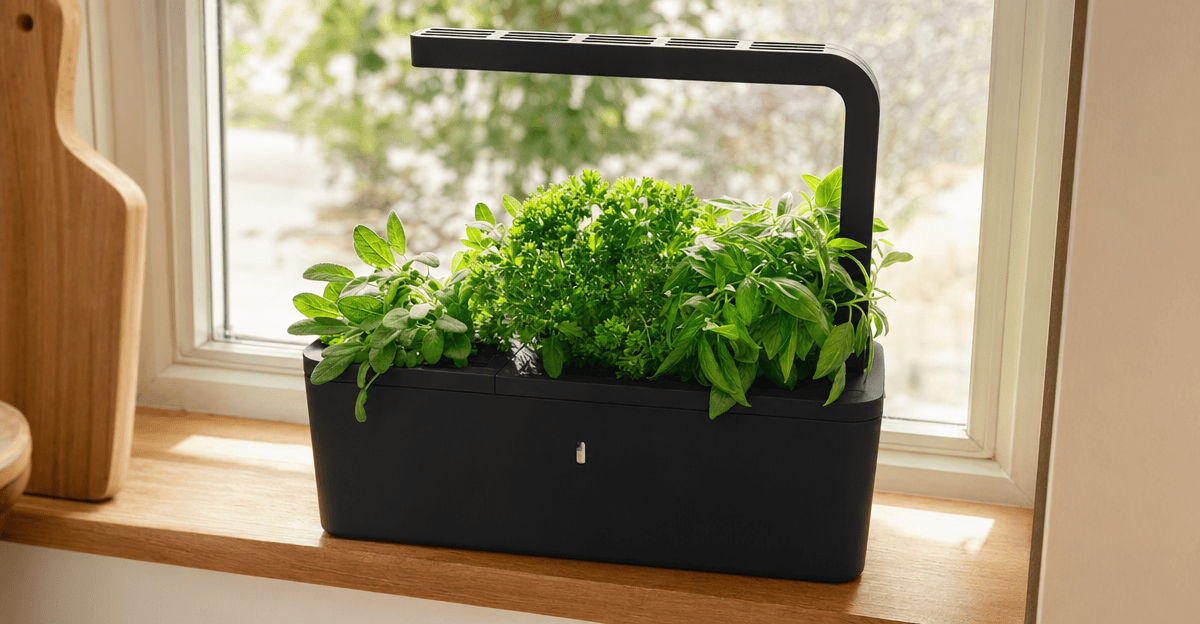
Ключовий висновок: Якщо ви залежали від AeroGarden і відчули себе покинутими після закриття у 2024 році — або просто хочете більше контролю, ніж будь-яка капсульна система пропонує — DIY гідропонна система може перевершити її за всіма вимірюваними показниками. Банка Кратки коштує менше $15 і не потребує електрики для водної системи. Повна збірка DWC коштує $30–50 і вирощує трави на 30–40% швидше, ніж у ґрунті. Цей посібник проведе вас через перехід крок за кроком, з реальними цифрами та науково обґрунтованими рекомендаціями.
Що Сталося з AeroGarden?
У жовтні 2024 року Scotts Miracle-Gro оголосила про закриття AeroGarden з 1 січня 2025 року. Бренд, який створив категорію настільної гідропоніки два десятиліття тому, зник — жертва того, що Scotts описала як бізнес, який «не був прибутковим». Материнська компанія зафіксувала $29 мільйонів списань, пов'язаних із надлишковими запасами AeroGarden у фіскальних результатах 2024 року.
Продукти були доступні на веб-сайті AeroGarden до 7 жовтня 2024 року. Продажі на Amazon тривали до кінця року. Гарантії були скорочені з одного року до 90 днів для пристроїв, проданих після 1 листопада 2024 року.
Потім, на початку січня 2025 року, AeroGarden змінив рішення та оголосив про перезапуск навесні 2025 року з оновленими моделями та новими наборами капсул із насінням. Бренд повернувся — але цей епізод оголив те, що спільнота домашнього вирощування обговорювала роками: залежність від пропрієтарної капсульної системи несе реальні ризики.
Доступність капсул, залежність від пропрієтарних добрив, обмежена висота вирощування, фіксований вихід LED, незамінні компоненти — ці обмеження існують у кожній закритій екосистемі. 15 місяців безперервного обговорення в спільноті після оголошення про закриття прояснили одне: вирощувачі хочуть незалежності.
Цей посібник — для кожного, хто хоче цієї незалежності, чи то повністю залишаючи AeroGarden, чи просто бажаючи другу систему, яку ви повністю контролюєте.
Що Таке AeroGarden Насправді (Технічно)
Перш ніж мігрувати від чогось, корисно зрозуміти, від чого ви мігруєте. Системи AeroGarden — це малогабаритні пристрої глибоководної культури (DWC) з інтегрованим LED-освітленням. Ось що пропонує кожна модель:
| Модель | Капсули | Потужність LED | Висота Вирощування | Резервуар | Місячна Вартість Енергії |
|---|---|---|---|---|---|
| Harvest | 6 | 20W | 30 см | 3 л | ~$1,33 |
| Bounty | 9 | 40W | 61 см | 5,7 л | ~$2,78 |
| Bounty Elite | 9 | 50W | 61 см | 5,7 л | ~$3,50 |
«Капсула» — це пропрієтарна губка для вирощування, вставлена в пластиковий кошик та розміщена на платформі з попередньо вирізаними отворами. Поживний розчин заповнює резервуар внизу. Маленький насос циркулює воду, а вбудований таймер керує LED-панеллю. Це вся система.
Кожен з цих компонентів можна відтворити зі стандартних деталей — і в більшості випадків покращити.
Ваші Три Шляхи Міграції
Не існує єдиної «найкращої» заміни. Правильний шлях залежить від того, скільки контролю ви хочете і скільки часу готові витрачати на обслуговування. Ось три реалістичні варіанти, від найпростішого до найуніверсальнішого.
Шлях 1: Банка Кратки (Нуль Електрики, Менше $15)
Метод Кратки — це гідропонна техніка без циркуляції, розроблена доктором Бернардом А. Кратки в Університеті Гаваїв. Ви заповнюєте контейнер поживним розчином, підвішуєте рослину в сітчастому горщику над ним — і все. У міру того, як рослина п'є, рівень води знижується, створюючи вологий повітряний простір, де коріння поглинає кисень. Без насоса, без таймера, без електрики для водної системи.
Що вам потрібно:
- Скляна банка 1 літр або пів-галона (~$3)
- Сітчастий горщик, діаметр 7,5 см (~$0,50)
- Гідропонні добрива, будь-яка універсальна формула A+B (~$12 на кілька місяців)
- Субстрат: керамзит, кубик мінеральної вати або торф'яна таблетка (~$5)
- За бажанням: лампа для вирощування, якщо немає вікна на південь
Загальна вартість: $10–20 за банку (без додаткової лампи)
Ідеально для: Салат, базилік, м'ята, коріандр та інші компактні трави. Метод Кратки перевірений для швидкорослих культур з коротким циклом. Він менш ефективний для великих плодових рослин через обмежений запас добрив.
Продуктивність проти AeroGarden: Банка Кратки вирощує одну рослину з нульовими операційними витратами на водну систему. Ви контролюєте концентрацію добрив, розмір контейнера та субстрат. Компроміс — кожна банка це одна рослина, і вам потрібно контролювати pH вручну.
Для повного занурення в цей метод дивіться наш посібник з методу Кратки.
Шлях 2: Відро DWC ($30–50, Активна Аерація)
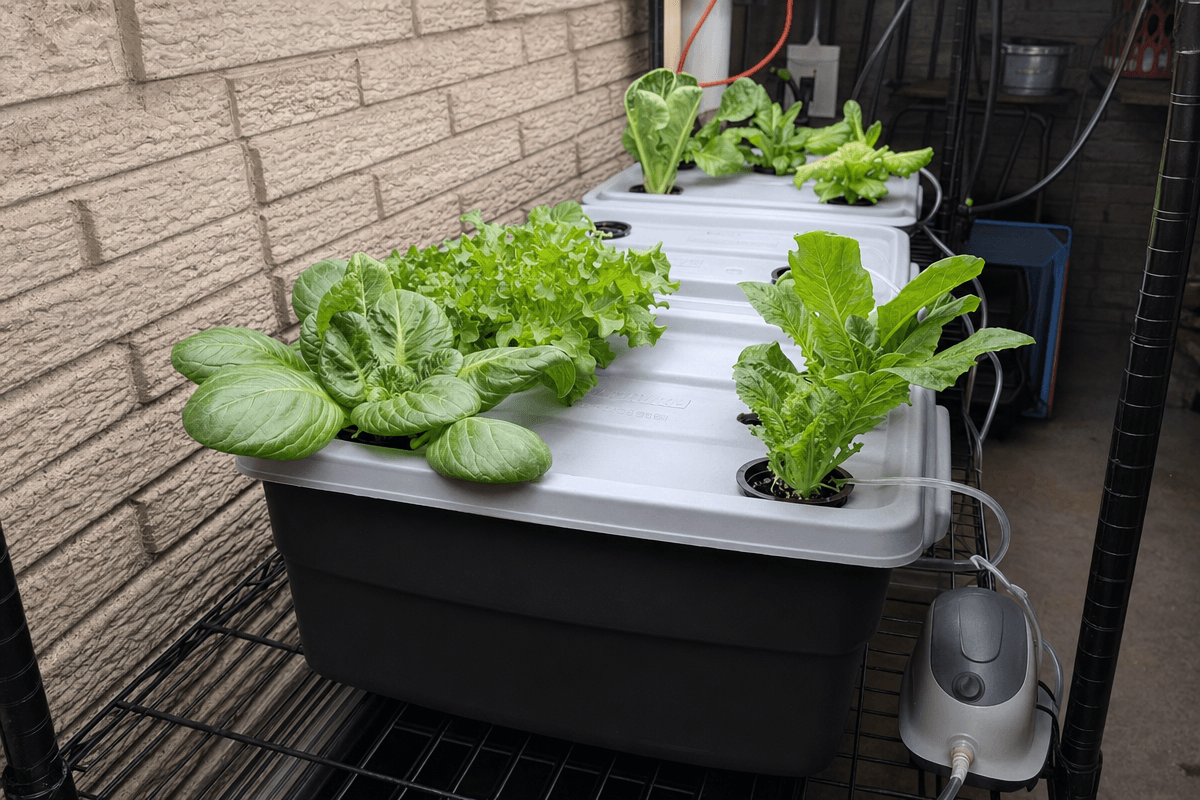
Глибоководна культура — це саме те, що використовує AeroGarden — але без пропрієтарних обмежень. Базова збірка DWC використовує відро на 20 літрів з кришкою, повітряний насос, аераційний камінь та сітчасті горщики. Насос проштовхує повітря через камінь у поживний розчин, підтримуючи безперервне насичення коріння киснем.
Що вам потрібно:
- Відро 20 літрів з кришкою (~$5)
- Повітряний насос, один вихід (~$10)
- Аераційний камінь та шланг (~$4)
- Сітчасті горщики, 7,5 см, кількість 4–6 (~$3)
- Гідропонні добрива, формула A+B (~$12)
- Субстрат: керамзит (~$8)
- Тест-набір pH або pH-метр (~$8–15)
Загальна вартість: $30–50 за відро
Ідеально для: Трави, салат, листові зелені, перець та маленькі томати. DWC краще підтримує довший цикл вирощування, ніж Кратки, тому що повітряний насос безперервно насичує розчин киснем.
Продуктивність проти AeroGarden: Відро DWC на 20 літрів вміщує 4–6 рослин з приблизно 4-кратним об'ємом резервуара порівняно з AeroGarden Bounty. Гідропонні системи широко задокументовані як такі, що прискорюють ріст на 30–50% порівняно з ґрунтом, переважно тому, що добрива доставляються безпосередньо до коріння, а рівні розчиненого кисню залишаються стабільно високими. Rajaseger et al. (2023) повідомили, що гідропонний салат може давати до 20 разів більший урожай з гектара, ніж звичайне землеробство. DWC забезпечує безперервну аерацію кореневої зони через повітряний насос — ключовий фактор цього прискорення росту. Ваш AeroGarden вже робив це; відро просто прибирає пропрієтарний корпус.
Шлях 3: Мульти-Відро або Контейнерна Система ($80–150, Масштабована)
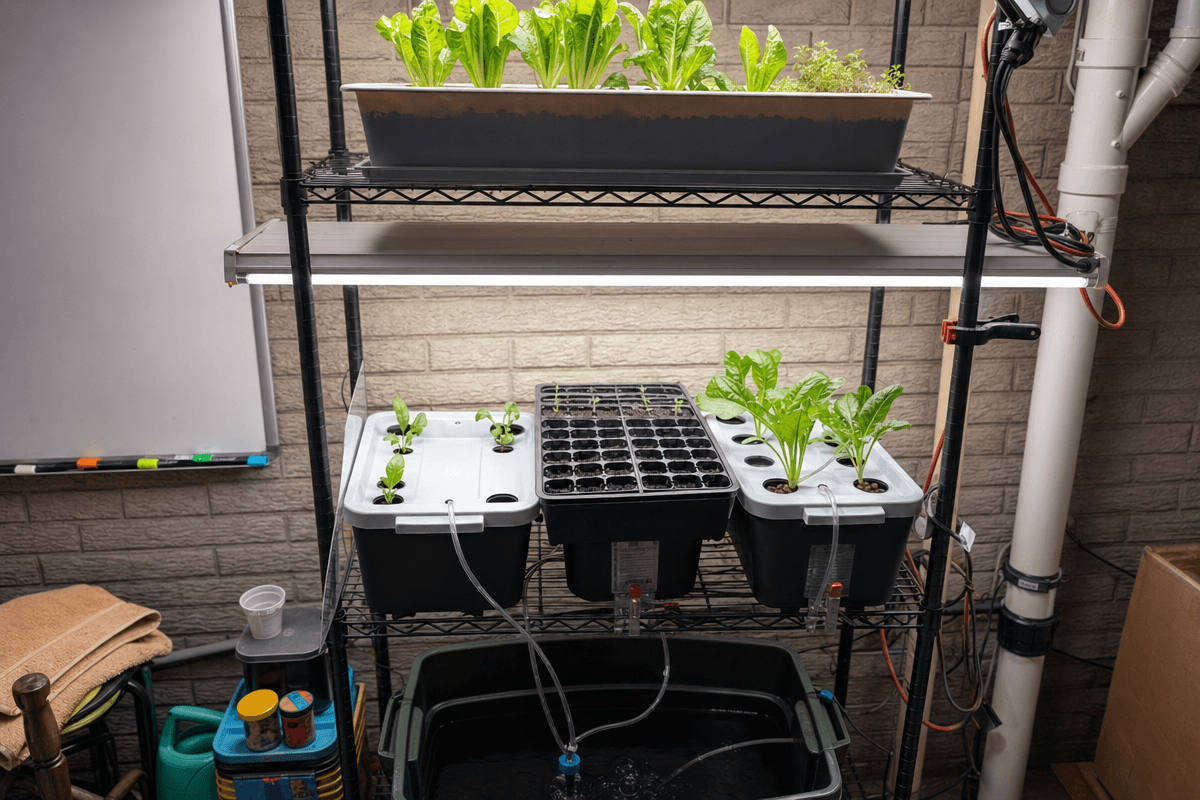
Коли у вас працює одне відро DWC, масштабування просте. Поширена збірка використовує контейнер для зберігання на 100 літрів як резервуар, з 6–12 отворами для сітчастих горщиків, вирізаними в кришці. Це дає вам місткість для рослин як у AeroGarden Bounty з набагато більшим простором для коріння та об'ємом добрив.
Що вам потрібно:
- Темний контейнер для зберігання на 100 літрів (~$12)
- Повітряний насос, подвійний вихід (~$15)
- Два аераційних каменя та шланг (~$8)
- Сітчасті горщики, 7,5 см, кількість 8–12 (~$6)
- Коронка, 7,5 см (~$10, одноразова покупка)
- Добрива, субстрат, набір pH (як вище)
Загальна вартість: $80–150 за повну систему для кількох рослин
Ідеально для: Кожного, хто хоче замінити місткість AeroGarden з простором для зростання. Ви можете вирощувати салат, трави, перець і навіть компактні плодові культури в одній системі.
Освітлення: Єдине, Що Не Можна Пропускати
Інтегрована LED-панель AeroGarden зручна, але обмежена. 20-ватна лампа Harvest дає приблизно 60–80 PPFD (щільність потоку фотосинтетичних фотонів) на рівні крони — достатньо для трав, але нижче оптимального для більшості культур.
Дослідження Pennisi et al. (2020) показало, що салат і базилік досягають максимальної врожайності при PPFD 250 мкмоль/м2/с, без додаткової користі вище цього порогу. Naznin et al. (2019) продемонстрували, що додавання лише 9% синього світла до червоного LED-спектру збільшило свіжу масу салату в 1,2 рази та суху масу в 1,7 рази порівняно з лише червоним світлом.
Що це означає для вашої міграції:
| Метрика | AeroGarden Harvest | AeroGarden Bounty | DIY Рекомендація |
|---|---|---|---|
| Потужність LED | 20W | 40W | Панель 50–100W |
| Орієнтовний PPFD на кроні | 60–80 | 100–150 | 200–300 |
| Спектр | Фіксований (червоний + синій + білий) | Фіксований | Повний спектр або співвідношення Ч:С ~3:1 |
| Регульована висота | Обмежена (підняти ковпак) | Так (61 см) | Повністю регульована (ланцюг/мотузка) |
| Фотоперіод | Авто 16г увімк./8г вимк. | Авто 16г | Керований таймером, регульований |
Бюджетний варіант: LED-панель повного спектру 50W з механічним таймером коштує $25–35 загалом і дає 2–3x PPFD порівняно з AeroGarden Harvest.
Науково обґрунтована мета: Орієнтуйтесь на 200–250 PPFD на рівні крони з фотоперіодом 16 годин. Це дає щоденний інтеграл освітлення (DLI) 11,5–14,4 моль/м2/день. Pennisi et al. встановили, що 250 PPFD (DLI 14,4) максимізував урожайність як для салату, так і для базиліку, тоді як 200 PPFD (DLI 11,5) оптимізував ефективність використання води для салату — що робить цей діапазон практичним оптимумом для домашніх вирощувачів.
Для глибшого погляду на науку LED-спектру дивіться наш посібник зі спектру LED-ламп для вирощування.
Добрива: Простіше і Дешевше, Ніж Капсули
AeroGarden продає пропрієтарні рідкі добрива приблизно за $8–10 за пляшку, якої вистачає на 2–3 місяці для одного пристрою. Концентрат гідропонних добрив у двох частинах A+B (наприклад, General Hydroponics Flora Series або аналог) коштує $12–15 і вистачає на 6–12 місяців для багатовідерної збірки.
Ось що говорить наука про цільові показники добрив для культур, які вирощує більшість користувачів AeroGarden:
| Культура | Діапазон pH | Діапазон EC (мСм/см) | Примітки |
|---|---|---|---|
| Салат | 5,5–6,5 | 1,2–1,8 | Високий калій сприяє росту листя |
| Базилік | 5,8–6,2 | 1,0–1,6 | Починати розсаду з EC 0,5 |
| М'ята | 5,5–6,5 | 1,0–1,6 | Агресивний ріст коріння, дайте простір |
| Коріандр | 5,5–6,5 | 1,0–1,8 | Швидко йде в стрілку при спеці; тримати в прохолоді |
| Чебрець | 5,5–7,0 | 0,8–1,6 | Толерує ширший діапазон pH |
| Перець | 5,5–6,5 | 1,8–2,8 | Вищий EC після початку плодоношення |
Порядок змішування має значення: Завжди додавайте мікроелементи першими (або «Micro» у трикомпонентній системі), потім grow, потім bloom. Додавання в неправильному порядку може спричинити блокування добрив через осадження.
Для повного посібника з управління pH та EC дивіться наш посібник з управління pH та EC.
Просунутий Протокол Змішування Поживних Речовин та Якості Води
Розділ вище охоплює основи — але управління добривами є найвпливовішою навичкою в гідропоніці, і правильні деталі відрізняють стабільні врожаї від розчаровуючих невдач.
Крок 1: Встановіть Базову Лінію Води
Перш ніж змішувати будь-які добрива, перевірте вашу вихідну воду:
| Вимірювання | Ідеальний Діапазон | Що Воно Показує |
|---|---|---|
| EC | 0,0–0,3 мСм/см | Вміст розчинених мінералів — вище 0,3, розгляньте фільтр або систему зворотного осмосу |
| pH | 6,0–7,5 | Початкова кислотність — більшість водопровідної води потрапляє сюди |
| Хлор | < 1 ppm | Високий хлор пошкоджує коріння — дайте воді відстоятися 24г або використовуйте дехлоратор |
Якщо EC вашої водопровідної води перевищує 0,5 мСм/см, ви вже витрачаєте половину бюджету добрив, не додавши нічого. Вода зворотного осмосу (ЗО) починається з 0,0 EC і дає повний контроль над профілем добрив.
Крок 2: Змішуйте за Стадією Росту
Більшість користувачів AeroGarden звикли до єдиної інструкції «додайте 2 кришечки». У DIY гідропоніці ви регулюєте силу добрив відповідно до стадії розвитку рослини:
| Стадія Росту | Цільовий EC (мСм/см) | Цільовий pH | Тривалість |
|---|---|---|---|
| Сіянець (дні 1–14) | 0,4–0,8 | 5,8–6,0 | До перших справжніх листків |
| Вегетативна (тижні 2–6) | 1,0–1,6 | 5,8–6,2 | До збору (листові) або цвітіння |
| Цвітіння/Плодоношення | 1,6–2,4 | 5,8–6,5 | Тільки перець, томати |
Ці діапазони узгоджені з рекомендаціями університетських служб поширення знань для домашніх гідропонних систем. Починайте з нижньої межі кожного діапазону та збільшуйте на 0,2 мСм/см, якщо рослини не показують ознак стресу.
Крок 3: Процедура Змішування
- Заповніть резервуар вихідною водою до цільового об'єму
- Спочатку додайте добавку Cal-Mag, якщо використовуєте воду ЗО (0,3–0,5 мСм/см)
- Додайте Частину A (зазвичай містить кальцій, азот, калій) — перемішуйте 30 секунд
- Додайте Частину B (зазвичай містить фосфор, магній, сірку, мікроелементи) — перемішуйте 30 секунд
- Виміряйте EC та відрегулюйте, додаючи більше A+B у рівних частинах
- Відрегулюйте pH останнім, використовуючи pH down (фосфорна кислота) або pH up (гідроксид калію) кроками по 1 мл
- Зачекайте 15 хвилин, перевірте pH знову — він часто зміщується після початкового регулювання
Ніколи не змішуйте Частину A та Частину B у концентрованій формі. Додавання їх нерозбавленими в одне місце спричиняє осадження кальцію із сульфатами, блокуючи обидва добрива назавжди.
Графік Заміни Резервуара
| Розмір Резервуара | Інтервал Повної Заміни | Частота Долівання |
|---|---|---|
| 4 літри (Кратки) | Кожні 2 тижні | За потребою (щодня в спеку) |
| 20 літрів (DWC) | Кожні 2–3 тижні | Кожні 2–3 дні |
| 100 літрів (контейнер) | Кожні 3–4 тижні | Щотижня |
Між повними замінами доливайте розчин половинної концентрації (не чисту воду) для підтримки стабільності EC. Якщо EC піднімається вище цілі більш ніж на 0,3, доливайте чисту воду зі скоригованим pH.
Субстрат: Заміна Губки Капсули
Капсули AeroGarden використовують пропрієтарну губку для вирощування — стиснений субстрат на основі торфу, який підводить вологу до насіння. Ви можете замінити її будь-яким із цих стандартних гідропонних субстратів:
- Кубики мінеральної вати ($8 за 50+): Галузевий стандарт для проростання насіння. Попередньо замочіть у воді з pH 5,5 на 30 хвилин перед використанням. Відмінне утримання води та повітряна пористість.
- Керамзит (LECA) ($10 за 10 л): Багаторазовий, pH-нейтральний, ідеальний для сітчастих горщиків у DWC. Забезпечує структурну підтримку та повітряні кишені навколо коріння.
- Кокосові таблетки ($6 за 50): Біорозкладні, добре утримують вологу, підходять для проростання насіння. Промийте перед використанням для видалення надлишкових солей.
- Торф'яні таблетки ($5 за 50): Подібні до того, що використовує AeroGarden. Розбухають при намоканні, утримують насіння на місці під час проростання.
Для проростання в системі DWC або Кратки почніть насіння в кубиках мінеральної вати або кокосових таблетках, потім перенесіть у сітчасті горщики, заповнені керамзитом, коли з'являться перші справжні листки.
Реальне Порівняння Витрат
Ось як виглядає ваш перший рік для всіх трьох шляхів, порівняно з використанням AeroGarden Bounty:
| Категорія Витрат | AeroGarden Bounty | Кратки (6 банок) | Відро DWC | Контейнерна Система |
|---|---|---|---|---|
| Обладнання | $180 | $18 | $40 | $120 |
| Лампа (за потреби) | Включена | $30 (панель) | $30 (панель) | $45 (панель) |
| Добрива (12 місяців) | $40 (пропрієтарні) | $15 (A+B) | $15 (A+B) | $15 (A+B) |
| Набори капсул (12 місяців) | $60 (4 набори) | $10 (субстрат) | $10 (субстрат) | $12 (субстрат) |
| Електрика (12 місяців) | $33 | $18 (тільки лампа) | $22 (лампа + насос) | $30 (лампа + насос) |
| Загалом Рік 1 | $313 | $91 | $117 | $222 |
| Місткість рослин | 9 | 6 | 4–6 | 8–12 |
| Вартість на місце | $34,78 | $15,17 | $19,50–$29,25 | $18,50–$27,75 |
Витрати Року 2 різко падають для DIY систем, тому що ви купуєте лише добрива та субстрат — приблизно $25–30/рік. Користувач AeroGarden продовжує купувати пропрієтарні набори капсул та добрива за $100+/рік.
Крок за Кроком: Ваша Перша Збірка DWC
Це найпоширеніший шлях міграції для користувачів AeroGarden, які хочуть активну аерацію з більшою гнучкістю. Загальний час: 30–45 хвилин.
Матеріали
- Відро 20 літрів із кришкою (темний колір бажано — світло сприяє водоростям)
- Повітряний насос з одним виходом
- Аераційний камінь 15 см
- 1,2 метри повітряного шланга
- Чотири сітчасті горщики 7,5 см
- Керамзит (2–3 літри)
- Гідропонні добрива (двокомпонентна формула A+B)
- Тест-набір pH або pH-метр
- Коронка або ступінчасте свердло, діаметр 7,5 см
Кроки Збірки
1. Виріжте отвори. Позначте чотири рівномірно розташовані кола на кришці відра, використовуючи сітчастий горщик як шаблон. Виріжте коронкою або ступінчастим свердлом. Сітчастий горщик повинен щільно сидіти в отворі з бортиком на поверхні кришки.
2. Підготуйте систему повітря. З'єднайте аераційний камінь з повітряним насосом за допомогою шланга. Опустіть камінь на дно відра. Розмістіть насос вище рівня води або встановіть зворотний клапан для запобігання зворотного потоку.
3. Змішайте поживний розчин. Заповніть відро водою приблизно на 2,5 см нижче дна сітчастих горщиків. Додайте добрива згідно з інструкціями виробника — для трав і салату орієнтуйтесь на EC 1,0–1,6 мСм/см. Відрегулюйте pH до 5,8–6,2 розчином pH up або pH down.
4. Підготуйте сітчасті горщики. Заповніть кожен горщик керамзитом. Якщо пересаджуєте сіянець із кубика мінеральної вати, вкладіть кубик у керамзит так, щоб основа стебла була трохи вище краю горщика.
5. Встановіть і запустіть. Вставте сітчасті горщики в отвори кришки. Закрийте кришку на відрі. Увімкніть повітряний насос. Розмістіть лампу для вирощування на відстані 30–45 см над кроною та встановіть таймер на 16 годин увімкнено, 8 годин вимкнено.
6. Щотижневе обслуговування. Перевіряйте рівень води та доливайте за потребою. Тестуйте pH двічі на тиждень — він природно зростає, оскільки рослини поглинають добрива. Регулюйте, щоб утримувати в діапазоні 5,5–6,5. Замінюйте весь розчин кожні 2–3 тижні.
Потижневий Календар для Початківців DWC
Ваш перший досвід вирощування в DWC може здаватися невизначеним, коли ви не знаєте, як виглядає «нормальне». Цей календар охоплює перші 8 тижнів вирощування салату або трав у відрі DWC на 20 літрів, за умови освітлення 200–250 PPFD протягом 16 годин на день (DLI 11,5–14,4 моль/м2/день).
| Тиждень | Дії | Очікувані Спостереження | Ключові Вимірювання |
|---|---|---|---|
| 1 | Пересадіть сіянці в сітчасті горщики. Розмістіть лампу на 45 см над кроною. Змішайте початковий поживний розчин при EC 0,5–0,8. | Сіянці можуть злегка в'янути протягом 24–48 год (стрес від пересадки). Коріння має досягти лінії води до дня 3–4. | pH: 5,8–6,0 / EC: 0,5–0,8 |
| 2 | Перевіряйте pH кожні 2 дні. Опустіть лампу до 35–40 см, якщо стебла витягуються. Доливайте резервуар. | Коріння витягується на 2,5–5 см у розчин. Перший набір нових листків з'являється. Споживання води ~2 л/тиждень. | pH: 5,8–6,2 / EC: 0,8–1,0 |
| 3 | Збільшіть концентрацію добрив до EC 1,0–1,2. Перша повна заміна резервуара. Огляньте коріння на зміну кольору. | Коріння повинно бути білим і розгалуженим. Ріст листя помітно прискорюється. Легке підвищення pH (0,2–0,3/день) — норма. | pH: 5,8–6,2 / EC: 1,0–1,2 |
| 4 | Тримайте лампу на 30–35 см. Доливайте кожні 2 дні. Слідкуйте за першими ознаками опіку добривами (коричневі кінчики листків). | Рослини розростаються. Коренева маса видна через сітчастий горщик. Споживання води ~4 л/тиждень на рослину. | pH: 5,8–6,2 / EC: 1,0–1,4 |
| 5 | Повна заміна резервуара. Збільшіть EC до 1,2–1,6 для трав, тримайте 1,0–1,2 для салату. Почистіть аераційний камінь, якщо бульбашки зменшились. | Потужний ріст. Базилік може почати бічне розгалуження. Голівки салату формують розетку. | pH: 5,8–6,2 / EC: 1,0–1,6 |
| 6 | Почніть вибіркове збирання (зрізайте зовнішні листки салату, обрізайте стебла базиліку для стимулювання розгалуження). Контролюйте шкідників. | Споживання води зростає до 6+ л/тиждень. Коріння може потребувати обрізки, якщо блокує аераційний камінь. | pH: 5,5–6,5 / EC: 1,0–1,6 |
| 7 | Повна заміна резервуара. Продовжуйте збирання. Якщо вирощуєте салат, оцініть, чи рослини йдуть у стрілку (подовжене центральне стебло). | Зрілий базилік дає 2–3 столові ложки листя на тиждень на рослину. Салат дає 4–6 зовнішніх листків за зріз. | pH: 5,5–6,5 / EC: 1,2–1,6 |
| 8 | Для салату: фінальний повний збір перед стрілкуванням. Для трав: продовжуйте збір з відростанням. Почистіть та перезапустіть, якщо починаєте нову культуру. | Загальна врожайність на рослину салату: 150–250 г за весь цикл. Трави продовжують давати врожай 3–6 місяців при регулярному обрізуванні. | pH: 5,5–6,5 / EC: 1,2–1,6 |
Примітка щодо температури: Тримайте воду в резервуарі між 18–22°C. Вище 24°C розчинений кисень падає, і ризик кореневої гнилі значно зростає. Якщо у вашому приміщенні тепло, оберніть відро відбивною ізоляцією або використовуйте заморожену пляшку з водою в резервуарі під час спеки.
А Що Щодо Комерційних Альтернатив?
Якщо DIY не для вас, кілька настільних систем заповнили порожнечу, яку залишив AeroGarden:
- iDOO 12 капсул (~$90): Більше капсул, ніж у Bounty, за половину ціни. Без додатка, без WiFi — просто лампа, насос та резервуар. Ручне налаштування світла.
- LetPot LPH-Max (~$110): WiFi-підключення, керування через додаток, регульована інтенсивність світла, 12 капсул. Найближча за функціональністю до розумних моделей AeroGarden.
- Click & Grow Smart Garden (~$100–200): Використовує попередньо засаджені капсули з розумним ґрунтовим субстратом. Найпростіше можливе налаштування, але найбільш прив'язане до пропрієтарної екосистеми — подібне до обмеження, від якого ви мігруєте.
Це дійсні варіанти, але вони несуть той самий фундаментальний компроміс: ви орендуєте потужність вирощування всередині чужої екосистеми. Якщо компанія змінить ціни, припинить випуск капсул або закриється — як продемонстрував AeroGarden — ви починаєте з нуля.
Поширені Помилки при Міграції
Solis-Toapanta et al. (2020) проаналізували 1 617 публікацій у чотирьох гідропонних сабредитах і виявили, що три найпоширеніші прогалини в знаннях стосувались проектування виробничих систем, освітлення рослин та середовища кореневої зони — з менш ніж 50% точності у відповідях спільноти. Ось помилки, які особливо підстерігають мігрантів з AeroGarden:
1. Недостатня потужність лампи. 20–50W LED-панелі AeroGarden працюють, тому що вони розташовані за кілька сантиметрів від крони в закритому ковпаку. Коли ви переходите на відкриту збірку, потрібна потужніша панель на правильній відстані. Панель 50W на відстані 45 см дає приблизно 150–200 PPFD — достатньо для трав. Нижче 100 PPFD більшість рослин будуть витягуватися та давати тонкий, етильований ріст.
2. Ігнорування зсуву pH. Користувачі AeroGarden рідко тестують pH, тому що система досить мала, щоб самобуферуватися протягом циклу вирощування. У більшому резервуарі зсув pH швидший і більш наслідковий. Перевіряйте двічі на тиждень надійним приладом.
3. Передозування добрив. Більше — не значить краще. Для трав і листових зелених EC вище 2,0 мСм/см може спричинити опік кінчиків та зменшений ріст. Починайте з EC 1,0 і збільшуйте поступово.
4. Використання водопровідної води без тестування. EC водопровідної води варіюється від 0,1 до 0,8 мСм/см залежно від вашого муніципалітету. Якщо ваша вода починається з 0,5, у вас є простір лише для 0,5–1,0 доданих добрив до досягнення оптимальної EC. Спочатку протестуйте базову лінію.
5. Розміщення системи під прямим сонячним світлом. Сонячне світло нагріває резервуар і прискорює ріст водоростей. Лампи для вирощування в кімнаті з контрольованою температурою дають стабільність цілий рік без температурних стрибків.
Дерево Рішень для Усунення Проблем
Поширені помилки вище охоплюють, чого уникати. Цей розділ охоплює, що робити, коли щось іде не так — систематичний протокол діагностики та відновлення для проблем, які найчастіше трапляються у нових гідропонних вирощувачів.
Жовте Листя
| Патерн | Ймовірна Причина | Рішення | Час Відновлення |
|---|---|---|---|
| Нижні/старші листки жовтіють, жилки залишаються зеленими | Дефіцит азоту | Збільшіть EC на 0,2–0,3 мСм/см. Перевірте, чи Частина A не порожня. | 5–7 днів |
| Новий приріст повністю блідо-жовтий | Дефіцит заліза (pH занадто високий) | Знизьте pH до 5,8–6,0. Залізо блокується вище pH 6,5. | 3–5 днів |
| Краї листків жовтіють/буріють всередину | Дефіцит калію або сольовий опік | Якщо EC > 2,0, злийте та перемішайте з нижчою концентрацією. Якщо EC низька, збільшіть на 0,2. | 5–10 днів |
| Випадкові жовті плями на листках середини крони | Світловий опік (PPFD занадто високий) | Підніміть лампу на 5–10 см. Орієнтуйтесь на 200–250 PPFD на кроні. | 3–5 днів для нового приросту |
Коричневе або Слизьке Коріння
| Спостереження | Ймовірна Причина | Рішення | Час Відновлення |
|---|---|---|---|
| Коріння коричневе і м'яке, неприємний запах | Коренева гниль (зазвичай від низького розчиненого кисню або високої температури) | Видаліть уражене коріння чистими ножицями. Додайте перекис водню (3%, 3 мл на літр) до резервуара. Знизьте температуру води нижче 22°C. Замініть розчин. | 7–14 днів. Якщо >50% кореневої маси втрачено, рослина може не відновитися. |
| Коріння коричневе, але щільне, без запаху | Фарбування добривами | Нормально — таніни з добрив забарвлюють коріння. Жодних дій не потрібно, якщо коріння щільне і рослина росте. | Н/Д |
| Зелений/коричневий слиз на корінні або стінках резервуара | Ріст водоростей (світло потрапляє в резервуар) | Закрийте всі протікання світла непрозорою стрічкою або матеріалом. Очистіть резервуар розведеним перекисом водню. | 3–5 днів після усунення світла |
Повільний або Затримкований Ріст
| Спостереження | Перевірте Спочатку | Рішення |
|---|---|---|
| Немає росту після 2+ тижнів у системі | EC занадто низький або коріння не досягає води | Підніміть рівень води, поки дно горщиків не буде занурене на 1 см. Перевірте, чи EC щонайменше 0,8 мСм/см. |
| Ріст повільніший, ніж очікувалося | Інтенсивність або фотоперіод освітлення | Виміряйте світло на рівні крони. Орієнтуйтесь на 200+ PPFD, фотоперіод 16 год. |
| Рослини витягнуті та тягнуться до світла | Недостатня інтенсивність освітлення | Опустіть лампу або замініть на панель більшої потужності. Витягування відбувається нижче ~100 PPFD. |
| В'янення попри достатню кількість води | Розчинений кисень занадто низький | Перевірте, чи працює повітряний насос і чи аераційний камінь дає видимі бульбашки. Замініть камінь, якщо він вкритий мінеральними відкладеннями. |
Екстрений Протокол: Повне Зараження Резервуара
Якщо ви бачите поширену кореневу гниль, неприємний запах та швидке погіршення стану кількох рослин:
- Видаліть усі рослини та зріжте все коричневе або м'яке коріння чистими ножицями
- Злийте та продезінфікуйте резервуар 10% розчином білизни — ретельно промийте тричі
- Замочіть аераційний камінь у білому оцті на 1 годину для розчинення мінеральних відкладень
- Заповніть свіжим поживним розчином при EC 0,6–0,8 (зменшена концентрація для відновлення)
- Додайте перекис водню (3%, 3 мл/л) як одноразову обробку кореневої зони
- Контролюйте щодня протягом 7 днів — якщо з'являються нові білі кінчики коріння, рослина відновлюється
Загальна Картина: Чому DIY Перевершує
Перехід від капсульних систем до відкритої гідропоніки — це не лише про економію грошей — це про принципово кращі умови вирощування.
Sousa et al. (2024) представляють домашню гідропоніку як сталий метод виробництва їжі, який використовує приблизно 10% води, необхідної для звичайного ґрунтового землеробства. Velazquez-Gonzalez et al. (2022) оглянули малогабаритні гідропонні технології та дійшли висновку, що навіть прості домашні збірки з використанням методів DWC або Кратки дають конкурентоспроможні врожаї порівняно з комерційними операціями при належному управлінні.
Справжня перевага DIY — це адаптивність. Ви можете:
- Змінювати формули добрив між циклами вирощування для оптимізації під різні культури
- Масштабуватися від одного відра до десяти без заміни обладнання
- Обирати власну інтенсивність та спектр освітлення у міру розвитку LED-технологій
- Ремонтувати або замінювати будь-який окремий компонент без утилізації системи
- Вирощувати рослини будь-якої висоти — без стелі у 61 см
AeroGarden — це закрита коробка. Відро DWC — це платформа.
З Чого Почати
Якщо ви ніколи не вирощували нічого за межами AeroGarden:
- Почніть з однієї банки Кратки. Виростіть одну рослину базиліку від насіння до збору. Це навчить вас основам добрива-вода-світло з нульовим ризиком та менш ніж $15 інвестицій.
- Зберіть одне відро DWC. Коли зберете свій перший базилік Кратки, зберіть 20-літрове DWC, описане вище. Вирощуйте 4 рослини — суміш салату та трав.
- Додайте належну лампу. Якщо ви вирощуєте в місці без сильного природного світла, LED-панель повного спектру 50W на таймері перетворить ваші результати.
- Вивчіть управління pH. Це єдина навичка, яка відрізняє вирощувачів, що мають труднощі, від успішних. Дивіться наш посібник з управління pH та EC для повного покрокового пояснення.
Ви вже знаєте більше, ніж думаєте. Якщо ви підтримували AeroGarden живим, ви розумієте основи гідропонного вирощування. Єдина різниця тепер — ви контролюєте кожну змінну — і ви більше не за одне корпоративне рішення від того, щоб починати все спочатку.
Виноски
Шукаєте конкретні поради щодо рослин? Ознайомтесь з нашими посібниками про гідропонні трави в приміщенні та гідропонний салат.