NFT Hydroponics: Build a Proven System in One Weekend ($150)
Build a nutrient film technique (NFT) hydroponic system for under $150 in one weekend. Covers channel sizing, flow rates, plant spacing, and crop yields.
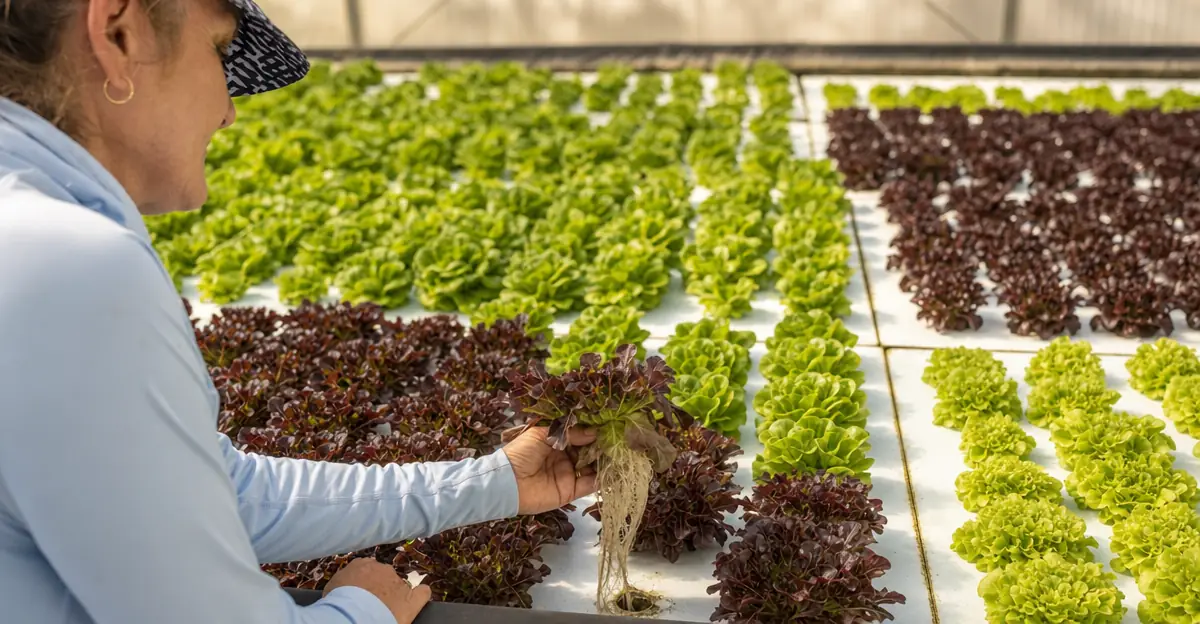
Key takeaway: Nutrient Film Technique (NFT) is a hydroponic method where a thin, continuously flowing stream of nutrient solution runs across plant roots inside shallow channels. Developed by Allen Cooper at England's Glasshouse Crops Research Institute in the late 1960s, NFT has become one of the most widely used commercial hydroponic systems in the world. A 2024 bibliometric review of 774 NFT research papers confirms the technique is especially effective for short-cycle crops like lettuce and herbs, where yields can exceed 14 kg per square meter. You can build a functional DIY NFT system for $80-150 using PVC pipe and a submersible pump.
What Is Nutrient Film Technique (NFT)?
Nutrient Film Technique is an active hydroponic system where a very shallow stream of nutrient solution — ideally just 1 to 3 mm deep — flows continuously through slightly sloped channels. Plant roots sit in this thin film of water, absorbing nutrients and oxygen simultaneously.
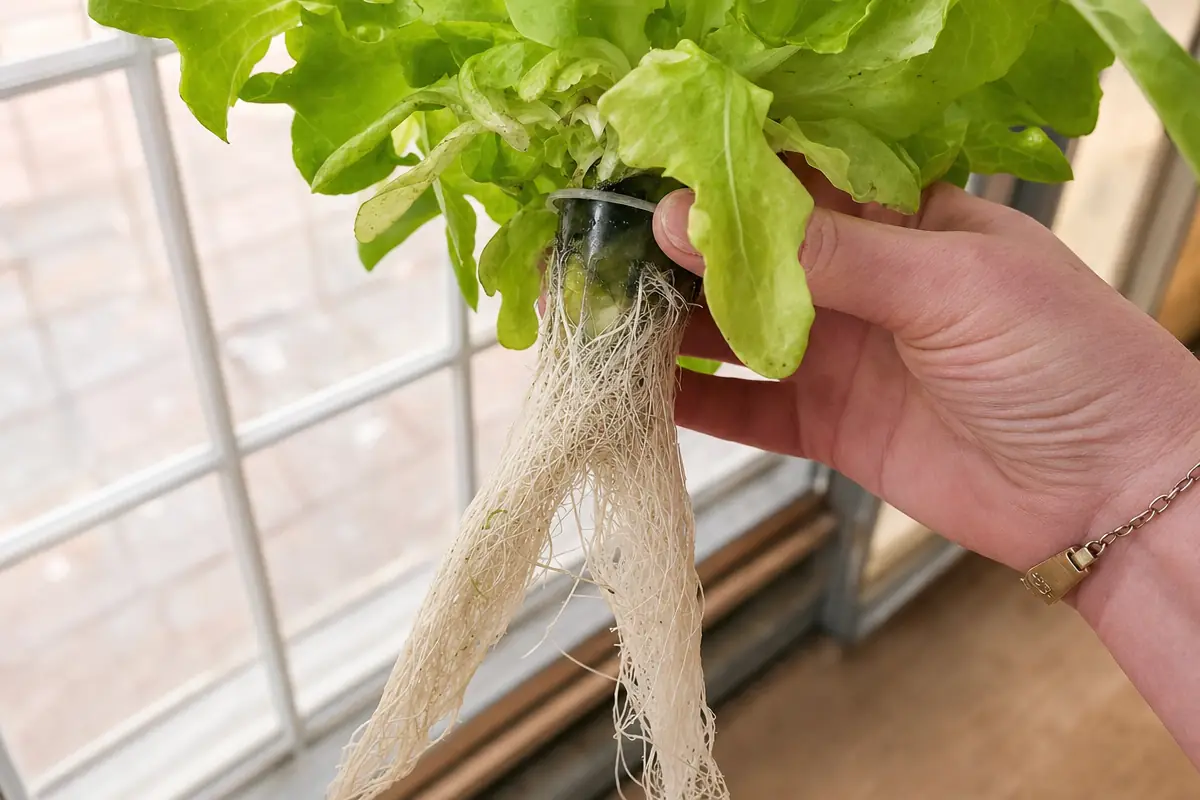
The "film" is the key concept. Unlike Deep Water Culture (DWC), where roots are fully submerged in a deep reservoir, NFT keeps only the bottom portion of the root mat in contact with the solution. The upper roots are exposed to air, which provides oxygen directly without the need for air stones or air pumps.
Allen Cooper developed NFT at the Glasshouse Crops Research Institute in Littlehampton, England, during the late 1960s. The first scientific description appeared in Cooper and Charlesworth's 1977 paper on nutrient-film tomato cultivation, published in Scientia Horticulturae. Cooper later wrote ABC of NFT (1980), which became the foundational reference for the technique.
Since then, NFT has grown into one of the most researched hydroponic methods. A 2024 comprehensive review by Palmitessa, Signore, and Santamaria analyzed 774 scientific documents published between 1977 and 2023, finding that research output has accelerated sharply — 81 papers were published in 2023 alone, with over half available as open access.
How NFT Works: The Science Behind the Thin Film
An NFT system has four core components:
- Channels (gullies): Slightly sloped troughs where plants sit in net pots. The nutrient solution flows through these by gravity.
- Reservoir: A tank that holds the nutrient solution. It sits below the channels so the solution drains back into it naturally.
- Pump: A submersible pump pushes the nutrient solution from the reservoir up to the high end of each channel.
- Return line: The solution flows down the channel by gravity, past the roots, and drains back into the reservoir to be recirculated.
This creates a closed loop. The same solution circulates continuously, making NFT one of the most water-efficient growing methods available.
Why the Film Must Stay Thin
The depth of the nutrient stream is critical. At 1 to 3 mm, the solution is shallow enough that:
- Oxygen reaches the roots directly. The thin film exposes most of the root mat to air while keeping the tips in contact with nutrients. Research shows that dissolved oxygen (DO) levels below 5 mg/L cause stress symptoms and stunted growth in NFT crops.
- Nutrient uptake is continuous. The constant flow delivers fresh nutrients to roots without the depletion cycles that occur in static systems.
- Root rot risk drops. Waterlogged roots (from pooling or excessive depth) lose access to oxygen, creating conditions for Pythium and other root pathogens.
If the film pools too deep — due to root mat blockages, incorrect slope, or excessive flow — oxygen levels plummet. The 2024 Palmitessa review reported that in traditional NFT channels, dissolved oxygen can drop from 7.12 mg/L at the inlet to as low as 2.9 mg/L over a 20-meter run, well below the 5 mg/L stress threshold.
Flow Rate
Virginia Tech Extension recommends 3 to 5 gallons per hour (approximately 0.2 to 0.3 L/min) per channel for home-scale systems. At commercial scale, the standard guideline is 1 liter per minute per channel, with 0.5 L/min acceptable at planting when root mass is small and up to 2 L/min as the maximum before nutritional problems appear.
Flow rate is not one-size-fits-all. Fruiting crops like tomatoes may need 2 to 3 L/min during flowering, while herbs perform well at 0.75 L/min.
Channel Slope
Channels need a consistent downward slope so the solution flows by gravity without pooling. The standard recommendation is a 1:30 to 1:40 gradient — meaning a 2.5 to 3.3 cm drop per meter of channel length.
Research by Lopez-Pozos et al. (2011) demonstrated that increasing gutter slope from 2% to 4% significantly decreased dissolved oxygen depletion and increased tomato yield. A minimum 2% slope is recommended by Oregon State Extension.
In practice, maintaining a perfectly flat slope over long distances is difficult. That is why many growers use steeper gradients (1:30 rather than the theoretical minimum of 1:100) to avoid localized ponding.
Channel Length
Longer channels mean more oxygen depletion by the time the solution reaches the far end. Research shows depressed growth rates when channels exceed 12 meters. Virginia Tech Extension recommends 4 to 12 feet (1.2 to 3.7 m) for home systems. At commercial scale, 10 to 15 meters is the practical maximum — beyond that, growers add a second nutrient feed point midway along the channel.
NFT vs Other Hydroponic Methods
If you are deciding between NFT and another hydroponic system, this comparison covers the practical differences.
| Feature | NFT | DWC | Kratky | Ebb and Flow |
|---|---|---|---|---|
| How it works | Thin film flows over roots | Roots submerged in aerated water | Roots in static, declining solution | Roots periodically flooded and drained |
| Electricity required | Yes (pump runs continuously) | Yes (air pump) | None | Yes (pump on timer) |
| Typical setup cost | $80-200 | $40-80 | $20-45 | $60-150 |
| Daily maintenance | Monitor flow, pH, and EC | Check pH, EC, air pump | Check pH 1-2x/week | Check pH, EC, timer |
| Best crops | Leafy greens, herbs | All plants including fruiting | Leafy greens, herbs | Versatile; herbs to fruiting |
| Water efficiency | Very high (recirculating) | High | High | High |
| Failure risk | Higher (pump failure = 20-30 min to wilt) | Medium (air pump failure) | Very low (no moving parts) | Medium (pump or timer failure) |
| Scalability | Excellent (modular channels) | Limited (heavy reservoirs) | Low (one plant per container) | Good |
When to Choose NFT
NFT is the strongest choice when you want to grow leafy greens or herbs at scale with maximum space efficiency. The modular channel design means you can start with 2 channels and expand to 20 without redesigning your system. Vertical and pyramidal configurations push yields even higher — Pastor-Arbulu and Rodriguez-Delfin (2025) achieved 14.14 kg per square meter of lettuce using pyramidal NFT modules, compared to lower yields with horizontal layouts.
NFT also excels at energy efficiency. Research comparing NFT and DWC for lettuce production found NFT achieved an energy use efficiency (EUE) of 31.3 g per kilowatt-hour versus 24.53 g/kWh for DWC — a 27.5% advantage.
When NOT to Choose NFT
- You are a complete beginner. The Kratky method has no moving parts and is far more forgiving of mistakes. Start there, then upgrade.
- You want to grow heavy fruiting plants. Tomatoes, peppers, and cucumbers develop massive root systems that fill NFT channels and block flow. DWC or Dutch buckets are better suited.
- You cannot tolerate pump failure risk. A Kratky or DWC system survives hours without power. An NFT system gives you 20 to 30 minutes before roots begin desiccating.
Best Plants for NFT Systems
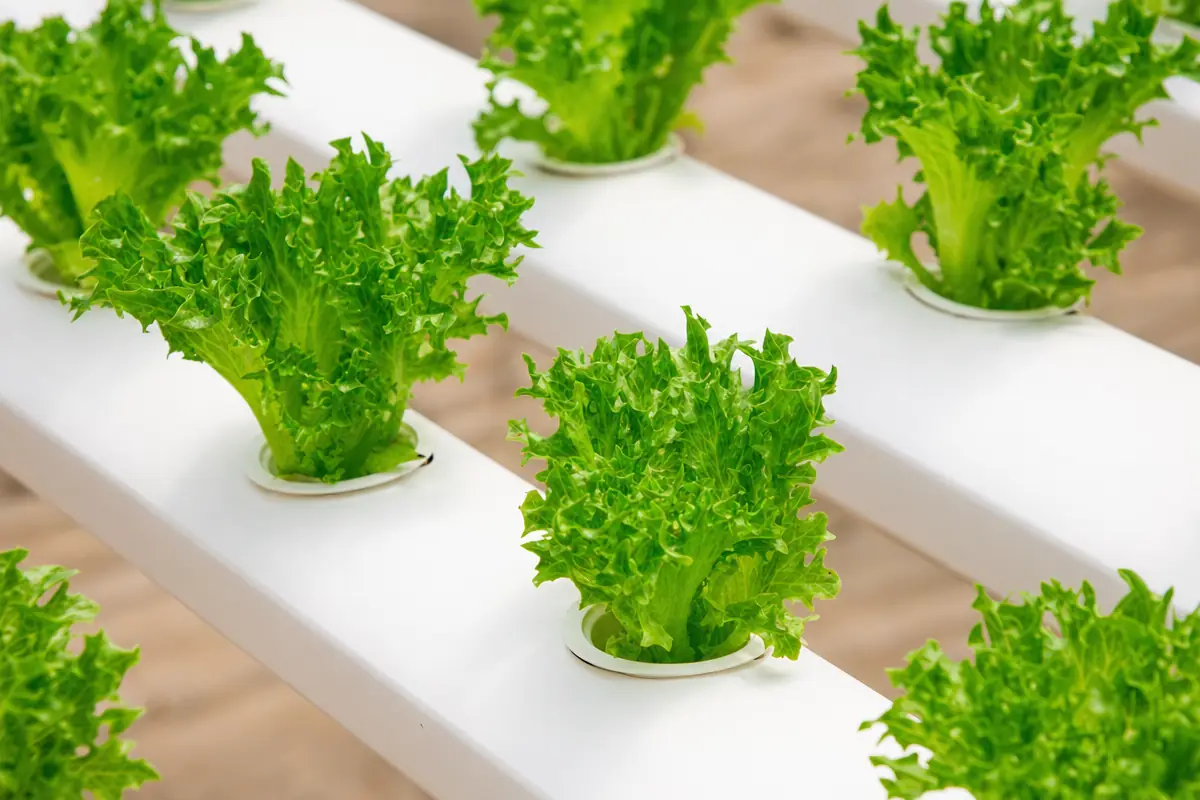
NFT is optimized for fast-growing, shallow-rooted crops with growth cycles of 30 to 50 days. The 2024 Palmitessa review confirms that lettuce alone accounts for 11% of all NFT research publications.
Ideal Crops
| Plant | pH | EC (mS/cm) | Spacing | Days to Harvest | Notes |
|---|---|---|---|---|---|
| Lettuce (all types) | 5.5-6.2 | 0.8-1.2 | 20 cm (8 in) | 30-45 | The default NFT crop. Butterhead, romaine, oakleaf all perform well. |
| Spinach | 5.5-6.5 | 1.2-1.8 | 15 cm (6 in) | 30-45 | Compact roots, fast cycle. |
| Kale | 5.5-6.5 | 1.4-1.8 | 20 cm (8 in) | 45-60 | Larger plant; space accordingly. |
| Bok choy | 6.0-7.0 | 1.0-1.5 | 15 cm (6 in) | 30-45 | Fast harvest, compact habit. |
| Arugula | 6.0-7.0 | 0.8-1.2 | 10 cm (4 in) | 21-30 | Very fast cycle, dense planting possible. |
| Basil | 5.5-6.5 | 1.0-1.6 | 20 cm (8 in) | 21-28 | High market value; excellent NFT crop. |
| Cilantro | 6.0-6.5 | 1.0-1.4 | 10 cm (4 in) | 21-35 | Bolts in heat; keep solution below 22°C. |
| Mint | 5.5-6.0 | 1.2-1.6 | 20 cm (8 in) | 21-30 | Vigorous roots; monitor for channel blockage. |
| Parsley | 5.5-6.5 | 1.0-1.6 | 15 cm (6 in) | 30-40 | Slower than basil but steady producer. |
Possible With Caveats
| Plant | Notes |
|---|---|
| Strawberries | Shallow roots work in NFT, but plants need physical support and a longer growth cycle. Select day-neutral varieties. |
| Swiss chard | Works well, but stalks can grow large enough to shade neighboring plants. |
| Mustard greens | Fast cycle, compact. Good NFT candidate often overlooked. |
Not Recommended
| Plant | Why |
|---|---|
| Tomatoes | Root mass fills channels within weeks, blocking flow and causing oxygen depletion. Use DWC or Dutch buckets. |
| Peppers | Same root mass problem as tomatoes, plus longer cycle (90+ days). |
| Cucumbers | Heavy water demand and vine growth overwhelm NFT channel dimensions. |
| Root vegetables | Carrots, beets, and radishes need a solid growing medium for root development — not compatible with a thin water film. |
Crop-Specific NFT Optimization by Growth Stage
The general ranges in the table above will get you started, but maximum yield requires adjusting parameters as plants move through growth stages. These stage-specific protocols are based on research data and commercial growing practices.
Lettuce (All Types)
| Stage | Days | EC (mS/cm) | pH | PPFD (umol/m2/s) | Flow Rate | Notes |
|---|---|---|---|---|---|---|
| Seedling/transplant | 1-7 | 0.5-0.8 | 5.8-6.0 | 150-200 | 0.5 L/min | Roots just reaching the film. Keep EC low to avoid burn. |
| Vegetative growth | 8-21 | 0.8-1.2 | 5.5-6.0 | 250-400 | 1.0 L/min | Main growth phase. Increase EC gradually as leaf area expands. |
| Head formation | 22-35 | 1.0-1.4 | 5.5-6.0 | 400-580 | 1.0-1.5 L/min | Higher light drives denser heads. Peak yields were achieved at 558 umol/m2/s PPFD. |
| Pre-harvest | 36-45 | 0.6-0.8 | 5.8-6.2 | 300-400 | 1.0 L/min | Reduce EC 3-5 days before harvest to improve flavor and reduce bitterness. |
Basil
| Stage | Days | EC (mS/cm) | pH | PPFD (umol/m2/s) | Flow Rate | Notes |
|---|---|---|---|---|---|---|
| Seedling/transplant | 1-7 | 0.6-0.8 | 5.8-6.2 | 150-200 | 0.5 L/min | Basil roots are delicate at transplant. Avoid EC shock. |
| Vegetative growth | 8-18 | 1.0-1.4 | 5.5-6.0 | 300-400 | 0.75-1.0 L/min | Pinch growing tips at the 6-leaf stage to encourage bushier growth. |
| Production | 19-28+ | 1.2-1.6 | 5.5-6.0 | 400-500 | 1.0 L/min | Harvest every 7-10 days by cutting above a leaf node. Continuous harvest extends production to 60+ days. |
Spinach
| Stage | Days | EC (mS/cm) | pH | PPFD (umol/m2/s) | Flow Rate | Notes |
|---|---|---|---|---|---|---|
| Seedling/transplant | 1-7 | 0.6-0.8 | 6.0-6.5 | 150-200 | 0.5 L/min | Sensitive to high EC at transplant. |
| Vegetative growth | 8-25 | 1.2-1.6 | 5.5-6.2 | 250-350 | 1.0 L/min | Keep solution below 20C. Spinach bolts quickly in warm conditions. |
| Pre-harvest | 26-40 | 1.0-1.4 | 5.8-6.2 | 250-300 | 1.0 L/min | Harvest outer leaves first for cut-and-come-again production. |
Key Optimization Principles
- EC ramping: Start every crop at 50-60% of the target EC and increase over the first week. Root damage from transplant shock makes young plants vulnerable to salt stress.
- Flow rate scaling: Begin at 0.5 L/min when root mass is small and increase to full flow rate as roots fill the channel. This prevents young seedlings from being dislodged while ensuring mature plants get adequate nutrient delivery.
- Light-EC relationship: Higher light intensities drive faster nutrient uptake. When increasing PPFD, increase EC proportionally — otherwise plants will show deficiency symptoms despite adequate solution concentration.
- Temperature-DO coupling: Every 1C increase in solution temperature above 20C reduces dissolved oxygen by approximately 0.2 mg/L. In warm conditions, compensate by increasing flow rate to deliver fresh, oxygenated solution more frequently.
Building a DIY NFT System
You can build a functional home NFT system in an afternoon with standard hardware store materials. This design supports 8 to 16 plants — enough to supply a household with fresh lettuce and herbs continuously.
Materials List
| Item | Specification | Estimated Cost |
|---|---|---|
| PVC pipe | 4-inch (10 cm) diameter schedule 40, two 4-foot (1.2 m) lengths | $10-15 |
| PVC end caps | 4-inch, 4 total | $8-12 |
| Net pots | 2-inch for herbs, 3-inch for lettuce | $5-10 |
| Reservoir | 10-20 gallon opaque plastic tote | $10-15 |
| Submersible pump | 250-400 GPH (gallons per hour) | $15-25 |
| Vinyl tubing | 1/2-inch inner diameter, 6 feet | $3-5 |
| Growing medium | Clay pebbles (LECA) or rockwool cubes | $8-12 |
| Support frame | Wood or PVC frame to hold channels at slope | $10-20 |
| Hole saw | 2-inch or 3-inch (matching net pot size) | $8-12 |
| Total | $77-126 |
You will also need hydroponic nutrients, a pH test kit, and pH Down — the same supplies used for any hydroponic method. If you already have these from a Kratky or DWC setup, you are ready.
Step 1: Prepare the Channels
Cut your PVC pipe to length — 4 feet (1.2 m) is ideal for a starter system. Using a hole saw, drill 3 to 4 evenly spaced holes along the top of each pipe, sized to fit your net pots snugly. For lettuce, space holes 20 cm (8 inches) apart. For herbs like basil, the same 20 cm works well; for small herbs like arugula or cilantro, you can tighten to 10-15 cm.
Glue an end cap on the high end of each pipe. On the low end, drill a 1/2-inch drain hole through the end cap before gluing it on. This is where the nutrient solution exits and returns to the reservoir.
Step 2: Set the Slope
Mount the channels on a support frame with a consistent downward slope. Aim for a 2.5 to 3.3 cm drop per meter — for a 1.2-meter channel, that means the inlet end should sit about 3 to 4 cm higher than the drain end. Use a level and shims to get this right. An inconsistent slope causes pooling, which kills oxygen availability.
Step 3: Connect the Plumbing
Place the reservoir below the drain end of the channels so the solution returns by gravity. Connect vinyl tubing from the submersible pump (sitting inside the reservoir) to the inlet hole at the high end of each channel. If running multiple channels, use a manifold or T-splitters to distribute flow evenly.
Step 4: Test Before Planting
Fill the reservoir with plain water, turn on the pump, and let the system run for at least an hour. Check for:
- Leaks at every connection point and end cap.
- Even flow through all channels. The water should form a thin, steady stream along the bottom — not a rushing torrent or a barely-there trickle.
- Proper drainage back into the reservoir. No pooling in the channels.
- Slope consistency. If water collects in any section, adjust the frame.
Step 5: Mix Nutrients and Plant
Once the system passes testing, drain the plain water and fill the reservoir with nutrient solution. Target pH 5.5-6.2 and EC 0.8-1.2 mS/cm for leafy greens and herbs. For exact nutrient amounts based on your brand and container size, use the Nutrient Manager.
Place seedlings (with established roots) into net pots filled with clay pebbles or rockwool. Set the net pots into the channel holes. The bottom of the net pot should sit just above or barely touching the nutrient film — capillary action through the growing medium will wick moisture up to the roots until they grow down into the stream.
Lighting: If growing indoors, provide 14-16 hours of light per day using a full-spectrum LED grow light positioned 15-30 cm (6-12 inches) above the plant canopy. Leafy greens and herbs need a PPFD (photosynthetic photon flux density) of 200-400 umol/m2/s. Lettuce grown in NFT at around 558 umol/m2/s PPFD showed excellent yield in the Pastor-Arbulu and Rodriguez-Delfin (2025) study.
NFT Nutrient Management
NFT systems are more sensitive to nutrient solution quality than static methods like Kratky, because the same solution circulates past every plant continuously. An imbalance affects the entire crop, not just one container.
pH and EC Targets
| Crop Type | pH Range | EC (mS/cm) |
|---|---|---|
| Leafy greens (lettuce, spinach, kale) | 5.5-6.2 | 0.8-1.2 |
| Herbs (basil, cilantro, mint) | 5.5-6.5 | 1.0-1.6 |
| Strawberries | 5.5-6.5 | 1.2-1.8 |
Monitor pH and EC at least twice per week. Virginia Tech Extension recommends checking 2 to 3 times weekly, especially during hot weather when evaporation concentrates the solution.
Solution Temperature
Keep the nutrient solution between 18 and 22°C (65-72°F). This range supports optimal root metabolism, nutrient uptake, and dissolved oxygen retention. Below 16°C, growth slows significantly. Above 24°C, dissolved oxygen drops and the risk of Pythium root rot increases — a particular concern in NFT where the thin film warms faster than a deep DWC reservoir.
In warm climates or under intense grow lights, consider insulating your reservoir (wrap in reflective material) or using a water chiller. Painting the reservoir and channels white or wrapping them in reflective foil also helps.
Reservoir Management
Virginia Tech Extension recommends 0.25 to 1 gallon (1-4 liters) of reservoir capacity per plant. For a 16-plant home system, a 10-20 gallon reservoir provides adequate volume stability.
Solution changes: Replace the entire nutrient solution every 7 to 14 days. The Oregon State Extension notes that NFT channels should be changed every 5 to 10 days because the thin film exposes the solution to more atmospheric oxygen and temperature variation than deep reservoirs, which accelerates nutrient depletion and concentration drift.
Between full changes, top off with pH-adjusted water (not full-strength nutrients) to compensate for evaporation. Plants consume water faster than nutrients, so topping off with nutrient solution steadily increases EC to toxic levels.
Common NFT Problems and Solutions
| Problem | Cause | Solution |
|---|---|---|
| Wilting within minutes of pump stop | No water reserve (unlike DWC or Kratky) | Install a backup pump or battery-powered UPS. Commercial setups use a 1500VA uninterruptible power supply as minimum. |
| Root mat blocking flow | Roots of mature plants fill the channel, damming the nutrient stream | Choose crops with compact root systems. Harvest on time. If growing in PVC, use 4-inch minimum diameter. For large crops, use wider commercial channels. |
| Algae in channels | Light reaching the nutrient solution through transparent materials or uncovered net pot holes | Use opaque channels. Wrap PVC in foil or paint it. Cover unused net pot holes. For persistent algae, hydrogen peroxide (3 mL per gallon of 3% solution) controls growth. |
| Uneven flow between channels | Inconsistent slope or plumbing restrictions | Re-level the support frame. Ensure each channel receives equal flow — use a manifold with individual valves for fine-tuning. |
| Tip burn on lettuce | Low calcium uptake, common in NFT. Research shows NFT-grown lettuce has lower shoot calcium and magnesium than DWC-grown lettuce. | Ensure adequate calcium in the nutrient solution. Increase airflow around plants. Keep solution temperature below 22°C. |
| Solution temperature spikes | Thin film and shallow channels heat up fast under grow lights or in warm rooms | Insulate the reservoir. Use white or reflective channel covers. Move the reservoir to a cooler location. Consider a water chiller for temperatures consistently above 24°C. |
| Root disease (brown, slimy roots) | Pythium or Phytophthora, often triggered by warm solution (>24°C) and low dissolved oxygen | Keep solution temperature below 22°C. Ensure slope is at least 2% for proper oxygenation. Sterilize channels between crops. |
| Rapid nutrient depletion | Thin film volume means less buffer than deep reservoir systems | Monitor EC frequently. Replace solution every 7-14 days. Use an adequately sized reservoir (minimum 1 gallon per 4 plants). |
The Pump Failure Problem
This deserves extra attention because it is the single biggest risk with NFT. In a DWC system, roots sit in a deep reservoir that holds enough oxygen for hours after an air pump fails. In Kratky, there is no pump at all. In NFT, the nutrient film is so shallow that roots begin to dry out within 20 to 30 minutes of a pump stopping.
For home growers, the practical safeguard is a battery-backup surge protector ($30-60) that keeps the pump running during short power outages. For any system with more than 20 plants, a dedicated UPS or backup pump on a separate circuit is worth the investment.
Running the pump 24/7 is standard practice in NFT. Some growers run the pump on a timer (15 minutes on, 15 minutes off) to save electricity, but this increases desiccation risk during off cycles and is not recommended for beginners.
Advanced Troubleshooting Protocols
The common problems table covers the basics. These protocols address the diagnostic process and recovery actions for the trickiest NFT-specific issues.
Root Zone Oxygen Management Protocol
Dissolved oxygen (DO) is the most critical and least visible parameter in NFT. Use this protocol to diagnose and correct oxygen-related issues before they cause visible damage.
Symptoms of oxygen stress (in order of severity):
- Slight growth slowdown (often unnoticed until compared with a healthy control)
- Root tips turning light brown — not yet slimy, but losing the bright white color of healthy roots
- Leaf margins yellowing, starting with older leaves
- Wilting during the warmest part of the day, even with the pump running
- Root mat turning brown and slimy — active Pythium infection
Diagnostic steps:
- Measure solution temperature at the channel inlet and outlet. If outlet temperature exceeds 24C, oxygen depletion is likely the root cause.
- Check channel slope with a level. Even a 0.5% deviation from the target 2-3% slope can cause localized pooling.
- Inspect the root mat at the channel's midpoint and outlet. If roots are matted flat against the channel floor (rather than floating in the film), the film is too deep or flow is too high.
- If you have a DO meter, measure at the inlet and outlet. A drop greater than 3 mg/L across a single channel indicates excessive channel length or insufficient slope.
Recovery protocol:
- Immediately reduce solution temperature below 22C (add frozen water bottles to the reservoir as an emergency measure)
- Increase slope by 0.5-1% if pooling is detected
- Reduce channel length or add a mid-channel nutrient feed point if DO drops exceed 3 mg/L
- For active root rot: remove affected plants, sterilize the channel with hydrogen peroxide (5 mL of 3% solution per gallon), and restart with fresh solution
Nutrient Lockout Diagnosis
NFT systems can develop nutrient lockout faster than reservoir-based systems because the thin film concentrates salts as water evaporates between reservoir top-offs.
| Symptom | Likely Cause | Check | Action |
|---|---|---|---|
| New growth is pale yellow while old leaves are green | Iron lockout (pH too high) | Measure pH — likely above 6.5 | Lower pH to 5.8-6.0. Iron becomes unavailable above pH 6.5. |
| Leaf edges browning on young leaves | Calcium deficiency from EC spikes | Measure EC — likely above target range | Drain and replace solution. Top off with water only until EC stabilizes. |
| Purple/red stems with stunted growth | Phosphorus lockout (pH too low) | Measure pH — likely below 5.0 | Raise pH to 5.5-6.0. Phosphorus precipitates at very low pH. |
| Interveinal chlorosis on middle leaves | Magnesium deficiency | Check if Ca:Mg ratio exceeds 4:1 | Supplement with magnesium sulfate (Epsom salt) at 0.5 g/L. NFT lettuce shows lower Mg uptake compared to DWC. |
| Tip burn on lettuce inner leaves | Calcium transport failure | Check airflow and solution temperature | Increase air circulation. Keep solution below 22C. Calcium moves with transpiration — low airflow means low calcium transport. |
Channel Biofilm Management
Biofilm buildup inside NFT channels is inevitable in long-running systems. A thin layer is harmless, but thick biofilm reduces effective channel diameter, traps debris, and harbors pathogens.
Prevention schedule:
- Between crops (every 30-50 days): Flush channels with hydrogen peroxide (10 mL of 3% H2O2 per gallon) for 30 minutes, then rinse with plain water
- Monthly (during long crops): Run a dilute enzymatic cleaner through the system overnight, then replace with fresh nutrient solution
- Continuous: Maintain solution temperature below 22C and ensure no light enters the channels — both conditions accelerate biofilm growth
Scaling Up: From Home to Commercial
One of NFT's greatest strengths is modularity. A home system with 2 channels and 8 plants uses the same principles as a commercial greenhouse with 200 channels and 2,000 plants.
Vertical and pyramidal layouts dramatically increase yield per square meter. The Pastor-Arbulu and Rodriguez-Delfin (2025) study compared horizontal (8-channel) and pyramidal (10- and 13-channel) NFT modules and found that pyramidal configurations produced significantly higher yields — up to 14.14 kg/m2 for lettuce — because they capture more light per unit of floor space.
Commercial considerations:
- Use purpose-built NFT channels (not PVC pipe) with contoured bottoms that distribute the nutrient film more evenly and resist root mat clogging.
- Install redundant pumps and backup power. Crop loss can occur in hours from a single pump failure or power outage.
- Monitor dissolved oxygen. In runs longer than 10 meters, add a second nutrient feed point midway along the channel to prevent oxygen depletion at the far end.
- Implement disease management protocols. NFT is a recirculating system — a pathogen introduced at any point spreads to every plant quickly. UV sterilization or ozone treatment of the return solution reduces this risk.
Professional Equipment Guide
Moving beyond DIY PVC builds requires investment in purpose-built equipment. This guide covers the components that separate hobby setups from productive growing systems.
Commercial NFT Channels
DIY PVC pipe works for learning, but has limitations: round bottoms create uneven film depth, smooth surfaces give roots nothing to anchor to, and the diameter limits plant size.
| Channel Type | Width | Depth | Best For | Approximate Cost |
|---|---|---|---|---|
| Flat-bottom gully (e.g., CropKing, AmHydro) | 10-15 cm | 5-7 cm | Lettuce, herbs, leafy greens | $8-15 per meter |
| Wide trough channel | 15-25 cm | 7-10 cm | Larger leafy crops, strawberries | $12-20 per meter |
| A-frame/pyramidal channel | 10 cm | 5 cm | High-density lettuce production | $15-25 per meter (including frame) |
Commercial channels feature textured bottom surfaces that distribute the nutrient film evenly and prevent root mat from damming flow. The contoured profile maintains a consistent 1-3 mm film depth across the full channel width — something round PVC pipe cannot achieve.
Pyramidal and A-frame configurations maximize yield per square meter of floor space. A 13-channel pyramidal module outperformed 8-channel horizontal layouts in both total yield and space efficiency.
Monitoring and Control Equipment
Consistent production requires continuous monitoring rather than periodic manual checks.
| Equipment | What It Measures | Why It Matters | Price Range |
|---|---|---|---|
| Inline pH/EC meter (e.g., Bluelab Guardian) | pH, EC, temperature | Continuous monitoring with alarms for out-of-range values. Replaces manual 2-3x/week testing. | $250-400 |
| Dissolved oxygen meter | DO in mg/L | Detects oxygen depletion before plants show symptoms. Critical for channels longer than 6 meters. | $150-300 |
| Flow meter (inline) | L/min per channel | Ensures each channel receives consistent flow. Detects partial blockages early. | $20-50 per channel |
| Data logger (Wi-Fi enabled) | pH, EC, temperature over time | Tracks trends and identifies gradual drift that point-in-time readings miss. | $100-200 |
Automation Essentials
| System | Function | Benefit | Complexity |
|---|---|---|---|
| pH dosing controller | Automatically adjusts pH with acid/base pumps | Eliminates the most frequent manual task. pH stability improves growth consistency. | Medium |
| EC dosing controller | Maintains target EC by adding concentrated stock solution | Prevents EC drift between manual checks. Critical for large systems with 20+ channels. | Medium-High |
| Timer-based reservoir cycling | Drains and refills reservoir on a schedule | Automates the 7-14 day solution replacement cycle. Requires a fresh water and drain connection. | Low-Medium |
| Environmental controller | Integrates temperature, humidity, lighting | Coordinates all growing parameters. Adjusts lighting schedule and ventilation based on temperature. | High |
Backup Power
Every NFT system larger than a hobby setup needs power failure protection. The thin film gives you 20-30 minutes before root desiccation begins.
| System Size | Minimum UPS Rating | Estimated Runtime | Cost |
|---|---|---|---|
| 2-4 channels (home) | 600 VA | 30-60 minutes | $60-100 |
| 5-15 channels (small commercial) | 1500 VA | 30-45 minutes | $150-250 |
| 16+ channels (commercial) | Generator + automatic transfer switch | Hours | $500-2000+ |
For any system with more than 15 channels, a battery UPS only buys time until a generator starts. Install an automatic transfer switch that starts the generator within 10 seconds of power loss.
Key Takeaways
- NFT flows a thin film of nutrient solution (1-3 mm deep) past plant roots in sloped channels, providing continuous nutrition and direct root oxygenation without air pumps.
- Developed by Allen Cooper in England in the late 1960s and validated in over 774 scientific publications since 1977.
- Best for leafy greens and herbs with 30 to 50-day growth cycles. Lettuce, basil, spinach, and arugula are ideal. Avoid heavy fruiting crops.
- Critical parameters: flow rate 1-2 L/min per channel, slope 2-4%, pH 5.5-6.2, EC 0.8-1.6 mS/cm, solution temperature 18-22°C.
- A home DIY system costs $80-150 and supports 8-16 plants. Build with 4-inch PVC pipe, a submersible pump, and a 10-20 gallon reservoir.
- The biggest risk is pump failure — roots desiccate in 20-30 minutes without flow. A battery backup is essential insurance.
- NFT scales exceptionally well. Pyramidal configurations can yield over 14 kg of lettuce per square meter.
Ready to start growing? Explore our plant database for specific growing parameters, or calculate your nutrient mix for exact dosing.