Why Hydroponic Produce Tastes Bland — and 5 Ways to Fix It
Your hydroponic lettuce looks perfect but tastes like water. The cause isn't hydroponics — it's flavor chemistry and five fixable growing choices: EC, light, harvest timing, storage, and cultivar. A research-backed guide grounded in peer-reviewed studies.
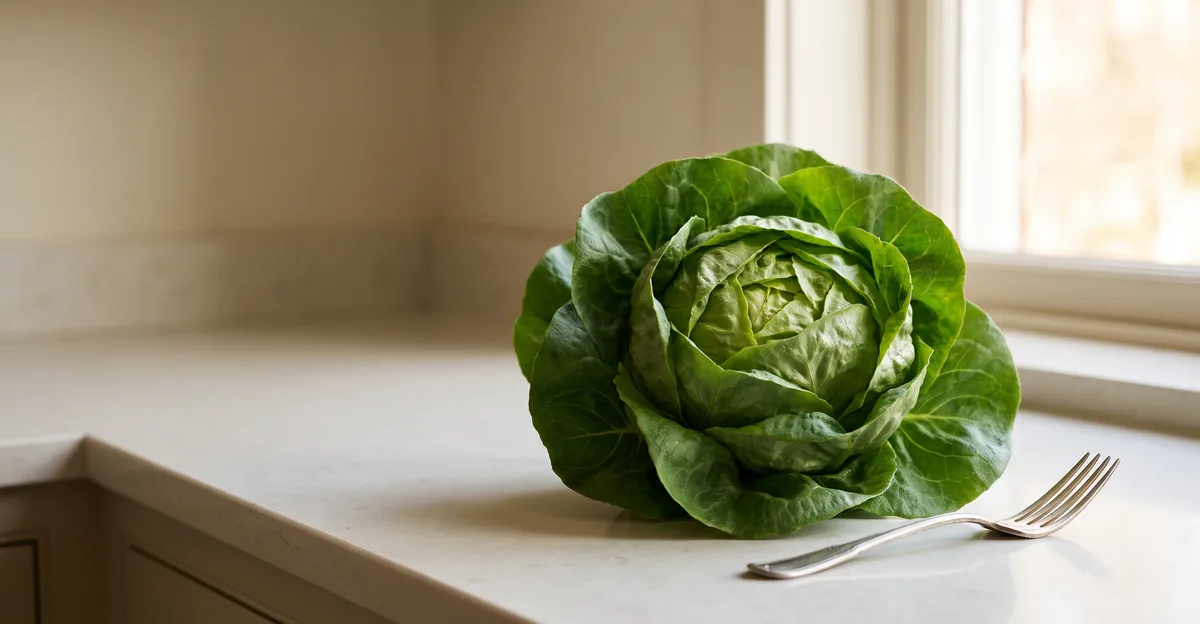
You did everything right. The lettuce is crisp, deep green, and unblemished — better-looking than anything at the store. Then you taste it, and it tastes like water. If you have grown anything hydroponically, you have almost certainly had this moment, and it is the single most common complaint home growers make: my lettuce, my basil, my tomatoes look perfect and taste like nothing.
Here is the reassuring part: this is not a verdict on hydroponics. Grown for quality, soilless systems can match or beat soil in sensory panels. Blandness is not something the water does to your food — it is the result of a handful of specific, controllable growing choices, and once you understand what flavor actually is, every one of them becomes something you can fix.
This guide reframes the problem in terms of flavor chemistry, walks through the five real reasons produce comes out bland, and gives you the levers you actually control. Everything here is grounded in peer-reviewed research, with explicit notes wherever the evidence is nuanced or crop-specific.
First, What "Flavor" Actually Is
The core misunderstanding behind bland produce is thinking flavor lives in the minerals and nutrients you feed the plant. It doesn't. Flavor is a specific chemistry: sugars, organic acids, and — crucially — a set of aroma volatile compounds that your nose reads as "tomato" or "strawberry" or "basil." Your brain integrates all three into the single sensation you call taste.
That volatile fraction is bigger than most people realize. More than 400 volatile organic compounds have been identified in tomato alone (only a fraction of them aroma-active), and the levels of those compounds swing widely with genetics, environment, and handling. This is why produce can be perfectly "healthy" — full of minerals, deep green, high-yielding — and still taste flat: the sugars and volatiles that carry flavor are simply low.
There is an even more counterintuitive finding here, and it reshapes how you should think about the problem. In a study of nearly 150 strawberry samples and more than 15,000 sensory data points, roughly twenty specific volatile compounds were found to increase perceived sweetness independently of the actual sugar content — meaning two berries with identical sugar can taste noticeably different in sweetness depending on their aroma chemistry. Flavor, in other words, is not the same as Brix (the standard measure of dissolved sugar). You cannot chase a single sugar number and expect flavor to follow; you have to grow for the whole picture.
So when produce tastes bland, the real question is: why are the sugars and volatiles low? There are five answers, and you control all of them.
Cause 1: Your Plants Are Too Comfortable (Low EC)
The most common cause of bland hydroponic produce is, paradoxically, growing conditions that are too easy. A plant given unlimited, weak nutrient solution and no reason to work has little incentive to build up the sugars and secondary compounds that create flavor. A modest amount of stress, it turns out, is what pushes a plant to concentrate flavor.
The clearest lever here is electrical conductivity (EC) — the strength of your nutrient solution. Across crop types, moderate nutrient or salt stress raises the compounds that carry flavor:
- In leafy greens, a controlled trial on hydroponic arugula raised EC from 1.2 to 2.1 dS/m and watched total glucosinolates — the compounds behind arugula's peppery bite — along with chlorophyll and carotenoids climb as EC rose. A too-weak solution gives you big, bland leaves; a stronger one gives you flavor.
- In fruiting crops, greenhouse tomatoes grown at higher EC (in the range of 4.5–6.0 mS/cm) produced higher dry matter and measurably higher °Brix — sweeter fruit.
- The mechanism was recently worked out in tomato: moderate salt or EC stress at the roots triggers a burst of the hormone abscisic acid, which sets off a signaling cascade that drives sugar accumulation in the fruit. The stressed plant literally makes itself sweeter.
A broad review of controlled-environment agriculture reaches the same conclusion from the top down: moderate stress positively influences the nutritional and flavor composition of vegetables. The single most common reason home-grown hydroponic produce tastes bland is running the nutrient solution too weak, so the plant never has to build flavor.
The fix is to measure and manage your EC rather than running whatever came out of the bottle — but there is an important catch, which is the next thing to understand.
Dialing In EC: The Flavor Sweet Spot and Its Ceiling
"More EC equals more flavor" is a dangerous half-truth. The relationship is a sweet spot with a ceiling, not a straight line, and pushing past the peak trades flavor away.
- There is an optimum, and it is crop-specific. In the arugula trial, flavor phytochemicals rose with EC but the best overall window was around 1.5–1.8 dS/m; at 2.1 dS/m the plants began accumulating nitrate and their uptake of nitrogen, calcium, and micronutrients (iron, zinc, copper, boron, manganese, molybdenum) declined. Past the peak, you are not buying flavor — you are banking nitrate and starving the plant of nutrients.
- Leafy greens and fruiting crops sit in different windows. The moderate window that suits arugula is not the same as the higher EC that pushed tomato Brix up. Feed a fruiting crop like a leafy green and you leave sweetness on the table; feed a leafy green like a tomato and you get nitrate-heavy, off-quality leaves. Match the strength to the crop.
- Flavor and yield pull against each other. The same moves that concentrate flavor — stronger solution, more controlled water — tend to reduce raw size and yield. Work on kale showed that crop-specific nitrogen management shifted glucosinolates, anthocyanins, and vitamin C, making clear you can optimize for size or for flavor compounds, and default feeding programs usually pick size. This is a deliberate tradeoff you control, not a free win.
- Measure, don't guess. The practical discipline is to keep an EC meter on your reservoir and adjust toward your crop's window, checking as water evaporates and concentrates the solution. Our EC/PPM converter helps you translate between the units different meters and nutrient labels use.
The takeaway: nudge your plants out of their comfort zone toward the middle of their crop's range — then stop. The goal is moderate stress, not maximum.
Cause 2: Not Enough Light
If low EC is the most common cause of blandness, light may be the most powerful lever you have. One broad review of controlled-environment agriculture found that — when the other growing factors are held optimal — light intensity ranked as the single strongest driver of nutritional and flavor quality, ahead of carbon dioxide, light spectrum, temperature, and humidity. That ranking comes from one review rather than a settled cross-study consensus, but it lines up with well-understood plant physiology.
This is where a lot of indoor and countertop setups quietly fail. A plant needs enough accumulated light each day (its "daily light integral") to run the photosynthesis that produces sugars in the first place — and sugars are both a flavor component themselves and the raw material for many aroma compounds. A dim windowsill or an underpowered grow light produces a plant that looks green and leafy but never made much sugar to begin with, so there is little flavor to taste and little feedstock for volatiles.
The fix is straightforward, if sometimes an investment: give your plants real light, not a token amount. For most leafy greens and herbs that means a genuine horticultural light run for a full photoperiod, positioned close enough to deliver meaningful intensity, not an accent lamp a meter away. If your produce is bland and your setup is on the dim side, light is very likely your limiting factor — and in that review's ranking, improving it did more for quality than any other single environmental change.
Cause 3: You Harvested Too Early
Flavor is built during ripening, right up to the end — and picking early cuts that process short. Aroma volatiles in particular develop late, so produce harvested before its optimal stage simply never accumulated the compounds that make it taste like anything.
The evidence on timing is precise. In a study tracking tomatoes across their maturity stages, the "turning" stage — when the fruit is just shifting from green toward color — retained the best-developed volatile profile, and picking outside that optimal window left aroma underdeveloped. More broadly, degree of maturity at harvest is one of the primary factors setting the final volatile composition of a fruit.
This is a genuine advantage you have over the supply chain, and most home growers throw it away. Commercial produce is picked underripe so it survives shipping; you don't have that constraint. Yet growers routinely harvest early out of impatience or uncertainty. Letting fruit reach its proper stage on the plant — and cutting leafy greens and herbs at maturity rather than the moment they look big enough — is one of the cheapest flavor upgrades available. Patience is free.
Cause 4: The Refrigerator Is Killing the Aroma
Even a perfectly grown, perfectly timed harvest can arrive at your plate bland if you store it wrong — and the culprit is one most people consider a best practice: cold storage.
In the same tomato study that pinpointed harvest timing, refrigeration suppressed aroma volatiles more than any other treatment tested, regardless of when the fruit was picked. Chilling doesn't just slow spoilage; for aroma-sensitive produce it actively shuts down the volatile compounds that carry flavor, and much of that loss does not come back when the produce warms up.
The practical rules that follow:
- Don't refrigerate flavor-sensitive fruit like tomatoes if you plan to eat them soon — keep them at room temperature and let the aroma stay intact.
- Eat close to harvest. The whole reason to grow your own is that you can eat it hours after cutting, at peak flavor, instead of after days of cold transit and storage.
- Where you must chill more perishable greens, do it briefly and eat them promptly rather than holding them cold for a week.
If your just-picked produce tasted fine and your leftovers taste like nothing, the fridge — not your growing — is the difference.
Harvest and Storage for Maximum Aroma
Two rules, drawn straight from the volatile-chemistry research, capture most of the flavor you can win or lose after the plant has done its work:
- Harvest at the right stage, not the first acceptable one. Aroma volatiles develop late in ripening, and the optimal maturity window — the turning-to-ripe stage in tomato — carries the richest, best-balanced volatile profile. Picking early for convenience, or letting fruit go overripe and soft, both cost you flavor. Learn each crop's window and cut there.
- Protect the aroma after harvest. Chilling is the single most destructive routine step for flavor-sensitive produce, suppressing volatiles more than any other handling treatment. Keep tomatoes and similar fruit at room temperature, eat as close to harvest as you can, and reserve refrigeration for genuinely perishable greens — and then only briefly.
The through-line: flavor is fragile at the end. You can grow it perfectly and still lose it in the last day between plant and plate.
Cause 5: The Variety Was Never Bred for Flavor
The last cause is one no amount of good growing can fully overcome: the variety itself. Over decades, many crops have been bred primarily for yield, firmness, uniformity, and shelf life — the traits that matter to commercial production — and flavor has measurably declined as a side effect, because the genes and resources that build flavor were not what breeders were selecting for. Aroma volatile content is strongly shaped by genotype, so two plants grown side by side in identical conditions can differ sharply in flavor purely because of their variety.
Many of the seeds and starts sold into the hydroponic and greenhouse market descend from exactly this yield-and-shelf-life lineage. If you are growing a variety bred to ship well and store for two weeks, you may be starting from a genetic flavor deficit that better EC and light can only partly close.
The fix is at the seed rack, before you plant anything:
- Choose varieties bred or known for flavor rather than yield or shipping tolerance — heirlooms and cultivars with a flavor reputation, rather than the default commercial workhorse.
- Grow crops where flavor is genetics-driven (tomatoes, strawberries, herbs, peppery greens) with especially careful variety selection, since that is where cultivar differences show up most.
- Treat variety as the ceiling on flavor and your growing as how close you get to it. A great variety grown carelessly disappoints; a flavorless variety grown perfectly stays flavorless.
Putting It Together: The Home Grower's Flavor Advantage
None of these five causes is inherent to hydroponics. Each is a choice — solution strength, light, timing, storage, variety — and each is one you make, not one the system imposes. That is exactly why the honest answer to "does hydroponic produce have to taste bland?" is no. When a hydroponic strawberry crop was grown for quality and put in front of a sensory panel, it held its own against soil-grown fruit; the controlled-environment quality literature reaches the same verdict, framing the growing system as a set of levers on flavor rather than a limit on it.
In fact, you hold advantages the store never can:
- You control the stress. You can dial EC into your crop's flavor window instead of running a weak, one-size-fits-all feed.
- You control the light. Give plants the intensity they need and you address what one major review ranks as the strongest single environmental driver of quality.
- You control the timing. You can harvest at peak maturity instead of underripe-for-shipping.
- You control the freshness. You can eat hours after cutting, before cold storage strips the aroma.
- You control the genetics. You can plant a variety chosen for flavor instead of shelf life.
Store-bought produce optimizes for shipping and shelf life at flavor's expense. You don't have to. Grow a flavorful variety, give it real light, keep its nutrient solution in the moderate stress window, harvest at the right stage, and eat it fresh — and hydroponic produce can taste better than anything you can buy.
The next time your lettuce tastes like water, don't blame the water. Walk the five causes, find the one that fits your setup, and change it.
Flavor comes up only in passing on most crop pages — these give the growing detail behind the levers above: loose-leaf lettuce, sweet basil, arugula, spinach, strawberry, and tomato. To manage the EC lever, use the EC/PPM converter.
Frequently Asked Questions
Why does my hydroponic lettuce taste like water? Almost always because the plant had it too easy: a weak nutrient solution (low EC) and often not enough light. A little root-zone stress and real light intensity push a plant to build the sugars and flavor compounds that make it taste like something. Raising EC toward your crop's window and improving light are the two highest-impact fixes.
Does higher EC always mean more flavor? No — it is a sweet spot, not a straight line. Flavor compounds rise with EC up to an optimum (around 1.5–1.8 dS/m for leafy arugula), then quality falls off as the plant accumulates nitrate and takes up fewer nutrients. Fruiting crops like tomato sit in a higher window for sweetness. Match the strength to the crop and don't overshoot.
Is hydroponic produce naturally less flavorful than soil-grown? No. Managed for quality, hydroponic produce can match or beat soil-grown in sensory panels. Blandness comes from specific growing choices — solution strength, light, harvest timing, storage, and variety — not from the absence of soil.
Why do store-bought tomatoes taste better than my homegrown ones sometimes? Usually variety and ripeness. Many varieties are bred for yield and shelf life, which lowers flavor, and a tomato harvested underripe never develops its aroma. Pick a flavor-focused variety and let fruit ripen to its proper stage on the plant.
Should I refrigerate my homegrown tomatoes? Not if you can help it. Refrigeration suppresses aroma volatiles more than any other handling step, and much of that flavor doesn't return when the fruit warms back up. Keep tomatoes and similar aroma-sensitive fruit at room temperature and eat them close to harvest.
Will more nutrients or minerals make my produce taste better? Not directly. Flavor is sugars, acids, and aroma volatiles — not minerals — so produce can be nutrient-rich and still bland. What helps flavor is the right level of moderate stress (EC), enough light, good timing, and the right variety, rather than simply feeding more.