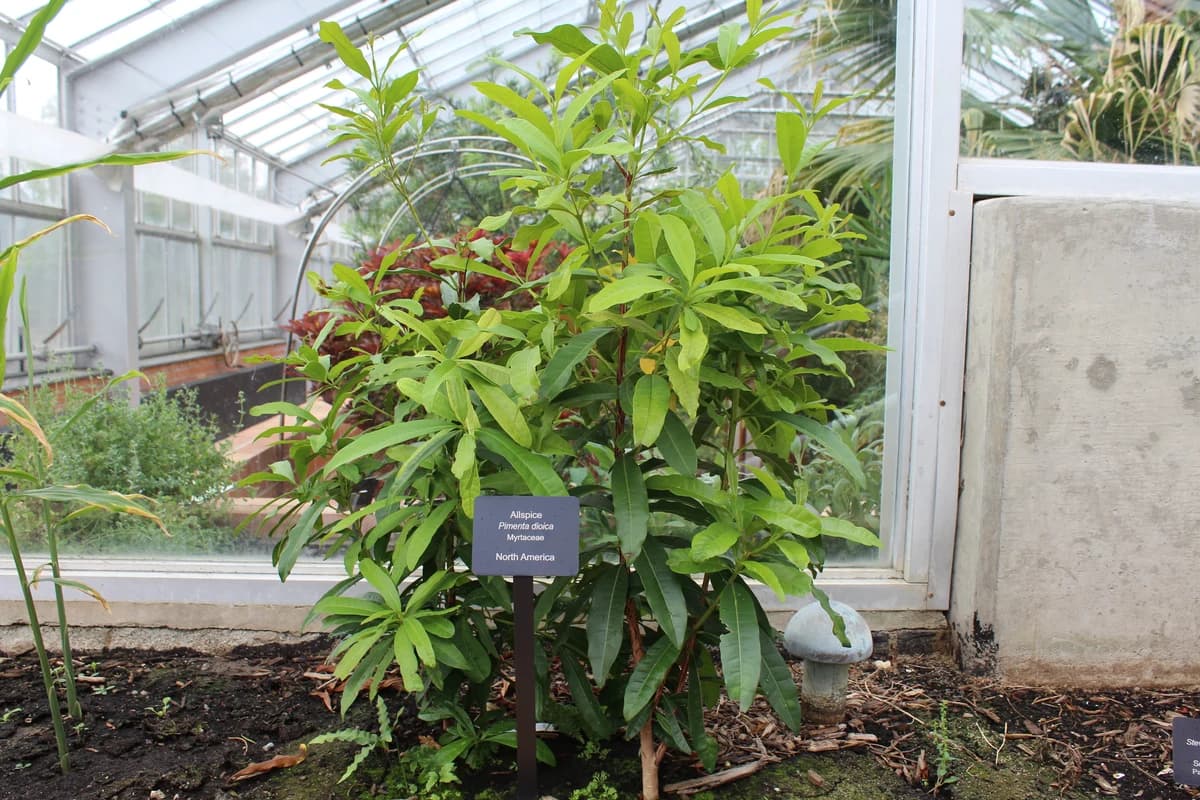
À Propos de cette Plante
Le quatre-épices est un arbre persistant tropical humide cultivé pour ses baies vertes aromatiques qui sèchent pour devenir l’épice. C’est une culture de verger à cycle long : les arbres issus de semis ont généralement besoin de 7-8 ans avant la première floraison, tandis que les plants greffés peuvent fleurir plus tôt. Il est préférable de le traiter comme un spécimen en pot ou de serre dans les climats non tropicaux, et non comme une culture hydroponique à cycle court.
Comment cultiver Piment de la Jamaïque
Apprenez à cultiver Piment de la Jamaïque de la graine à la récolte en 2920 jours. Difficulté Advanced. Guide complet des nutriments, exigences pH/EC et conditions de culture pour sol et conteneur.
Appuyé par 15 citations évaluées par des pairs.
Besoins en Nutriments par Stade de Croissance
Les données probantes sur la nutrition du piment de la Jamaïque reposent sur la culture en sol et en verger, et non sur des valeurs hydroponiques en ppm. Les recommandations des services de vulgarisation et des références culturales utilisent de la matière organique ainsi qu’un engrais complet fractionné, les arbres…
Connectez-vous pour voir besoins en nutriments
Un compte gratuit débloque les objectifs NPK des quatre stades de croissance, les niveaux d'oligo-éléments, un calculateur de nutriments par stade et le guide de nutrition complet. L'inscription ne prend qu'un clic. Truleaf est un projet gratuit et à but non lucratif, et chaque nouveau compte nous aide à grandir. Jamais de spam.
Environnements de Culture
Le piment de la Jamaïque convient le mieux à une culture de plein champ tropicale ou subtropicale humide, en serre, ou en grand conteneur. PROSEA privilégie les sols calcaires limoneux bien drainés, pH 6.3-8.0, et les sites chauds de basse altitude, tandis que l'UF/IFAS répertorie l'arbre pour les zones côtières du…
Température
Le quatre-épices est un arbre tropical humide plutôt qu’une herbe de climat tempéré. Les références culturales situent une croissance adaptée autour de 15-32C, la TNAU indiquant environ 27C comme idéal ; des limites plus larges de type Ecocrop s’étendent approximativement de 10-35C, mais ne doivent pas être traitées comme un objectif de production. Gardez les arbres en serre ou en intérieur au chaud et évitez le refroidissement, surtout pendant l’établissement des plantules.
Humidité
Les sources publiées sur le quatre-épices décrivent une culture tropicale humide avec des précipitations élevées et régulières, et non un point de consigne précis d’humidité relative. PROSEA donne des précipitations acceptables proches de 1000-2500 mm et un optimum autour de 1500-1600 mm, tandis que la TNAU donne…
Lumière
Aucune source reconnue n’a fourni de cibles de photopériode, DLI ou PPFD pour le quatre-épices. Les plantules sont mieux conduites dans des conditions de pépinière humides et ombragées, puis acclimatées à des conditions chaudes d’arbre en extérieur ou en serre…
Circulation d'Air
Le quatre-épices n’a pas de cible publiée de débit d’air, mais les données sur les maladies soutiennent l’évitement des canopées stagnantes et durablement humides. La rouille des Myrtaceae est documentée sur le quatre-épices et favorisée par des conditions humides et mouillées, tandis que l’anthracnose des fruits a…
Connectez-vous pour voir besoins environnementaux
Un compte gratuit débloque les valeurs exactes de température, d'humidité, de lumière et de ventilation, y compris les plages de germination et de croissance, DLI, photopériode et PPFD, ainsi que le guide d'environnement complet. L'inscription ne prend qu'un clic. Truleaf est un projet gratuit et à but non lucratif, et chaque nouveau compte nous aide à grandir. Jamais de spam.
Compatibilité des Systèmes Hydroponiques
Aucune source universitaire, de vulgarisation, de la FAO ou gouvernementale examinée n'a vérifié la production de piment de la Jamaïque en DWC, NFT, flux et reflux, Kratky, aéroponie ou hydroponie goutte à goutte sur substrat inerte. Les systèmes vérifiés sont les planches de pépinière, les conteneurs et la plantation…
Substrats
Utilisez un sol profond, fertile et bien drainé, ou un mélange de conteneur qui se comporte comme un substrat pour arbre, et non comme un substrat hydroponique saturé. PROSEA privilégie les sols calcaires limoneux bien drainés à pH 6.3-8.0, et TNAU indique que les loams profonds et riches, à forte teneur en humus,…
Conteneurs
Pour les conteneurs, traitez le piment de la Jamaïque comme un arbre fruitier tropical ligneux. Utilisez un grand conteneur bien drainé, un substrat meuble de type arboricole, et prévoyez des rempotages vers des contenants plus grands ou un travail des racines à mesure que la plante grandit…
Palissage et Support
Le piment de la Jamaïque est un arbre persistant autoportant et ne nécessite pas de palissage. Tuteurez uniquement les jeunes plants repiqués si le vent ou l’instabilité de la motte l’exige…
Connectez-vous pour voir compatibilité du système
Un compte gratuit débloque les raisons pour lesquelles chacun des six systèmes convient ou non, ainsi que les substrats, les tailles de pot, les méthodes de palissage, les plantes compagnes et le guide des systèmes complet. L'inscription ne prend qu'un clic. Truleaf est un projet gratuit et à but non lucratif, et chaque nouveau compte nous aide à grandir. Jamais de spam.
Propagation
Multipliez le piment de la Jamaïque à partir de graines très fraîches ou par des méthodes végétatives maîtrisées. Les graines doivent être retirées des fruits mûrs et semées rapidement, car leur viabilité diminue vite; des sources rapportent un début de germination vers 9-15 jours, tandis qu’une étude sur la viabilité…
Récolte
Récoltez les baies de piment de la Jamaïque lorsqu’elles sont pleinement matures mais encore vertes, avant que le fruit ne devienne violet-noir brillant. PROSEA décrit une récolte environ 3-4 mois après la floraison, suivie d’un étuvage ou d’un blanchiment puis d’un séchage au soleil ou artificiel jusqu’à environ 12%…
Calendrier de Plantation
Le calendrier est tropical et guidé par la phénologie. Semez les graines fraîches dès que des fruits mûrs sont disponibles, repiquez les semis en pot au stade deux feuilles, puis transplantez à 9-10 mois lorsque les plants mesurent environ 25-40 cm de haut…
Problèmes Courants
Le signal de maladie le plus important propre au piment de la Jamaïque est la rouille du myrte ou du goyavier causée par Austropuccinia psidii, anciennement Puccinia psidii ; elle attaque les jeunes pousses et peut provoquer des pustules, des lésions, une défoliation et le dépérissement des rameaux. L’anthracnose…
Accédez au guide complet fondé sur la science
En vous inscrivant, vous nous aidez à maintenir Truleaf gratuit et soutenez la croissance de notre projet à but non lucratif. Votre compte débloque tous les détails de chaque problème végétal—symptômes, causes, solutions étape par étape et prévention—ainsi que le calendrier de plantation mois par mois, le guide complet et toutes les sources de recherche. Un seul clic suffit. Jamais de spam.