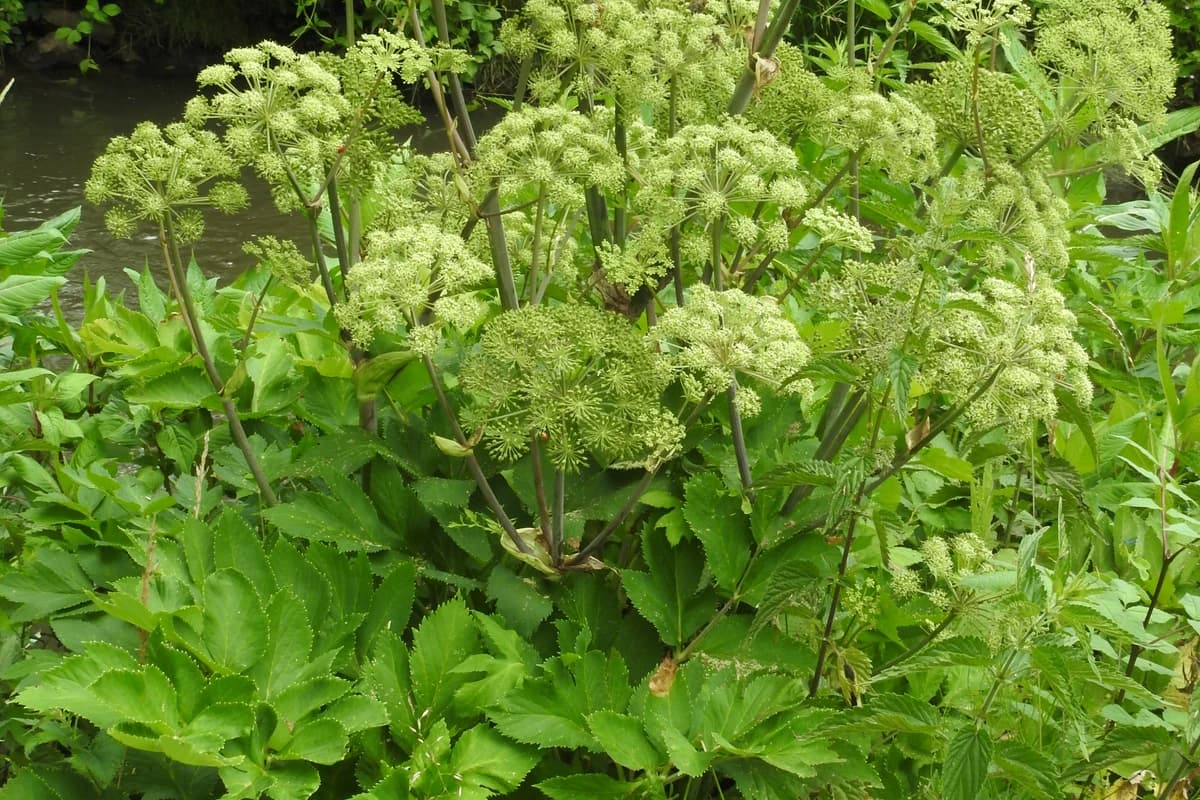
Sobre Esta Planta
La angélica es una hierba bienal, cultivada frecuentemente por sus raíces, tallos y semillas aromáticos, que se utilizan en confitería y medicina tradicional. Requiere suelo rico y húmedo, y prefiere sombra parcial, aunque puede tolerar pleno sol. La planta es bienal, produciendo follaje el primer año y floreciendo en el segundo.
Cómo Cultivar Angélica
Aprende a cultivar Angélica desde la semilla hasta la cosecha en 180 días. Dificultad Advanced. Guía completa de nutrientes, requisitos de pH/EC y condiciones de cultivo para tierra y maceta.
Respaldado por 15 citas revisadas por pares.
Requisitos de Nutrientes por Etapa de Crecimiento
No se encontraron valores ppm de NPK hidropónicos específicos para angélica, por lo que el programa actual de ppm no debe presentarse como verificado experimentalmente. La evidencia aplicada respalda un suelo fértil y rico en materia orgánica, P y K guiados por análisis del suelo, y nitrógeno moderado: OMAFRA cita…
Inicia sesión para ver requisitos de nutrientes
Una cuenta gratuita desbloquea los objetivos de NPK de las cuatro fases de crecimiento, los niveles de micronutrientes, una calculadora de nutrientes por fase y la guía de nutrición completa. Registrarse solo lleva un clic. Truleaf es un proyecto gratuito y sin ánimo de lucro, y cada nueva cuenta nos ayuda a crecer. Sin spam, nunca.
Ambientes de Cultivo
La angélica se adapta mejor a bancales exteriores de clima fresco y a invernaderos controlados. OMAFRA describe un cultivo tolerante a las heladas con temperaturas óptimas de 5-19C, mientras que NC State la sitúa en las zonas USDA 5a-8b y admite pleno sol a sombra parcial…
Temperatura
Trata la angélica como una bienal de clima fresco en lugar de como una hierba de clima cálido. OMAFRA indica 5-19C como el intervalo óptimo de temperatura del cultivo y suelo por encima de 10C en la plantación, mientras que UNH indica una temperatura del suelo de 50-60F y unos 30 días hasta la germinación. El intervalo de crecimiento anterior de 15-25C era demasiado cálido, por lo que el intervalo estructurado se corrige a 5-19C con un punto medio fresco.
Humedad
Ninguna fuente proporcionó un objetivo numérico validado de humedad relativa del aire para la angélica. La evidencia respalda de forma constante una zona radicular húmeda: UNH recomienda un suelo franco rico, húmedo y bien drenado, NC State enumera suelos húmedos a ocasionalmente mojados, y OMAFRA dice que el riego es…
Luz
La angélica tolera pleno sol a sombra parcial, siendo la sombra parcial especialmente útil fuera de condiciones norteñas frescas. La germinación de las semillas está fuertemente ligada a la luz: UNH aconseja cubrir apenas la semilla, y los trabajos sobre dormancia de semillas muestran que la luz y los pretratamientos…
Circulación de Aire
El movimiento de aire es un requisito de gestión de enfermedades más que un objetivo de rendimiento. OMAFRA señala que la presión de enfermedades puede reducirse mediante una selección adecuada del sitio y un buen movimiento de aire en el dosel, y su orientación de cosecha también depende de secar las raíces y…
Inicia sesión para ver requisitos ambientales
Una cuenta gratuita desbloquea los valores exactos de temperatura, humedad, luz y ventilación, incluidos los rangos de germinación y crecimiento, DLI, fotoperiodo y PPFD, además de la guía de ambiente completa. Registrarse solo lleva un clic. Truleaf es un proyecto gratuito y sin ánimo de lucro, y cada nueva cuenta nos ayuda a crecer. Sin spam, nunca.
Compatibilidad con Sistemas Hidropónicos
Los sistemas con mejor respaldo son los bancales de suelo, el cultivo en sustrato de invernadero y los contenedores profundos con riego por goteo. OMAFRA y UNH respaldan el cultivo en campo húmedo y bien drenado, mientras que la investigación en invernadero encontró que los efectos del medio eran importantes y que el…
Sustratos
Use franco rico, húmedo y bien drenado, o suelo orgánico, como medio predeterminado. OMAFRA indica pH 4.5-7.3 y suelos húmedos y bien drenados; UNH especifica franco rico, húmedo y bien drenado…
Contenedores
No se encontraron dimensiones exactas de ensayos en contenedor para la angélica, por lo que la especificación del contenedor es conservadora. NC State y UNH describen una planta de 90-210 cm de altura con una extensión de 60-120 cm y raíces comestibles, y OMAFRA usa 30 cm de separación dentro de la fila con 60-90 cm…
Conducción y Soporte
No se requiere ningún sistema de espaldera, jaula o poda para la angélica. OMAFRA no indica requisitos especiales de hábito de crecimiento, y los perfiles de extensión describen una bienal erguida en lugar de un cultivo trepador o propenso al encamado…
Inicia sesión para ver compatibilidad de sistemas
Una cuenta gratuita desbloquea por qué cada uno de los seis sistemas funciona o no, además de sustratos, tamaños de maceta, métodos de entutorado, plantas compañeras y la guía de sistemas completa. Registrarse solo lleva un clic. Truleaf es un proyecto gratuito y sin ánimo de lucro, y cada nueva cuenta nos ayuda a crecer. Sin spam, nunca.
Propagación
La semilla es la vía principal de propagación, pero la angélica no es una hierba fácil de sembrar directamente. UNH informa de unos 30 días hasta la germinación y recomienda exposición a la luz más fluctuación de temperatura, mientras que OMAFRA enumera la siembra en campo a finales de agosto con un periodo de…
Cosecha
La cosecha depende de la parte de la planta. Las hojas y los tallos jóvenes se utilizan mientras están tiernos, y OMAFRA respalda cosechas repetidas de hojas de la misma plantación…
Calendario de Siembra
Para producción en clima templado, inicia las semillas en invernadero a finales de invierno y trasplanta en mayo, o siembra directamente semilla fresca a finales de verano donde las condiciones exteriores proporcionen ciclos de ruptura de dormancia. OMAFRA enumera la siembra en campo a finales de agosto, un periodo de…
Problemas Comunes
La lista de problemas se corrigió hacia evidencia específica de la angélica. OMAFRA informa de pulgones y ácaros de dos puntos como plagas observadas y enumera el oídio, el mildiu, Fusarium y Rhizoctonia como posibles problemas de enfermedades…
Accede a la guía completa respaldada por la ciencia
Al registrarte, ayudas a mantener Truleaf gratis y apoyas el crecimiento de nuestro proyecto sin ánimo de lucro. Tu cuenta desbloquea todos los detalles de cada problema de las plantas—incluidos síntomas, causas, soluciones paso a paso y prevención—además del calendario de siembra mes a mes, la guía completa y todas las fuentes de investigación. Solo lleva un clic. Sin spam, nunca.