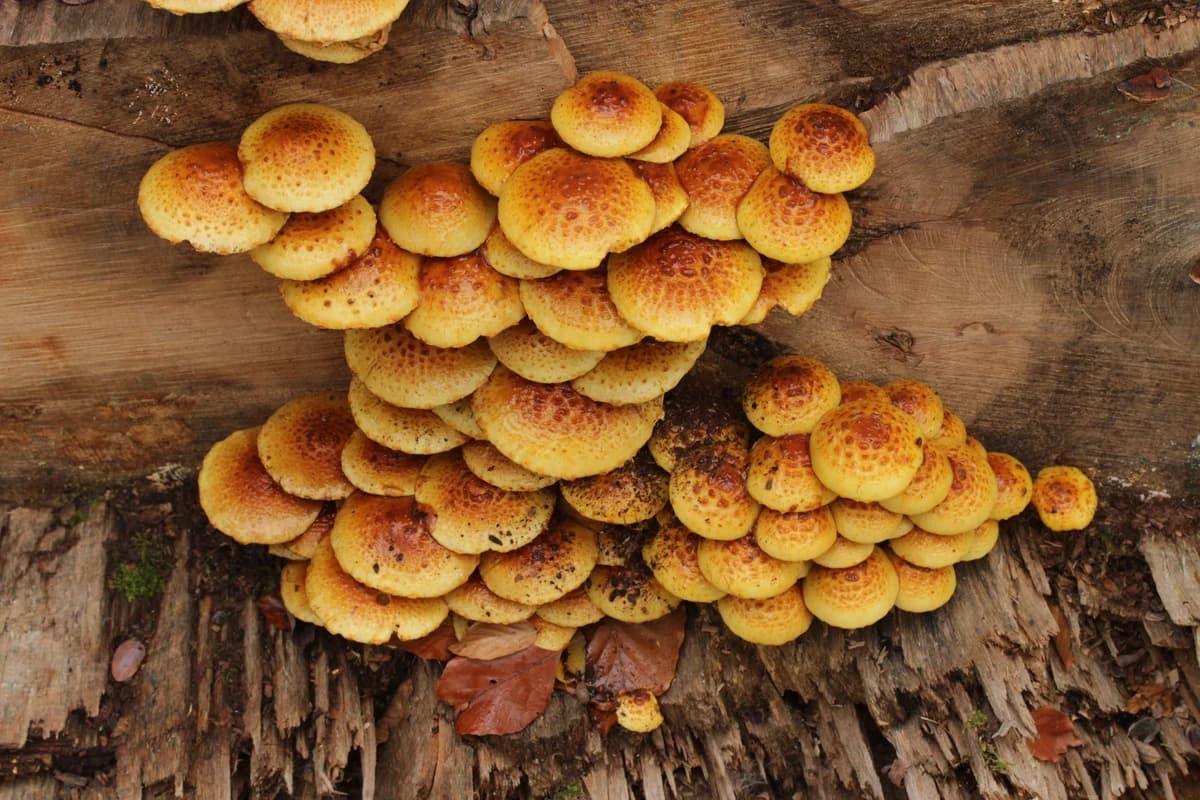
About This Plant
Chestnut mushroom (Pholiota adiposa) is a wood-rotting gourmet fungus grown on sterilized sawdust and agricultural-residue substrates. It is managed through warm spawn-run conditions, cool humid fruiting, low light, and careful fresh-air exchange rather than plant-style hydroponic nutrition.
How to Grow Chestnut Mushroom
Learn how to grow Chestnut Mushroom from seed to harvest in 53 days. Intermediate difficulty. Complete nutrient guide, pH/EC requirements, and growing conditions for soil & container.
Backed by 14 peer-reviewed citations.
Nutrient Requirements by Growth Stage
Chestnut mushroom nutrition is solid-substrate nutrition, not hydroponic NPK ppm. Productive P…
Sign in to view nutrient requirements
A free account unlocks NPK targets for all four growth stages, micronutrient levels, a per-stage nutrient calculator, and the full nutrition guide. Signing up takes one click. Truleaf is a free, non-profit project, and every new account helps it grow. No spam, ever.
Growing Environments
The strongest evidence supports indoor controlled-environment production in containers. Studies used spawn-running rooms, cooled induction, and fruiting chambers with controlled temperature, humidity, low light, and high substrate moisture…
Temperature
Treat temperature as two phases. Spawn run and mycelial growth are warm: Pholiota adiposa studies place active growth around 20-30C, with optima near 25-26C. Fruiting is cooler: bag and bottle systems induced primordia around 10-15C or fruited at 14-18C, with 14-16C giving strong yield and fruit quality in temperature-humidity work. Do not read the warm value as seed germination; this mushroom is propagated as mycelium.
Humidity
Keep humidity high during primordia and fruit-body development. Bag trials fruited P…
Light
Use darkness for spawn run and low light for fruiting. Controlled bag and bottle studies incubated cultures in darkness during substrate colonization…
Airflow
Fresh air should prevent stagnant CO2 without drying pins or caps. Morimoto found airtight covers inhibited spawn-run, while paper or vented polypropylene caps allowed colonization…
Sign in to view environmental requirements
A free account unlocks exact temperature, humidity, light and airflow targets, including germination and growth ranges, DLI, photoperiod and PPFD, plus the full environment guide. Signing up takes one click. Truleaf is a free, non-profit project, and every new account helps it grow. No spam, ever.
Hydroponic System Compatibility
DWC, NFT, ebb-flow, drip hydroponics, Kratky, and aeroponics are not suitable for chestnut mushroom. Those systems assume rooted plants taking up dissolved fertilizer, while P…
Growing Media
Use sterilized supplemented sawdust or other lignocellulosic mushroom substrate. Productive formulas include cottonseed hull plus sawdust, wheat bran, corn flour, gypsum, and lime; Sugi sawdust amended with cotton hull, corncob meal, and rice bran; and sawdust-corn-stalk mixes that produced the highest biological…
Container Specs
Container culture is well supported. Bottle studies used 800 ml polypropylene bottles with about 500 g substrate, while artificial-bed work used 850 ml bottles with about 550 g medium…
Training & Support
Training support is not applicable. P…
Sign in to view system compatibility
A free account unlocks why each of the six systems fits or fails, plus growing media, container sizes, training methods, companion plants, and the full systems guide. Signing up takes one click. Truleaf is a free, non-profit project, and every new account helps it grow. No spam, ever.
Propagation
Propagate chestnut mushroom through selected mycelium, not seed. Research strains were isolated from fruiting bodies by tissue culture, maintained on agar, and expanded into spawn for substrate inoculation…
Harvesting
Harvest clusters when caps are expanded but still firm, before over-maturity or heavy spore release reduces quality. Pholiota trials report maturation about 5-7 days after primordia, with first harvest timing depending on spawn-run length and fruiting stimulation…
Planting Calendar
Use a controlled indoor production calendar instead of seed sowing dates. Fast bottle culture completed spawn run in about 23 days under dark, ventilated conditions…
Common Issues
Frame chestnut mushroom problems around air exchange, moisture, and contamination. Long stems with underdeveloped caps are consistent with excess CO2 or insufficient fresh air, so increase ventilation gradually while preserving high humidity…
Get the full science-backed guide
By signing up, you help keep Truleaf free and support the growth of our nonprofit project. Your account unlocks full details for every plant issue—including symptoms, causes, step-by-step solutions, and prevention—plus the month-by-month planting calendar, the complete guide, and all research sources. It only takes one click. No spam, ever.