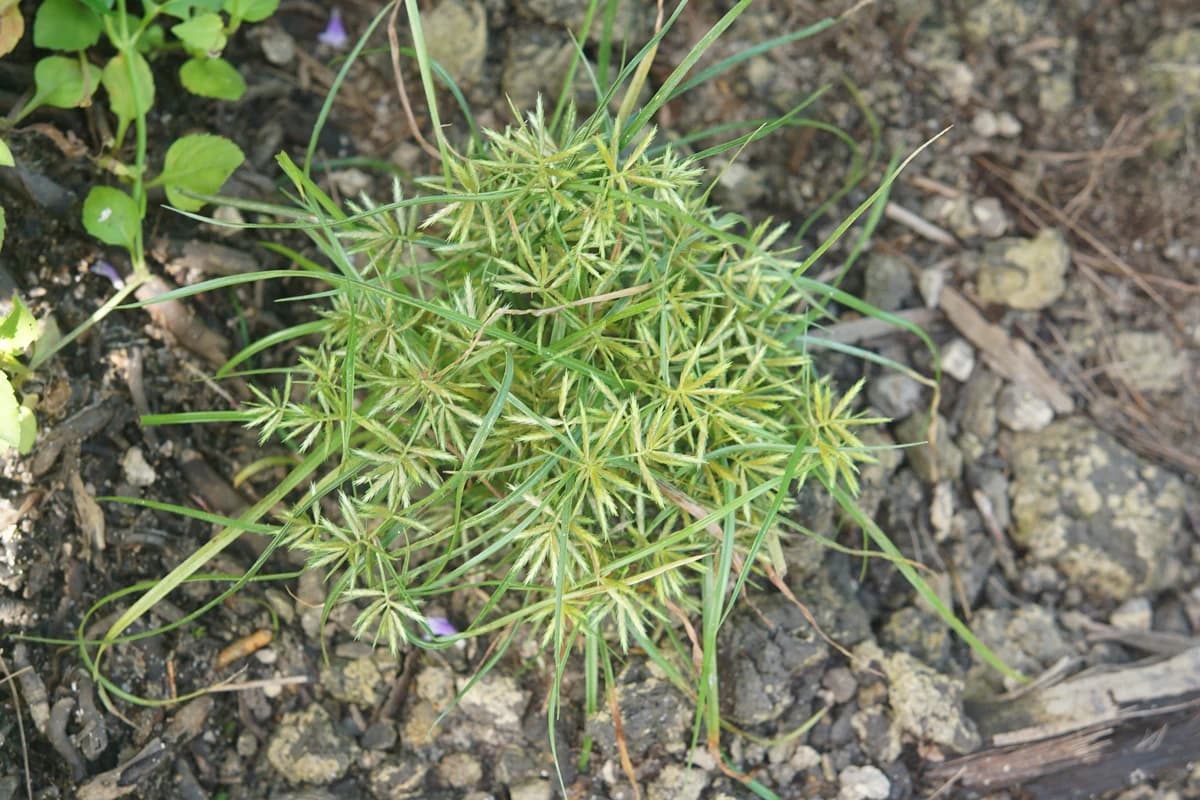
About This Plant
Chufa, or tiger nut, is a warm-season sedge grown as an annual crop for sweet edible tubers used fresh, dried, roasted, milled, or processed into horchata. It performs best in warm, bright conditions, loose sandy or sandy-loam media, reliable irrigation, and a long frost-free season of about 90-130 days.
How to Grow Chufa (Tiger Nuts)
Learn how to grow Chufa (Tiger Nuts) from seed to harvest in 120 days. Intermediate difficulty. Complete nutrient guide, pH/EC requirements, and growing conditions for soil & container.
Sources cited: 15.
Nutrient Requirements by Growth Stage
The best open chufa nutrient-solution evidence is a soilless culture study using a Hoagland-based solution near 196 ppm N, 31 ppm P, 235 ppm K, 160 ppm Ca, and 49 ppm Mg at EC 2.31 dS/m and pH 6.1. Field evidence should not be converted directly to reservoir ppm: a 2024 sandy-soil trial found 300 kg N/ha outperformed…
Sign in to view nutrient requirements
A free account unlocks NPK targets for all four growth stages, micronutrient levels, a per-stage nutrient calculator, and the full nutrition guide. Signing up takes one click. Truleaf is a free, non-profit project, and every new account helps it grow. No spam, ever.
Growing Environments
Chufa is suitable outdoors, in greenhouses or hoop houses, and in containers when given warmth, high light, and loose media. Rutgers concluded production is feasible in New Jersey hoop-house and field systems, while FAO Ecocrop describes a broad elevation range and a 90-120 day harvest period…
Temperature
Chufa is a warm-season sedge. Rutgers hoop-house observations found tuber sprouts emerging 6-7 days after planting at 24-29C, while a Chinese field study reports sprouting once soil stays above about 12C and better sprouting at warmer temperatures. FAO EcoCrop gives a broader optimum of about 14-26C and absolute tolerance near 4-30C, so production should emphasize warm establishment without assuming extreme heat tolerance.
Humidity
No source gives a true chufa RH optimum. Rutgers hoop-house work operated around 75-90% RH, while Chinese greenhouse maintenance used 40-60% RH…
Light
Chufa is best treated as a high-light crop. FAO EcoCrop lists very bright or clear-sky conditions as optimal and light shade only as an absolute tolerance…
Airflow
No chufa source specifies canopy air velocity in m/s. Air movement is still important operationally: Rutgers notes that low humidity and free air circulation preserve harvested tuber quality during drying, and disease work shows tuber-borne rot can move with infected propagules…
Sign in to view environmental requirements
A free account unlocks exact temperature, humidity, light and airflow targets, including germination and growth ranges, DLI, photoperiod and PPFD, plus the full environment guide. Signing up takes one click. Truleaf is a free, non-profit project, and every new account helps it grow. No spam, ever.
Hydroponic System Compatibility
Drip-irrigated media beds or containers are the strongest controlled-system fit because chufa tubers develop in loose substrate and the crop requires reliable but drained moisture. Ebb-and-flow can work only in deep media that drains fully…
Growing Media
Use loose, drained media that can hold even moisture. Chufa is repeatedly reported from sandy or sandy-field systems, and Rutgers grew pot trials in 20 cm pots using Pro-Mix BX while field plots used plastic mulch and managed moisture…
Container Specs
Containers must provide enough depth for rhizomes and tubers. Rutgers found tubers distributed through the full 20 cm media depth in one selection, while other selections held tubers mostly in the upper 5 cm…
Training & Support
Chufa does not require trellising or pruning. It is a sedge grown for belowground tubers; Rutgers observed upright foliage that eventually senesced and lodged as tubers matured…
Sign in to view system compatibility
A free account unlocks why each of the six systems fits or fails, plus growing media, container sizes, training methods, companion plants, and the full systems guide. Signing up takes one click. Truleaf is a free, non-profit project, and every new account helps it grow. No spam, ever.
Propagation
Cultivated chufa is normally propagated vegetatively from tubers rather than seed. Rutgers used market and commercial tubers as propagules, PROSEA reports soaking tubers for 2-3 days and planting 2.5-4 cm deep, and the Chinese accession study soaked mature tubers in 30-40C water before planting…
Harvesting
Harvest is a single end-of-cycle tuber harvest. Rutgers observed mature tubers by 14 weeks after planting in hoop-house pots, with foliage senescing and lodging by 13-14 weeks and dead foliage by 16 weeks…
Planting Calendar
Plant after frost when soil or container media is warm. Alabama Extension recommends late spring to early summer when soil is above 60F, USDA-NRCS Mississippi guidance lists April 1-June 1, and Rutgers transplanted nursery plants in late May to early June before October harvest…
Common Issues
Verified chufa risks include tuber-borne rot, weed competition, vertebrate or insect damage in repeated food plots, viral disease, storage mold, and nutrition imbalance. Crop Protection work showed hot-water treatment can control Dematophora necatrix on tubers…
Get the full science-backed guide
By signing up, you help keep Truleaf free and support the growth of our nonprofit project. Your account unlocks full details for every plant issue—including symptoms, causes, step-by-step solutions, and prevention—plus the month-by-month planting calendar, the complete guide, and all research sources. It only takes one click. No spam, ever.