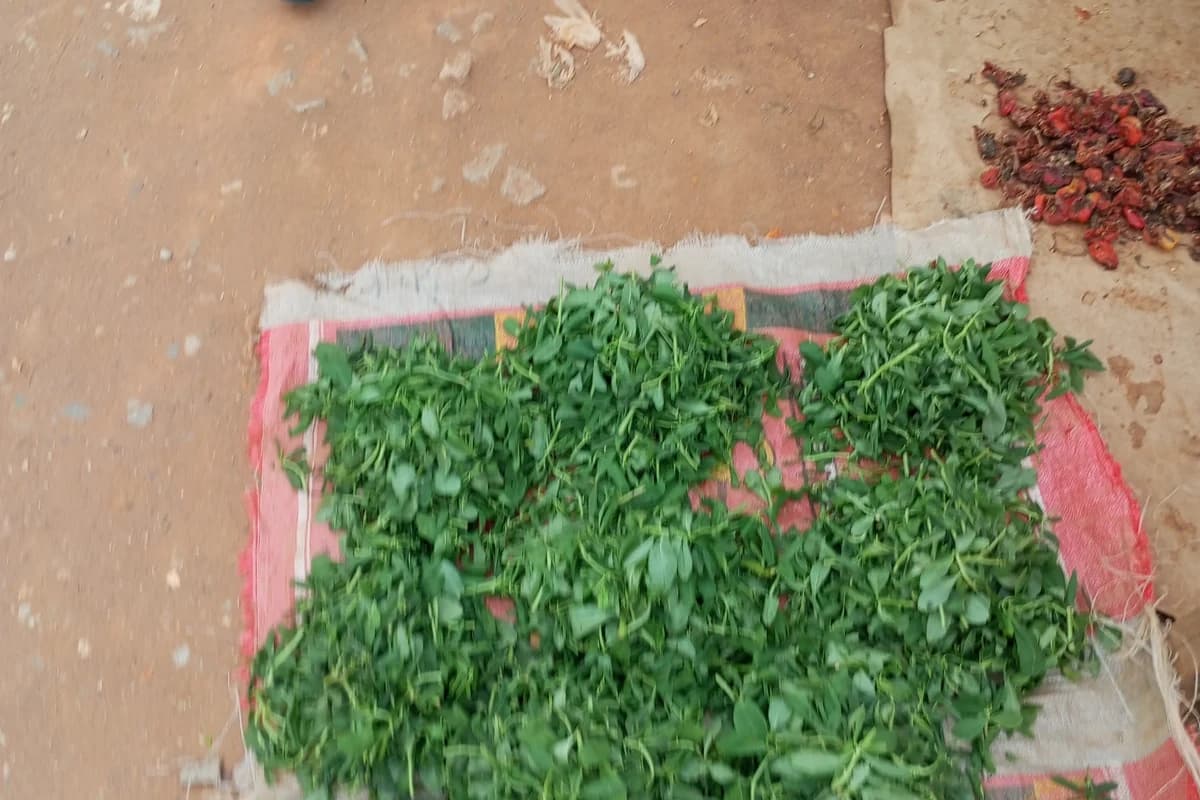
About This Plant
Fenugreek, also known as methi, is a fast-growing annual Fabaceae herb grown for tender leafy shoots, aromatic seeds, sprouts, and green manure. It performs best as a direct-sown crop in sunny, well-drained media, with early leaf harvest possible in about six weeks and seed harvest after pods dry.
How to Grow Fenugreek
Learn how to grow Fenugreek from seed to harvest in 42 days. Beginner difficulty. Complete nutrient guide, pH/EC requirements, and growing conditions for hydroponics, soil & greenhouse.
Sources cited: 8.
Nutrient Requirements by Growth Stage
Fenugreek should be treated as a legume with moderate nitrogen demand and meaningful phosphorus response. A two-year factorial field trial found the best seed yield from N60P80K40 kg ha-1, with medium nitrogen and phosphorus outperforming lower or excessive rates under alluvial West Bengal conditions…
Sign in to view nutrient requirements
A free account unlocks NPK targets for all four growth stages, micronutrient levels, a per-stage nutrient calculator, and the full nutrition guide. Signing up takes one click. Truleaf is a free, non-profit project, and every new account helps it grow. No spam, ever.
Growing Environments
Fenugreek is suitable outdoors, in greenhouses, indoors, and in containers when the purpose is clear. Field and garden production are the best-supported systems; TNAU describes wide soil adaptability, frost tolerance, and good performance in moderate or low rainfall regions…
Temperature
Fenugreek germination is broader and cooler than the previous 22-28 C record suggested. A hydrothermal-time study estimated germination cardinal temperatures near a 7.8-10 C base, about 18-20 C optimum, and 34.5-40 C ceiling, with the highest germination response around 20 C under low osmotic stress. TNAU production guidance also describes fenugreek as widely adaptable and frost tolerant, but better suited to moderate or low rainfall than heavy rainfall. Keep leafy crops near 15-25 C when possible and avoid prolonged hot, wet conditions.
Humidity
Fenugreek tolerates ordinary outdoor humidity, but protected culture should favor a dry canopy rather than the previous 60-70% target. Powdery mildew is reported as an important fenugreek disease during flowering and pod formation, and downy mildew infection rises with leaf wetness and favorable cool-to-mild…
Light
Grow fenugreek in full sun or strong greenhouse light. TNAU recommends a sunny, well-drained production site and describes fenugreek as vigorous enough to compete with weeds after establishment…
Airflow
Airflow should keep leaves dry and prevent dense humid pockets. Powdery mildew of fenugreek becomes serious around flowering and pod formation, and downy mildew infection can begin after only several hours of leaf wetness…
Sign in to view environmental requirements
A free account unlocks exact temperature, humidity, light and airflow targets, including germination and growth ranges, DLI, photoperiod and PPFD, plus the full environment guide. Signing up takes one click. Truleaf is a free, non-profit project, and every new account helps it grow. No spam, ever.
Hydroponic System Compatibility
For hydroponics, fenugreek is most defensible as a short-cycle leafy crop rather than a long seed crop. The 2026 hydroponic study used floating raft production with cocopeat and compared standard Hoagland solution with microbial treatments, showing fenugreek can complete useful leafy growth in soilless culture…
Growing Media
Use a sunny, well-drained root zone with near-neutral pH. TNAU reports fenugreek can grow across many soils but performs relatively better in clay loam, with optimum soil pH about 6-7…
Container Specs
Fenugreek is container-friendly for leaves because it is compact and quick. Use at least 20 cm depth and strong drainage for baby leaf or cut-and-come-again crops, spacing plants about 5-10 cm apart after thinning…
Training & Support
Fenugreek normally needs no staking, trellis, cage, or formal training. It is an annual herb with upright branching growth, and production guidance focuses on thinning, weeding, cutting shoots, and then allowing flowering for seed rather than structural support…
Sign in to view system compatibility
A free account unlocks why each of the six systems fits or fails, plus growing media, container sizes, training methods, companion plants, and the full systems guide. Signing up takes one click. Truleaf is a free, non-profit project, and every new account helps it grow. No spam, ever.
Propagation
Propagate fenugreek from seed and prefer direct sowing. TNAU describes broadcasting or line sowing, with line spacing around 20-25 cm and germination completing in about 6-8 days…
Harvesting
Harvest depends on whether the crop is grown for leaves or seed. For leafy methi, TNAU advises nipping young shoots about 25-30 days after sowing, cutting roughly 4 inches above ground, and taking later cuts about 15 days apart before allowing flowering…
Planting Calendar
Use climate-specific sowing windows rather than a single hydroponic calendar. TNAU reports plains sowing generally in September-November for Indian seed production, with March sowing in hills, and harvest after pods dry…
Common Issues
The primary verified issues are powdery mildew, downy mildew, root rot, and leaf spots. Powdery mildew caused by Erysiphe polygoni is reported as significant during flowering and pod formation, with favorable field temperatures in the high-20s to mid-30s C range…
Get the full science-backed guide
By signing up, you help keep Truleaf free and support the growth of our nonprofit project. Your account unlocks full details for every plant issue—including symptoms, causes, step-by-step solutions, and prevention—plus the month-by-month planting calendar, the complete guide, and all research sources. It only takes one click. No spam, ever.