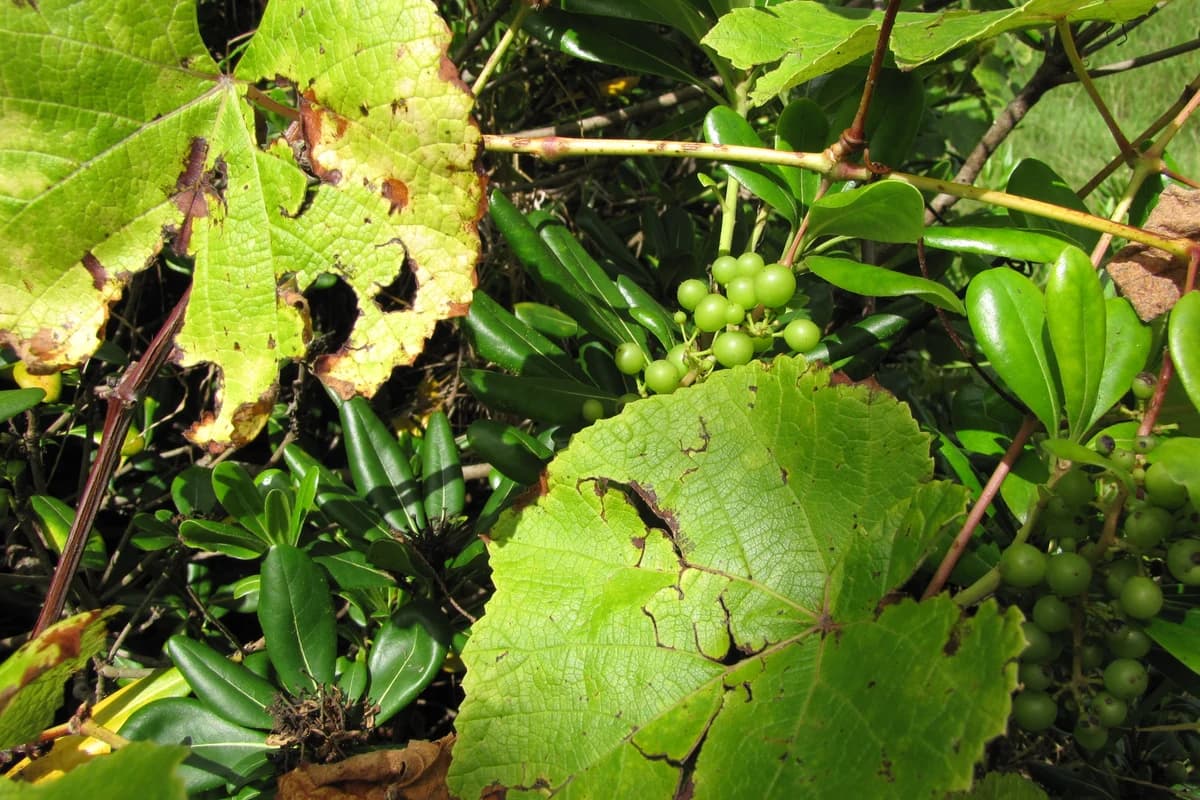
About This Plant
The common grape vine is a vigorous perennial fruiting climber grown for fresh grapes, raisins, juice, and wine. Vitis vinifera performs best in full sun with annual dormant pruning, sturdy trellis support, and careful canopy airflow. Hydroponic and soilless grape production is possible, especially for protected high-value cultivars, but fruiting vines still need strong light, stage-aware nutrition, and cultivar-specific dormancy management.
How to Grow Grape
Learn how to grow Grape from seed to harvest in 180 days. Intermediate difficulty. Complete nutrient guide, pH/EC requirements, and growing conditions for soil & container.
Sources cited: 8.
Nutrient Requirements by Growth Stage
Grape nutrition should be managed from soil or tissue analysis, with the strongest nutrient demand from bloom to veraison and potassium demand rising sharply as fruit becomes the dominant sink. WVU Extension confirms that N demand is high during spring vegetative growth then tapers during reproductive development,…
Sign in to view nutrient requirements
A free account unlocks NPK targets for all four growth stages, micronutrient levels, a per-stage nutrient calculator, and the full nutrition guide. Signing up takes one click. Truleaf is a free, non-profit project, and every new account helps it grow. No spam, ever.
Growing Environments
Grape is best treated as an outdoor or greenhouse perennial vine, not a normal indoor crop. It needs full sun, heat accumulation, a sturdy support structure, and enough seasonal change for dormancy and fruiting…
Temperature
Grape is a temperate woody perennial, so temperature guidance must distinguish dormancy, budbreak, and fruit ripening. Phenology research shows temperature is the main driver of grapevine stages, with successful harvest associated with moderate growing-period averages and budbreak or flowering modeled from accumulated heat. The current 18-29C growth band was narrowed downward for cool-season development: use roughly 12-29C for active outdoor growth, with 24C as a practical protected-culture target. Seed propagation is uncommon, but after dormancy treatment, warm germination conditions near 20-30C are more defensible than a simple hydroponic seedling setpoint.
Humidity
Keep grape canopies moderately dry and fast-drying rather than humid. The prior 60-75% RH target is too disease-friendly for dense fruiting vines…
Light
Grapes are full-sun fruit crops. UMN Extension states that vines should be planted in full sun to provide the heat needed for ripening, and productive trellis systems should expose clusters and renewal wood to abundant light…
Airflow
Airflow is a core grape disease-control practice. UMN recommends sunny locations with good air circulation and dormant pruning to keep canopies from becoming too dense…
Sign in to view environmental requirements
A free account unlocks exact temperature, humidity, light and airflow targets, including germination and growth ranges, DLI, photoperiod and PPFD, plus the full environment guide. Signing up takes one click. Truleaf is a free, non-profit project, and every new account helps it grow. No spam, ever.
Hydroponic System Compatibility
The current database overstated hydroponic compatibility. Controlled work confirms grapevines can be grown in perlite with timed Hoagland fertigation, but that supports drip-fed soilless culture rather than small-channel NFT, Kratky, or long-term DWC…
Growing Media
Outdoor grapes prefer warm, well-drained soil and are poor candidates for cool, wet root zones. UMN cautions that mulch is often not recommended because it can keep soil too cool for grape roots…
Container Specs
Container grapes are possible but should be sized for a woody perennial, not a short-cycle fruiting annual. UMN notes that potted vines require regular watering while roots establish and should be monitored daily for drought stress during acclimation…
Training & Support
Support and pruning are mandatory. UMN states grapevines need support or they trail on the ground, and that annual winter or spring pruning is essential for healthy growth and fruit production…
Sign in to view system compatibility
A free account unlocks why each of the six systems fits or fails, plus growing media, container sizes, training methods, companion plants, and the full systems guide. Signing up takes one click. Truleaf is a free, non-profit project, and every new account helps it grow. No spam, ever.
Propagation
Do not treat grape as a seed-first crop. UMN describes planting dormant bare-root vines or potted vines in spring, while cultivar preservation normally depends on vegetative propagation…
Harvesting
Harvest grapes by flavor, not color alone. UMN notes that many varieties change color before they are truly ripe, so tasting berries is the best ripeness check…
Planting Calendar
For temperate outdoor production, prune established vines before growth starts in March, plant bare-root vines as soon as soil can be worked in April or May, and plant potted vines after frost risk in May or June. Tie new growth to the trellis from spring through summer, scout for disease and insect problems from…
Common Issues
The issue list was corrected from generic hydroponic problems to grape-specific risks. Botrytis bunch rot infects flowers, leaves, shoots, and ripening berries after wet conditions, especially in dense canopies, and is managed by airflow, light exposure, drip irrigation, sanitation, and prompt harvest…
Get the full science-backed guide
By signing up, you help keep Truleaf free and support the growth of our nonprofit project. Your account unlocks full details for every plant issue—including symptoms, causes, step-by-step solutions, and prevention—plus the month-by-month planting calendar, the complete guide, and all research sources. It only takes one click. No spam, ever.