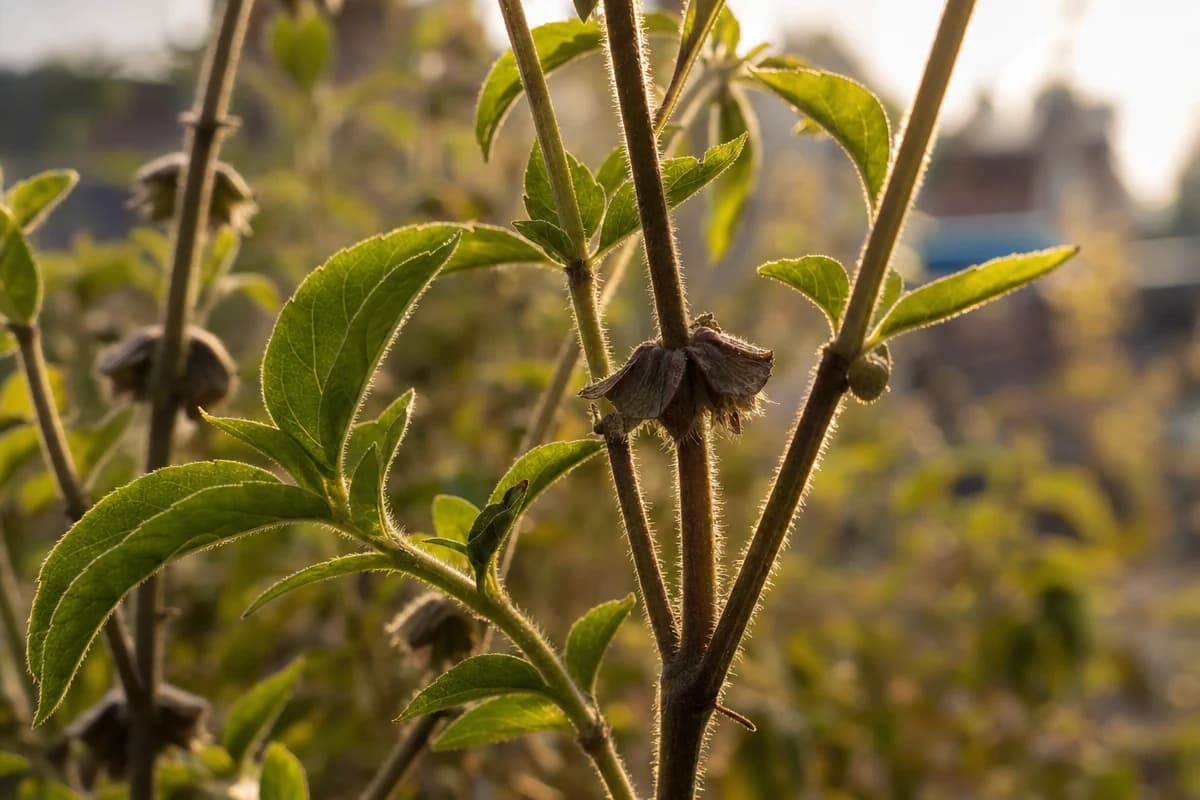
About This Plant
Holy basil, also known as tulsi or sacred basil, is a warm-season aromatic herb in the mint family grown for culinary, medicinal, and devotional uses. It performs best in warm, humid, high-light conditions, can be managed as a cut-and-come-again herb, and is compatible with soil, containers, and hydroponic systems when drainage, airflow, and nutrient strength are controlled.
How to Grow Holy Basil (Tulsi)
Learn how to grow Holy Basil (Tulsi) from seed to harvest in 56 days. Beginner difficulty. Complete nutrient guide, pH/EC requirements, and growing conditions for hydroponics, soil & greenhouse.
Sources cited: 25.
Nutrient Requirements by Growth Stage
Run holy basil at moderate hydroponic nutrient strength. NPK-R and NPK-E agree within 15% for most stages; where phosphorus diverged, the academic NPK-R target was kept…
Sign in to view nutrient requirements
A free account unlocks NPK targets for all four growth stages, micronutrient levels, a per-stage nutrient calculator, and the full nutrition guide. Signing up takes one click. Truleaf is a free, non-profit project, and every new account helps it grow. No spam, ever.
Growing Environments
Holy basil can be grown outdoors, indoors, in greenhouses, and in containers. Outdoors it needs frost-free warmth, full sun, and moist but well-drained soil…
Temperature
Holy basil is heat-loving and cold-sensitive. Germinate at 25-35C with a practical target near 30C; holy-basil seed work supports warm testing and nursery conditions. For vegetative growth, keep plants around 24-30C, with biomass response peaking near 29C before declining as temperatures approach 35C. Avoid chilling transplants; treat outdoor plants as frost-sensitive warm-season herbs.
Humidity
Holy basil performs well under moderately high humidity. Controlled plant-factory work used about 70% RH for seedling and flowering-stage production…
Light
Use full sun outdoors or moderate-high indoor light. A holy-basil NFT trial showed fresh weight increased strongly when DLI rose from about 7 to 15 mol/m2/d…
Airflow
Use gentle continuous airflow for indoor, greenhouse, and dense hydroponic holy basil. A PFAL study reported wind speed near 0.41 m/s during successful flowering-stage production…
Sign in to view environmental requirements
A free account unlocks exact temperature, humidity, light and airflow targets, including germination and growth ranges, DLI, photoperiod and PPFD, plus the full environment guide. Signing up takes one click. Truleaf is a free, non-profit project, and every new account helps it grow. No spam, ever.
Hydroponic System Compatibility
Holy basil is strongly compatible with hydroponics. NFT and DFT/DWC are the best-supported systems from direct holy-basil trials…
Growing Media
Use well-aerated media. For hydroponics, start seedlings in sponge, foam, rockwool, or equivalent plugs before transplanting into NFT/DFT systems…
Container Specs
Holy basil is well suited to containers. Use a pot at least 20 cm wide and 20 cm deep, about 4 L or larger, with drainage…
Training & Support
Holy basil needs no trellis, cage, stake, string, or netting. The useful management is pruning and topping…
Sign in to view system compatibility
A free account unlocks why each of the six systems fits or fails, plus growing media, container sizes, training methods, companion plants, and the full systems guide. Signing up takes one click. Truleaf is a free, non-profit project, and every new account helps it grow. No spam, ever.
Propagation
Holy basil is easily propagated from seed or terminal cuttings. Sow seed shallowly and keep it warm and moist; holy-basil seed research supports germination near 30C, with emergence commonly around 7-12 days…
Harvesting
Holy basil regrows after cutting. For field medicinal-herb production, cut the first harvest about 90-95 days after planting and repeat every 65-75 days…
Planting Calendar
For a temperate Northern Hemisphere calendar, start holy basil indoors in February through April, transplant or direct sow after frost in May or June, and harvest or prune through July to October. Tropical and subtropical field culture differs: guidance from India raises nursery plants in late winter or before monsoon…
Common Issues
Use holy-basil-specific issue defaults rather than a sweet-basil disease list. The defensible set is root rot, powdery mildew, tulsi lace bug, leaf rollers, seedling blight, Japanese beetles, and occasional sucking pests…
Get the full science-backed guide
By signing up, you help keep Truleaf free and support the growth of our nonprofit project. Your account unlocks full details for every plant issue—including symptoms, causes, step-by-step solutions, and prevention—plus the month-by-month planting calendar, the complete guide, and all research sources. It only takes one click. No spam, ever.