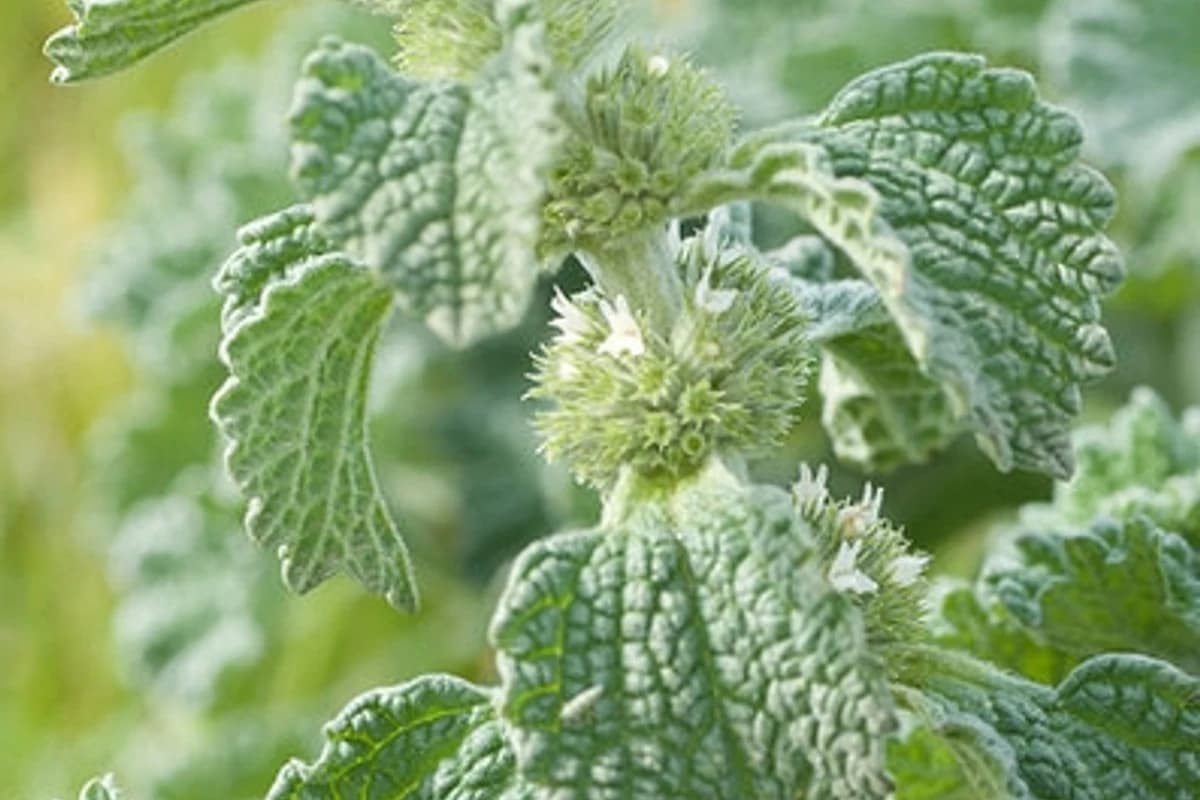
About This Plant
Horehound, or white horehound, is a drought-tolerant perennial herb in the mint family grown for bitter aromatic leaves and flowering tops used in traditional herbal preparations and candy. It prefers full sun, lean sandy soil, and sharp drainage, and it should be managed carefully because it can self-seed and become weedy.
How to Grow Horehound
Learn how to grow Horehound from seed to harvest in 94 days. Beginner difficulty. Complete nutrient guide, pH/EC requirements, and growing conditions for hydroponics, soil & greenhouse.
Sources cited: 14.
Nutrient Requirements by Growth Stage
Do not treat the current hydroponic NPK ppm table as horehound-specific. NPK-R and NPK-E both found no peer-reviewed or extension source giving stage-specific elemental ppm for Marrubium…
Sign in to view nutrient requirements
A free account unlocks NPK targets for all four growth stages, micronutrient levels, a per-stage nutrient calculator, and the full nutrition guide. Signing up takes one click. Truleaf is a free, non-profit project, and every new account helps it grow. No spam, ever.
Growing Environments
Horehound can be grown outdoors, indoors, in greenhouses, and in containers, but the environment must stay bright and drained. Outdoors it prefers full sun and sandy dry soil and tolerates poor soil once established…
Temperature
Horehound seed germination is best supported by mild warm conditions, not high heat. Controlled work found strong germination at 25/20C day/night and older Weed Science work supports 20-25C after dormancy is relieved. Keep established plants in a moderate herb range around 18-28C, with 24C as a practical indoor target. The species tolerates frost once established, but young seedlings should be protected from hard freezes and waterlogged cold soil.
Humidity
Treat horehound as a dryland herb. Extension and weed-management sources describe it as drought tolerant and warn that excessive watering or standing water can kill plants…
Light
Horehound is a full-sun herb. NC State lists full sun and sandy dry soil as preferred, while USU recommends open, well-drained sites…
Airflow
Use steady gentle airflow indoors and in greenhouses. Horehound's low-moisture preference means the canopy should dry quickly and humid pockets should not persist around the woolly leaves…
Sign in to view environmental requirements
A free account unlocks exact temperature, humidity, light and airflow targets, including germination and growth ranges, DLI, photoperiod and PPFD, plus the full environment guide. Signing up takes one click. Truleaf is a free, non-profit project, and every new account helps it grow. No spam, ever.
Hydroponic System Compatibility
Hydroponics is possible, but horehound should be biased toward oxygen and drainage rather than constant saturation. Drip substrate and ebb-flow are the strongest fits because irrigation can be brief and media can re-oxygenate…
Growing Media
Use lean, airy, fast-draining media. USU and NC State both emphasize full sun and well-drained soil, with NC State noting preference for sandy dry soil and tolerance of poor soil…
Container Specs
Horehound suits containers, especially where garden spread is a concern. Use at least a 30 cm wide and 30 cm deep container, roughly 10 L or larger, with aggressive drainage…
Training & Support
Horehound needs pruning and deadheading, not structural support. The plant is a short, bushy perennial, reaching about 60 cm tall and wide at maturity…
Sign in to view system compatibility
A free account unlocks why each of the six systems fits or fails, plus growing media, container sizes, training methods, companion plants, and the full systems guide. Signing up takes one click. Truleaf is a free, non-profit project, and every new account helps it grow. No spam, ever.
Propagation
Horehound propagates by seed, young stem cuttings, and division. Sow seed shallowly, about surface to 6 mm deep, and keep the seedbed moist until emergence…
Harvesting
Harvesting should be corrected from "before flowering" to "as flowering begins or at peak bloom." USU allows only light first-year leaf harvest, then recommends harvesting leaves and flowers at peak bloom in later years. NC State says the plant is harvested as it comes into flower…
Planting Calendar
For temperate gardens, start horehound indoors in late winter to early spring or sow/transplant outdoors in early spring once soil can be worked. Seedlings may need 4-6 weeks before transplanting, and one field trial used 45-day seedlings…
Common Issues
The current issue list needed correction. Horehound-specific sources say it has few significant pest or disease problems…
Get the full science-backed guide
By signing up, you help keep Truleaf free and support the growth of our nonprofit project. Your account unlocks full details for every plant issue—including symptoms, causes, step-by-step solutions, and prevention—plus the month-by-month planting calendar, the complete guide, and all research sources. It only takes one click. No spam, ever.