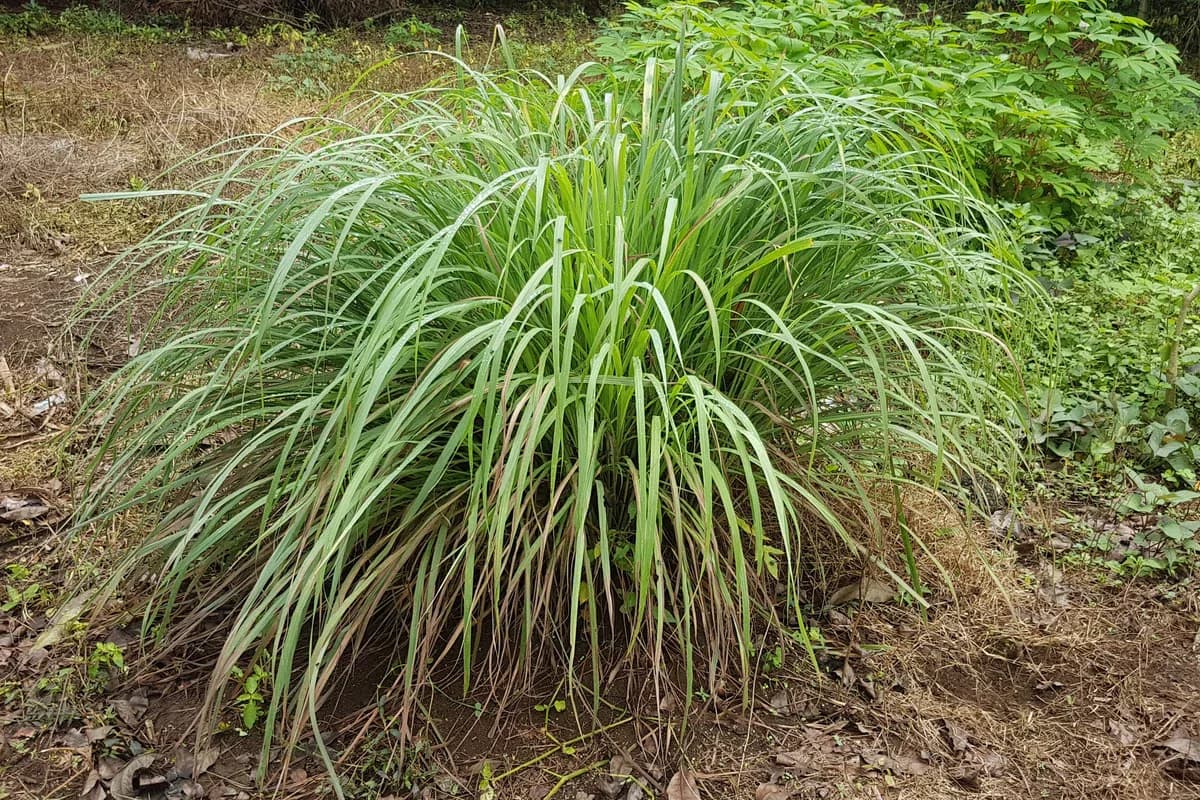
About This Plant
Lemongrass is a frost-tender, perennial C4 grass grown for citrus-scented basal stalks, leaves, and essential oil. It forms a dense, self-supporting clump and is normally propagated by separating rooted tillers or slips. Fresh seed can germinate but is uncommon and short-lived. Warm temperatures, full sun, steady moisture with free drainage, and regular nitrogen and potassium support rapid tillering and repeated harvests.
How to Grow Lemongrass
Learn how to grow Lemongrass from seed to harvest in 120 days. Intermediate difficulty. Complete nutrient guide, pH/EC requirements, and growing conditions for hydroponics, soil & greenhouse.
Sources cited: 33.
Nutrient Requirements by Growth Stage
Treat the seedling slot as rooted-slip establishment, not botanical seedling growth. NPK-R found no direct species-specific solution ppm for establishment or vegetative growth, so the numeric schedule comes from NPK-E as a single applied source at medium confidence: start near N 75-105, P 15-25, and K 100-145 ppm,…
Sign in to view nutrient requirements
A free account unlocks NPK targets for all four growth stages, micronutrient levels, a per-stage nutrient calculator, and the full nutrition guide. Signing up takes one click. Truleaf is a free, non-profit project, and every new account helps it grow. No spam, ever.
Growing Environments
Lemongrass grows outdoors in warm full-sun climates and in greenhouses, indoor controlled environments, and large containers. Field, shade-house, and climate-controlled greenhouse experiments all support these settings…
Temperature
Lemongrass is a warm-season, frost-tender C4 grass. Keep established plants around 21-29 C, with 25 C a practical controlled-environment target; authoritative crop accounts place strongest growth near 23-30 C, and a greenhouse trial grew healthy plants at 25 C days and 20 C nights. Fresh seed, when available, germinates in warm media around 20-30 C. Protect plants from frost and avoid hot, dry wind that desiccates leaves and lowers oil retention.
Humidity
Use moderate relative humidity around 40-70%, with 55% as an operational target. No controlled C…
Light
Treat lemongrass as a full-sun crop. Target about 20-30 mol/m2/day DLI, using 25 mol/m2/day as the structured set point…
Airflow
Provide gentle, continuous circulation through the dense clump, especially above 60% RH. The goal is to shorten leaf-wetness periods and move humid air out of the canopy without creating a hot, dry blast…
Sign in to view environmental requirements
A free account unlocks exact temperature, humidity, light and airflow targets, including germination and growth ranges, DLI, photoperiod and PPFD, plus the full environment guide. Signing up takes one click. Truleaf is a free, non-profit project, and every new account helps it grow. No spam, ever.
Hydroponic System Compatibility
Hydroponics is suitable overall, but named-system evidence is uneven. Drip-fed substrate is the preferred scalable configuration because complete species studies support repeatedly irrigated coco-coir and peat-vermiculite containers…
Growing Media
Use an airy, moisture-retentive medium that drains freely. Coco coir is directly supported for transplant and drip culture, while a 75:25 peat-moss and vermiculite mix supported greenhouse container growth…
Container Specs
Use one division in a freely draining container at least 38 cm wide and about 30 cm deep; the 38 cm width follows UC's 15-inch permanent-pot recommendation, while 20 L is a practical minimum rather than a tested optimum. Mature clumps commonly exceed 60 cm across, and measured canopies reached about 75-128 cm, so…
Training & Support
Lemongrass needs no trellis, cage, stake, string, or netting. Tested lines were erect or semi-erect and formed self-supporting clumps…
Sign in to view system compatibility
A free account unlocks why each of the six systems fits or fails, plus growing media, container sizes, training methods, companion plants, and the full systems guide. Signing up takes one click. Truleaf is a free, non-profit project, and every new account helps it grow. No spam, ever.
Propagation
Propagate lemongrass mainly by dividing a healthy clump into rooted tillers or slips. One-tiller slips produced the strongest overall growth, fresh-leaf weight, and oil content in an Ethiopian field trial…
Harvesting
Separate culinary harvest from full leaf or oil harvest. For cooking, take the oldest outer shoots once their bases reach about 13 mm diameter, cutting at ground level or twisting the shoot away…
Planting Calendar
In a temperate Northern Hemisphere garden, start rare fresh seed indoors from February through April, or divide established clumps and transplant rooted slips from April through June after frost. Harvest leaves and stalks through the warm season, then move containers into bright frost-free protection…
Common Issues
Lemongrass rust is the leading verified disease. Look for pale spots, cinnamon-brown pustules, vein-aligned lesions, and blighting; remove infected foliage, shorten leaf-wetness periods, avoid overhead irrigation, and improve spacing and airflow…
Get the full science-backed guide
By signing up, you help keep Truleaf free and support the growth of our nonprofit project. Your account unlocks full details for every plant issue—including symptoms, causes, step-by-step solutions, and prevention—plus the month-by-month planting calendar, the complete guide, and all research sources. It only takes one click. No spam, ever.