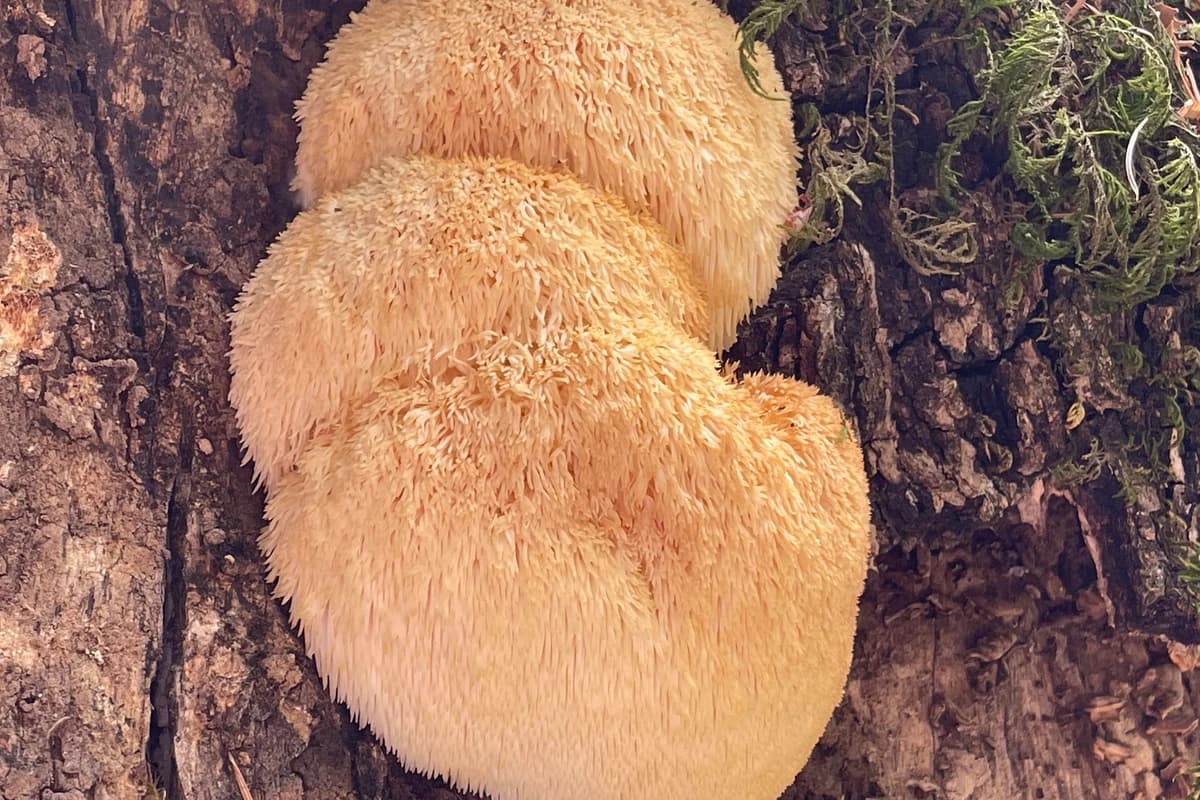
About This Plant
Lion's mane is a culinary fungus that forms white, cascading tooth-like fruiting bodies. Commercial production uses clean mycelial culture and spawn to colonize sterilized, supplemented lignocellulosic substrate in bags or bottles. Spawn run and fruiting need different temperature, light, humidity, and gas-exchange settings. Nutrition is incorporated into the solid substrate before sterilization rather than supplied through plant-style NPK fertigation.
How to Grow Lion's Mane
Learn how to grow Lion's Mane from seed to harvest in 35 days. Intermediate difficulty. Complete nutrient guide, pH/EC requirements, and growing conditions for soil & container.
Sources cited: 21.
Nutrient Requirements by Growth Stage
Lion's mane receives nutrition from a supplemented solid substrate prepared before inoculation, not from stage-specific NPK fertigation. Controlled studies show that substrate response depends on the carbon matrix, supplement, moisture, total NPK, C:N, pH, and EC; higher total N does not consistently improve yield…
Sign in to view nutrient requirements
A free account unlocks NPK targets for all four growth stages, micronutrient levels, a per-stage nutrient calculator, and the full nutrition guide. Signing up takes one click. Truleaf is a free, non-profit project, and every new account helps it grow. No spam, ever.
Growing Environments
Indoor controlled rooms, regulated greenhouses, plastic bags, and bottles all have direct production support. These environments allow sterile substrate preparation, controlled spawn-run heat, staged light, humidity, and gas exchange…
Temperature
Treat the schema's germination range as spawn-run guidance. Use about 25 C in darkness for mycelial colonization; complete studies also succeeded near 20-24 C. After full colonization, shift to cooler fruiting conditions. The strongest recent controlled fruiting trial used 18 plus or minus 2 C, supporting a 16-20 C operating band.
Humidity
Maintain 85-90% relative humidity during fruiting while preventing free water from collecting on the block or fruiting body. A bottle trial used 80 plus or minus 5% during colonization, so colonization humidity should not be copied into the fruiting field…
Light
Keep spawn run dark. During fruiting, provide about 1000 lux for 8 hours per day…
Airflow
No retained source measured canopy air speed, air changes per hour, or volumetric airflow, so the numeric airflow fields remain unset zero sentinels. Ventilate during fruiting to keep CO2 below the directly tested 1200 ppm ceiling without directing drying air at the crop…
Sign in to view environmental requirements
A free account unlocks exact temperature, humidity, light and airflow targets, including germination and growth ranges, DLI, photoperiod and PPFD, plus the full environment guide. Signing up takes one click. Truleaf is a free, non-profit project, and every new account helps it grow. No spam, ever.
Hydroponic System Compatibility
Use sterilized supplemented solid substrate in filtered bags or bottles for fruiting. DWC, NFT, ebb-and-flow, hydroponic drip, Kratky, and aeroponics were not tested in the retained full-cycle studies, so all remain off as conservative product defaults…
Growing Media
The plant growing-media enum cannot represent the verified mushroom substrates, so suitable remains an empty array. Use a sterilized lignocellulosic base such as hardwood sawdust, sunflower or cottonseed hulls, corn residues, straw, or contained wood, with a complete tested supplement formula…
Container Specs
Use containers chosen for sterilization compatibility and gas exchange, not drainage. Verified systems include 300 g glass bottles, 500 g polypropylene bags, 750 g plastic bottles, short polypropylene bags, long polyethylene bags, and bagged wood segments…
Training & Support
Training support is not applicable. Lion's mane forms fruiting bodies from colonized substrate and needs no trellis, cage, stakes, pruning, or canopy training…
Sign in to view system compatibility
A free account unlocks why each of the six systems fits or fails, plus growing media, container sizes, training methods, companion plants, and the full systems guide. Signing up takes one click. Truleaf is a free, non-profit project, and every new account helps it grow. No spam, ever.
Propagation
Propagate lion's mane through clean mycelial culture and spawn. Maintain a verified culture, transfer mycelial wedges or fragments to sterilized cereal grain or sawdust spawn, then inoculate cooled production substrate aseptically…
Harvesting
Use maturity cues rather than a fixed day count as the final harvest trigger. Check at least daily and harvest when teeth are 1/4-1/2 inch long and still white, before yellowing; cut or twist at the base, place directly into a rigid breathable container, and cool immediately…
Planting Calendar
Schedule fungal stages rather than plant sowing and transplanting. Verified protocols move through culture expansion, mother spawn, production-substrate inoculation, complete spawn run, fruiting induction, first flush, and optional later flushes…
Common Issues
Prevention starts with fresh spawn and substrate, sealed spawn before use, clean containers, correct substrate treatment, and enough space between colonizing bags for metabolic heat to escape. Side-fruit bags so water cannot pool and encourage disease…
Get the full science-backed guide
By signing up, you help keep Truleaf free and support the growth of our nonprofit project. Your account unlocks full details for every plant issue—including symptoms, causes, step-by-step solutions, and prevention—plus the month-by-month planting calendar, the complete guide, and all research sources. It only takes one click. No spam, ever.