About This Plant
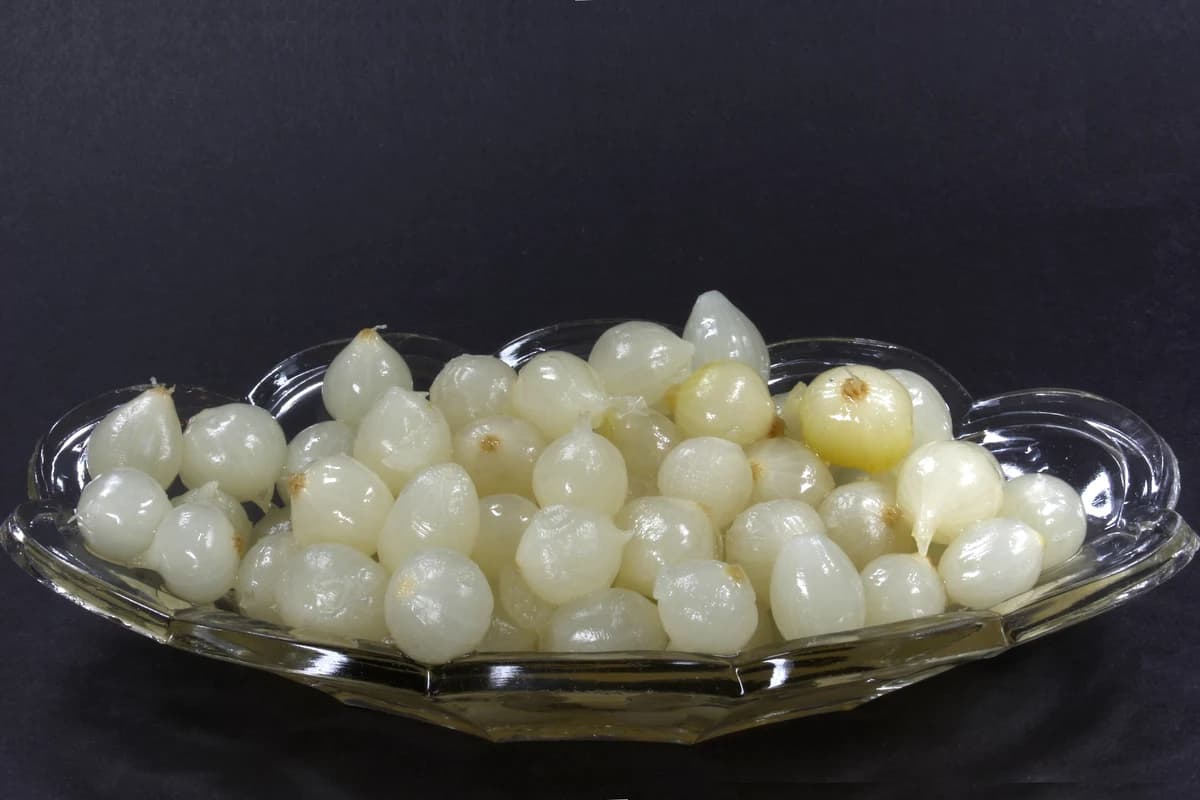
Pearl onions, also called button, baby, or silverskin onions, are a small-bulb form of Allium ampeloprasum — the same species as leek and elephant garlic, not the common bulb onion (A. cepa). Grown at very high density so each plant forms a single mild, sweet bulb only 1.5-3 cm across, they are prized for pickling, boiling whole, and creaming. They need a long, cool growing season, precise photoperiod management for bulbing, and careful nutrient balance, making them a rewarding intermediate crop for hydroponic and container growers.
How to Grow Pearl Onion
Learn how to grow Pearl Onion from seed to harvest in 100 days. Intermediate difficulty. Complete nutrient guide, pH/EC requirements, and growing conditions for hydroponics, soil & greenhouse.
Sources cited: 20.
Nutrient Requirements by Growth Stage
Pearl onions respond best to a modified-Hoagland style solution rather than a generic high-NPK feed. Keep nitrogen moderate — about 90 ppm at seedling, rising to ~125 ppm through leaf growth, then deliberately reduced to ~80 ppm once bulbing begins; excess late nitrogen delays maturity, thickens necks, and increases…
Sign in to view nutrient requirements
A free account unlocks NPK targets for all four growth stages, micronutrient levels, a per-stage nutrient calculator, and the full nutrition guide. Signing up takes one click. Truleaf is a free, non-profit project, and every new account helps it grow. No spam, ever.
Growing Environments
Outdoor: a classic cool-season allium, pearl onion grows best in full sun (6-8 h) and tolerates light frost, planted in early spring; increasing daylength through the season naturally triggers bulbing at temperate latitudes above about 35°N. Indoor: fully feasible with LED lighting set to a 14-16 hour photoperiod and…
Temperature
Pearl onion (*Allium ampeloprasum* var. *sectivum*) is a cool-season crop. Seeds germinate across roughly 7-30°C, but the most uniform, rapid emergence occurs at 15-25°C. Once established, vegetative growth is best at 13-24°C with an optimum near 18-20°C; sustained heat above 27°C during bulb swelling reduces bulb size and firmness. Cold is a distinct risk: well-grown plants with 7-10 leaves exposed to 6-15°C for an extended spell will bolt, aborting the bulb. In hydroponic systems hold the root-zone solution at 18-20°C to protect against Pythium and Fusarium while keeping ambient air at 15-24°C.
Humidity
Pearl onions prefer moderate humidity throughout the crop. Seedlings establish best around 60-70% relative humidity, while maturing plants do well at 50-65% — high enough to prevent leaf-tip desiccation but low enough to suppress the foliar fungal diseases alliums are prone to, notably Botrytis neck rot and downy…
Light
Bulbing in pearl onion is photoperiod-driven: as a long-day member of *Allium ampeloprasum*, it initiates bulbs only once daylength exceeds roughly 14 hours, and short photoperiods keep plants in leaf indefinitely. Provide 14-16 hours of light during the bulbing phase at about 300 µmol/m²/s PPFD, giving a Daily Light…
Airflow
Steady, gentle airflow is especially important for pearl onions because they are grown at tight spacing that traps humid air among the leaves and promotes Botrytis and downy mildew. General controlled-environment guidance of 0.3-1.0 m/s air movement keeps the canopy dry, strengthens the tubular leaves through…
Sign in to view environmental requirements
A free account unlocks exact temperature, humidity, light and airflow targets, including germination and growth ranges, DLI, photoperiod and PPFD, plus the full environment guide. Signing up takes one click. Truleaf is a free, non-profit project, and every new account helps it grow. No spam, ever.
Hydroponic System Compatibility
Pearl onions have been grown across all the major hydroponic methods, with the same principle that governs every allium bulb crop: keep the bulb crown above the solution to prevent rot. Media-based ebb-and-flow and drip systems are the most dependable because an aggregate bed gives the densely packed bulbs firm…
Growing Media
The universal requirement for pearl onion media is firm support for the developing bulb without submerging it. Perlite is the most versatile choice — inert, free-draining, and light enough for the shallow, densely spaced plugs this crop uses across DWC net pots, drip, and ebb-flow…
Container Specs
For soil-based container growing use at least 15 cm (6 in) of depth to hold the fibrous root system, which reaches roughly 15 cm below the bulb. Because pearl onions are deliberately grown crowded — around 2-3 cm apart — to force small bulbs, a 20 cm wide pot can carry a whole cluster of plants rather than a single…
Training & Support
Pearl onions need no staking, trellising, caging, or training of any kind. Each plant grows as a compact, upright clump of hollow cylindrical leaves 25-45 cm tall and is entirely self-supporting throughout the crop…
Sign in to view system compatibility
A free account unlocks why each of the six systems fits or fails, plus growing media, container sizes, training methods, companion plants, and the full systems guide. Signing up takes one click. Truleaf is a free, non-profit project, and every new account helps it grow. No spam, ever.
Propagation
Pearl onions are raised principally from seed, sown thickly (about 2-3 cm apart) and left unthinned so plant-to-plant competition keeps each bulb small — the defining cultural trick of this crop. Sow 6-12 mm deep into rockwool cubes or perlite plugs; seeds germinate in 7-14 days at 15-25°C, and seedlings are ready to…
Harvesting
Pearl onion is a destructive, single-bulb harvest with no regrowth. The reliable signal is natural top-fall — lift when 60-80% of the foliage has toppled on its own and the neck squeezes soft rather than firm…
Planting Calendar
Sow indoors (Jan-Mar): start pearl onion seed 8-12 weeks before the last frost so plants build leaf area before long days trigger bulbing. Transplant (Mar-May): set hardened seedlings out at 5-8 cm tall, spacing tight (2-3 cm) to keep bulbs small; the crop tolerates light frost…
Common Issues
Pearl onions share the full *Allium* disease and pest complex, and their tight, high-density planting makes humidity- and airflow-driven problems especially likely. Among fungal diseases, Botrytis neck rot (*B…
Get the full science-backed guide
By signing up, you help keep Truleaf free and support the growth of our nonprofit project. Your account unlocks full details for every plant issue—including symptoms, causes, step-by-step solutions, and prevention—plus the month-by-month planting calendar, the complete guide, and all research sources. It only takes one click. No spam, ever.