About This Plant
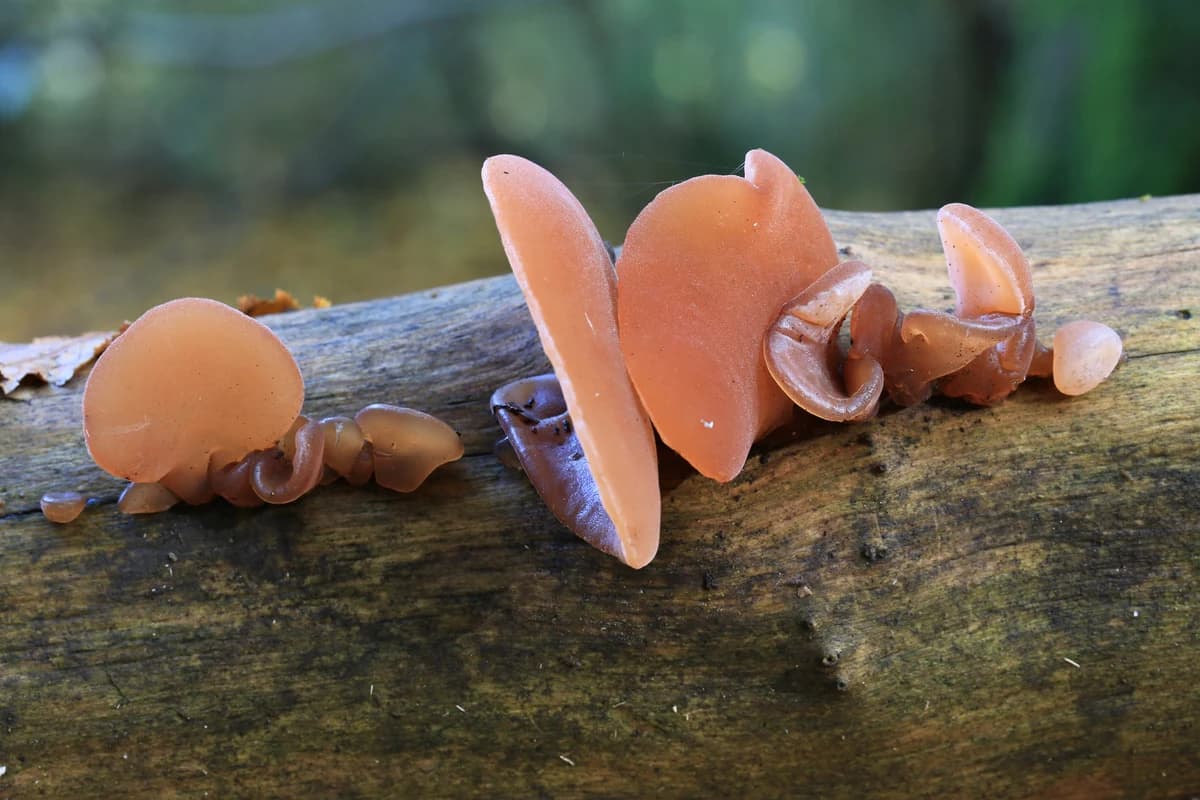
Wood ear (Auricularia auricula-judae) is a saprophytic jelly fungus cultivated on hydrated hardwood sawdust or logs rather than in hydroponic solution. It is prized for its gelatinous, ear-shaped brown fruiting bodies used widely in East Asian cuisine and traditional medicine. The fungus decomposes lignocellulose enzymatically, so cultivation centers on a sterilized, supplemented substrate colonized by mycelium, then fruited under high humidity, moderate warmth, diffuse light, and steady fresh-air exchange.
How to Grow Wood Ear
Learn how to grow Wood Ear from seed to harvest in 60 days. Intermediate difficulty. Complete nutrient guide, pH/EC requirements, and growing conditions for soil & container.
Sources cited: 10.
Nutrient Requirements by Growth Stage
As a saprophytic wood-decay fungus, wood ear derives all carbon and nitrogen from enzymatic breakdown of lignocellulose, not from mineral hydroponic feed. The standard substrate is hardwood sawdust (~78%) supplemented with wheat bran (~20%) as a nitrogen and vitamin source, plus about 1% each glucose, gypsum, and lime…
Sign in to view nutrient requirements
A free account unlocks NPK targets for all four growth stages, micronutrient levels, a per-stage nutrient calculator, and the full nutrition guide. Signing up takes one click. Truleaf is a free, non-profit project, and every new account helps it grow. No spam, ever.
Growing Environments
Wood ear adapts to indoor fruiting chambers, greenhouses, sheltered outdoor bag or stick yards, and traditional hardwood-log culture. Indoor and greenhouse systems give the tightest control over the high humidity and moderate temperatures the fruiting bodies need, while outdoor stick and log culture is lower-cost and…
Temperature
Wood ear is a medium-to-high-temperature wood-decay fungus. Mycelial colonization proceeds best at 22-28C, with the substrate cooled below 28C before inoculation to avoid heat injury and the incubation room held under 30C. Fruiting is cooler: primordia and ear expansion perform best at 15-25C, and commercial guidance keeps the fruiting environment at or below 25C, switching to morning and evening misting when temperatures climb higher. Sustained heat above 30C stalls colonization and favors competitor molds such as Trichoderma.
Humidity
High humidity is essential during fruiting. During the spawn run, keep the substrate at roughly 55-60% moisture and ambient humidity moderate to limit contamination…
Light
Wood ear fruiting bodies require diffuse light to develop normal dark-brown pigmentation, cupped shape, and thickness; mycelial colonization itself needs no light. A low daily light integral (around 0.5 mol) with 10-12 hours of indirect illumination is sufficient, since direct sun dries and bleaches the ears…
Airflow
Fresh-air exchange governs ear morphology. During colonization the fungus tolerates elevated CO2, but at fruiting, accumulating CO2 causes aborted, coral-like, or thin ears, so growing rooms need steady ventilation balanced against humidity loss…
Sign in to view environmental requirements
A free account unlocks exact temperature, humidity, light and airflow targets, including germination and growth ranges, DLI, photoperiod and PPFD, plus the full environment guide. Signing up takes one click. Truleaf is a free, non-profit project, and every new account helps it grow. No spam, ever.
Hydroponic System Compatibility
Hydroponic systems (DWC, NFT, ebb-and-flow, drip, Kratky, aeroponics) are all inapplicable to wood ear. The fungus is heterotrophic and must physically colonize and enzymatically digest a solid lignocellulosic matrix; it cannot absorb dissolved mineral nutrients from a recirculating solution…
Growing Media
The preferred medium is supplemented hardwood sawdust, the conventional and highest-quality substrate for wood-decay fungi thanks to its balanced C:N ratio. A typical mix is hardwood sawdust with about 20% wheat bran and roughly 1% each gypsum and lime, hydrated to 55-65% moisture at pH 6.0-7.0…
Container Specs
Wood ear is grown in heat-tolerant polyethylene or polypropylene filter bags rather than pots. Commercial sticks use roughly 17 x 55 cm bags filled with about 2 kg of substrate, sealed and sterilized at 100C for over 12 hours (or autoclaved), then cooled below 28C before inoculation…
Training & Support
Training, staking, and pruning play no role in wood ear cultivation. Ears emerge directly from the punched holes in the substrate bag or from the surface of inoculated hardwood logs…
Sign in to view system compatibility
A free account unlocks why each of the six systems fits or fails, plus growing media, container sizes, training methods, companion plants, and the full systems guide. Signing up takes one click. Truleaf is a free, non-profit project, and every new account helps it grow. No spam, ever.
Propagation
Wood ear is propagated from spawn, not seed. A pure culture is started from spores or tissue, expanded on sterilized grain to make grain spawn, then multiplied on hardwood sawdust to produce sawdust spawn…
Harvesting
Harvest ears at roughly 70-90% maturity, when the cap has expanded and thickened but before it releases spores or begins to soften. Cut or twist whole clusters from the substrate surface; for peak phenolic and antioxidant content, ears harvested around 8 days of fruiting age are optimal…
Planting Calendar
Under controlled indoor or shed conditions wood ear can be produced year-round, since temperature, humidity, and light are all managed artificially. In China's commercial sheds, colonized sticks are moved outdoors onto wires and cropped in the milder parts of the year, avoiding peaks above 25C…
Common Issues
The dominant threat is competitor molds, especially green mold (Trichoderma), which colonize inadequately pasteurized or overheated substrate and suppress fruiting. Other issues include aborted or coral-like ears from high CO2 and poor fresh-air exchange, pale thin ears from insufficient light, slow or failed spawn…
Get the full science-backed guide
By signing up, you help keep Truleaf free and support the growth of our nonprofit project. Your account unlocks full details for every plant issue—including symptoms, causes, step-by-step solutions, and prevention—plus the month-by-month planting calendar, the complete guide, and all research sources. It only takes one click. No spam, ever.