Black Pepper Plant Yellowing? Check for Foot Rot or Slow Decline
Use five clues to assess black pepper plant yellowing, compare rapid foot rot with slower root decline, and choose a safer diagnostic next step.
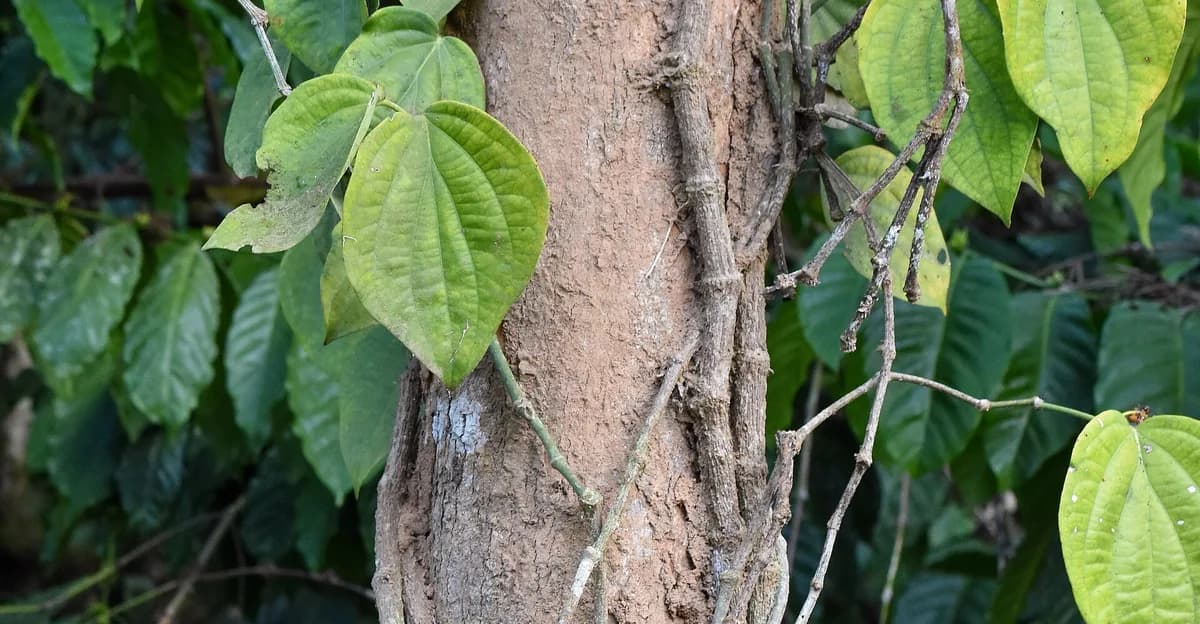
Key point: Yellow leaves on black pepper (Piper nigrum) are a warning sign, not a diagnosis. Check how quickly the vine changed, whether the root zone has been wet, and what you see at the stem collar and feeder roots. Fast collapse with collar decay raises concern for foot rot. Yellowing that develops over months points toward a slower root problem that may need laboratory testing.
Resist the urge to add fertilizer or choose a disease product from leaf color alone. Foot rot, nematode injury, Fusarium-associated disease, and other stresses can produce overlapping yellowing, wilt, stunting, or leaf loss. A treatment chosen from the wrong symptom can miss the damaged tissue and delay a proper diagnosis.
Start with five observations: speed, recent wetness, collar condition, root condition, and spread among nearby vines. Together, those clues give you a safer next step than the shade of yellow on a leaf.
Check these five clues before treating the plant
- Speed: Did the vine change within days or weeks, or has it weakened over months or recurring seasons?
- Wetness: Did heavy rain, waterlogging, or another period of poor drainage come before the decline?
- Collar: Is the tissue where the main stem meets the soil dark, decayed, or weakened? Are runner shoots blackened where they touch the ground?
- Roots: Are fine feeder roots missing or necrotic? Do larger roots carry visible galls?
- Spread: Is one vine affected, or are similar symptoms appearing on neighboring vines?
Inspect gently. ICAR-Indian Institute of Spices Research guidance warns that root injury increases risk, so uncover only enough of the collar and outer root zone to see the pattern. Do not repeatedly dig around a living vine.
Match the Pattern Before You Treat
| Pattern | What it raises concern for | Best next action |
|---|---|---|
| Fast wilt or collapse after wet conditions, with collar or stem decay | Phytophthora-type foot rot | Keep water from collecting around the vine, avoid moving suspect soil or cuttings, and seek a local plant diagnosis before disease-specific treatment. |
| Recurring yellowing, defoliation, dieback, and loss of fine roots | Slow decline involving root damage; nematodes may be part of the problem | Inspect for galls and necrosis, then ask whether a local laboratory can test roots and soil. |
| Gradual yellowing that begins on lower leaves, with stunting, vascular discoloration, or reduced roots | Fusarium-associated yellowing is possible | Photograph the foliage, cut-stem discoloration, and roots, then request a plant-disease diagnosis. |
| Yellow leaves without clear collar or root signs | Cause remains open | Review drainage and root health, then use soil or tissue evidence before correcting nutrition. |
| Root galls with stunting, yellowing, or easy wilting | Root-knot nematodes are possible | Do not identify the nematode species from galls alone. Submit an appropriate sample where testing is available. |
These patterns overlap, and a vine may face more than one source of root damage. ICAR guidance describes slow decline as a syndrome that can involve nematodes and other root pathogens. A multi-province Vietnam survey also found major regional differences in nematode communities and showed that yellowing could be high where nematode density was relatively low.
Use the table for triage, not for a final pathogen name. Region, planting material, weather, and site history all affect which diagnosis is plausible.
Fast decline after wet weather raises concern for foot rot
Phytophthora-type foot rot can affect leaves, runner shoots, the stem collar, feeder roots, and the main root system. Reports from India and Ethiopia describe water-soaked or dark leaf lesions, heavy leaf and spike shedding, blackened runners, collar decay, wilt, and vine death. The exact mix depends on which tissue is infected and how far disease has advanced.
Collar damage is the urgent pattern. When decay cuts across the main stem near soil level, the whole vine may wilt and collapse quickly. ICAR field guidance says collapse can occur within weeks in severe cases. Feeder-root infection can be less dramatic at first and show up later as yellowing, defoliation, and gradual loss of vigor.
Recent wetness strengthens the foot-rot concern because both reviewed sources place drainage and water movement at the center of prevention. It does not prove the diagnosis. Similar above-ground symptoms can follow other forms of root damage, and pathogen patterns differ by region.
If you find a wet, decayed collar, correct water accumulation without cutting into healthy roots. Keep runner shoots from lying on contaminated soil. Do not take propagation material from the affected vine or move its soil to another growing area. Dead, infected vines and roots may need removal, but disposal rules should be checked locally.
Slow decline points you toward the roots
A black pepper vine that yellows, drops leaves, dies back, and loses vigor over months or repeated seasons fits a slower decline pattern. The useful evidence is below ground: loss of fine feeder roots, root necrosis, or galls. Yellow leaves alone cannot tell you which organism, if any, is responsible.
Root-knot nematodes can produce visible galls along with yellowing, stunting, and easy wilting. Other plant-parasitic nematodes may be linked with root necrosis and canopy decline. Their distribution is regional. The Vietnam survey found several nematode groups across 432 paired root and soil samples, but it did not find Radopholus similis, a known black-pepper pest in other areas. That is why a species should not be assumed from symptoms or from advice written for another country.
The same survey found only a weak positive association between root Meloidogyne incognita density and yellow-leaf incidence. One surveyed district combined relatively low nematode density with high yellowing. Because this was an observational field survey, it could not establish that nematodes caused the yellowing. Finding yellow leaves does not prove nematode damage, and finding one nematode does not prove it caused every symptom.
Fusarium-associated yellowing can resemble a nutrient problem
Researchers in Sarawak isolated several Fusarium species from symptomatic black pepper vines and tested them in a glasshouse pathogenicity assay using wounded roots and repeated inoculation. The inoculated cuttings developed a gradual pattern that included lower-leaf yellowing, wider canopy yellowing, small or wrinkled leaves, stunting, vascular discoloration, and reduced root mass. Some plants resembled nitrogen-deficient vines.
That study supports Fusarium as one possible cause of gradual yellowing in its regional setting. Its symptom timing and severity should not be treated as field predictions because the assay deliberately intensified infection. It does not show that every yellow black pepper vine has Fusarium disease or that the same species dominate worldwide. Confirming it requires diagnostic work beyond a visual leaf check.
This is also why an untested fertilizer application is a poor diagnostic step. If root or vascular damage is limiting the plant, leaf color cannot tell you which nutrient to add. Use a soil or tissue test and local interpretation before changing the fertilizer program.
What to do now
1. Stop water from collecting around the vine
Restore drainage and correct obvious waterlogging. Keep irrigation from repeatedly wetting the collar, but do not turn a disease investigation into severe water stress. The cited sources support drainage as part of prevention; they do not provide one watering schedule for every soil, container, or climate.
2. Keep suspect material in place
Do not propagate from a declining vine or carry its soil and roots into a clean area. Clean planting material is part of foot-rot and nematode risk reduction because infected cuttings, roots, or attached soil can move a problem to another planting.
3. Remove obvious disease reservoirs carefully
ICAR and the Ethiopian field study place sanitation and removal of infected plant material within an integrated foot-rot program. If a vine is dead or a diagnosis supports removal, collect the affected roots as completely as practical while limiting soil movement and damage to neighboring plants. Confirm local disposal requirements before discarding diseased material.
4. Get the diagnosis before choosing a product
Pesticide registrations, permitted crops, application sites, rates, and resistance instructions differ by country and can change. The reviewed field trial was small, single-site, and combined cultural practices with fungicides, so its results do not establish a universal home-grower recipe. Ask a local extension service, crop adviser, or plant diagnostic laboratory what samples they need, then follow current local labels if treatment is recommended.
5. Record what changes
Photograph the whole vine, the lowest yellow leaves, the collar, and any exposed roots. Note when symptoms began, recent wet periods, which vines are affected, and whether the decline is spreading. These observations match the distinctions used in the pathology and survey sources and can make a local diagnosis more useful.
Build a Useful Diagnostic Record
Use a Truleaf grow log to keep the evidence together. Record the same points each time so you can see whether the vine is stabilizing or continuing to lose foliage and roots.
| Record | What to capture | Why it helps |
|---|---|---|
| Timeline | First yellow leaf, first wilt, and speed of canopy change | Separates rapid collapse from a gradual decline pattern |
| Water conditions | Heavy rain, standing water, drainage failure, or irrigation changes | Adds context for a possible Phytophthora-type problem |
| Collar | Healthy-looking tissue, darkening, soft decay, or stem weakening | Collar damage raises the urgency of the foot-rot branch |
| Fine roots | Present, sparse, discolored, or necrotic | Shows whether canopy symptoms are paired with feeder-root loss |
| Larger roots | Galls, necrotic areas, or no visible change | Helps decide whether nematode testing belongs in the next step |
| Distribution | One vine, a cluster, or symptoms moving through a planting | Gives the diagnostic service site-level context |
Ask the diagnostic service which roots, soil, or diseased tissue it needs before taking the sample. The Vietnam nematode survey examined paired root and soil samples, while the Sarawak Fusarium study isolated fungi from diseased plant tissue and confirmed identity in the laboratory. Different diagnostic questions require different evidence.
For crop care outside this diagnostic problem, see our black pepper growing guide and black pepper plant profile.
Frequently asked questions
Why are my black pepper leaves turning yellow?
Yellowing can follow damage from foot rot, Fusarium-associated disease, nematodes, or another root or growing-condition problem. Leaf color does not identify the cause. Compare the speed of decline, recent wetness, collar condition, feeder roots, and any root galls before choosing a treatment.
How can I tell foot rot from slow decline?
Fast wilt or collapse during wet conditions, especially with a dark or decayed collar, blackened runners, leaf lesions, and heavy shedding, raises concern for foot rot. Yellowing and loss of vigor that develop over months or return across seasons fit slow decline better and call for careful root inspection and possible nematode or disease testing.
Do root galls prove nematodes are causing the yellow leaves?
Galls make root-knot nematodes a strong possibility, but they do not prove that nematodes caused every canopy symptom or identify the species. Nematode communities vary by region, and the Vietnam survey found that yellowing did not track nematode density closely enough for a leaf-only diagnosis.
Should I fertilize a yellow black pepper plant?
Do not choose a fertilizer from yellow leaves alone. Fusarium-associated yellowing can resemble nitrogen deficiency, while several kinds of root damage can reduce the plant's ability to support its canopy. Use soil or tissue evidence and local interpretation before changing the nutrient program.
Can I treat black pepper foot rot with a fungicide?
A correctly diagnosed case may have locally authorized treatment options, but this article cannot give a worldwide product or rate. The field evidence and extension guidance reviewed here come from specific countries, and pesticide labels differ across jurisdictions. Confirm the diagnosis and follow current local guidance and labels.
For your first inspection, write down when the decline began, check whether water is collecting at the vine, and look gently at the collar and outer roots. Those observations will tell you whether the next call should focus on rapid foot rot, slower root decline, or a different stress.