Grow Lemon Balm: 8 Varieties + 3 Must-Know Harvest Tips
Complete guide to growing lemon balm indoors, outdoors, and hydroponically. Covers 8 varieties, propagation methods, harvest timing, and essential oil content.
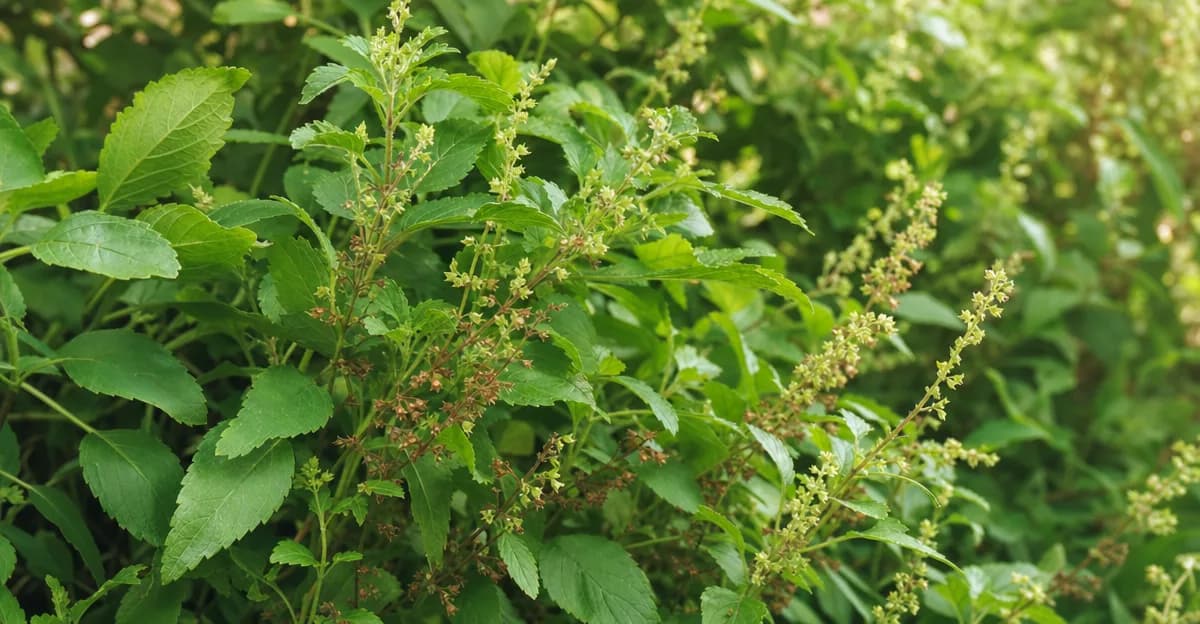
Key point: Lemon balm (Melissa officinalis) is one of the easiest and most rewarding herbs you can grow — indoors, outdoors, or hydroponically. It thrives in almost any light condition, resists most pests naturally, and produces leaves with antioxidant activity up to 10 times stronger than vitamins B and C. See the full lemon balm growing profile for detailed nutrient schedules and environment data. This guide covers everything from seed starting to hydroponic nutrient ratios, backed by peer-reviewed research.
What is lemon balm?
Lemon balm is a perennial herb in the mint family (Lamiaceae) native to southern Europe and northern Africa. Its botanical name, Melissa officinalis, comes from the Greek word melissa meaning "honeybee" — a nod to its white flowers that have attracted pollinators for centuries. The species name officinalis indicates its long history in herbal medicine.
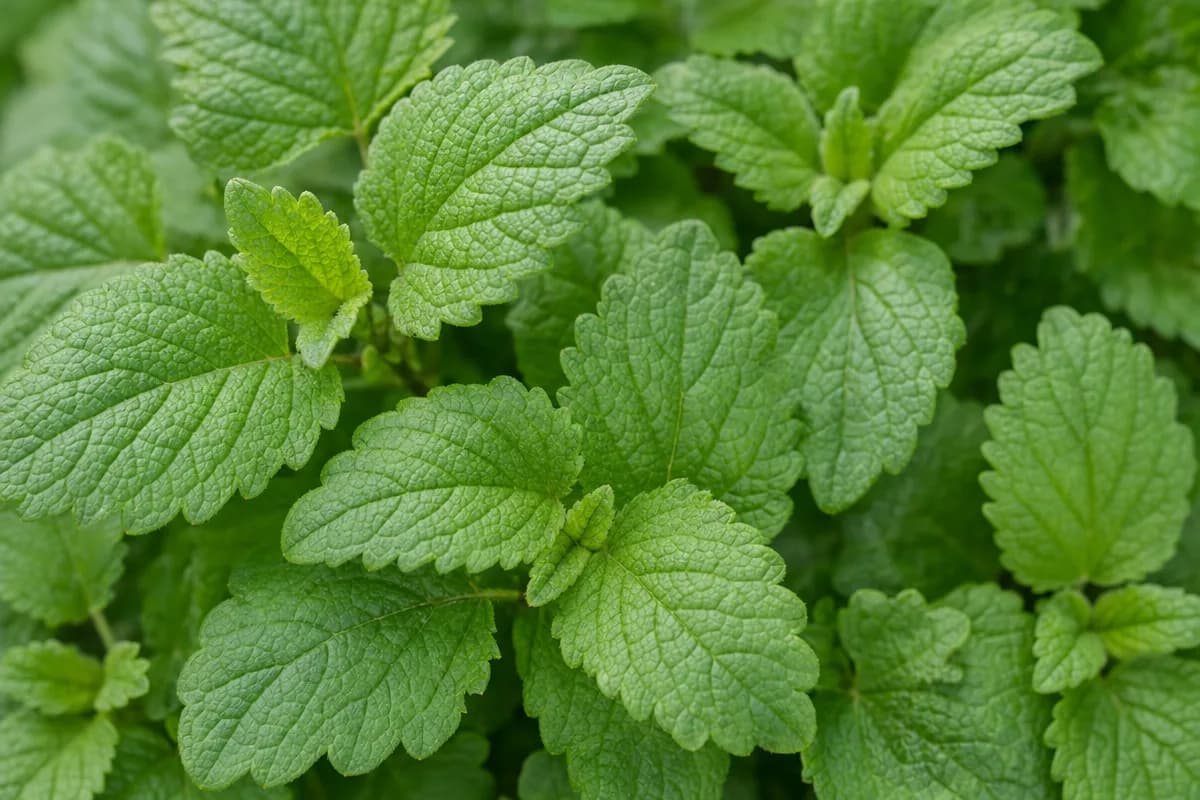
The plant grows 60–90 cm (2–3 ft) tall with branching stems and bright green, crinkled, oval leaves that release a strong lemon scent when crushed. That scent comes from its essential oil, which is dominated by two citral isomers — geranial (6–51% of total oil) and neral (4–35%) — along with citronellal (0.4–20%), beta-caryophyllene (1–29%), and caryophyllene oxide (1–44%). The wide ranges reflect enormous variation between genotypes and growing conditions.
Beyond fragrance, lemon balm has genuine pharmacological substance. A comprehensive review in the Journal of Evidence-Based Complementary & Alternative Medicine reported that its antioxidant activity can reach up to 10 times stronger than vitamins B and C, driven primarily by rosmarinic acid and other polyphenolic compounds that make up approximately 11.8% of dried leaf weight. Research has documented anxiolytic effects at 75–150 mg/kg of hydro-alcoholic extract, antimicrobial activity at 10–15 mg/mL against E. coli, Listeria monocytogenes, S. aureus, and S. typhimurium, and neuroprotective properties. A 2020 randomized, double-blind, placebo-controlled trial found that 500 mg/day of Melissa officinalis extract containing rosmarinic acid was safe and well-tolerated in patients with mild Alzheimer's dementia over 24 weeks.
Lemon balm varieties worth growing
Not all lemon balm is identical. Here are the varieties most relevant for indoor and hydroponic growers:
| Variety | Height | Key characteristics | Best for |
|---|---|---|---|
| Common (M. officinalis) | 60–90 cm | Standard lemon scent, vigorous, reliable oil yield | General purpose, proven in hydroponic research |
| 'Compacta' (Dwarf) | 20–30 cm | Dense mound habit, sterile — produces no seeds or flowers | Containers, space-limited hydroponic systems |
| 'Aurea' (Golden) | 45–60 cm | Gold-splashed variegated foliage, subtler scent | Decorative, partial shade |
| 'Lime' | 30–45 cm | Lime-citrus aroma instead of lemon, sweeter flavor | Culinary use, teas |
| 'Mandarina' | 40–60 cm | Mandarin-orange scent, unique flavor profile | Specialty culinary |
| 'All Gold' | 45–60 cm | Entirely golden-yellow leaves, best color in partial shade | Ornamental |
| 'Quedlinburger' | 60–75 cm | Higher essential oil content than common type | Maximum essential oil production |
| 'Lemona' | Standard | Lowest infection rate for Septoria leaf spot among commercial cultivars | Disease-prone environments |
For hydroponic systems, common lemon balm is the best-documented choice — virtually all research studies use it. 'Compacta' is excellent for Kratky jars and small DWC systems because it stays compact and won't bolt (it's sterile). If your goal is maximum essential oil, consider 'Quedlinburger'.
Growing lemon balm from seed
Seed starting basics
Lemon balm seeds are photoblastic — they require light to germinate. This is the single most important thing to know: do not bury them. Surface-sow and press gently into the growing medium.
Germination parameters:
| Parameter | Value |
|---|---|
| Sow depth | Surface only — press into medium, do not cover |
| Temperature | 18–21 C (65–70 F) optimal for home growers |
| Base temperature | 7.2 C (45 F) — no germination below this |
| Optimal temperature | 28.9 C (84 F) for fastest germination |
| Time to germination | 7–14 days (up to 21 in cooler conditions) |
| Light | Required — keep under grow lights or in bright window |
Cold stratification for better germination
While not strictly required, cold stratification significantly improves germination rate and speed. Place seeds in a damp paper towel inside a sealed plastic bag and refrigerate at 1–4 C (35–40 F) for 7–14 days before sowing. The University of Wisconsin-Madison Extension specifically recommends this step.
Step-by-step seed starting
- Fill seed trays or small pots with moist seed-starting mix
- Scatter seeds on the surface — 2–3 seeds per cell
- Press gently with your finger or a flat tool to ensure seed-to-soil contact
- Do not cover — seeds need light
- Mist with a spray bottle to keep the surface consistently moist (not soggy)
- Place under grow lights (14–16 hours/day) or on a bright windowsill
- Maintain 18–21 C until germination
- Thin to one seedling per cell once the first true leaves appear
Start seeds indoors 6–8 weeks before your last frost date for outdoor transplanting, or any time for year-round indoor growing.
Propagation alternatives
Seeds aren't your only option — lemon balm propagates easily by division and stem layering:
- Division (easiest method): In late summer or early fall, dig up an established plant and separate the root clump into sections with 3–4 buds each. Replant immediately.
- Stem layering: Bend a 15–30 cm (6–12 in) stem to the ground and pin it against moist soil. Roots form within 1–2 months, then cut the new plant free.
- Stem cuttings: Take 10–15 cm cuttings from non-flowering stems, strip lower leaves, and root in water or moist perlite.
Planting and growing conditions
Light
Lemon balm is flexible — it grows in full sun to partial shade. However, light conditions affect plant character:
- Full sun (6+ hours direct): Produces the most compact growth and highest essential oil concentration
- Partial shade (3–6 hours): Produces larger, more succulent leaves with milder flavor — preferable for fresh culinary use
For indoor growing under LEDs, research suggests a PPFD of 125–200 umol/m2/s with a 14–16 hour photoperiod (yielding a DLI of approximately 6.5–11.5 mol/m2/day). A 2021 study in Botanical Studies found that a 70:30 red-to-blue LED combination at 300 umol/m2/s produced the highest shoot biomass and antioxidant activity — with DPPH radical scavenging reaching 80–82% compared to 25–34% under greenhouse conditions.
Soil and pH
| Parameter | Outdoor | Hydroponic |
|---|---|---|
| pH | 6.0–7.5 | 5.5–6.5 |
| Soil type | Rich, well-drained, humus-filled | N/A |
| Medium | Garden soil or potting mix | Clay pebbles, perlite, or no medium (DWC/Kratky) |
Watering
Keep soil consistently moist but never waterlogged. Lemon balm is susceptible to root rot in soggy conditions. Mulching conserves moisture outdoors. For container plants, water when the top 2–3 cm of soil feels dry.
Temperature and hardiness
Lemon balm is reliably perennial in USDA Zones 4–9. It tolerates winter cold down to approximately -30 C (-20 F) with mulch protection and handles heat up to Zone 9 with adequate moisture. Plants die back to the ground in winter in colder zones and regrow from the roots each spring.
| Parameter | Range |
|---|---|
| Growing season temperature | 15–35 C (59–95 F) |
| Optimal growth | 20–25 C (68–77 F) |
| Winter hardiness | USDA Zones 4–9 (perennial) |
| Cold limit | Approximately -30 C (-20 F) with mulch |
Spacing and containers
- Outdoor spacing: 45–60 cm (18–24 in) between plants
- Container size: Minimum 20 cm (8 in) diameter pot per plant
- Important: Lemon balm spreads aggressively via self-seeding and runners. Growing in containers is strongly recommended unless you want ground cover. 'Compacta' is the only sterile variety that won't self-seed.
Growing lemon balm indoors
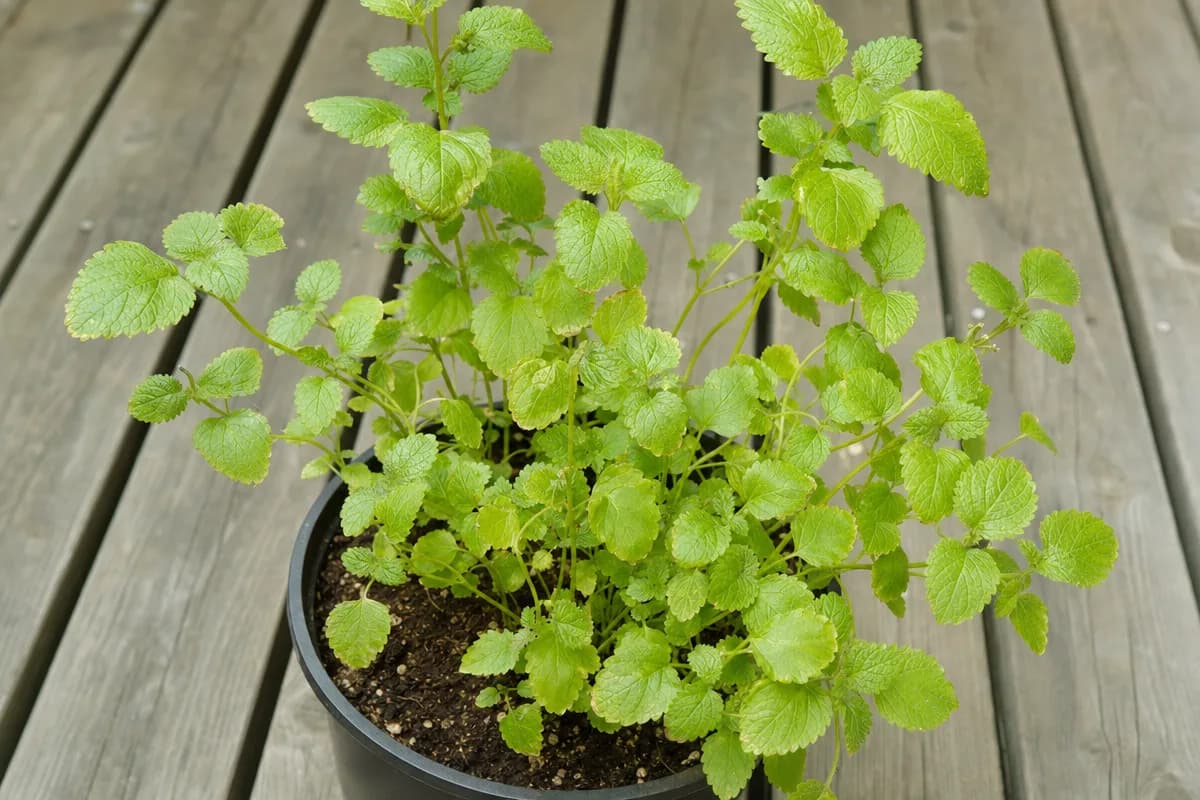
Indoor lemon balm grows year-round with minimal equipment. The key requirements are adequate light, consistent moisture, and container depth of at least 15–20 cm for the fibrous root system.
Container setup
- Pot: 20–30 cm diameter with drainage holes
- Medium: Standard potting mix (outdoor-style) or 100% perlite/clay pebbles (hydroponic)
- Location: Brightest window available, or under LED grow lights
- Temperature: Normal room temperature (18–24 C) is ideal
Hydroponic lemon balm
This is where Truleaf's data-driven approach provides the biggest advantage. Lemon balm grows exceptionally well in hydroponic systems — a 2024 study in BMC Plant Biology produced plants reaching 72.2 cm height and 105.57 g dry biomass per plant under optimized conditions.
System options:
Any hydroponic system works. A 2021 study comparing artificial soil beds, perlite beds, and aeroponic systems found no significant yield difference between them — all three produced comparable biomass. The choice comes down to complexity and budget:
- Kratky method (passive, no pump): Best for beginners. Fill a mason jar or container with nutrient solution, suspend a net pot with the plant at the top. As roots grow into the solution, the air gap provides oxygen. Zero electricity needed.
- DWC (Deep Water Culture): Add an air pump and air stone to a Kratky setup for faster growth and better oxygenation. Ideal for 1–6 plants.
- NFT (Nutrient Film Technique): Best for scaling to multiple plants. A thin film of nutrient solution flows continuously across a flat channel.
Target parameters:
| Parameter | Value |
|---|---|
| pH | 5.5–6.5 |
| EC | 1.0–1.6 mS/cm (seedlings: 0.6–0.8) |
| Water temperature | 18–24 C (65–75 F) |
| Nitrogen form | Pure nitrate (0:100 NH4+:NO3-) — critical |
| Total nitrogen | 15 mM |
The nitrogen form discovery
This is the single most important hydroponic finding for lemon balm. Safaei et al. (2024) tested five ammonium-to-nitrate ratios and found that pure nitrate nutrition (0:100 NH4+:NO3-) produced the highest dry biomass (105.57 g per plant), tallest plants (72.20 cm), most lateral branches (25.56), and best phytochemical content (60.40 mg GAE/g DW total phenolics). At the opposite extreme, pure ammonium (100:0) killed plants in early growth stages due to ammonium toxicity.
There is one nuance: while 0:100 maximizes growth and total phenolics, the 75:25 NH4+:NO3- ratio produced dramatically higher geranial content in the essential oil (47.30% vs. 27.86% at 0:100). If you're growing specifically for essential oil quality rather than maximum biomass, a moderate ammonium inclusion could be worth experimenting with — but start with pure nitrate.
Macroelement priority
A study on macroelement omission in hydroponic lemon balm established the limiting order for growth: N > K = Ca = P > S = Mg. Nitrogen is by far the most critical element. Interestingly, magnesium omission actually increased essential oil content, chlorophyll, and carotenoid levels — so don't over-supplement magnesium if essential oil production is your goal.
For essential oil specifically, the limiting order shifts to N > Ca > S = K = P > Mg. Calcium and sulfur omission decreased citral content (the primary aromatic compound), making these elements important for flavor quality.
Phytochemical trade-offs in hydroponics
Growing lemon balm hydroponically affects its phytochemical profile in ways growers should understand. A 2021 study comparing soil and soilless systems found that hydroponic methods increased caffeic acid and methyl rosmarinate concentrations by 6–8 times. However, total phenolic acid content and radical scavenging capacity were lower in hydroponic systems, driven by decreased rosmarinic acid and lithospermic acid A — the dominant antioxidant compounds. This means hydroponics selectively enriches some beneficial compounds while reducing others.
Lemon balm plant care
Fertilizing
- Outdoor: Apply a balanced all-purpose fertilizer in spring and after each major harvest. Avoid over-fertilizing — excessive nitrogen produces leggy growth with poor flavor.
- Hydroponic: Maintain EC at 1.0–1.6 mS/cm with a complete hydroponic nutrient solution. Use nitrate-based nitrogen sources exclusively.
Pruning and controlling spread
Lemon balm's biggest challenge isn't growing it — it's containing it. The plant spreads through both self-seeding and underground runners.
Control strategies:
- Deadhead regularly: Remove flower spikes before seeds form to prevent self-seeding
- Container planting: The most reliable method — even outdoors, plant in containers sunk into the ground
- Choose 'Compacta': The only sterile cultivar that cannot self-seed
- Regular harvesting: Frequent cutting keeps plants compact and prevents flowering
- Cut back hard after flowering: Stimulates a fresh flush of leaves
Pest and disease management
Lemon balm is naturally resistant to most pests due to its high essential oil content. Utah State University Extension notes that it is "generally not bothered by insects or diseases because of its high natural oils concentration".
Common pests (mainly indoor):
| Pest | Signs | Management |
|---|---|---|
| Aphids | Clusters on new growth, sticky residue | Blast with water, neem oil, or release ladybugs |
| Spider mites | Fine webbing, stippled leaves | Increase humidity, neem oil spray |
| Whiteflies | Small white insects flying when disturbed | Yellow sticky traps, neem oil |
| Fungus gnats | Small flies near soil surface | Let soil dry between watering, Bti drench, sticky traps |
Diseases:
- Septoria leaf spot (Septoria melissae): The most significant disease of lemon balm. It produces dark brown, angular necrotic spots with purplish-brown margins on leaves. The pathogen spreads primarily through contaminated plant debris and water-splash transmission — not true soil-borne. In hydroponic systems, the absence of soil splash greatly reduces this infection pathway, though the pathogen can still arrive via infected seed or cuttings. Use clean starting material. If you're in a disease-prone environment, the cultivar 'Lemona' shows the lowest infection rates among commercial varieties.
- Powdery mildew: White powdery coating on leaves, especially in humid conditions with poor air circulation. Improve spacing and airflow.
- Root rot (Pythium/Phytophthora): The primary risk in hydroponic systems. Keep water temperature below 24 C, maintain proper dissolved oxygen levels, and use sterile growing media.
Overwintering and perennial care
In Zones 4–9, lemon balm dies back to the ground in fall and returns from the roots in spring. After the first hard frost:
- Cut back dead stems to ground level
- Mulch with 5–8 cm (2–3 in) of straw or shredded leaves in Zones 4–5
- For containers: Move to an unheated garage or cold frame (plants need some cold to reset)
Plants decline after 3–4 seasons. When vigor drops, divide the root clump and replant in fresh soil or a new hydroponic system.
Harvesting lemon balm
When to harvest
Harvest before flowering for peak essential oil content. Once lemon balm flowers, the phytochemical profile shifts — citral (the primary lemon-scented compound) decreases while citronellal increases. Singh et al. (2014) found that the optimal harvest time for maximum essential oil yield was at 160 days after planting, yielding 7.70 kg/ha of fresh oil. Yields declined at 180 days.
For home growers, the practical rule is simple: harvest when flower buds first appear but before they open. You can begin light harvesting (individual leaves) any time after the plant is well-established, but for maximum oil content, time your main harvests to the pre-flowering window.
Harvest timing within the day: Essential oil concentration peaks in late afternoon. If you're harvesting specifically for essential oil or maximum flavor, cut in the late afternoon rather than morning.
How to harvest without killing the plant
- Never remove more than one-third of the plant at once
- Cut stems above a leaf node — this encourages branching and bushier regrowth
- On established plants: Take 2–3 full cuttings per growing season
- Use sharp scissors or pruning shears — tearing damages stems and increases disease risk
- Don't bruise leaves during harvest, as this releases and wastes essential oils
Drying and storing lemon balm
Lemon balm loses flavor quickly if not dried properly:
- Bundle 4–6 stems together with twine
- Hang upside-down in a dark, dry, well-ventilated area (not in direct sunlight — UV degrades essential oils)
- Dry for 5–7 days until leaves are crispy and crumble easily
- Strip leaves from stems and store in airtight glass jars away from light and heat
- Shelf life: 6–12 months when stored properly
Alternatively, use a food dehydrator at 35 C (95 F) for 4–8 hours for faster, more consistent results.
Freezing works well for preserving fresh flavor: chop leaves and freeze in ice cube trays with water or olive oil.
Uses for lemon balm
Culinary
- Tea: The classic use — steep 1 tablespoon of fresh leaves (or 1 teaspoon dried) in hot water for 5–10 minutes. Known for its calming effect.
- Salads: Add fresh leaves for a bright citrus note
- Desserts: Pairs with berries, stone fruit, and lemon desserts
- Pesto: Substitute or blend with basil for a citrus twist
- Infused water: Muddle leaves into cold water with cucumber or fruit
- Cooking: Add to fish, poultry, and vegetable dishes in the last few minutes (heat diminishes flavor)
Research-backed health applications
Lemon balm has been studied extensively. Total polyphenolic compounds constitute approximately 11.8% of dried leaf weight. Key findings:
- Antioxidant: Activity up to 10 times stronger than vitamins B and C. n-Butanol extracts achieve maximum DPPH radical scavenging at 0.4 mg/mL, with lipid peroxyl radical inhibition reaching 93.2% at 5 mg/mL.
- Anxiolytic: Reduces anxiety symptoms at 75–150 mg/kg of hydro-alcoholic extract in preclinical studies.
- Antimicrobial: Active at 10–15 mg/mL against common pathogens including E. coli, L. monocytogenes, S. aureus, and S. typhimurium.
- Neuroprotective: A 2020 randomized, double-blind, placebo-controlled trial showed 500 mg/day of rosmarinic acid-containing extract was safe and well-tolerated in mild Alzheimer's patients over 24 weeks.
- Rosmarinic acid content: Ranges from 3,516 to 86,638 ug/g dry weight — an enormous range reflecting genetic and environmental variability.
Note: These are research findings, not medical claims. Consult a healthcare provider before using lemon balm medicinally.
Companion planting benefits
Lemon balm's citronellal content repels aphids, mosquitoes, ants, and flies, making it a useful companion plant:
- Vegetables: Tomatoes, peppers, squash, brassicas — lemon balm repels common pests and attracts pollinators
- Fruit trees: Improves pollination rates by attracting bees
- Other herbs: Grows well alongside basil, oregano, thyme, sage, and rosemary
- Flowers: Plant near marigolds, nasturtiums, and borage for a comprehensive pest-management border
The main caveat: contain it. In raised beds, grow lemon balm in a buried pot to prevent it from crowding out companion plants.
Frequently asked questions
Does lemon balm come back every year? Yes. Lemon balm is a perennial in USDA Zones 4–9. It dies back in winter and regrows from the roots each spring. Plants typically remain vigorous for 3–4 years before needing division.
Is lemon balm invasive? It spreads aggressively through self-seeding and underground runners but is not classified as invasive in most regions. Grow in containers, deadhead flowers, or choose the sterile 'Compacta' variety to prevent spreading.
Can I grow lemon balm in water only? Yes — both Kratky (passive hydroponic) and DWC systems work excellently. Use a complete hydroponic nutrient solution at pH 5.5–6.5 and EC 1.0–1.6. Pure nitrate nitrogen produces the best results.
How much lemon balm should I plant? For a household, 2–3 plants provide more than enough for fresh use, tea, and drying. One plant in a hydroponic system produces 105+ g of dry biomass under optimized conditions.
What is the best light for indoor lemon balm? A 70:30 red-to-blue LED at 125–200 umol/m2/s for 14–16 hours daily produces the best combination of growth and essential oil quality. A standard daylight or cool-white LED works well for casual growing.
Why is my lemon balm leggy and flavorless? The two most common causes: too much nitrogen (produces rapid, flavorless growth) and insufficient light (causes stretching). Reduce fertilizer, move to brighter light, and harvest frequently to encourage compact, bushy growth.
Final takeaway
Lemon balm is one of the most forgiving herbs you can grow — and one of the most scientifically interesting. It thrives in containers, garden beds, and hydroponic systems with equal ease. The key insights: use pure nitrate nutrition in hydroponics, harvest before flowering for peak essential oil, and don't over-fertilize. Start with a Kratky jar or a pot on your windowsill, and you'll be harvesting lemon-scented leaves within weeks.
Explore the full plant profile: Lemon balm on Truleaf.org — nutrient schedules, system compatibility, growing calendar, and more.