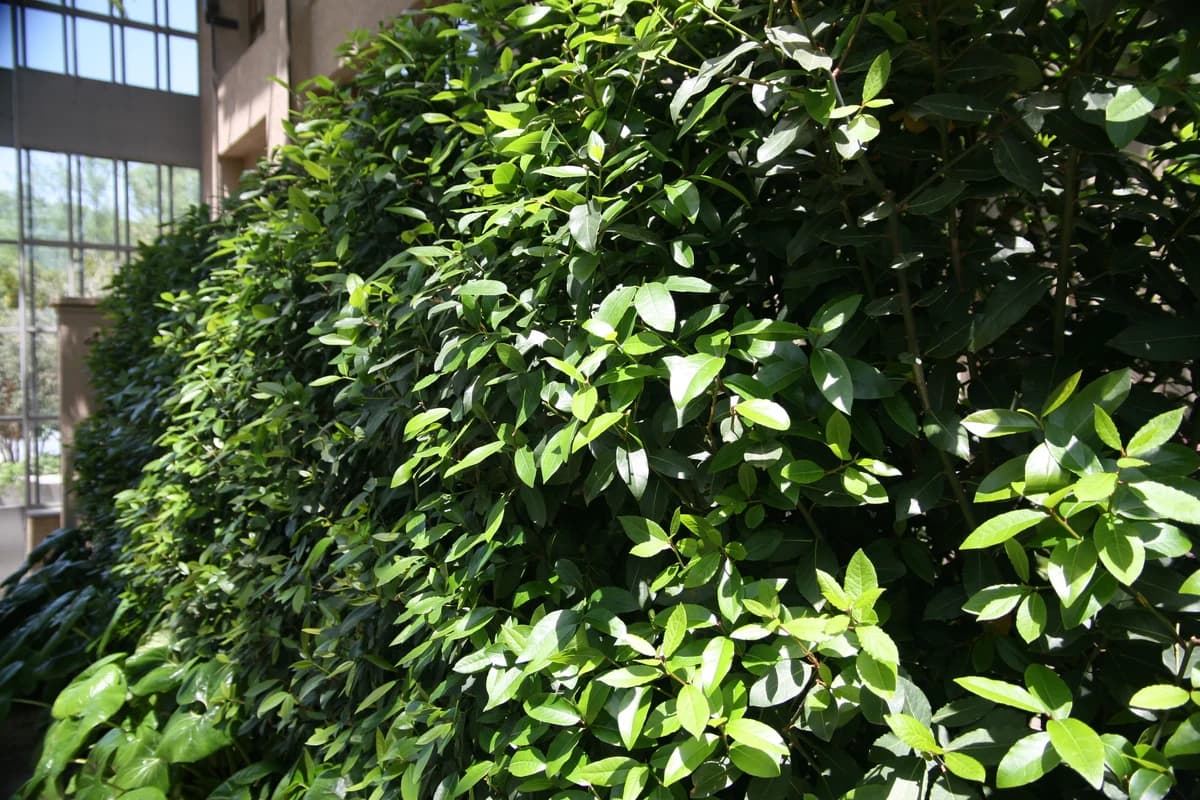
About This Plant
Bay laurel is a slow-growing Mediterranean evergreen shrub or small tree grown for aromatic leaves used fresh or dried in cooking. It is best treated as a woody container herb in cold climates, with bright light, excellent drainage, conservative feeding, and patient pruning rather than rapid leafy-hydroponic crop management.
How to Grow Bay Laurel
Learn how to grow Bay Laurel from seed to harvest in 365 days. Intermediate difficulty. Complete nutrient guide, pH/EC requirements, and growing conditions for soil & container.
Sources cited: 14.
Nutrient Requirements by Growth Stage
Stage-specific hydroponic NPK ppm for Laurus nobilis could not be verified. A seedling trial tested 0, 500, and 1000 ppm of a 20-20-20 NPK product in sandy soil and found growth was strongly constrained by water availability, with the best interaction at weekly high irrigation plus 1000 ppm product…
Sign in to view nutrient requirements
A free account unlocks NPK targets for all four growth stages, micronutrient levels, a per-stage nutrient calculator, and the full nutrition guide. Signing up takes one click. Truleaf is a free, non-profit project, and every new account helps it grow. No spam, ever.
Growing Environments
Bay laurel is suitable outdoors in mild climates, in greenhouses or protected structures, indoors as a bright houseplant, and especially in containers. NC State describes it as a Mediterranean evergreen grown as a container patio or houseplant in colder regions…
Temperature
Bay laurel is a Mediterranean evergreen that grows best in mild conditions rather than hot leafy-crop rooms. Review data place good growth around 17-25C, with tolerance from about 8-30C, while young growth can be damaged near freezing. Cornell propagation work used 24C greenhouse benches after chilling to break dormancy and push new shoots. Keep active container plants near 18-24C, allow cooler 2-16C winter dormancy if light is limited, and protect plants before hard frost.
Humidity
No complete Laurus nobilis source gave a precise relative-humidity target, so humidity should be managed indirectly through Mediterranean container culture. Bay prefers regular moisture but strongly drained media; overly wet roots invite rot…
Light
Bay laurel tolerates full sun to partial shade. NC State lists full sun or partial shade, Wisconsin notes container plants thrive in full sun in cooler Midwestern conditions but may benefit from light shade in warmer climates, and UC guidance supports full sun with light afternoon shade outdoors…
Airflow
Bay laurel has no published airflow target, but gentle airflow is still useful in containers and indoor overwintering. Sources consistently emphasize well-drained media, avoiding overwatering, and root-rot prevention…
Sign in to view environmental requirements
A free account unlocks exact temperature, humidity, light and airflow targets, including germination and growth ranges, DLI, photoperiod and PPFD, plus the full environment guide. Signing up takes one click. Truleaf is a free, non-profit project, and every new account helps it grow. No spam, ever.
Hydroponic System Compatibility
The prior hydroponic compatibility values were not supported by Laurus-specific sources. Evidence supports containers, greenhouse propagation, and drained substrate management, not DWC, NFT, Kratky, or aeroponic production…
Growing Media
Use media that drain quickly but do not become bone dry during active growth. Illinois recommends a prepared potting mix in a pot with drainage holes, well-drained but moisture-retentive enough for growth…
Container Specs
Bay is container-friendly but woody and long-lived, so undersized pots create water stress and unstable canopies. Illinois recommends containers with drainage holes and prepared potting mix, while Wisconsin notes that container-grown plants should be repotted or root-pruned to balance root and top growth, at least…
Training & Support
Bay does not need trellising, but pruning is a normal management practice. Wisconsin notes that bay can be shaped as a single-trunked tree, multi-trunked shrub, topiary, or standard, and recommends annual pruning after establishment…
Sign in to view system compatibility
A free account unlocks why each of the six systems fits or fails, plus growing media, container sizes, training methods, companion plants, and the full systems guide. Signing up takes one click. Truleaf is a free, non-profit project, and every new account helps it grow. No spam, ever.
Propagation
Bay propagation is slow. Takos found that removing the pericarp and using moist stratification broke seed dormancy, with 50 days warm-moist or 60 days cold-moist treatment producing high laboratory germination, while fall sowing gave only 20-41% germination depending on pericarp removal…
Harvesting
Bay is harvested as a perennial leaf crop, not a 90-day annual herb. Illinois Extension says leaves can be harvested through the season as needed, with larger older leaves giving the strongest flavor and dried leaves stored in sealed containers…
Planting Calendar
Calendar timing should follow container movement and propagation biology. Fresh seed is best collected and handled promptly in autumn or winter, then treated for dormancy before sowing…
Common Issues
The supported Bay Laurel issue list is root rot or Phytophthora, scale insects, laurel psyllid, water-stress leaf yellowing, and regional laurel wilt risk. NC State lists scale and psyllids as occasional pests and susceptibility to laurel wilt, Phytophthora, and root rot…
Get the full science-backed guide
By signing up, you help keep Truleaf free and support the growth of our nonprofit project. Your account unlocks full details for every plant issue—including symptoms, causes, step-by-step solutions, and prevention—plus the month-by-month planting calendar, the complete guide, and all research sources. It only takes one click. No spam, ever.