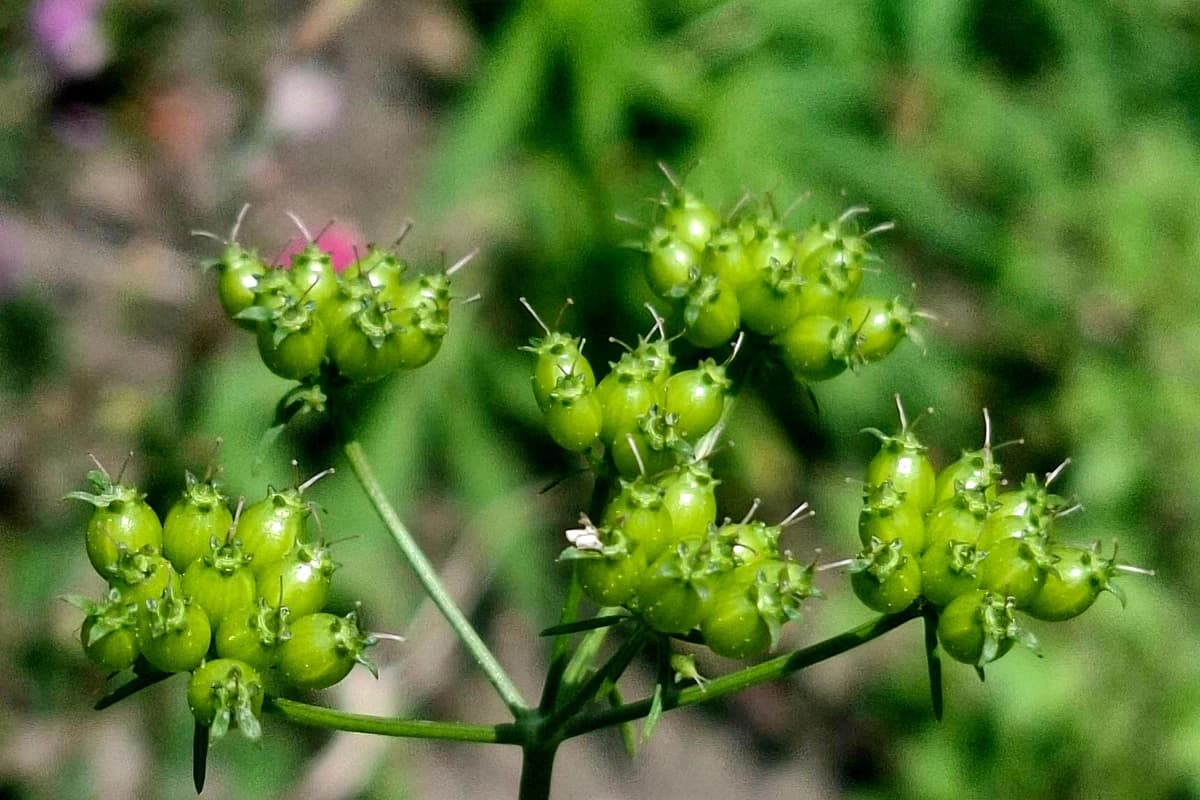
About This Plant
Coriander is a fast-growing annual herb grown either for fresh cilantro leaves or for mature dried seed. Seed production intentionally lets the plant bolt, flower, and mature umbels, so it needs cool establishment, full sun, wider spacing than leaf cilantro, and dry finishing conditions for clean spice harvest.
How to Grow Coriander (for seed)
Learn how to grow Coriander (for seed) from seed to harvest in 120 days. Intermediate difficulty. Complete nutrient guide, pH/EC requirements, and growing conditions for hydroponics, soil & greenhouse.
Sources cited: 15.
Nutrient Requirements by Growth Stage
Coriander seed crops need moderate fertility, with nitrogen important but easy to overdo. Utah State recommends only 1-2 light nitrogen side-dressings and warns that too much nitrogen can reduce flavor…
Sign in to view nutrient requirements
A free account unlocks NPK targets for all four growth stages, micronutrient levels, a per-stage nutrient calculator, and the full nutrition guide. Signing up takes one click. Truleaf is a free, non-profit project, and every new account helps it grow. No spam, ever.
Growing Environments
Coriander works outdoors, in containers, in greenhouses, and indoors, but the goal matters. Outdoor seed crops need sun, drainage, and enough spacing for flowering stems…
Temperature
Coriander should establish in cool weather but can mature seed under a warmer, dry reproductive window. Oregon State Extension notes that flowering and seed set are controlled by both temperature and day length, with plants completing the life cycle faster in warm weather and staying vegetative longer in cooler spring or fall conditions. Greenhouse nutrient-standard work germinated 'Santo' seed on 22C heat mats in about 10 days, while plant-factory coriander studies used about 23-25C root-zone or air temperatures successfully. Use 18-25C for reliable germination and 18-30C as the practical seed-crop growth window, with heat stress avoided during flowering.
Humidity
None of the coriander sources we found gave an exact relative-humidity target, so humidity should be managed through disease prevention rather than a rigid setpoint. Utah State says coriander prefers a sunny, dry location and does not perform well in damp or humid conditions…
Light
For seed production, provide full sun or strong indoor light. Utah State describes cilantro/coriander as a cool-season herb that grows best in full sun, and Maryland suggests afternoon shade mainly to slow hot-weather bolting for leaf harvest…
Airflow
No coriander paper reported a numeric airflow-speed experiment, so the 0.2-0.6 m/s range is an operational controlled-environment target. The evidence does support air movement and dry canopy management: Utah State cautions against damp or humid conditions, and PNW disease guidance identifies wilt/root-rot risk that…
Sign in to view environmental requirements
A free account unlocks exact temperature, humidity, light and airflow targets, including germination and growth ranges, DLI, photoperiod and PPFD, plus the full environment guide. Signing up takes one click. Truleaf is a free, non-profit project, and every new account helps it grow. No spam, ever.
Hydroponic System Compatibility
Hydroponic and controlled-environment evidence is strongest for leaf cilantro and early flowering, not mature seed harvest. The 2025 greenhouse nutrient-standard study grew 'Santo' in recirculating hydroponic sand culture and cites cilantro work in DFT and NFT systems, and hydroponic coriander NPK extraction work…
Growing Media
Use a loose, well-drained medium. Utah State says coriander grows in most moderately fertile soils if they are well drained, and recommends compost incorporation before sowing…
Container Specs
Containers are suitable, but use more depth than small herb pots. Maryland says cilantro/coriander can be successfully grown in containers, and Utah State notes indoor containers must be deep enough…
Training & Support
Coriander does not need pruning for seed; flower-stem removal is only for delaying leaf-crop bolting. Maryland says pinching flower stems extends leaf harvest, but if seeds are desired the plant should be allowed to flower and mature brown heads…
Sign in to view system compatibility
A free account unlocks why each of the six systems fits or fails, plus growing media, container sizes, training methods, companion plants, and the full systems guide. Signing up takes one click. Truleaf is a free, non-profit project, and every new account helps it grow. No spam, ever.
Propagation
Propagation is by seed. Oregon State recommends direct sowing because coriander has a long taproot and transplanting is difficult; sow 10-15 seeds per foot, cover with 1/2 inch of soil, then thin seed crops to about 8 inches apart…
Harvesting
Seed harvest is the opposite of leaf-harvest management: once a seed crop is established, stop removing flower stems and let umbels mature. Utah State says to wait until plants flower and seed heads turn brown, then place the plant in a bag and dry it until seeds fall off…
Planting Calendar
In temperate gardens, sow coriander in early spring after frost risk, or again in late summer to early autumn as temperatures cool. Oregon State warns that late June or early July sowings bolt quickly during long, hot days, producing seed within four to six weeks but little leaf growth…
Common Issues
The major verified issues are heat-stress flowering with poor seed set, leafhopper-associated aster yellows, seedling damping off, Fusarium wilt/root rot, bacterial leaf spot, and fertility imbalance. Bolting is driven by heat and long days; for seed production it is useful only after plants establish enough biomass…
Get the full science-backed guide
By signing up, you help keep Truleaf free and support the growth of our nonprofit project. Your account unlocks full details for every plant issue—including symptoms, causes, step-by-step solutions, and prevention—plus the month-by-month planting calendar, the complete guide, and all research sources. It only takes one click. No spam, ever.