How to Grow Cilantro and Slow the Bolting That Ruins It
A research-backed guide to growing cilantro (Coriandrum sativum) in beds, containers, indoors, and hydroponically. Learn why it bolts, how to slow it with cool-season timing and slow-bolt cultivars, plus germination, succession sowing, spacing, light, feeding, and harvest. Grounded in peer-reviewed studies and university extension guidance.
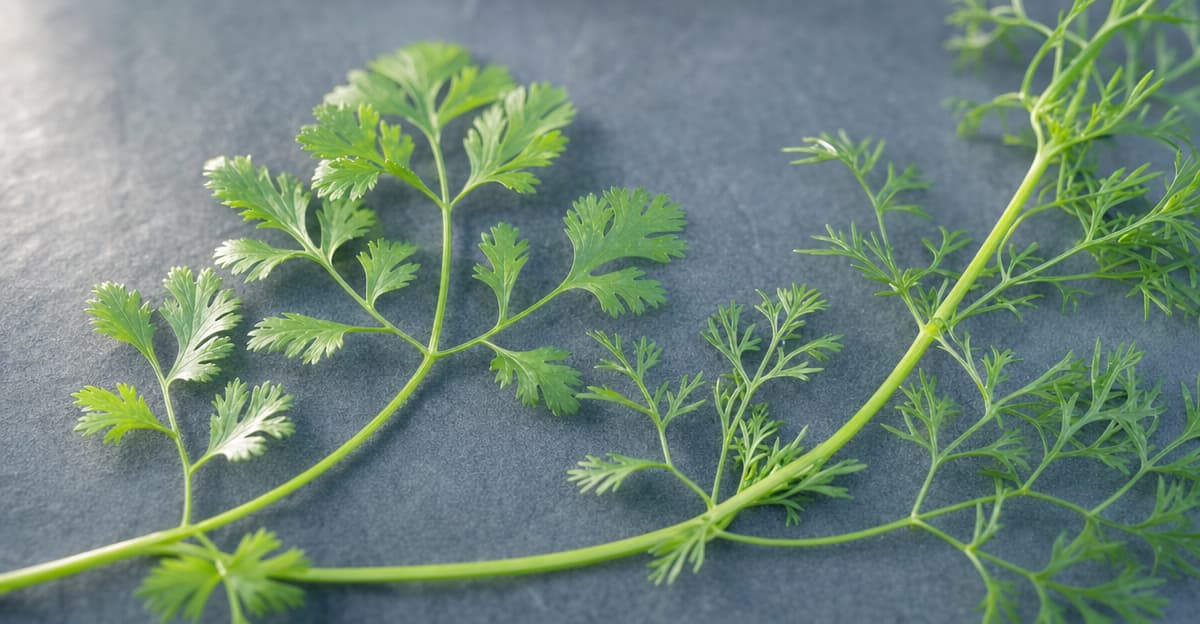
Cilantro is the herb people argue about. To some it is bright and citrusy; to others it tastes unmistakably of soap, and that split is not imagination or fussiness. A genome-wide association study of 14,604 people traced the "cilantro tastes like soap" reaction to a genetic variant (the SNP rs72921001) sitting beside a cluster of olfactory-receptor genes on chromosome 11, one of which binds the very aldehydes that give cilantro its aroma. A later review of the literature confirms the pattern: the divide is real, partly heritable, and rooted in how a person's nose reads those aldehyde compounds.
That is the argument at the dinner table. In the garden, cilantro is divisive for a different reason, and it is the reason most crops fail: it bolts. One week you have a lush rosette of leaves, and the next the plant shoots up a flower stalk, the foliage turns feathery and bitter, and the harvest is over. Nearly every complaint about growing cilantro traces back to that single event. This guide is built around preventing it, then covers the whole crop, from seed to harvest, across beds, containers, indoor lights, and hydroponic systems, with every recommendation tied to peer-reviewed research and university extension guidance.
Cilantro and Coriander Are One Plant
A quick point of vocabulary, because it shapes how you grow the crop. Cilantro and coriander are the same species, Coriandrum sativum. In most of the English-speaking world, "cilantro" means the fresh leaves and "coriander" means the dried seed harvested from the same plant later in its life. You are not choosing between two crops; you are choosing which stage to harvest. If you want leaves, you fight bolting. If you want seed, you eventually let the plant bolt on purpose, because the flowers and seeds only come after that reproductive switch, and seed oil composition (dominated by linalool) is itself cultivar- and sowing-date-dependent. This guide leads with the leaf, then closes with the seed.
Why Cilantro Bolts, and the Cool-Season Rule
Cilantro is a cool-season annual. It grows best in mild conditions, roughly 10 to 24 °C (50 to 75 °F), and it treats summer heat as a signal to reproduce rather than keep making leaves. Understanding what actually throws that switch is what lets you delay it.
Two triggers work together. Cilantro is a long-day plant: a peer-reviewed plant-factory study documented that light intensity and photoperiod strongly govern coriander's morphological and phenological development, and lengthening days push it out of the leafy phase toward flowering. Extension sources, working from field experience, emphasize the other half of the same picture: heat pushes cilantro to bolt fast. These are not contradictory. Bolting in cilantro is a long-day-plus-heat response, so the practical enemy is late spring and summer, when days lengthen and temperatures climb at the same time. On top of that, genotype matters: a study of coriander genotypes documented wide variation in habit and in how long the harvest window stays open across seasons, which is why cultivar choice is a real lever, not a rounding error.
The takeaway sets up everything below. Grow cilantro in the cool shoulders of the year, in spring and fall (or through winter in mild-winter regions), not in the heat of summer. In hot weather, give it a little afternoon shade to buy time. And accept the biology: even a well-grown plant will eventually bolt, so the game is to slow it and to keep a fresh crop always coming.
Slow-Bolt Cultivars: Your First Defense
Because time-to-bolt is partly genetic, plant breeders have selected slow-bolt (also called "long-standing") cultivars that hold in the leafy stage longer before flowering. Extension guidance names varieties such as 'Leisure', 'Costa Rica', 'Long Standing', and 'Slow Bolting' as leaf-harvest choices worth seeking out, and the genotype research confirms that such lines genuinely extend the harvesting window relative to fast-bolting types. Cultivar trials likewise show measurable differences in yield and behavior between varieties grown side by side.
One honest caveat: the named cultivars come from North American and European extension and trial work, and availability varies by market. Treat the names as examples of what to look for on the seed packet, "slow bolt" or "long standing," rather than a fixed shopping list. If your only choice is generic cilantro seed, the timing and succession tactics below matter even more.
Starting From Seed: Germination Without the Guesswork
Cilantro is almost always direct-sown from seed and dislikes root disturbance, so start it where it will grow. One quirk worth knowing: each round cilantro "seed" is actually a schizocarp, a dried fruit that splits into two single-seeded segments (mericarps). Some growers gently crush them to speed and even out sprouting, though it is optional.
Germination speed is where sources disagree, and the disagreement is informative rather than confusing. University extension guidance quotes a slow roughly 21 days for untreated seed. Popular growing guides cite a faster 7 to 14 days, usually assuming a pre-soak. And a controlled priming study compressed the mean germination time to about 7.9 days, with 82% germination — though that specific result came from a copper-priming treatment (a 16-hour soak in a dilute copper solution), not plain water. The mechanism still reconciles all three: dry, unsoaked seed in cool soil is slow; soaking or priming the seed and keeping the medium consistently moist and warm (but not hot) speeds it up substantially. Treat "one to three weeks" as the honest range, and lean on presoaking plus steady moisture to land at the fast end.
Sow shallowly, keep the surface from drying out until sprouts appear, and thin to give each plant room (see spacing below). Because you want a steady supply and each plant is short-lived, how often you sow matters as much as how well you sow.
Succession Sowing: The Habit That Actually Beats Bolting
Here is the single most effective practice for a continuous cilantro supply, and every cultural source agrees on it: sow a fresh short row every 2 to 3 weeks through the growing season. Because any given planting will eventually bolt no matter what you do, a staggered series means a younger, leafy planting is always coming online as the previous one starts to flower. Succession sowing turns cilantro's biggest weakness, its short leafy window, into a non-issue. Combine it with slow-bolt seed and cool-season timing and you effectively convert a crop famous for "bolting in two weeks" into a steady kitchen supply.
Spacing and Seasonal Windows
Spacing. Denser planting raises leaf yield, within reason. A Virginia State University field trial found that narrower row spacing (about 37.5 cm) out-yielded wider spacing (about 75 cm) for both cilantro leaf and coriander seed, and a separate spacing-and-fertilizer study reached the same directional conclusion. For a home bed or container aimed at leaves, that argues for a fairly dense stand, thinned only enough to keep airflow and avoid disease, rather than the generous spacing you would give a fruiting crop.
Season. Timing follows the cool-season rule, and the direction of the effect is documented. In the same Virginia trial, spring plantings out-yielded fall plantings on average, while both seasons produced a usable crop; a Canadian study likewise found that earlier sowing improved productivity; and extension guidance frames the practical windows as spring and fall, extending into winter where winters are mild. The specific calendar depends on your latitude and climate, so use your regional extension office to pin exact dates, but the rule of thumb holds everywhere: aim your plantings at the cool shoulders and keep them out of peak summer heat.
A Season-by-Season Succession Calendar
The calendar below turns the season and succession rules into a running schedule you can start from any hemisphere. It is anchored to soil temperature and your last and first frost dates rather than fixed months, because that is what actually drives the crop; the exact dates shift with your latitude. Read it as a rhythm to keep going, not a one-time planting.
Early spring (as soon as soil is workable, roughly 4 to 6 weeks before the last frost). Cilantro tolerates cool soil, so start the first direct sowing here. Presoak the mericarps to move germination away from the three weeks untreated seed can take toward the fast end; a controlled copper-priming study measured a mean of roughly eight days. This first sowing rides the longest cool window of the year, and it lines up with the spring plantings that out-yielded fall in trial work.
Spring through early summer (the succession engine). Sow a fresh short row every 2 to 3 weeks. As the season warms toward the top of cilantro's comfortable 10 to 24 °C range, shift to slow-bolt cultivars such as 'Leisure' or 'Long Standing' and give the bed a little afternoon shade to buy leafy days against the lengthening photoperiod and rising heat that together trigger bolting. Begin cutting outer leaves once a planting reaches about 15 cm.
Peak summer (pause and hold). In hot-summer climates this is the losing window; long days plus heat push even a good planting to bolt quickly, so let plantings run to seed for coriander rather than fighting for leaves, and rely on the shoulders instead. In cool-summer or maritime climates the succession can simply continue.
Late summer into fall (restart the succession). As nights cool, resume sowing every 2 to 3 weeks for a fall leaf crop; it will yield a little under spring on average but is well worth running. This is also the sowing that carries the crop into winter where winters are mild.
Winter (mild-winter and indoor growers). Where hard freezes are rare, cilantro overwinters as a cool-season crop and keeps producing leaves. Everywhere else, move the succession indoors under lights, where controlling day length with a timer holds the plant in its leafy phase; keep sowing a fresh tray every couple of weeks so a young planting is always replacing the one that tires.
The single habit that makes the whole calendar work is refusing to skip a sowing. Because any one planting is short-lived and will eventually bolt no matter the season, the unbroken 2-to-3-week cadence, not any single perfect planting date, is what keeps leaves on the counter year round.
Growing Cilantro Indoors and Hydroponically
Cilantro grows well without a garden, and controlled-environment research on this exact crop is unusually good, so the indoor guidance rests on real data.
Light is the primary lever. A plant-factory study of coriander tuned photosynthetic photon flux density (PPFD) and found it directly drives growth and metabolite production, and the light-intensity-and-photoperiod work confirms that both the amount and the daily duration of light shape how the plant develops. Indoors you control day length with a timer, which is a genuine advantage: keeping the photoperiod moderate helps hold the plant in its leafy phase rather than pushing it toward the flowering it would reach under long days.
A counter-intuitive, peer-reviewed finding on nutrients. It is tempting to assume that a brighter setup needs a stronger nutrient solution. For cilantro, a peer-reviewed hydroponic study found the opposite of the expected interaction: nutrient-solution strength did not interact with the daily light integral to affect growth or tissue mineral content. In plain terms, you do not need to crank up fertilizer strength just because you have raised the light. Feed to a sensible target and manage light on its own terms.
Root-zone temperature shapes flavor. Two plant-factory studies showed that adjusting root-zone temperature measurably changes the accumulation of the secondary metabolites, the aroma and flavor compounds, in hydroponic coriander. It is a lever worth knowing exists if you are chasing flavor intensity in a controlled setup, though it is an advanced tuning knob rather than a beginner requirement.
On exact dosing, we keep the numbers where they belong. Researchers have characterized cilantro's nutrient uptake and even established leaf-tissue nutrient standards for greenhouse production, along with hydroponic NPK extraction figures and nitrogen-source effects. But the right dose depends on your system, water, and stage, so we do not print a one-size recipe here. For how to mix and manage a solution and read EC and pH, use our dedicated pillars, hydroponic nutrients for beginners and pH and EC management. Stage-by-stage targets live on the cilantro plant page alongside the rest of its growing data.
An Indoor Cilantro Setup That Holds Off Bolting
Pulling the research together into a practical indoor plan:
- Sow densely and directly into your chosen medium or net cups; cilantro resents transplanting, and a denser stand suits leaf harvest.
- Keep the photoperiod moderate rather than maximal. As a long-day plant, cilantro is pushed toward its reproductive switch by long photoperiods, so you do not need to run lights as long as possible; a moderate day length with good intensity favors sustained leaf growth.
- Match light to nutrients independently. Raising light does not oblige you to raise nutrient strength for cilantro; set a reasonable solution and adjust it based on the plants, not the lamp.
- Grow it cool. The same cool-season biology applies indoors, so a cooler room extends the leafy window.
- Succession-sow indoors too. A fresh tray every couple of weeks keeps a supply coming as older plantings tire.
Harvesting: Leaves First, Then Seed
Begin cutting cilantro once plants reach about 15 cm (6 inches) tall. Harvest the outer, older leaves and leave the inner crown intact, which lets the plant keep producing, the classic cut-and-come-again approach that every cultural source recommends. Take no more than about a third of the plant at a time so it can recover. Cilantro leaf flavor is best before flowering, so harvest generously and often while the plant is still in its leafy phase; regular cutting also modestly delays bolting by removing the growth the plant would otherwise push upward.
When a planting finally bolts, you have a choice. Pull it and rely on your next succession sowing for more leaves, or let it flower and set seed to harvest coriander. The umbels of small white-to-pink flowers are also excellent for pollinators. Let the seed heads dry to tan on the plant, then cut and finish drying them somewhere airy before storing the round seeds; leftover seed doubles as next season's planting stock. This is where the leaf-versus-seed decision from the top of the guide comes full circle.
The Short Version
Cilantro's reputation for being difficult comes down to one behavior: it bolts. Beat it with three habits that reinforce each other. Grow it cool (10 to 24 °C, in spring and fall, not summer heat), because long days plus heat are what trigger flowering. Choose slow-bolt cultivars like 'Leisure', 'Costa Rica', or 'Long Standing' where you can find them. And above all, succession-sow every two to three weeks so a fresh leafy planting is always replacing the one that flowers. Direct-sow the seed and presoak it to shorten a germination that otherwise stretches toward three weeks; plant fairly densely for leaf yield; and indoors, control day length with a timer while remembering that more light does not mean more fertilizer for this crop. Harvest outer leaves cut-and-come-again from about 15 cm, and when a planting finally bolts, either move on to the next sowing or let it run to seed and collect your own coriander.
For cilantro's full growing-condition data and nutrient targets, see the cilantro plant page. For the other headline kitchen crops, our garlic guide and how to harvest basil round out the herb bench.