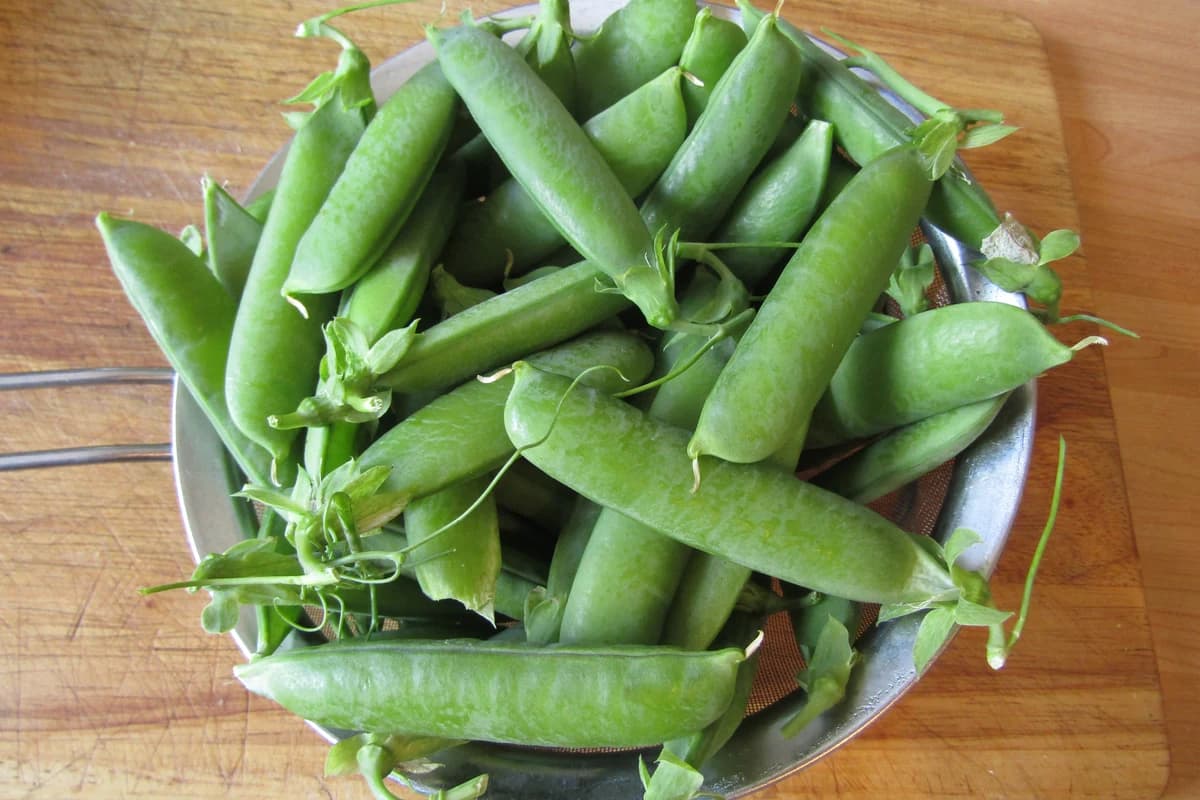
About This Plant
Field pea (Pisum sativum) is a cool-season annual pulse grown for dry seed, food peas, forage, cover cropping, and shoots. It is best supported in outdoor soil or drained substrate, where correct Rhizobium inoculation supplies much of its nitrogen and cool planting avoids flowering heat stress.
How to Grow Field Pea
Learn how to grow Field Pea from seed to harvest in 90 days. Beginner difficulty. Complete nutrient guide, pH/EC requirements, and growing conditions for soil & container.
Sources cited: 20.
Nutrient Requirements by Growth Stage
Field pea nutrition should be managed as an inoculated pulse, not as a high-N hydroponic feeder. NDSU reports field pea can obtain much of its nitrogen through Rhizobium fixation, and N fixation begins about four weeks after emergence and continues through seed formation…
Sign in to view nutrient requirements
A free account unlocks NPK targets for all four growth stages, micronutrient levels, a per-stage nutrient calculator, and the full nutrition guide. Signing up takes one click. Truleaf is a free, non-profit project, and every new account helps it grow. No spam, ever.
Growing Environments
Outdoor soil is the primary verified environment for field pea as a pulse, forage, green manure, or cover crop. Greenhouse and indoor production are plausible for shoots, seedling demonstrations, or research, but they are not the main way to capture field pea seed yield or soil nitrogen-fixation benefits…
Temperature
Field pea is a cool-season crop. Seeds can germinate in soil near 4-5C, but field emergence normally takes 10-14 days, so the old 7-day value was too short for field conditions. Use 13-18C as the working growth target because USDA NRCS and extension guidance identify cool temperatures as most productive. Keep flowering before heat: field trials found seed set and germination decline as flowering and reproductive maximum temperatures rise above about 25C, with stronger losses near 30C and above.
Humidity
No complete field-pea source defines a precise relative-humidity optimum. A moderate 40-70% indoor or greenhouse operating band is acceptable only when leaves dry quickly…
Light
Treat field pea as a full-sun cool-season crop outdoors. Protected-culture evidence is stronger for pea shoots and research plants than for dry seed: LED pea-shoot work supports lower DLI values than a full-sun crop, and a full Frontiers pea nutrition study used a 16-hour photoperiod at about 188 umol/m2/s in…
Airflow
No field-pea source reports a species-specific airflow value in m/s. The evidence supports moderate canopy ventilation as disease and lodging management: dense or lodged pea stands hold moisture, and wet canopy conditions favor powdery mildew, downy mildew, Botrytis, and root disease pressure…
Sign in to view environmental requirements
A free account unlocks exact temperature, humidity, light and airflow targets, including germination and growth ranges, DLI, photoperiod and PPFD, plus the full environment guide. Signing up takes one click. Truleaf is a free, non-profit project, and every new account helps it grow. No spam, ever.
Hydroponic System Compatibility
Soil, raised beds, and drip-irrigated substrate are the strongest controlled-system fits. Pea roots and nodules need oxygen, and extension sources warn against wet, compacted, saline, or waterlogged conditions…
Growing Media
Use fertile, light-textured, well-drained soil as the preferred medium. USDA NRCS gives pH 5.5-7.0 as the ideal range and notes sensitivity to salinity and extreme acidity…
Container Specs
Container field pea is possible but not well studied for dry-seed production. Oregon State Extension recommends a 5-gallon container for peas, drainage holes, commercial potting soil, and a pole or trellis…
Training & Support
Do not mark trellis support as universally required for field pea. Commercial field peas are drilled in narrow rows and modern semi-leafless types are bred for standability, but weak vines can still lodge…
Sign in to view system compatibility
A free account unlocks why each of the six systems fits or fails, plus growing media, container sizes, training methods, companion plants, and the full systems guide. Signing up takes one click. Truleaf is a free, non-profit project, and every new account helps it grow. No spam, ever.
Propagation
Propagate field pea by seed. Direct sow into firm, moist, well-drained soil rather than transplanting; field guides emphasize seed-to-soil moisture contact and a typical field depth near 5 cm, with broader 3-8 cm regional guidance when moisture requires it…
Harvesting
Field pea grown for dry seed is a one-time annual harvest, not a cut-and-come-again crop. Start harvest planning when lower pods are tan, middle pods are yellow to tan, upper pods are yellow-green, and seed moisture is in range…
Planting Calendar
Use regional cool-season timing. Spring field peas are direct-seeded as soon as soil can be worked and soil temperature is near 4-5C; northern field guides cluster seeding from April to mid-May, with yield penalties when planting is delayed beyond mid- or late May…
Common Issues
The previous issue list needed major correction because it framed several problems as hydroponic solution failures. Field pea disease guidance supports a root-rot complex involving Fusarium, Aphanomyces, Pythium or Globisporangium, Rhizoctonia, and related pathogens; prevention depends on drainage, rotation, clean…
Get the full science-backed guide
By signing up, you help keep Truleaf free and support the growth of our nonprofit project. Your account unlocks full details for every plant issue—including symptoms, causes, step-by-step solutions, and prevention—plus the month-by-month planting calendar, the complete guide, and all research sources. It only takes one click. No spam, ever.