Pois carré vs haricot kilomètre : comment les distinguer
Le pois carré et le haricot kilomètre sont confondus en permanence — vignes grimpantes semblables, noms qui se ressemblent, vendus sous un enchevêtrement d'appellations. Pourtant, ce sont deux genres différents, et les différences comptent pour la façon de les cultiver et ce que l'on peut manger. Ce guide vous donne l'identification visuelle la plus rapide (une gousse carrée à quatre ailes contre une gousse ronde fine comme un crayon), fait le tri des parties comestibles (une seule possède un tubercule comestible riche en protéines), démêle le comportement de floraison qui fait qu'un des deux refuse de fructifier au cours d'un long été, dissipe la confusion de noms entre « haricot asperge » et « pois asperge », et vous aide à choisir lequel cultiver. Fondé sur des recherches évaluées par des pairs et des références institutionnelles de ressources végétales.
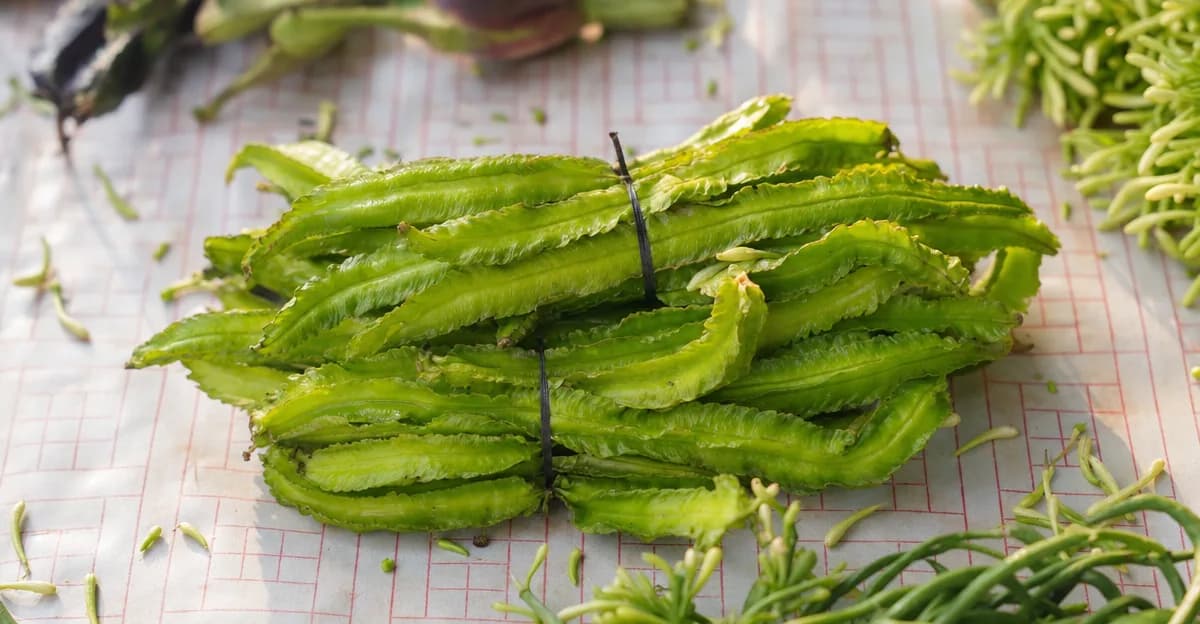
Deux haricots grimpants tropicaux sont confondus plus souvent que presque n'importe quelle autre paire du potager. Tous deux sont des vignes volubiles vigoureuses qui ont besoin d'un treillis. Tous deux produisent de longues gousses vertes que l'on cuisine et que l'on mange. Et tous deux circulent sous une foule d'appellations déroutantes — le pois carré est aussi le haricot de Goa, le haricot à quatre angles, le pois-carré ou le « pois asperge », tandis que le haricot kilomètre répond aux noms de haricot asperge, haricot long chinois, haricot serpent et bodi. Placez côte à côte un sachet de graines de chacun et il est vraiment facile de croire que l'on regarde des variations d'une même culture.
Ce n'est pas le cas. Ce sont deux plantes différentes, issues de deux genres différents, et les différences ne sont pas anecdotiques : elles déterminent la gousse que vous obtenez, la présence ou non d'une racine comestible en dessous, et si la plante fleurira ou non sous votre climat. Ce guide fait le tri : l'identification visuelle en un coup d'œil, ce qui est réellement comestible chez chacun, pourquoi l'un d'eux refuse notoirement de fructifier au cours d'un été septentrional, la confusion de noms qui piège les acheteurs, et une réponse franche à la question « lequel devrais-je cultiver ». Chaque affirmation ici renvoie à des recherches évaluées par des pairs ou à des références institutionnelles de ressources végétales, listées à la fin.
Sont-ils seulement la même plante ? Non — des genres différents
Commençons par le fait qui résout l'essentiel de la confusion : le pois carré et le haricot kilomètre ne sont ni la même espèce, ni le même genre, ni même des parents particulièrement proches. Ils partagent une famille botanique (les Fabaceae, les légumineuses) et peu de choses au-delà, au niveau qui compte.
Le pois carré est Psophocarpus tetragonolobus — sa propre espèce dans son propre genre, Psophocarpus. Le haricot kilomètre est Vigna unguiculata sous-espèce sesquipedalis : c'est une forme cultivée du niébé, la même espèce que le pois à œil noir et le pois de brousse, simplement sélectionnée au fil des siècles pour ses longues gousses immatures et tendres consommées comme légume. Ainsi, le plus proche parent du haricot kilomètre n'est pas du tout le pois carré — c'est le pois à œil noir.
Ce seul fait — des genres différents — explique pourquoi presque tout diverge en aval. Deux plantes sélectionnées par des peuples différents, sur des continents différents, à partir d'ancêtres sauvages différents, ont convergé vers la même silhouette de jardin (une vigne de haricot grimpante) tout en conservant des gousses, des racines et des mécanismes de floraison complètement différents en dessous.
Le moyen le plus rapide de les distinguer : regardez la gousse
Si vous avez une gousse en main, vous n'avez pas besoin du latin. Le repère de terrain le plus fiable est la section transversale de la gousse, et les deux ne pourraient guère être plus différentes.
Pois carré — carré et frangé. Coupez une gousse de pois carré en travers : elle est à peu près carrée à rectangulaire, avec quatre « ailes » longitudinales, souvent ondulées ou dentelées qui courent sur toute la longueur de la gousse. Ce profil à quatre angles, ailé, est à l'origine du nom, et il est diagnostique — aucun niébé ne fait cela. Les gousses sont relativement courtes : généralement autour de 15–25 cm, bien que les génotypes varient beaucoup et que les références régionales enregistrent une large fourchette allant d'environ 6 jusqu'à 40 cm. Présentez-la comme une fourchette, non comme un nombre fixe — la longueur est l'un des caractères qui diffèrent le plus entre variétés.
Haricot kilomètre — rond, lisse et très long. La gousse du haricot kilomètre est tout l'inverse : lisse, ronde en section, fine comme un crayon et extrêmement longue — couramment 30–75 cm, et les plus longues peuvent approcher un mètre complet. Le nom de la sous-espèce sesquipedalis signifie littéralement « un pied et demi », ce qui décrit assez bien une gousse typique. Il n'y a ni ailes ni arêtes ; elle pend en cordes minces, droites à recourbées.
La règle en un coup d'œil est donc simple : gousse à quatre côtés avec des ailes frangées → pois carré ; gousse ronde fine comme un crayon aussi longue que votre avant-bras → haricot kilomètre. Cette distinction est constante dans chacune des sources que nous avons vérifiées, et c'est la réponse la plus rapide à la question « lequel ai-je ».
Les distinguer avant la gousse : indices de graine, de fleur et de plantule
La gousse est le cas facile. Acheteurs et cultivateurs doivent souvent trancher plus tôt — à partir d'un sachet de graines, d'une vigne en fleur sans gousse mûre encore, ou d'une jeune plantule. Chaque stade a son indice.
À la graine. Les graines de pois carré sont à peu près sphériques et de la taille d'un pois, luisantes, et vont du crème et du brun jusqu'au presque noir, sans œil marqué. Les graines de haricot kilomètre sont la graine de niébé classique — oblongue, réniforme, et marquée d'une cicatrice pâle bien visible (le hile, ou « œil »). Ce n'est pas un hasard : le haricot kilomètre est exactement la même espèce que le pois à œil noir, il porte donc la graine de niébé à œil familière. Ronde et sans œil → pois carré ; réniforme avec un œil → haricot kilomètre.
À la fleur. Le pois carré se trahit à la floraison : il porte de grandes fleurs papilionacées voyantes d'un bleu pâle à violet inhabituel — un bleu que peu de haricots de jardin arborent. Les fleurs du haricot kilomètre sont la plus petite fleur du niébé, blanche à violet pâle ou mauve. Une fleur nettement bleue sur un haricot grimpant est presque toujours un pois carré.
À la plantule et à la vigne. C'est le stade le plus difficile. Tous deux sont des grimpants volubiles trifoliés, et les jeunes plants se ressemblent vraiment — le feuillage seul ne tranchera pas. Le tubercule du pois carré est diagnostique mais souterrain et invisible. Quand vous hésitez au stade feuillu, la réponse honnête est d'attendre : la première fleur ou la première gousse est décisive, les feuilles ne le sont pas.
Le recours fiable à chaque stade est celui de la section sur la gousse — ignorez le nom commercial et lisez le genre sur le sachet. Psophocarpus est le pois carré ; Vigna est le haricot kilomètre.
Ce qui est comestible : un seul des deux possède un tubercule
C'est la plus grande différence fonctionnelle entre les deux cultures, et celle qu'il vaut le plus la peine de connaître avant de planter.
Pois carré — presque toute la plante est comestible, y compris un tubercule riche en protéines. Des recherches de terrain évaluées par des pairs décrivent le pois carré comme une culture où les gousses immatures, les graines mûres, les jeunes feuilles, les fleurs et le tubercule de réserve amylacé sont tous consommés. Le tubercule est la vedette : dans un essai au champ thaïlandais de deux ans, les tubercules de pois carré affichaient environ 20–21 % de protéines sur la base du poids sec — remarquablement élevé pour une plante-racine, la plupart étant des réserves glucidiques pauvres en protéines. Les graines mûres constituent l'autre atout nutritionnel, avec environ 29–39 % de protéines, dans la catégorie du soja, ce qui explique pourquoi la plante est régulièrement décrite comme un analogue tropical du soja. Si vous avez déjà vu un haricot décrit comme un « supermarché sur une tige », c'était celui-ci.
Haricot kilomètre — cultivé pour la gousse, pas de tubercule comestible. Le haricot kilomètre est un légume à gousse avant tout. Les jeunes gousses immatures sont l'objectif, consommées fraîches ou cuites tant qu'elles sont encore tendres ; les graines mûres et les feuilles sont des usages secondaires. Fait décisif, il ne forme aucun tubercule de réserve — c'est un niébé annuel doté d'un système racinaire fibreux ordinaire, rien à déterrer et à cuisiner. Donc si la question est « quel haricot possède une racine comestible », la réponse est sans ambiguïté : le pois carré, jamais le haricot kilomètre.
Cette différence redéfinit à quoi sert chaque culture. Le pois carré est une plante à protéines multi-organes ; le haricot kilomètre est un producteur de gousses-légumes rapide et frais. Aucun n'est « meilleur » — ils répondent à des questions différentes.
Port et vitesse de croissance
C'est ici que les deux cultures se ressemblent le plus, avant de diverger discrètement.
Tous deux sont des grimpants qui ont besoin d'un support. Le pois carré et le haricot kilomètre sont tous deux des vignes volubiles vigoureuses qui doivent être tuteurées ou palissées pour bien produire ; cultivés au sol, ils s'étalent et donnent de piètres résultats. Si vous cultivez l'un ou l'autre, construisez d'abord le treillis.
Le pois carré est la plante la plus lente et la plus spécialisée. Il est pérenne sous les vrais tropiques (généralement cultivé comme annuel ailleurs), plus lent à s'établir, et porte ce système racinaire tubéreux comme partie de son cycle de vie. Il récompense la patience et une saison longue et chaude.
Le haricot kilomètre est l'annuelle rapide et indulgente. C'est une annuelle de saison chaude à cycle court qui noue ses gousses dans un été normal, et les sélectionneurs disposent de types grimpants (indéterminés) comme de types nains (déterminés) — le port de croissance est largement contrôlé par un seul gène dominant, qui ségrège proprement dans les croisements. Le nombre de jours jusqu'à la floraison et jusqu'à la première récolte sont des caractères standard et bien mesurés chez cette culture, précisément parce qu'elle est si largement cultivée comme légume potager rapide à travers l'Asie. En pratique, le haricot kilomètre est celui qui donne à un cultivateur débutant un résultat rapide et fiable.
Pourquoi l'un d'eux ne fleurira pas au cours de votre été
C'est le mode d'échec qui prend de court les cultivateurs des zones tempérées, et c'est la différence physiologique la plus tranchée entre les deux.
Le pois carré est fortement de jours courts : il fleurit quand les nuits sont longues et les jours courts, et les longues durées de jour estivales retardent ou suppriment activement la floraison. Ce n'est pas du folklore — c'est documenté dans des études de photopériode évaluées par des pairs, et c'est la raison pour laquelle une vigne de pois carré saine et vigoureuse, au cours d'un long été septentrional, peut croître pendant des mois et refuser tout simplement de fleurir. (Nous traitons ce problème précis, et ce qu'il faut faire, dans pourquoi votre pois carré ne fleurit pas.)
Le haricot kilomètre est en général bien plus facile à faire fleurir quelle que soit la durée du jour. En tant que niébé, il est largement thermophile et de nombreux types de haricot kilomètre cultivés se comportent comme des plantes de jour neutre, nouant leurs gousses sans peine au cours d'un été tempéré. Une réserve honnête a sa place ici : la réponse photopériodique chez le niébé est dépendante du génotype — certaines variétés locales conservent une tendance de jours courts — donc « jour neutre » est une règle générale pour les types potagers de haricot kilomètre, pas une loi absolue pour chaque lignée de graines. Le contraste ferme, évalué par des pairs, est du côté du pois carré : il est fiablement de jours courts et peut retenir ses fleurs sous les jours longs, tandis que le haricot kilomètre fleurit typiquement librement. Pour un cultivateur qui lutte contre une saison courte, cette différence est décisive.
Faire fleurir et fructifier le pois carré hors des tropiques
Le comportement de jours courts est la première raison pour laquelle les cultivateurs des zones tempérées renoncent au pois carré — une vigne qui grimpe vigoureusement tout l'été sans jamais fleurir. C'est un problème soluble une fois que l'on comprend le levier. La floraison est déclenchée à mesure que les jours raccourcissent : en étude contrôlée, une photopériode de 11 heures a induit la floraison, tandis que les jours longs l'ont retardée ou supprimée. Quatre leviers pratiques en découlent.
1. Choisissez une lignée de jour neutre ou à floraison précoce. Le génotype fait une énorme différence. Dans une évaluation, la plupart des accessions étaient fortement sensibles à la durée du jour et mettaient 119–167 jours jusqu'à la première fleur, tandis qu'un rare génotype de jour neutre a fleuri en seulement 68–82 jours, quelle que soit la durée du jour. Une graine étiquetée précoce ou de jour neutre est ce qui se rapproche le plus d'un raccourci ; la graine de variété locale tropicale ordinaire est la plus difficile à amener à fleurir au cours d'un été septentrional.
2. Misez sur le raccourcissement des jours de la fin de l'été. En zone tempérée, la durée du jour ne descend vers la plage inductrice de floraison qu'au tournant de la saison. Une plante sensible à la durée du jour peut ne pas initier ses fleurs avant que les jours raccourcissent en fin d'été ou début d'automne — moment où le gel est souvent proche. L'implication pratique : commencez tôt, gardez la plante vigoureuse, et offrez-lui la plus longue et la plus chaude queue de saison sans gel possible, pour qu'il y ait le temps de nouer des gousses une fois la floraison enfin amorcée.
3. Forcez les jours courts par occultation. Comme la floraison est contrôlée par la photopériode, vous pouvez l'induire délibérément en couvrant les plants pour les maintenir à environ un jour de 11 heures — la même photopériode courte qui a déclenché la floraison dans les travaux sur la photopériode, où des jours de 11 heures ont amené les plants à fleurir à des températures modérées mais où une chaleur proche de 30 °C a supprimé la floraison même sous ces jours courts. Associez donc l'occultation à une chaleur modérée, non à une chaleur extrême. C'est la voie de l'environnement contrôlé ou de l'amateur assidu, mais elle vaut mieux que d'attendre le calendrier.
4. Offrez-lui une saison véritablement longue, chaude et de jours courts. Sous les vrais tropiques, dans les subtropiques sans gel, ou dans une serre chauffée à éclairage contrôlé, la plante fleurit et forme à la fois gousses et tubercules à l'heure prévue — ce qui explique précisément pourquoi elle y est un aliment de base et une curiosité ailleurs.
Une consolation qu'il vaut la peine de connaître : le tubercule est une racine de réserve végétative, non un produit de la floraison. Un pois carré qui ne fleurit jamais sous votre climat peut tout de même être arraché pour un tubercule comestible, riche en protéines, en fin de saison, de sorte que même une vigne « ratée » n'est pas une perte totale. Pour le diagnostic complet d'une plante non fleurie, voir pourquoi votre pois carré ne fleurit pas.
Nutrition : concentré de protéines vs gousse fraîche riche en fibres
Tous deux sont des légumineuses nutritives, mais ils apportent leurs bienfaits sous des formes différentes.
Le pois carré concentre des protéines sérieuses dans sa graine sèche (~29–39 %) et son tubercule (~20–21 %), aux côtés d'huile, de vitamines et de minéraux répartis dans ses parties comestibles — une plante véritablement dense en protéines de haut en bas. Son intérêt est celui d'une culture à protéines.
Le haricot kilomètre est apprécié comme légume frais : les gousses immatures apportent fibres alimentaires, protéines, vitamines et antioxydants, un profilage nutritionnel sur des dizaines d'accessions confirmant une solide charge en micronutriments et en composés bioactifs. Comme on mange les gousses jeunes, la teneur en protéines par portion est plus faible que celle d'une graine mûre de pois carré — mais c'est une comparaison biaisée. Le haricot kilomètre est une gousse-légume croquante et riche en fibres, non une légumineuse séchée, et il excelle à être exactement cela.
En version courte : pois carré = protéines (graine sèche et tubercule) ; haricot kilomètre = gousse fraîche riche en fibres.
La confusion de noms, éclaircie
Une grande partie de la confusion vient de noms communs qui se chevauchent. Deux méritent d'être fixés.
- « Haricot asperge » vs « pois asperge ». Ils sonnent comme la même plante et ne le sont pas. Haricot asperge = haricot kilomètre (Vigna unguiculata subsp. sesquipedalis) — la gousse ronde et très longue. Pois asperge est un nom parfois appliqué au pois carré, et, de façon déroutante, aussi à une plante sans lien (Lotus tetragonolobus) dans certaines régions. Si un sachet dit « haricot asperge », attendez-vous à la longue gousse ronde de niébé ; s'il dit « pois asperge », vérifiez le nom latin avant de rien supposer.
- « Haricot de Goa » vs « haricot long chinois ». Ce ne sont que des appellations régionales qui distinguent nettement les deux cultures : haricot de Goa / haricot à quatre angles = pois carré ; haricot long chinois / haricot serpent / bodi = haricot kilomètre. En cas de doute, ignorez le nom commercial et lisez le nom botanique sur le sachet — Psophocarpus est le pois carré, Vigna est le haricot kilomètre.
Le geste fiable, chaque fois qu'un nom est ambigu, est de chercher le genre. Il n'y a aucun chevauchement là : l'un est Psophocarpus, l'autre est Vigna.
Le comparatif complet : chaque caractère qui les sépare
Tout ce qui précède, condensé en une seule référence que vous pouvez parcourir avant d'acheter des graines ou de décider quoi planter. Chaque chiffre ici correspond aux affirmations sourcées des sections ci-dessus.
| Caractère | Pois carré (Psophocarpus tetragonolobus) | Haricot kilomètre (Vigna unguiculata subsp. sesquipedalis) |
|---|---|---|
| Genre / famille | Psophocarpus, Fabaceae — son propre genre | Vigna, Fabaceae — une sous-espèce cultivée de niébé |
| Parent commun le plus proche | Aucun analogue de jardin proche | Le pois à œil noir / niébé (même espèce) |
| Section de la gousse | Carrée à rectangulaire, quatre ailes frangées | Ronde, lisse, fine comme un crayon |
| Longueur typique de gousse | ~15–25 cm (fourchette génotypique ~6–40 cm) | ~30–75 cm, les plus longues proches d'un mètre |
| Gousse comestible | Oui | Oui — la culture principale |
| Graine comestible | Oui, ~29–39 % de protéines | Oui, mais mangée jeune en gousses ; graine secondaire |
| Feuilles et fleurs comestibles | Oui | Feuilles, usage secondaire |
| Tubercule comestible | Oui — ~20–21 % de protéines (poids sec) | Aucun tubercule de réserve |
| Cycle de vie | Pérenne sous les tropiques, généralement cultivé en annuel | Annuelle rapide |
| Port de croissance | Vigne grimpante, treillis requis | Types grimpants et nains ; treillis pour les grimpants |
| Floraison / photopériode | Fortement de jours courts ; les longs jours d'été suppriment la floraison | En général de jour neutre (dépendant du génotype) ; fleurit librement |
| Rapidité jusqu'à la première récolte | Lent ; a besoin d'une longue saison chaude | Rapide ; produit dans un été normal |
| Le mieux adapté à | Protéines (graine + tubercule), usage de toute la plante, saisons tropicales/de jours courts | Gousses-légumes fraîches, étés tempérés, cultivateurs débutants |
| Appellations courantes | Haricot de Goa, haricot à quatre angles, pois asperge, pois-carré | Haricot asperge, haricot long chinois, haricot serpent, bodi |
À retenir en une ligne : pour une gousse fraîche au cours d'un été normal, le haricot kilomètre l'emporte en facilité et en rapidité ; pour une culture à protéines exploitant toute la plante avec un rare tubercule comestible — et une saison longue, chaude et de jours courts pour la lui offrir — le pois carré est le seul des deux à le livrer.
Lequel devriez-vous cultiver ?
Adaptez la culture à votre objectif et à votre saison.
- Cultivez le haricot kilomètre si vous voulez un légume rapide, indulgent et thermophile qui fleurit librement et produit dans un été normal — surtout sous un climat tempéré, ou s'il s'agit de votre premier haricot grimpant. C'est le plus facile, le plus rapide et le plus fiable des deux, et il vous donne un approvisionnement régulier en longues gousses tendres.
- Cultivez le pois carré si vous disposez d'une saison longue et chaude, tropicale ou quasi tropicale (ou si vous pouvez fournir des jours courts), et que vous voulez quelque chose d'inhabituel : une culture exploitant toute la plante avec une graine véritablement riche en protéines et ce rare tubercule protéiné comestible. Il est plus lent et plus exigeant — et il peut ne pas fleurir du tout si vos jours d'été sont longs — mais aucun autre haricot de jardin ne vous offre autant de parties comestibles à partir d'une seule plante.
Les questions décisives, dans l'ordre : Quelle est la longueur et la chaleur de ma saison ? (Courte/tempérée penche vers le haricot kilomètre.) Est-ce que je veux une gousse fraîche, ou une culture à graine-et-tubercule protéinée ? (La gousse penche vers le haricot kilomètre ; les protéines vers le pois carré.) Puis-je accepter une plante qui pourrait refuser de fleurir au cours d'un long été ? (Sinon, le haricot kilomètre.)
Si vous optez pour le pois carré, notre guide complet de culture du pois carré parcourt le palissage, le calendrier et la manière de le faire fleurir ; pour l'angle de la comestibilité de toute la plante — gousses, graines, feuilles, fleurs, et ce tubercule — voir quelles parties du pois carré vous pouvez manger. Dans tous les cas, la première étape est la plus simple : regardez la gousse. Carrée et ailée, ou ronde et longue — cela seul vous dit quel haricot vous tenez en main.