How to Grow Lemon Balm Hydroponically: A Complete Science-Backed Guide
Learn how to grow lemon balm (Melissa officinalis) hydroponically. Complete guide covering pH, EC, lighting, nutrient solutions, harvesting, and essential oil production — backed by peer-reviewed research.
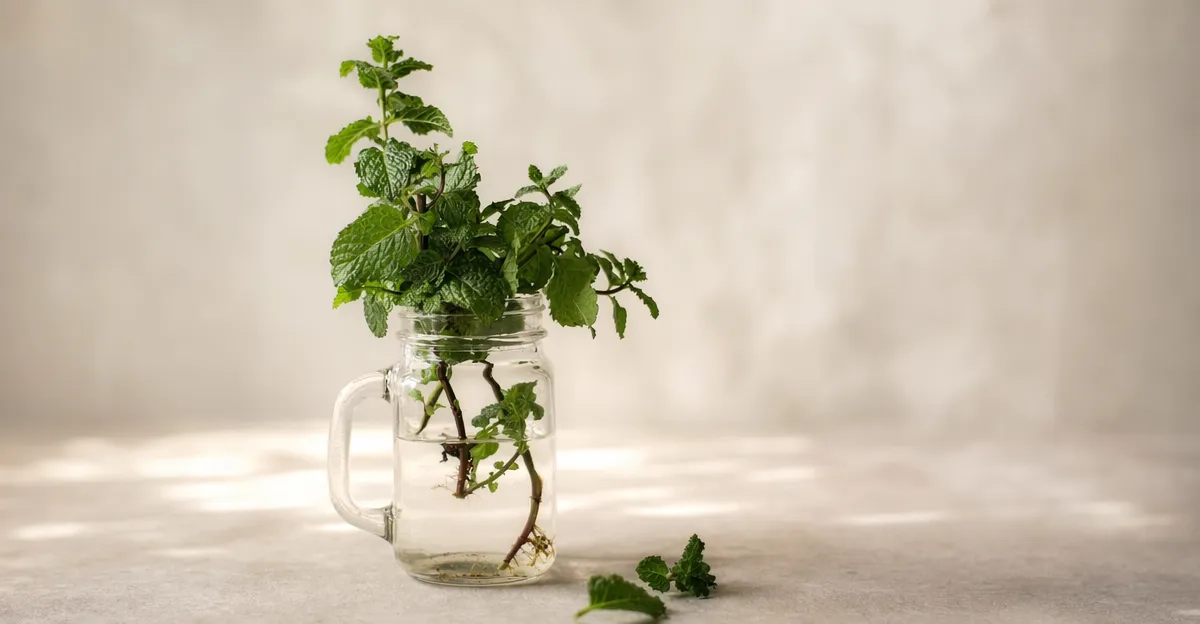
Key takeaway: Lemon balm (Melissa officinalis) is one of the most rewarding herbs to grow hydroponically. It grows vigorously, produces fragrant leaves packed with rosmarinic acid and citral compounds, and reaches harvest in as little as six weeks after transplanting. A 2024 study in BMC Plant Biology found that hydroponic lemon balm grown with nitrate-based nutrients produced plants 72 cm tall with 105 g of aerial dry biomass and 25+ lateral branches — far exceeding typical soil-grown yields (Safaei et al., 2024). This guide covers every step from seed to harvest, grounded in peer-reviewed research.
Why Grow Lemon Balm Hydroponically?
Lemon balm has been cultivated for over 2,000 years for its calming properties, culinary versatility, and distinctive citrus scent. It is a member of the mint family (Lamiaceae) and shares mint's aggressive growth habit — which is actually an advantage in hydroponics, where you can channel that energy into rapid leaf production without worrying about it taking over your garden bed.
Here is why soilless culture makes particular sense for this herb:
Faster, denser growth. In hydroponic systems, lemon balm produces significantly more lateral branches (25+ per plant) compared to soil-grown plants. The direct access to dissolved nutrients eliminates the energy plants spend growing extensive root networks to forage for food.
Selective phytochemical enrichment. Research comparing three hydroponic systems found that soilless methods increased caffeic acid and methyl rosmarinate concentrations by 6–8× compared to soil cultivation (Industrial Crops and Products, 2021). These compounds contribute to lemon balm's antioxidant properties.
Note: The same study found that total phenolic acid content and radical scavenging capacity were lower in hydroponic systems, associated with decreased rosmarinic acid and lithospermic acid A — the dominant antioxidant compounds in lemon balm. Hydroponics shifts the phytochemical profile rather than uniformly improving it.
You control the nitrogen source — and it matters. Safaei et al. (2024) tested five ammonium-to-nitrate ratios and found that the nitrogen source dramatically affects both growth and phytochemical production. Pure nitrate nutrition produced the best results across the board: maximum biomass, highest phenolic content (60.40 mg GAE/g dry weight), and strongest flavonoid production. Pure ammonium? It killed the plants. In soil, you cannot control which nitrogen form your plants absorb. In hydroponics, you can.
Year-round harvesting. Lemon balm is a perennial in USDA zones 4–9, but it goes dormant in winter outdoors. Under grow lights and controlled conditions, your hydroponic lemon balm produces continuously.
Reduced disease pressure. Septoria leaf spot (Septoria melissae), one of the most common lemon balm diseases, spreads primarily through contaminated plant debris and soil-splash transmission onto leaves. In hydroponic systems, the absence of soil splash greatly reduces this major infection pathway — though the pathogen can still arrive via infected seed or cuttings, so use clean starting material.
Quick Reference: Growing Parameters
| Parameter | Value |
|---|---|
| pH | 5.5–6.5 |
| EC | 1.0–1.6 mS/cm |
| Air temperature | 18–24°C (65–75°F) |
| Water temperature | 18–22°C (65–72°F) |
| Humidity | 40–60% RH |
| Light | 14–16 hours/day |
| Germination time | 7–14 days |
| Days to harvest | 42–56 from transplant |
These numbers align with the parameters in our hydroponic herbs overview — lemon balm falls neatly into the same pH and EC range as basil, sage, and dill.
Choosing Your Hydroponic System
Lemon balm adapts well to multiple hydroponic setups. Research has tested several, and they all work — but some offer specific advantages.
Deep Water Culture (DWC) — Best Overall
This is the most studied system for lemon balm. Safaei et al. (2024) used a floating culture system (a DWC variant) and achieved their highest yields: 72 cm plant height, 105 g dry biomass, 25+ branches per plant. The constant root contact with aerated nutrient solution suits lemon balm's heavy-drinking growth habit.
Setup basics: Net pots sit in lids above a reservoir. An air pump with an air stone keeps dissolved oxygen (DO) high. Use a light-proof container to prevent algae.
Kratky Method — Best for Beginners
The Kratky method is passive DWC without pumps or electricity. Fill a container, place the plant, and let the water level drop as the plant grows. Lemon balm's vigorous root system adapts naturally to the growing air gap. Start with a lower EC (0.8–1.0 mS/cm) since the solution concentrates as the plant drinks.
Nutrient Film Technique (NFT) — Best for Multiple Plants
A thin film of nutrient solution flows through sloped channels. Good if you want a row of lemon balm plants or a mixed herb channel alongside basil and oregano. Ensure flow rate is adequate — lemon balm drinks heavily once established.
Aeroponics — Viable but Unnecessary
A 2021 study in Industrial Crops and Products found no significant yield difference between aeroponic, perlite bed, and artificial soil bed systems at 8 and 10 weeks. Aeroponics works, but it adds complexity without a meaningful yield advantage for this crop. Save it for plants that genuinely benefit from mist-based root delivery.
Starting From Seed
Lemon balm seeds are tiny and have specific germination requirements. Here is how to get reliable results.
What You Need
- Lemon balm seeds (buy fresh — viability drops after one year)
- Rockwool (stonewool) cubes, peat plugs, or coco coir plugs
- A seedling tray with a humidity dome
- Grow light or bright windowsill
- Spray bottle for misting
Germination Steps
-
Pre-soak your growing medium. If using rockwool, soak in pH 5.5 water for 30 minutes to neutralize its natural alkalinity.
-
Place seeds on the surface — do not bury them. Lemon balm seeds are photoblastic, meaning they need light to germinate. Press them gently into the surface of the growing medium but leave them exposed.
-
Mist lightly and cover. Use a humidity dome or plastic wrap to maintain 70–80% humidity around the seeds. Mist daily to keep the surface moist but not waterlogged.
-
Maintain 18–21°C (65–70°F). This is the sweet spot for germination. Too cold and nothing happens; too warm and germination becomes erratic.
-
Provide light immediately. Unlike many seeds, lemon balm benefits from light from day one. A standard grow light on a 14–16 hour cycle or a bright windowsill works.
-
Wait 7–14 days. Most seeds germinate within this window. Some can take up to 21 days, especially without cold stratification.
Pro tip — cold stratification boosts germination rates. Place seeds in a damp paper towel inside a sealed bag in the refrigerator at 1–2°C (33–35°F) for 7–14 days before sowing. This mimics the natural winter period that triggers spring germination.
Alternative: Start From Cuttings
Cuttings are faster and guarantee you get the same chemotype (aroma profile) as the parent plant.
- Take 10–15 cm (4–6 inch) stem cuttings from healthy, non-flowering shoots.
- Remove leaves from the bottom half of the cutting.
- Place in water, perlite, or a rockwool cube.
- Roots develop in 2–3 weeks.
- Transplant to your hydroponic system once roots are 5 cm (2 inches) long.
Transplanting to Your Hydroponic System
Move seedlings to your hydroponic setup when they reach 5–8 cm (2–3 inches) tall with at least two sets of true leaves.
-
Gently remove the seedling from its starting medium. If started in soil (from a nursery purchase), rinse all soil from the roots under lukewarm water. Soil particles in your reservoir breed pathogens.
-
Place in a net pot filled with clay pebbles (LECA — Lightweight Expanded Clay Aggregate) or perlite. Support the stem so it stays upright.
-
Start with dilute nutrients. Set your EC to 0.6–0.8 mS/cm for the first week. Seedling roots need time to adjust to constant nutrient contact.
-
Gradually increase EC to 1.0–1.3 mS/cm over the next two weeks as the plant establishes.
-
Space plants 30–45 cm (12–18 inches) apart. Lemon balm spreads aggressively. Crowded plants develop poor air circulation and invite powdery mildew.
Nutrient Management
This is where the science gets interesting. Lemon balm is surprisingly specific about what it eats.
Nitrogen Form Is Critical
The single most impactful finding from recent research: use nitrate-based nitrogen, not ammonium. Safaei et al. (2024) tested five NH₄⁺:NO₃⁻ ratios and found:
| NH₄⁺:NO₃⁻ Ratio | Plant Height (cm) | Dry Biomass (g) | Lateral Branches | Total Phenolics (mg GAE/g DW) |
|---|---|---|---|---|
| 0:100 (pure nitrate) | 72.20 | 105.57 | 25.56 | 60.40 |
| 25:75 | 63.17 | 89.43 | 21.67 | 52.30 |
| 50:50 | 51.33 | 67.22 | 17.44 | 43.10 |
| 75:25 | 38.67 | 41.11 | 11.22 | 31.60 |
| 100:0 (pure ammonium) | Plant death | — | — | — |
The trend is clear: more nitrate = more growth, more branches, and more of the beneficial phenolic compounds that give lemon balm its medicinal value. Most quality hydroponic nutrient formulations already use primarily nitrate nitrogen, but check your label. Avoid cheap fertilizers with high ammonium content.
Macronutrient Priorities
Research on macronutrient omission (Journal of Applied Research on Medicinal and Aromatic Plants, 2021) revealed two distinct limiting orders for lemon balm:
For total dry weight (growth): N > K = Ca = P > S = Mg
For essential oil content: N > Ca > S = K = P > Mg
Key takeaways from the omission study:
- Nitrogen — Most critical for both growth and essential oil. Deficiency causes pale yellow leaves, stunted growth, and purple stems.
- Potassium, Calcium, Phosphorus — Equally limiting for total dry weight. K deficiency shows as brown leaf edges (marginal necrosis) on older leaves. Ca deficiency causes necrotic spots on young leaves. P deficiency causes dark green leaves with purple undersides.
- Calcium — Particularly important for essential oil production (second only to nitrogen), and Ca omission decreased citral content — the key aromatic compound.
One surprise: magnesium omission actually increased essential oil concentration, chlorophyll, and carotenoid levels. The researchers suggest this is a stress response — the plant ramps up secondary metabolite production when mildly Mg-stressed. This is not a recommendation to remove magnesium (the plant still needs it for photosynthesis), but it demonstrates how nutrient manipulation can tune phytochemical output in hydroponics.
Practical Nutrient Schedule
| Growth Stage | EC (mS/cm) | Notes |
|---|---|---|
| Seedling (weeks 1–2) | 0.6–0.8 | Half-strength solution |
| Early vegetative (weeks 3–4) | 0.8–1.1 | Gradually increase |
| Active growth (weeks 5–8) | 1.0–1.3 | Full-strength; monitor leaf color |
| Mature / pre-harvest (weeks 8+) | 1.2–1.6 | Can push slightly higher for established plants |
Use a complete hydroponic nutrient solution with micronutrients. Change reservoir water every 7–10 days to prevent salt buildup and nutrient imbalances.
Lighting
Lemon balm is a long-day plant. Under natural conditions, photoperiods longer than 12 hours trigger flowering — and flowering reduces leaf quality and essential oil concentration.
Recommended Light Schedule
- Vegetative growth (leaf production): 14–16 hours of light per day.
- To delay flowering: Drop to 10–12 hours. This keeps the plant in vegetative mode for continuous leaf harvest.
- Light intensity: 200–400 µmol/m²/s is sufficient for indoor growing. Research conditions used 560–640 µmol/m²/s (Safaei et al., 2024), but that level of intensity is not necessary for home growers.
Light Type
Full-spectrum LED grow lights work best. Lemon balm responds well to both red and blue wavelengths. If you are growing alongside other herbs in the same system, a standard 14–16 hour photoperiod at moderate intensity suits lemon balm, basil, mint, and most other culinary herbs.
Lemon balm also tolerates partial shade better than many herbs. Plants grown under lower light develop larger, more succulent leaves with a milder flavor — useful if you prefer subtler taste for teas and desserts.
Environment and Climate Control
Temperature
Keep your growing area between 18–24°C (65–75°F). Lemon balm is a cool-season herb and does not like heat. Above 30°C (86°F), expect:
- Wilting and leaf curl
- Reduced essential oil content
- Premature bolting (flowering)
- Bitter-tasting leaves
If your growing space gets warm, a small fan for air circulation helps. Keep reservoir water at 18–22°C (65–72°F) — warm water holds less dissolved oxygen, which stresses roots.
Humidity
Aim for 40–60% relative humidity. Research conditions used 55% RH with excellent results (Safaei et al., 2024).
- Above 60% — Increased risk of powdery mildew. This is lemon balm's most common fungal issue.
- Below 40% — Spider mites thrive in dry conditions.
Good air circulation is your best defense against both problems. A small oscillating fan pointed near (not directly at) the plants keeps air moving and strengthens stems.
pH Management
Maintain pH between 5.5 and 6.5. Check every 2–3 days — nutrient uptake naturally shifts pH over time. Most hydroponic systems drift upward. Use pH-down solution (phosphoric acid or citric acid) to correct.
Growth Timeline: What to Expect
Weeks 1–3: Germination and Seedling Stage
Seeds sprout in 7–14 days. First true leaves appear around day 14–21. Growth is slow — this is normal. Lemon balm invests in root development before pushing top growth.
Weeks 3–6: Vegetative Explosion
Once established, lemon balm accelerates rapidly. You will see multiple new leaf pairs each week and the characteristic branching pattern emerge. Pinch the growing tip when the plant reaches 15 cm (6 inches) to encourage bushier growth and more lateral branches.
Weeks 6–8: First Harvest Window
Your first significant harvest comes around 42–56 days after transplanting. The plant should be 30–45 cm (12–18 inches) tall with dense foliage. Harvest the top third of each stem.
Weeks 8+: Continuous Production
After the first harvest, lemon balm regrows aggressively. Expect a new harvestable flush every 2–3 weeks. Established plants can produce for months under continuous lighting and proper nutrition.
Harvesting
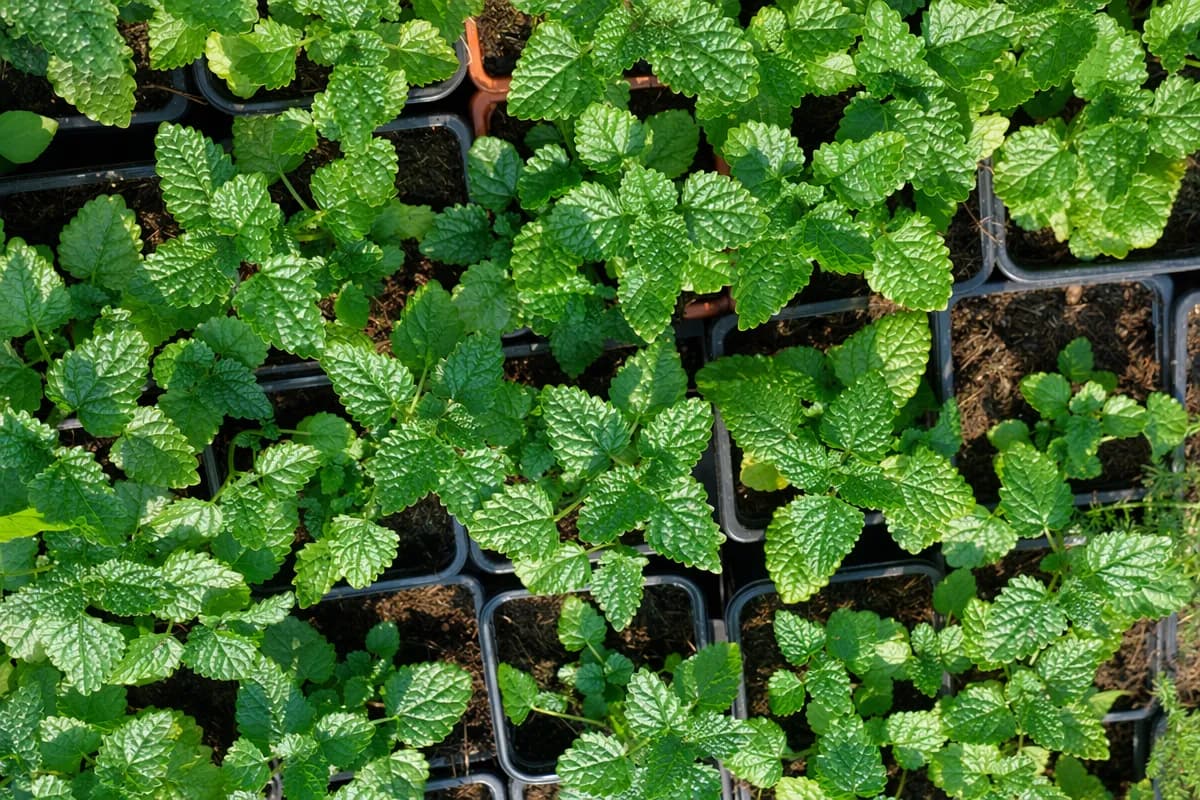
When to Harvest
- Best timing: Just before flower buds appear. Essential oil concentration peaks at this stage.
- Time of day: Morning, after any surface moisture has dried but before peak heat. Essential oils are most concentrated in cool morning hours.
- Frequency: Every 2–3 weeks once established. Regular harvesting encourages branching and keeps the plant compact.
How to Harvest
- Use sharp, clean scissors or shears.
- Cut stems 5–8 cm (2–3 inches) above a strong set of leaves.
- Never remove more than one-third of the plant at once. This preserves enough leaf area for the plant to recover quickly.
- Prioritize cutting above leaf nodes — new growth emerges from these points.
- If the plant flowers, cut it back hard (to 10 cm / 4 inches above the base). A fresh flush of tender leaves follows within 2–3 weeks.
Preserving Your Harvest
Fresh lemon balm loses its aroma quickly — use it within 1–2 days of cutting, or preserve it:
- Freezing: Flash-freeze individual leaves on a tray, then store in a sealed bag. Retains flavor better than drying.
- Drying: Hang bundles upside down in a warm, dark, well-ventilated space for 1–2 weeks. Dried leaves lose significant aroma but work for teas and sachets.
- Infusions: Steep fresh leaves in oil, vinegar, or honey for immediate preservation.
Using Your Lemon Balm
Culinary
- Tea: The most popular use. Steep 1 tablespoon of fresh leaves (or 2–3 teaspoons dried) in a cup of just-boiled water for 5–10 minutes. Cover the cup to trap volatile oils.
- Salads and garnish: Chop fresh leaves into green salads, fruit salads, and grain bowls.
- Cooking: Add to fish, chicken, and shellfish dishes in the last few minutes of cooking to preserve flavor.
- Compound butter: Blend chopped leaves into softened butter with a pinch of salt. Excellent on vegetables and bread.
- Drinks: Muddle into lemonade, cocktails, or mocktails. Pairs beautifully with gin and cucumber.
Wellness
Lemon balm has an extensive documented history in traditional medicine, and modern research supports several of its uses. A 2022 comprehensive review in the International Journal of Molecular Sciences documents antioxidant, anxiolytic, antimicrobial, and neuroprotective properties (Petrisor et al., 2022). The dominant active compound is rosmarinic acid, found at concentrations of 3,516–86,638 µg/g depending on growing conditions.
Common wellness uses include:
- Calming tea before bed
- Topical application for cold sores (the antiviral properties of rosmarinic acid)
- Aromatherapy — the essential oil contains geranial and neral (citral compounds) at combined concentrations of 10–86% of total oil content
Essential Oil
Lemon balm essential oil (melissa oil) is one of the most expensive essential oils due to the plant's low oil yield: 0.01–0.72% depending on chemotype and growing conditions (Petrisor et al., 2022). Hydroponic cultivation allows you to optimize oil production through nutrient manipulation — particularly by using pure nitrate nitrogen sources and managing harvest timing. Singh et al. (2014) found that harvesting at 160 days after planting produced the highest essential oil yield.
Troubleshooting Common Problems
Powdery Mildew
Symptoms: White, powdery coating on leaf surfaces. Cause: High humidity (above 60%), poor air circulation, overcrowded plants. Fix: Improve airflow with a fan. Space plants further apart. Remove affected leaves immediately. Maintain humidity at 40–60%.
Yellowing Lower Leaves
Symptoms: Older leaves turn pale green, then yellow. Cause: Nitrogen deficiency — the most common nutrient issue in lemon balm. Fix: Check and increase EC. Ensure your nutrient solution uses nitrate-dominant nitrogen.
Root Rot
Symptoms: Wilting despite adequate water. Brown, slimy roots with a bad smell. Cause: Low dissolved oxygen, warm water temperatures, pathogen buildup. Fix: Check your air pump and air stone. Keep water temperature below 22°C (72°F). Change reservoir solution. Clean and sanitize equipment.
Leggy, Stretched Growth
Symptoms: Long internodes (gaps between leaf pairs), thin stems. Cause: Insufficient light. Fix: Move your grow light closer or increase the photoperiod. Lemon balm needs at least 14 hours of adequate light for compact growth.
Premature Flowering
Symptoms: Small white flowers in leaf axils; leaves become bitter. Cause: Photoperiod longer than 12 hours combined with warm temperatures signals the plant to flower. Stress (inconsistent watering, temperature swings) also triggers bolting. Fix: If you want to delay flowering, reduce photoperiod to 10–12 hours. Harvest regularly to remove flower buds before they open. If the plant has already flowered, cut it back hard — new vegetative growth follows within weeks.
Pests
Lemon balm's high essential oil content gives it natural pest resistance. Utah State University Extension notes it is "generally not bothered by insects or diseases because of its high natural oils concentration." That said, watch for:
- Aphids — Check leaf undersides. Use insecticidal soap or introduce ladybugs.
- Spider mites — Appear in dry conditions (below 40% RH). Increase humidity. Mist plants. Introduce predatory mites (Phytoseiulus persimilis) for biological control.
- Whiteflies — Yellow sticky traps near the canopy catch adults before populations establish.
Companion Planting in Hydroponic Systems
If you are growing lemon balm alongside other herbs in a shared system, group it with plants that have similar pH and EC requirements:
Good companions: Basil, oregano, thyme, sage, parsley, dill, lettuce, and most leafy greens.
Avoid sharing a channel with: Mint. Both are aggressive Lamiaceae family members that compete for space and resources. Give each its own container or channel.
For more on building a multi-herb hydroponic setup, see our complete indoor hydroponic herbs guide.
Key Takeaways
- pH 5.5–6.5, EC 1.0–1.6 mS/cm. Lemon balm shares the same sweet spot as most culinary herbs.
- Use nitrate-based nutrients. This is the single biggest factor for growth and phytochemical quality. Ammonium-heavy fertilizers will damage or kill lemon balm.
- Harvest before flowering for the best flavor and essential oil content. Regular harvesting keeps the plant bushy and productive.
- Keep humidity at 40–60% with good airflow to prevent powdery mildew.
- Start from cuttings if you want faster results and a guaranteed aroma profile. Seeds work but take longer and need light to germinate.
- Expect your first harvest at 6–8 weeks after transplanting, with continuous production every 2–3 weeks thereafter.
Lemon balm is one of those herbs that genuinely gets better in hydroponics — higher yields, cleaner compounds, and none of the soil-borne diseases that plague garden-grown plants. If you already grow basil or mint in your system, you already have the skills. The growing conditions are nearly identical.
Want to track your lemon balm's progress? Add it to your Truleaf plant dashboard for pH, EC, and growth logging.